
What’s Inside
- Implement a Strategic Toy Rotation System
- Embrace Montessori-Inspired Open Shelving for Aesthetic Toy Storage
- Utilize Hidden Storage within Multi-functional Furniture
- Maximize Vertical Space with Wall-Mounted Solutions
- Use Natural Woven Baskets for Soft Textures
- Clear Acrylic Bins for Micro-Toys and Legos
- Under-Bed Rolling Carts for Bulky Items
- Repurposed Kitchen Storage for Art Supplies
- Canvas Drawstring Bags for Puzzles and Board Games
- Creating a Dedicated Reading Nook with Forward-Facing Bookshelves
- Color-Coded Organization for Visual Harmony
- Minimalist Picture Labels for Aesthetic Toy Storage
Last November, I tripped over a hard plastic singing farm animal in the dark, spilling an entire $6.99 bag of Trader Joe’s organic French roast coffee beans across my living room rug. That was the moment my system failed. I needed toy storage that actually worked in a real house, not just in a photo. Most of the perfect playrooms you see online hide the reality of daily cleanup. I spent three weeks testing bins, baskets, and shelving. I bought the wrong sizes. I bought cheap plastic that cracked in days. I’m going to show you how I organize my kids’ stuff without spending a fortune. The goal isn’t perfection. It’s a system that takes less than five minutes to reset. Let’s break down twelve methods that keep the plastic chaos contained, using exact measurements and products you can buy right now.
1. Implement a Strategic Toy Rotation System

Before you buy a single basket, address the volume of items in your house. I tried organizing everything at once for months before figuring this out. It’s impossible. Instead of having all toys accessible, use a strict rotation. Expert opinion says keeping only 8-10 well-chosen toys out at a time is plenty for toddlers. This fosters better play and focus. A common mistake is having too many toys out, which overwhelms kids and makes cleanup a nightmare. Trust me.
I use the 66-quart Sterilite clear latching bins from Walmart for $14.98 each. I keep four of these in my garage. Every two to four weeks, I rotate the contents. For toddlers, a one to two-week rotation is ideal. Older kids can manage two to four weeks. I sort them by category. One bin for building materials, one for figures, one for puzzles. When I bring a new bin in, the old items go back to the garage. The 66-quart size is specific. It’s large enough for bulky items like a 100-piece Magnatiles set, but small enough that I can lift it off a shelf without straining my back. If you skip this, no amount of baskets will save your living room.
2. Embrace Montessori-Inspired Open Shelving for Aesthetic Toy Storage

Low, open shelving is a cornerstone of Montessori design. It lets children see, choose, and return items independently. I use the IKEA KALLAX. It’s about $120 for the 8-cube version, though the 6-cube unit works well for smaller kids. The cubes measure exactly 13 by 13 by 15 inches.
The biggest mistake with the KALLAX is stuffing every cube full. You’ve got to leave space between toys to avoid visual clutter and encourage focus. I leave at least two cubes empty. On other shelves, I place one item or one basket. I bought the white stained oak finish because it hides dust better than the matte white version. I learned that the hard way. Ensure the shelves are anchored to the wall. I skipped the anchors once, and the unit shifted when my three-year-old leaned on it. You can’t compromise on safety, even if it puts small holes in your drywall.
3. Utilize Hidden Storage within Multi-functional Furniture

Integrate storage into your living spaces with furniture that does double duty. I spent years staring at ugly plastic bins before buying pieces with hidden compartments. Look for ottomans with storage, coffee tables with lift tops, or benches with drawers. Pottery Barn Kids has the Quinn Lidded Storage Trunk for around $299. It’s 32 inches wide and holds a massive amount of stuffed animals.
If you aren’t ready to spend three hundred dollars, Target sells the Threshold 30-inch storage ottoman for $85. I bought the faux leather version last Tuesday. The leather is key because you can wipe sticky fingerprints off with a damp cloth. Fabric ottomans in a playroom are a mistake. Another effective tactic is using sectional sofas with hidden storage. These hold bulky items like train tracks or wooden blocks. The key is ensuring the hinges have soft-close mechanisms. If the lid slams, it’s a hazard for small fingers. Always check the hinge tension before buying.

Bathroom Organizers and Storage,4 Pack Bathroom Accessories
Honestly, Bathroom Organizers and Storage surprised me — sturdier than it looks in the photos, and over 32 buyers gave it 4.5 stars.
4. Maximize Vertical Space with Wall-Mounted Solutions

Floor space is premium real estate. Don’t overlook your walls. Wall-mounted shelves, pegboards, or hanging baskets free up square footage. I use the IKEA FLISAT wall storage. It measures 27.5 by 3.5 by 6.25 inches and costs $19.99. It’s solid pine, so you can sand and paint it to match your trim. You might also like: 15 Gorgeous Hacks Home Organization to Inspire Your Next Project
I mount these into wall studs, exactly 24 inches off the floor. This lets a toddler reach items without climbing. I use them for small board books and wooden figures. A major mistake is mounting these using basic drywall anchors. A child will eventually pull down on the shelf. If it’s not in a stud, it will rip a chunk out of your drywall. I spent a weekend patching a hole in my hallway because I was too lazy to find my stud finder. Use three-inch wood screws. Vertical storage draws the eye upward, making the room feel larger while keeping the floor clear. You might also like: 20 Creative DIY Garage Organization Ideas That Changed Everything
5. Use Natural Woven Baskets for Soft Textures

Plastic bins look cheap. To get a better look, you need natural textures. I use woven water hyacinth baskets. Specifically, I buy the Brightroom 13-inch square baskets from Target for $16.00 each. The 13-inch dimension is critical because it fits flush inside the IKEA KALLAX. I tested the 11-inch baskets first. They leave a two-inch gap on either side, which immediately becomes a dust trap. You might also like: 16 Walk In Closet Organization Ideas for Every Budget
Water hyacinth has a distinct, earthy smell at first, and the texture is rough. It brings warmth to an otherwise sterile room. The downside? These baskets shed small fibers onto the shelves. You’ll have to vacuum the inside of the shelf once a month. I find it worth the tradeoff. I use these for visually chaotic items like mismatched plastic animals, musical instruments, and electronic toys. The thick woven material hides the mess.
6. Clear Acrylic Bins for Micro-Toys and Legos

While I prefer natural baskets for large items, you can’t use deep, dark baskets for tiny pieces. Small toys get lost at the bottom, and kids will dump the entire basket to find one piece. For micro-toys, I use clear acrylic bins. I buy The Home Edit by iDesign 10 by 10 by 6 inch bins at Walmart for $12.98 each.
The 6-inch height is perfect for sorting Legos by color. I keep these stacked inside a closed cabinet. The clear plastic lets kids see what’s inside without opening the lid. I tried opaque shoeboxes for a year. It was a disaster. The kids couldn’t remember which box held the wheels and which held the windows, so they opened all of them. Acrylic solves this. The downside is that it scratches easily. If you throw heavy metal cars into these, the plastic will look scuffed in a week. Reserve the acrylic for lightweight bricks or craft supplies.

IRIS USA 19 QT Plastic Storage Box with Lid and Latches
IRIS USA 19 QT Plastic Storage Box with Lid and Latches – 6 Pack – BPA has been one of the most consistently praised picks in this category. 339 reviewers averaged 4.5/5.
7. Under-Bed Rolling Carts for Bulky Items

The space under a bed is usually wasted on dust bunnies and lost socks. I use this area for the largest, most awkward items. I use the Room Essentials 28-quart under-bed boxes from Target for $14.00 each. They measure 34.8 inches long, 16.5 inches wide, and 6 inches high. The 6-inch height is crucial. Measure your furniture clearance first. My previous sofa only had 5.5 inches of clearance, and I had to return four bins.
I use these for large puzzles, train tracks, and oversized drawing pads. I added felt adhesive pads to the bottom corners. Without them, the hard plastic will scratch hardwood floors when you drag them out. I learned that the hard way and had to use a stain marker on my oak floors. Under-bed bins keep bulky items out of sight but accessible. It’s an efficient use of dead space.
8. Repurposed Kitchen Storage for Art Supplies

You don’t have to buy storage exclusively from the children’s section. Some of the best containers come from the kitchen aisle. I store markers, crayons, and pencils in heavy glass jars. I wash and reuse Bonne Maman 13-ounce preserve jars. I buy the strawberry preserves at Whole Foods for $5.99. The jars have a beautiful faceted design and a wide, 3-inch mouth.
The wide mouth is necessary. If you use standard mason jars, the opening is too narrow for a child to grab a handful of crayons. I line these up on the top tier of an IKEA Raskog utility cart, which costs $39.99. The cart holds paper and paint on the lower tiers. I can roll the art station to the kitchen table when it’s time to create and tuck it into a closet when we’re done. The negative to glass is obvious. It breaks. I only did this once my youngest turned four. If you have toddlers who throw things, stick to heavy-weight silicone cups.
9. Canvas Drawstring Bags for Puzzles and Board Games

Cardboard game boxes are the enemy of organization. They come in different sizes, the corners rip, and the lids never stay on. I throw the cardboard boxes in the recycling bin. Instead, I transfer everything into heavy-duty cotton canvas drawstring bags. I buy a 10-pack of 8 by 10 inch blank canvas bags on Amazon for $14.99.
I cut the picture off the original box and punch a hole in the corner. I thread the drawstring through the hole. Now, I have a uniform, soft-sided bag that shows exactly what’s inside. I can fit ten canvas puzzle bags into a single 13-inch basket. If I kept them in boxes, I could only fit three. I also use the canvas tote bags from Trader Joe’s (the $3.99 ones with navy handles) to hang larger games on hooks inside a closet. The canvas is durable, washable, and looks clean compared to a stack of crushed cardboard.
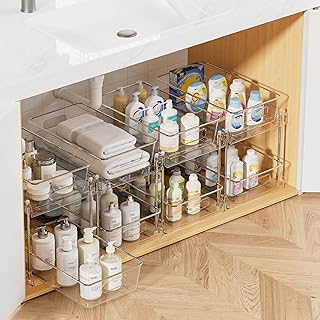
Vtopmart 4 Pack Bathroom Organizer
Vtopmart 4 Pack Bathroom Organizer has been one of the most consistently praised picks in this category. 65 reviewers averaged 4.5/5.
10. Creating a Dedicated Reading Nook with Forward-Facing Bookshelves

Traditional bookshelves where you only see the spine don’t work for young children. They pull every book off the shelf trying to find the one with the picture they want. You need forward-facing shelves. I built a reading nook using repurposed spice racks. I bought four IKEA BEKVAM wooden spice racks. They cost $6.99 each and are 15.75 inches wide.
I sanded them down and painted them with matte white trim paint. I mounted them vertically on a narrow wall, spacing them 14 inches apart. This fits oversized picture books. The forward-facing display acts as functional art. The book covers provide color while the white racks keep things clean. One mistake: I mounted the bottom rack too close to the floor. The vacuum kept hitting it and chipping the paint. Ensure your lowest shelf is at least eight inches off the ground.
11. Color-Coded Organization for Visual Harmony

When you have a massive amount of small, identical items, organizing them by color instantly improves the room. This works for Legos, wooden blocks, or toy cars. I use the rainbow method. I bought a 10-piece set of clear plastic shoebox-sized bins from Costco for $19.99. I spent four hours sorting a massive tub of mixed Legos into color categories: red, orange, yellow, green, blue, black, and white.
The visual impact of stacking these bins is striking. It looks intentional. It also changes how kids play. When they need a grey piece for a spaceship, they only search the grey bin rather than dumping three thousand pieces onto the rug. The negative to this is the maintenance. It requires discipline to put pieces back correctly. I don’t force my kids to sort perfectly every day. I keep one large dump bin for daily cleanup, and once a month, I re-sort the dump bin into the color-coded boxes. It took me years to figure out that routine.
12. Minimalist Picture Labels for Aesthetic Toy Storage

The final step is labeling. If the bins aren’t labeled, you’re the only person who knows where things belong. You’ll spend your weekend answering questions about where the dinosaurs are. I use a Brother P-Touch label maker, which I bought at Staples for $34.99. I use the 12-millimeter white tape with black text.
For children who can’t read, text is useless. I print minimalist picture labels. I find simple black-and-white icons online (a car, a block, a dinosaur) and print them on heavy cardstock. I attach these to the woven baskets using small black safety pins, or I use clear packing tape to affix them to plastic bins. Do not use masking tape. I tried using cheap tape from Kroger once, and the adhesive dried out in a week, leaving a crusty yellow residue on my expensive bins. Use proper labels. The combination of uniform text and clean icons ensures everyone can maintain the system you spent hours building.
Creating a functional system doesn’t require a designer or a huge budget. It requires precise measurements, durable materials, and a ruthless approach to decluttering. I’ve used these exact bins, shelves, and baskets for two years now, and the daily cleanup takes less than ten minutes. Skip the flimsy plastic bins from the dollar store. They crack, they look terrible, and you’ll replace them in three months anyway. Invest in the specific sizes that fit your shelves, implement a rotation, and use your vertical wall space. Pin this guide for later when you’re standing in the aisle at Target trying to remember the dimensions of those under-bed bins.

SNSLXH 5 Pack Stackable Closet Storage Basket
SNSLXH 5 Pack Stackable Closet Storage Basket has been one of the most consistently praised picks in this category. 4 reviewers averaged 4.5/5.
Frequently Asked Questions
How many toys should be out at one time?
Keep only 8-10 well-chosen items accessible at once. This prevents visual overwhelm and encourages children to focus deeply on their play. Store the rest in latching bins in a garage or closet.
How often should I rotate toys?
Rotate items every two to four weeks. For toddlers, a faster rotation of one to two weeks keeps them engaged. Bring a new bin in, and immediately pack the old items away.
What is the best way to store small items like Legos?
Use clear acrylic bins with a 6-inch depth. The transparent material allows kids to see the contents without dumping the entire bin. Sort the pieces by color to create visual harmony.
How can I make board game storage look aesthetic?
Throw away the ripped cardboard boxes. Transfer all game pieces and boards into heavy-duty 8×10 inch cotton canvas drawstring bags. You can fit significantly more games into a single woven basket this way.
