
What’s Inside
- Maximize Vertical Space with a Double Hanging Rod System
- Size Dividers Are the Core of Good Baby Closet Organization
- Invest in Slim Velvet Baby Hangers
- Utilize Expandable Drawer Dividers for Small Items
- Embrace the Capsule Wardrobe Trend
- Designate a “Too Small” Basket
- Label Everything with a Label Maker
- Utilize Over-the-Door Storage for Accessories
- Use Clear Acrylic Bins for Shoes and Accessories
- Baby Closet Organization Must Include a “Next Size Up” Zone
- Set Up a Rolling Cart for Diapering Essentials
- Drawer Organizers for Tiny Socks
I stood in my daughter’s nursery at 2 AM last November, holding a screaming infant in one arm while digging through a mountain of tangled onesies with the other. I needed a 3-6 month sleeper because of a massive diaper blowout, but I kept pulling out newborn sizes that barely fit her a month ago. That specific failure sent me down a rabbit hole of baby closet organization the very next morning. Most nursery tips focus on making things look cute for Instagram. I just wanted a system where I didn’t have to turn on the overhead light and wake the baby just to find a clean pair of pants. I spent the next six months testing bins, rods, and hangers. I wasted money on the wrong things. I bought bulky wooden hangers that took up half the closet space. I tried folding tiny socks into origami squares, which lasted exactly three days before I gave up. Now I’ve built a system that actually functions on three hours of sleep. Here’s exactly what worked, what failed miserably, and what you should buy instead to keep your nursery running.
1. Maximize Vertical Space with a Double Hanging Rod System

Baby clothes are tiny. A standard closet rod sits at about 65 inches high. When you hang a 0-3 month onesie on it, you get about four feet of wasted empty air underneath. I realized this in early January when I ran out of space for my daughter’s bulky winter coats. The easiest fix is installing a second, adjustable hanging rod to double your capacity.
I started with a basic adjustable tension rod from Walmart that cost $14.98. It hooked right onto the top rod and hung down. It worked okay for a few weeks, but it swung every time I grabbed a sweater. The metal hooks also scratched the original wooden rod. I eventually upgraded to the Elfa system from The Container Store.
You can get a basic hanging setup for around $30, or you can go all out with custom drawers and shelving which runs from $300 to over $1,200. I chose a middle-ground option. I installed a track system directly into the drywall. This setup lets you hang current sizes on the lower rod where you can reach them. You put the next size up on the higher rod. The Elfa system feels solid. It doesn’t sway when I pull a heavy winter sleep sack off the hanger. If you rent and can’t drill holes, stick to the $15 adjustable rod but wrap a little electrical tape around the hooks so they don’t slide.
2. Size Dividers Are the Core of Good Baby Closet Organization

Babies grow at a ridiculous pace. They outgrow clothes every two to three months. If you don’t separate the sizes, you end up with a chaotic mix of newborn sleepers and 12-month sweaters. I use specific closet size dividers to categorize hanging clothes. You want to sort them by Newborn, 0-3M, 3-6M, and so on. I initially tried making my own out of cardboard. They looked terrible, bent out of shape, and ripped within a week.
I switched to the Cloud Island size dividers from Target. A set of seven dividers costs $9.99. They’re made of thick plastic that snaps securely onto the rod. You can also find great options from brands like Baby Buddy or 3 Sprouts, usually ranging from $9 to $25. I bought the 3 Sprouts canvas ones first, but the fabric snagged on the velvet hangers I use. The smooth plastic of the Cloud Island ones works much better.
This approach prevents frantic searches for the right size when you’re exhausted. It also ensures clothes are actually worn before they get too small. I found three brand-new, tags-on outfits shoved in the back of a drawer last summer because I didn’t have them sorted. Put the dividers on the rod before you hang a single piece of clothing. It forces you to look at the tag of every item you wash and put away.
3. Invest in Slim Velvet Baby Hangers

Don’t use adult hangers for baby clothes. I made this mistake with my first child. I bought a 50-pack of standard plastic tubular hangers from Costco. They stretched out the necks of every single onesie. The shoulders had weird, permanent bumps. The plastic was also so thick that I could only fit about twenty outfits on the rod.
You need ultra-thin velvet baby hangers. I use the Casafield 11-inch Velvet Baby Hangers. A pack of 50 costs exactly $23.99 on Amazon. Zober Premium Kids Velvet Hangers are another solid option for around the same price. These slim hangers double or even triple your closet space compared to bulkier plastic or wooden alternatives. The velvet material has a non-slip surface. This is crucial for keeping delicate baby clothes, slippery synthetic winter coats, and wide-neck rompers from sliding off and ending up in a pile on the floor.
One negative about velvet hangers is that putting clothes on them takes a tiny bit more effort. The fabric grips the velvet immediately. You can’t just shove the hanger through the neck hole. You have to slide it up through the bottom of the shirt. It takes an extra two seconds per shirt. The space you save is worth that minor inconvenience. I bought the light gray color because the black velvet tends to show white lint from baby towels and muslin blankets.
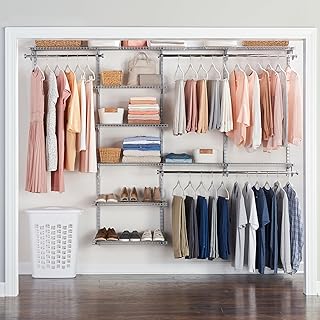
Rubbermaid Configurations Deluxe Custom Closet Kit 4-8 Ft.
Rubbermaid Configurations Deluxe Custom Closet Kit 4-8 Ft. Adjustable has been one of the most consistently praised picks in this category. 81 reviewers averaged 4.5/5.
4. Utilize Expandable Drawer Dividers for Small Items

Baby socks, mittens, and burp cloths are basically designed to get lost. If you just toss them into a dresser drawer, they merge into a tangled knot within three days. I tried using small cardboard boxes to separate things, but they slid around every time I opened the drawer.
The solution is expandable drawer dividers. I use the OXO Tot Expandable Drawer Dividers. They come in a two-pack for $24.99. These dividers expand from 11 to 17 inches. You push a grey button down, slide the divider to fit the depth of your drawer, and then push the tension lever up to lock it in place. The ends have foam pads so they don’t scratch the inside of your furniture. They create rigid compartments that don’t shift.
I use these in the top drawer of the nursery dresser. I dedicate the front left section to frequently used items like diapers and wipes. I buy the massive boxes of Kirkland wipes from Costco and stack three packs right in that compartment. The front right section holds current-size onesies. The back sections hold the tiny items like socks and mittens. This layout means I only have to open one drawer while keeping one hand on the baby during a diaper change. The OXO dividers are slightly more expensive than generic brands, but the generic ones I bought broke at the tension spring after two months. You might also like: 15 Small Closet Organization Ideas That Actually Work
5. Embrace the Capsule Wardrobe Trend

The baby apparel industry wants you to buy hundreds of tiny, complicated outfits. You don’t need them. A major trend for 2026 is the baby capsule wardrobe. This involves curating a collection of versatile, mix-and-match clothing items rather than buying random pieces. This strategy reduces closet clutter, saves a lot of money, and simplifies daily outfit selections. You might also like: 12 Closet Organization Ideas Small Space Worth Trying
I learned this the hard way. I had forty different outfits for my daughter’s 3-6 month phase. Most of them had annoying buttons down the back or stiff tulle skirts that made her cry when she sat in her car seat. I ended up constantly washing the same five soft sleepers. You might also like: 16 Linen Closet Organization Ideas You Need to See
Experts at PatPat suggest a formula to avoid overbuying. Aim for 7 to 10 bodysuits, 5 to 6 rompers, 4 to 5 footed sleepers, and 3 to 4 pairs of soft pants per size. You adjust these quantities based on how often you want to do laundry. I do laundry twice a week. I stick to neutral colors like gray, sage green, and cream for the pants, so they match every single bodysuit. I buy the 5-pack of simple cotton bodysuits from H&M for $19.99. Having fewer clothes means you don’t need a massive closet system. It also means the drawers actually close without you having to shove the clothes down with your knee.
6. Designate a “Too Small” Basket

This is the most functional habit I’ve developed for nursery organization. You need to keep a clearly labeled basket or bin right inside the closet specifically for clothes your baby has outgrown. Babies don’t outgrow clothes all at once. One Tuesday morning, a onesie fits fine. By the next Monday, you’re struggling to snap the bottom buttons.
When you encounter an item that is suddenly too tight, you must immediately take it off and place it in this basket. Don’t put it back in the drawer. Don’t wash it and hang it back up. If you put it back in the active rotation, you’ll accidentally try to put it on the baby again a week later.
I use a large woven cotton rope basket I found at Sprouts Farmers Market for $16.99. It sits on the floor in the corner of the closet. This simple bin prevents clutter in the active wardrobe. It streamlines the entire process of sorting clothes for donation, storage, or hand-me-downs. Once the basket is full, I take thirty minutes to fold the clothes, place them in a vacuum-seal bag, label the bag with the size, and put it in the attic. I used to just toss small clothes onto the top shelf of the closet, which resulted in a massive, dusty avalanche of mixed sizes six months later.

Ulif E10 Clothes Rack(With Stretchable Hanger
If you want something that just works, Ulif E10 Clothes Rack(With Stretchable Hanger Rod)Freestanding Clothin is a safe bet (951 reviews, 4.5 stars).
7. Label Everything with a Label Maker

When you’re running on two hours of sleep, you won’t remember which white plastic bin holds the size 3 diapers and which one holds the winter hats. I thought I had a great memory until my mother-in-law came to babysit and had to pull every single bin off the shelf to find a burp cloth.
You need to label opaque bins, shelves, and drawer sections. I use the Dymo LetraTag 100H. It costs $29.99 at Target. It prints clear, durable labels in seconds. I buy the plastic white tape cartridges for $6.49 because the paper labels peel off when the room gets humid. Clear labels are crucial for quick retrieval, especially for caregivers or when you send your partner into the room to grab something specific.
I label bins for categories such as “0-3 Months”, “Swaddles”, “Diaper Stock”, and “Next Size Up”. I also put tiny labels on the inside lip of the dresser drawers so everyone knows exactly where the socks go. One negative of the Dymo LetraTag is that it wastes about a half-inch of tape on either side of the word. You end up going through cartridges faster than you expect. To save tape, I type out multiple labels at once with spaces in between, print one long strip, and cut them apart with scissors.
8. Utilize Over-the-Door Storage for Accessories

The back of the closet door is a massive blank slate of storage space that most people ignore. I left mine empty for a year before realizing I had nowhere to put the awkward, bulky items like boxes of breast milk storage bags and large tubes of diaper cream.
I installed the Elfa Utility Door & Wall Rack from The Container Store. The basic setup cost me $115. It clips over the top and bottom of the door, so you don’t have to drill any holes in the wood. It comes with adjustable wire baskets. I use the top basket for things I need to keep away from toddlers, like infant Tylenol, nail clippers, and the FridaBaby NoseFrida (which costs $15.99 and is a necessity). The lower baskets hold rolled-up muslin swaddles, extra pacifiers, and bibs.
If the Elfa system is too expensive, you can buy a simple fabric over-the-door shoe organizer with clear pockets from Walmart for $9.98. The clear pockets are great for storing small items like headbands and socks. The only issue with the cheap fabric organizers is that they swing and bang against the door every time you open it. I fixed this by using two 3M Command Strips at the bottom to stick the fabric securely to the door.
9. Use Clear Acrylic Bins for Shoes and Accessories

Baby shoes are adorable, tiny, and impossible to keep paired up. I used to toss them into a soft fabric bin on the closet floor. I’d spend ten minutes digging around looking for the left shoe of a specific pair of sneakers while we were already late for a pediatrician appointment.
I switched to using clear acrylic bins for shoes and small accessories. I bought a set of four mDesign Plastic Storage Bins with handles from Amazon for $34.99. They measure 10 by 6 inches. Because they’re transparent, I can see exactly what’s inside without having to pull the bin off the shelf. It reminds me of the clear bulk bins at Whole Foods where you can instantly spot the exact almonds you want.
I line the shoes up in the clear bins. I use another clear bin for winter hats and mittens. The rigid plastic is much better than fabric bins because it doesn’t collapse when it’s half empty. One mistake I made was buying acrylic bins with attached lids. The lids made it annoying to quickly grab a pair of shoes with one hand. Always buy the open-top bins for items you need to access daily. Save the lidded bins for long-term storage on the very top shelf.

Ulif E1 Heavy Duty Closet Garment Rack
A dependable everyday pick — Ulif E1 Heavy Duty Closet Garment Rack pulls in 14 ratings at 4.5 stars. Not flashy, just solid.
10. Baby Closet Organization Must Include a “Next Size Up” Zone

People constantly gift you baby clothes that are three to six months too big. You also end up buying clothes on clearance for the next season. If you mix these larger clothes in with the current sizes, your closet becomes a frustrating mess.
You need a dedicated “next size up” zone. I use the very top shelf of the closet for this. I bought three large Y-Weave plastic storage bins from Target. They cost $8.00 each. I label them clearly with the upcoming sizes. When I find a great deal on 12-month sweaters at Kroger’s apparel section, I bring them home, wash them, and put them straight into the 12-month bin on the top shelf.
I also use this zone for diaper stockpiling. When I buy the massive boxes of Up&Up diapers (which run about $28.99 for a giant pack), I take the sleeves of diapers out of the cardboard box and stack them behind the clothing bins on the top shelf. Getting rid of the bulky cardboard packaging frees up space. Do not put heavy items like wipes on the top shelf. I dropped a heavy three-pack of water wipes on my foot trying to get it down from a high shelf last spring. Keep the heavy diapering supplies lower to the ground.
11. Set Up a Rolling Cart for Diapering Essentials

Sometimes the closet is just too far away from where you actually need to change the baby. My nursery has the closet on the opposite wall from the changing table. Walking back and forth across the room with a messy baby was a disaster waiting to happen.
I moved my daily essentials out of the closet and into a rolling cart. I bought the IKEA Raskog utility cart for $29.99. Target sells a very similar version in their Brightroom line for $30.00. The cart has three tiers. I use the top tier for current-size diapers, a tub of Aquaphor Baby Healing Ointment ($14.29 for the 14 oz jar), and wipes. The middle tier holds burp cloths and extra changing pad covers. The bottom tier holds my baby’s bath towels and washcloths.
The wheels are the best part. I can roll the entire cart into the bathroom during bath time, then roll it right back to the changing station. When I’m organizing the closet, the cart isn’t taking up floor space inside the actual wardrobe. The metal construction is much sturdier than the plastic carts you find at craft stores. The plastic ones tend to wobble and lean if you put too many heavy lotion bottles on one side. The IKEA cart stays perfectly balanced.
12. Drawer Organizers for Tiny Socks

Even if you use the expandable drawer dividers I mentioned earlier, you might find that tiny items like socks and hair bows still get jumbled within those larger compartments. I tried rolling the socks into little balls, but the elastic gets stretched out quickly.
I found the perfect solution at IKEA. I use the Skubb box drawer organizers. A set of six costs just $6.99. They’re made of a thin polyester fabric over a rigid plastic board. You get different sizes in the pack. I use the smallest square boxes specifically for socks. I lay the socks flat, one on top of the other, rather than folding them. This preserves the elastic and lets me see all the colors at a glance.
I use the medium rectangular Skubb boxes for folded bibs. The fabric boxes fit perfectly inside the dresser drawers, but they also work great sitting on a closet shelf. If you spill baby oil or diaper cream on them, you can’t throw them in the washing machine because the plastic inserts will warp. You have to spot-clean them with a damp cloth. I learned that the hard way when a bottle of baby lotion leaked in the drawer. Despite that minor flaw, they’re the cheapest and most effective way to micro-organize the smallest items in a baby’s wardrobe.
Getting a baby’s closet organized isn’t about creating a perfect, magazine-worthy space. It’s about preserving your sanity when you’re exhausted, covered in spit-up, and just need a clean pair of pajamas at three in the morning. I tried forcing complicated folding systems for months before I realized that simple, rigid bins and clear labels are the only things that survive real life with a newborn. Start with the velvet hangers and the size dividers. Those two changes alone will cut your frustration in half. Skip the expensive custom wooden shelves unless you have an unlimited budget. The $30 rolling cart and the simple plastic bins work just as well, if not better. I hope these strategies help you reclaim your space and your time. If you found this breakdown helpful, save this post or pin it to your nursery planning board so you can reference the exact product names and prices when you head to the store.

AWTATOS Cube Storage Organizer Storage 12 Cube Bookshelf
A dependable everyday pick — AWTATOS Cube Storage Organizer Storage 12 Cube Bookshelf DIY Plastic C pulls in 28 ratings at 4.5 stars. Not flashy, just solid.
Frequently Asked Questions
How do you organize baby clothes by size?
Use plastic closet size dividers on your hanging rod to separate clothes by age range (Newborn, 0-3M, 3-6M). For folded items, use labeled drawer dividers or clear acrylic bins to keep different sizes separated and easy to grab.
What is the best way to store baby socks?
Use small, rigid fabric boxes like IKEA Skubb organizers inside your dresser drawers. Lay the socks flat on top of each other rather than rolling them into balls, which stretches out the delicate elastic over time.
How many baby clothes do I actually need?
A capsule wardrobe approach works best. Aim for 7 to 10 bodysuits, 5 to 6 rompers, 4 to 5 footed sleepers, and 3 to 4 pairs of pants per size. This reduces closet clutter and simplifies daily dressing.
What should I do with clothes my baby outgrows?
Keep a dedicated woven basket on the floor of the closet. The moment a piece of clothing becomes too tight, place it in the basket immediately. Once full, transfer the clothes to vacuum-sealed bags for long-term storage.
