
What’s Inside
- Start with Modular Toy Storage Solutions Like IKEA KALLAX
- Swap Opaque Baskets for Clear Stackable Bins
- Set Up a Toy Rotation System in Your Closet
- Use Picture Labels for Pre-Readers
- Ditch the Oversized Bins That Turn Into Black Holes
- Sort by Specific Category, Not Material
- Install Low Wall-Mounted Shelving for Easy Access
- Switch to Eco-Friendly Toy Storage Solutions
- Use Portable Caddies for Multi-Room Play
- Ditch the Cardboard Boxes for Zippered Pouches
- Hide the Mess With Multi-Functional Furniture
- Display Small Collectibles on Wall-Mounted Strips
Last Tuesday at 2 AM, I stepped on a hard, sharp plastic dinosaur while walking to the kitchen for a glass of water. The crunch echoed on the hardwood floor, and the sharp pain shot straight up my heel. That exact moment forced me to rethink my entire approach to toy storage. My living room looked like a plastic explosion, and tossing everything into one giant woven basket wasn’t working. If you’re tired of tripping over wooden blocks and digging for missing puzzle pieces under the couch, you need practical storage that actually fits. I’ve spent three years testing bins, shelves, and labels in my tiny 1,200-square-foot house to figure out what survives daily toddler destruction. I tried Pinterest-perfect wicker baskets first, but they snagged kids’ clothes and collected thick layers of dust and crushed goldfish crackers. No exaggeration. Organizing kids’ stuff requires systems that withstand sticky fingers, aggressive dumping, and constant use. You don’t need a massive playroom to stay tidy. You just need specific, measured containers and a ruthless sorting habit. Let’s break down what works, what costs too much, and how to reclaim your floor space.
1. Start with Modular Toy Storage Solutions Like IKEA KALLAX

When I first started, I bought cheap, flimsy particleboard shelves from Walmart. They bowed in the middle within two months under the weight of heavy wooden train tracks. I finally bought the IKEA KALLAX, and it’s popular for a reason: the rigid square dimensions hold heavy items without warping. I bought the 3×4 cube unit in matte white for $89.99. The best part is that the modular design adapts as your child grows. Right now, I use the bottom row for heavy wooden toys and the top row for delicate art supplies. I initially paired it with IKEA BRANÄS rattan baskets. They cost $12.99 each and slide into the cubbies perfectly. A quick warning: the natural rattan sheds tiny wood splinters if you pull them out roughly. I learned that the hard way when I found splinters in my rug. If you want something smoother, the IKEA Kuggis plastic containers fit the exact dimensions without scratching the veneer. For heavier, chunkier toys like Duplos, I’ve also used the IKEA TROFAST system. The light white stained pine frame with white plastic boxes measures 36 5/8 by 17 3/8 by 20 1/2 inches. It runs about $146.99. The built-in tracks let you slide the bins out like drawers. It’s incredibly sturdy, even when my three-year-old uses it as a step stool. Just make sure you anchor both systems to the wall studs. I skipped that step initially, but after seeing the unit wobble when my toddler pulled a bin, I bought the $4 anti-tip hardware immediately.
2. Swap Opaque Baskets for Clear Stackable Bins

I used to think hiding toys in solid fabric bins made the room look cleaner. I was wrong. When kids can’t see what’s inside, they just dump every bin onto the floor to find one specific blue race car. Professional organizer Amanda Titchenal recommends clear bins for this exact reason, and it makes sense once you see it. I made the switch last October after a brutal forty-five-minute cleanup. I bought a 10-pack of The Container Store’s Our Shoe Boxes for $34.99. They measure exactly 13 by 7.5 by 4.25 inches. Katy Winter, another organizing expert, points out that 90 percent of small toys fit perfectly in standard shoe and sweater boxes. I use the shoe boxes for Magna-Tiles, action figures, and train tracks. Because they’re clear, my kids can do a quick visual inventory without opening a single lid. They stack neatly, which helps in my narrow hallway closet. I also picked up a few larger Our Sweater Boxes for $11.99 each to hold bulkier items like princess dresses and doctor kits. The only downside is that the plastic lids don’t latch securely. If you drop one, it pops open instantly. But for shelf storage, they’re highly functional. I found a similar clear bin at Target for $4.50, but the plastic felt thin and cracked when I stepped on the edge. Stick to the thicker plastic if you’re dealing with rough toddlers.
3. Set Up a Toy Rotation System in Your Closet

Having every toy available at all times is a recipe for overstimulation. I noticed my kids would walk into a room full of toys, whine that they had nothing to do, and walk right back out. I started a toy rotation system last January, and it shifted how they engage with their things. Professional organizer Tonia Tomlin confirms that rotating toys every few weeks makes old items feel brand new. Here’s how I do it. I bought four large 27-gallon black and yellow storage totes from Costco for $10.99 each. I divided all the toys into four equal groups, ensuring each bin had a mix of building toys, figures, and puzzles. Three bins live in the basement, and one stays upstairs. Every three weeks, I swap them out. When I bring up a “new” bin, they play for hours like it’s Christmas morning. The mistake I made early on was rotating too frequently. I tried swapping them every Sunday, but hauling those heavy bins became an exhausting chore. Three to four weeks is the sweet spot. When you’re packing away out-of-rotation toys, wipe them down first. I once packed away a plastic kitchen set that still had a sticky smear of peanut butter on the side. When I opened the bin a month later, it smelled awful and had attracted a small colony of ants. Now I do a quick wipe with a damp microfiber cloth before anything goes into the basement bins.
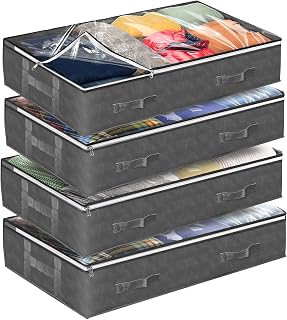
Reli. 90L Under Bed Storage Containers (4 Pack) | Closet
Honestly, Reli. 90L Under Bed Storage Containers (4 Pack) | Closet Organizer wit surprised me — sturdier than it looks in the photos, and over 12 buyers gave it 4.5 stars.
4. Use Picture Labels for Pre-Readers

You can’t expect a four-year-old to clean independently if they can’t read the word “Blocks” on the bin. I tried fancy cursive vinyl labels from Etsy. They looked gorgeous but were useless for my kids. I had to point to every single bin during cleanup, which defeated the purpose. I finally took the advice of organizers who suggest picture labels. It makes independence possible. I bought a Canon IVY Mini Photo Printer at Target for $99.99. It prints small 2 by 3 inch photos from my phone on sticky-backed paper. I spent one Saturday morning taking photos of the toys on my kitchen counter. A wooden train for the train bin, a Barbie for the doll bin. I stuck the photos directly onto the clear containers. Tonia Tomlin uses this method, and I can confirm kids respond to it. The first time I told my son to clean up, he looked at the picture of the Lego brick and matched his toys to the right box. The sticky paper costs about $24.99 for a 50-pack. It’s not cheap, but the time it saves me during evening cleanup justifies the cost. If you don’t want a printer, I saw printed clip art taped to bins at Kroger. You can just print clip art on paper and use clear packing tape. Just know the packing tape leaves a terrible sticky residue if you ever try to peel it off. You might also like: 13 Organization Ideas For The Home Bedroom You Need to See
5. Ditch the Oversized Bins That Turn Into Black Holes

The biggest mistake I made was buying a massive 22-inch deep woven rope basket from Target for $35. I thought I could toss everything inside and the room would look clean in five seconds. Instead, it became a terrifying black hole. The heavy wooden toys sank to the bottom, delicate pieces got crushed, and my kids would dump the entire basket just to find one dinosaur. Organizer Weinstock calls these “dumping pits,” and she’s right. I replaced the giant basket with shallow storage. If you must use a larger bin, divide the interior space. I started using clear reusable produce bags to separate small categories. I bought a 15-pack of Earthwise reusable mesh produce bags at Whole Foods for $14.99. I put all the plastic farm animals in one bag, all the wooden blocks in another, and pull the drawstrings tight. When you drop these bags into a larger bin, the toys stay categorized. The mesh lets you see exactly what’s inside. I tried gallon-sized Ziploc bags first, but the sharp edges of plastic toys poked holes in the thin plastic within a week. The mesh bags are much more durable and wash easily in the sink. You might also like: 15 Home Office Organization Ideas for Every Budget
6. Sort by Specific Category, Not Material

I used to sort toys by material because it looked aesthetically pleasing. I had a bin for wooden toys, a bin for plastic, and a bin for plushies. It made zero sense to my kids. When they wanted to set up a toy farm, they had to dig through the wooden bin for the barn, the plastic bin for the animals, and the plush bin for the farmer. Professional organizers advise sorting by category—how they are actually played with. I spent a Friday night sitting on my rug, dumping every toy out, and sorting them into strict categories. Vehicles in one pile. Action figures in another. Building blocks in a third. I bought a set of six Sterilite 6-quart clear latching boxes from Walmart for $11.88 to hold the smaller categories. When you group toys intentionally, it encourages focused play. My kids grab the Magna-Tiles bin and actually build something, rather than staring at a mixed bin of plastic junk. I noticed Sprouts organizes their bulk bins exactly like this—by use, not visual similarity. The hardest part is dealing with random, one-off toys that don’t fit a category. The cheap spinning top or the random bouncy ball. I created one small bin labeled “Miscellaneous” for these stragglers. Every few months, I go through it and throw out the broken junk.

Delamu 2-Tier Multi-Purpose Bathroom Under Sink Organizers
Delamu 2-Tier Multi-Purpose Bathroom Under Sink Organizers and Storage punches above its price — 73 buyers rated it 4.5 stars. I would buy it again.
7. Install Low Wall-Mounted Shelving for Easy Access

In a small space, floor real estate is valuable. I was wasting blank wall space while constantly tripping over bins. Maximizing vertical space is crucial, but you have to do it at the right height. I installed a beautiful floating shelf from West Elm high up to display wooden toys. It looked great, but my kids couldn’t reach it, so they ignored the toys entirely. I learned my lesson and installed low, open shelves, similar to preschool classrooms. I bought three IKEA LACK wall shelves in white, 43 1/4 inches long, for $24.99 each. I mounted them just 18 inches off the floor. This keeps toys off the carpet but within a toddler’s reach. For craft supplies, I went a step further. I bought a large SKÅDIS pegboard from IKEA for $22.99 and mounted it above a small desk. I added SKÅDIS clear containers ($3.00 each) to hold markers, scissors, and glue. It keeps messy supplies visible but organized. I noticed Trader Joe’s uses a similar pegboard system in their office. It’s a functional way to store things. Just be prepared to dust those open shelves. Toys that sit out gather dust much faster than toys in a bin, and I find myself wiping them down with a Swiffer duster twice a week. You might also like: 13 Sliding Door Closet Organization Ideas You Need to See
8. Switch to Eco-Friendly Toy Storage Solutions

If you’re tired of neon plastic bins cracking and ending up in a landfill, you aren’t alone. Sustainable toy storage is a massive trend, and it looks better in a shared living space. I started phasing out my broken plastic tubs last spring. I replaced them with natural materials like bamboo, reclaimed wood, and organic cotton. I found bamboo toy storage jars from a brand called EKOBO. They cost about $35 for a set of two, which is an investment, but the matte finish and solid bamboo lids are gorgeous. I use EKOBO jars to store tiny items like glass marbles and small wooden dolls. They sit on my coffee table and look like modern decor. For larger items, I stopped buying synthetic fabric cubes and switched to heavy-duty organic cotton canvas bins. I bought a Pehr canvas bin for $40. The thick canvas stands up on its own, unlike the cheap polyester ones that collapse. I also started upcycling. I found an old wooden apple crate at a flea market for $15, sanded it down, and now it holds all our oversized library books. The one negative with natural materials is moisture. I left a damp towel in the bottom of a cotton canvas bin, and it developed a spot of mildew within two days. Ensure everything is completely dry before tossing it in.
9. Use Portable Caddies for Multi-Room Play

Kids rarely keep their toys in the playroom. My kids drag coloring books to the kitchen island while I cook or bring action figures into the bathroom. Trying to force them to stay in one room is a losing battle. Instead, I opted for portable storage. I bought two mDesign plastic divided storage tote caddies from Target for $14.99 each. They have a sturdy handle and four compartments. We use one exclusively as an art caddy. It holds crayons, paper, and stickers. When my daughter wants to color at the kitchen table, she grabs the handle and brings the whole caddy with her. When she’s done, she carries it right back to the shelf. It makes quick cleanups easier because I’m not carrying loose markers back and forth. I use the second caddy for small building blocks. It’s much easier to carry a handled caddy up the stairs than balancing a stack of slippery plastic bins. I tried using a woven basket with handles initially, but the soft sides made it difficult to carry when loaded with heavy items, and the handles tore after a month. Rigid plastic or thick wood caddies are the only way to go if you plan on carrying them daily.

NESOMI Shower Caddy Adhesive Shower Organizer 7-Pack
A dependable everyday pick — NESOMI Shower Caddy Adhesive Shower Organizer 7-Pack pulls in 75 ratings at 4.5 stars. Not flashy, just solid.
10. Ditch the Cardboard Boxes for Zippered Pouches

Board game boxes are the worst thing to organize. They come in twenty different sizes, never stack neatly, and the thin cardboard corners rip after opening them three times. I had a stack of board games in my hall closet that would avalanche onto my head every time I reached for a towel. I threw out almost all the original cardboard boxes and transferred the game boards and pieces into clear zippered pouches. I bought a 14-pack of waterproof mesh zipper pouches from Walmart for $12.99. I use the large A4 size pouches for full-size board games. I slide the folded game board in first, then dump all the cards, dice, and plastic pieces into the pouch. To remember the rules, I cut the cover and the instruction panel off the box and slide them into the pouch facing outward. It saves a ridiculous amount of space. I condensed a massive stack of ten board games into one single fabric bin that slides under the couch. I use the smaller A5 pouches for 48-piece puzzles. I cut the picture off the puzzle box and stick it inside the pouch. The only game I couldn’t do this with was Mouse Trap, because the plastic 3D pieces are too bulky for a flat pouch. For everything else, this method is brilliant. It eliminates the issue of lost pieces falling out of torn box corners.
11. Hide the Mess With Multi-Functional Furniture

If your playroom is also your main living room, you need furniture that works double duty. I couldn’t stand looking at plastic toy bins while trying to relax at 9 PM. Using multi-functional furniture for hidden storage is the best way to maintain your sanity in a small house. I replaced my standard wooden coffee table with a large faux-leather storage ottoman from Costco. It cost $149.99 and has a lift-off lid. The inside is hollow and massive. I use it to store all the large, awkwardly shaped toys that don’t fit in normal bins—like the giant plastic fire truck and the oversized stuffed animals. When guests come over, I sweep the toys off the rug, dump them into the ottoman, and put the lid back on. It takes ten seconds, and the room looks perfect. I also bought a storage bench for the entryway from Target for $130. It has three cubbies underneath where I placed woven baskets for outdoor toys like chalk, bubble wands, and jump ropes. A quick warning about storage ottomans with hinged lids: make sure they have safety hinges that stay open on their own. I bought a cheap wooden toy chest at a garage sale once, and the heavy lid slammed down on my son’s fingers because it didn’t have a soft-close mechanism. I threw it out the next day. Always check the hardware if you’re buying furniture that kids will open themselves.
12. Display Small Collectibles on Wall-Mounted Strips

Tiny collectibles are the bane of my existence. Hot Wheels cars, little plastic rings, and tiny action figures always end up shoved under the couch cushions or rattling in the vacuum cleaner. I realized that instead of trying to bury them in a bin, I should use wall-mounted solutions to display them. This gets them off the floor and turns them into decor. For metal toy cars, I bought two heavy-duty magnetic knife strips from IKEA (the KUNGSFORS stainless steel magnetic strip). They cost $19.99 each. I mounted them low on the wall in my son’s bedroom. The metal cars snap right onto the strip. It holds them securely, and he loves lining them up by color. It looks like a cool art installation, and it keeps the cars from scratching my baseboards. For larger, awkward items like plastic toy swords or lightsabers, I repurposed a wall-mounted broom and mop holder from Walmart. The Command Broom Gripper costs $14.28 for a two-pack. You just press the plastic sword handle into the rubber grip, and it holds it vertically against the wall. I tried using fabric wall pockets from Target ($15) to hold small plastic figurines, but the pockets sagged heavily under the weight of the hard plastic, and it looked messy. Stick to rigid wall mounts for hard toys, and save the fabric pockets for lightweight items like small paperback books or flashcards.
Implementing these toy storage solutions won’t magically make your kids clean up perfectly every single time. They’re still kids, and messes will happen daily. But having a specific, logical place for every item removes the friction from the cleanup process. I don’t dread the end-of-day tidy-up anymore because I’m not trying to shove a square peg into a round hole. If you’re feeling overwhelmed, don’t try to tackle the entire house in one weekend. Start with the zippered pouches for puzzles—it’s cheap, fast, and gives you an immediate visual win. Then move on to setting up a Kallax shelf or a rotation system in the basement. Let’s reclaim your floor space and your sanity. If you found these ideas helpful, pin this article to your home organization board so you can reference the exact product dimensions next time you’re standing in the Target aisle trying to remember which bins actually fit your shelves.

Sakugi Storage Shelves
A dependable everyday pick — Sakugi Storage Shelves – 5-Tier Heavy Duty Garage Shelving Units with pulls in 34 ratings at 4.5 stars. Not flashy, just solid.
Frequently Asked Questions
How do you store toys in a small living room?
Use multi-functional furniture like storage ottomans with lift-off lids to hide bulky items. Vertical shelving units with clear bins keep toys organized and off the floor without sacrificing square footage.
What is a toy rotation system?
A toy rotation system involves dividing your child’s toys into separate bins and only keeping one bin accessible at a time. You swap the bins every three to four weeks to prevent boredom and reduce daily clutter.
How should I store board games and puzzles?
Throw away the bulky cardboard boxes and transfer the pieces into clear, waterproof zippered pouches. Cut the picture from the original box and slide it inside the pouch so you know exactly what’s inside.
Are clear or solid bins better for toy storage solutions?
Clear bins are significantly better for children because they allow for a visual inventory. Kids can see exactly what’s inside without dumping every single container on the floor just to find one specific toy.
