
What’s Inside
- Implement Personalized Locker Systems for Each Family Member
- Optimize Vertical Space with Custom Cabinetry and Shelving
- Install Hooks at Varying Heights for Mudroom Closet Organization
- Integrate a Multi-Functional Bench with Hidden Storage
- Utilize Durable Baskets and Bins for Contained Clutter
- Create Dedicated Shoe Storage to Prevent Floor Piles
- Incorporate Smart Technology with Integrated Charging Stations
- Avoid the Common Mistake of Underestimating Storage Needs
- Embrace a Minimalist Aesthetic with Clean Lines and Neutral Colors
- Convert an Existing Closet into a Functional Mudroom
- Install a Full-Length Mirror on Closet Doors
- Create “Holding Spots” for Transient Items
- Prioritize Durable and Easy-to-Clean Materials
- Don’t Forget About Smart Lighting Solutions
- Leave Some Empty Space for Future Flexibility
- Master Your Mudroom Closet Organization Maintenance Routine
Last Tuesday morning, I tripped over my husband’s size 12 wet work boots, slammed my shoulder into the doorframe, and watched a ripped Trader Joe’s paper bag spill three glass jars of marinara sauce across the tile floor. The sound of shattering glass at 7:15 AM really sets the tone for the day. That was my breaking point. I realized my mudroom closet organization was non-existent. My entryway was just a dumping ground for damp coats, dirty sneakers, and random piles of mail that I’d ignored for weeks. I spent the next three months pulling everything out, measuring walls, and testing different storage systems. Some failed miserably. I bought cheap plastic bins that cracked in the cold, and I installed hooks that immediately ripped out of the drywall because I didn’t use anchors. Learned that the hard way. Other systems actually stuck and fixed the chaos. If you’re tired of screaming about lost shin guards five minutes before soccer practice, I’m sharing the exact strategies that fixed my space. I’m skipping the unrealistic magazine photos and focusing on exact measurements, specific products that hold up to wet dog leashes, and the structural mistakes you need to avoid.
1. Implement Personalized Locker Systems for Each Family Member

Assigning a dedicated locker or cubby to each person stops the daily argument about who left their jacket on the floor. I tried a communal coat rack for years, and it always ended up as a massive, tangled mountain of fleece and nylon. Expert organizers consistently emphasize that personalized spaces are the only way to maintain long-term organization. Aim for a width of 18 to 24 inches per person. Anything narrower than 18 inches means puffy winter coats will spill over into the next person’s space. I looked at custom options from brands like Goldenhome and Dura Supreme, which offer fantastic custom mudroom locker programs. A standard Goldenhome unit runs about $450 per section depending on the finish. I went with a 20-inch width for our house. It comfortably fits a bulky Costco winter coat, a standard school backpack, and a gym bag without feeling crammed. I added a small brass label holder from Home Depot for $3.98 above each section. When my kids know exactly which 20-inch space belongs to them, they actually put their stuff away. It removes the decision fatigue from their afternoon routine.
2. Optimize Vertical Space with Custom Cabinetry and Shelving

Most people waste the top three feet of their mudroom. If you have eight or nine-foot ceilings, leaving that space empty is a massive mistake. I originally put a single shelf above our coat hooks, leaving a huge void of empty drywall above it. It looked terrible. I eventually upgraded to custom cabinetry that extends all the way to the ceiling. Brands like Bertch offer solid wood cabinets that you can stack vertically. A basic 36-inch wide upper cabinet from them costs around $320. I use these high cabinets for off-season storage. In July, the heavy snow boots and thick wool scarves go up top. In December, the pool towels and bug spray take their place. If custom cabinets aren’t in your budget, floating shelves are an excellent alternative. I bought three heavy-duty floating pine shelves from a local lumber yard for $85 total. I mounted them 14 inches apart all the way to the ceiling. I keep my canvas Sprouts farmers market bags on the very top shelf. I only need them once a week, so keeping them out of the daily drop zone clears up space for things I actually use every day.
3. Install Hooks at Varying Heights for Mudroom Closet Organization

This is the most common structural mistake I see. If you install a single row of hooks at adult height, your kids will drop their coats on the floor because they simply can’t reach them. I made this exact error. I installed a beautiful row of matte black hooks at 65 inches off the floor. My four-year-old couldn’t reach them, so his muddy jacket lived on the bench. You need two distinct rows. Adult hooks should be placed between 60 and 66 inches from the floor. A lower row for children needs to sit at 36 to 48 inches. I bought the Target Threshold heavy-duty double hooks for $12.99 per two-pack. They’re solid metal and don’t bend under the weight of a wet canvas jacket. Plan for at least two hooks per person. You need one for outerwear and another for a backpack or purse. Space the hooks exactly 6 to 9 inches apart. I initially spaced mine 4 inches apart, and the coats overlapped so much that they wouldn’t dry properly. They just smelled like damp dog for days. Trust me on this.
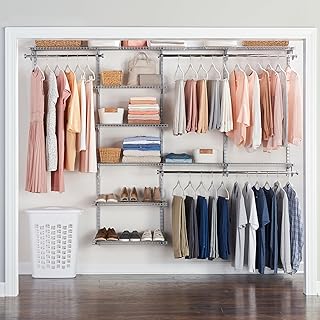
Rubbermaid Configurations Deluxe Custom Closet Kit 4-8 Ft.
Honestly, Rubbermaid Configurations Deluxe Custom Closet Kit 4-8 Ft. Adjustable surprised me — sturdier than it looks in the photos, and over 81 buyers gave it 4.5 stars.
4. Integrate a Multi-Functional Bench with Hidden Storage

A sturdy bench is non-negotiable for putting on stiff boots, but an open bench is a wasted opportunity. You need a bench with integrated hidden storage. I originally bought a cheap wire shoe rack bench from Amazon. It looked cluttered immediately, and dirt from the shoes on top would fall into the shoes on the bottom. I ripped it out and replaced it with a solid wood bench featuring a lift-up lid. A comfortable bench height is strictly 17 to 19 inches. Any higher, and your feet dangle. Any lower, and it’s hard to stand up. For depth, you want 14 to 17 inches for tight spaces, or up to 18 inches for comfortable seating. I built mine using 3/4-inch plywood, which cost about $65 at Lowe’s. If you don’t want to build one, the IKEA Smastad bench is $119 and offers a massive pull-out drawer. I use the hidden compartment in my bench to store bulky sports equipment. It currently holds two basketballs, a pair of rollerblades, and a pile of shin guards. Make sure you install soft-close hinges on the lid. I skipped this step initially and my son slammed his fingers in the heavy wooden lid last October. Soft-close hinges cost $14 at Home Depot and save you a trip to urgent care.
5. Utilize Durable Baskets and Bins for Contained Clutter

Open shelving without baskets is just a display case for your mess. You need containers to group smaller items like winter gloves, dog waste bags, and sunscreen. I spent months testing different materials. Woven water hyacinth baskets look incredible in photos, but they’re terrible for mudrooms. They shed sharp little brown flakes every time you pull them off the shelf, and if you put a damp mitten inside, the basket absorbs the moisture and smells like mildew. I switched strictly to plastic or wire. Brands like Mainstays at Walmart offer affordable plastic storage baskets starting around $2.88. I use these for the really dirty items, like garden trowels and wet dog toys, because I can rinse them in the sink. For the upper shelves, I bought the Target Brightroom y-weave plastic bins for $8.00 each. They have the visual texture of a woven basket but the durability of plastic. I bought six in the dark gray color so they don’t show dirty fingerprints. You must measure your cubbies before buying bins. The bin should leave about one inch of clearance at the top so you can easily pull it out without scraping the shelf above it.
6. Create Dedicated Shoe Storage to Prevent Floor Piles

The floor of your mudroom should be completely clear. If shoes are resting directly on the floor, you can’t sweep or mop easily, and dirt just accumulates in the corners. Dedicated shoe storage requires precise measurements. You need to plan for 12 to 16 inches of horizontal space per person just for their daily shoes. I tried a slanted wooden shoe rack first, but my husband’s heavy work boots just slid right off the back. I eventually switched to a grid of open cubbies under the bench. The openings must be at least 12 inches high to accommodate high-top sneakers and ankle boots. For nicer shoes that I don’t wear daily, I use The Container Store’s drop-front shoe boxes. They cost $11.99 each and stack perfectly. The clear front lets me see exactly what’s inside, but the plastic enclosure keeps the dust off. I keep six of these stacked in the corner of the closet for my running shoes and nicer flats. It keeps the rubber soles off my clean floor and forces everyone to put their shoes in a specific slot rather than kicking them into a chaotic pile by the door. You might also like: 15 Inspiring Cozy Home Hacks That Changed Everything

SNSLXH 5 Pack Stackable Closet Storage Basket
SNSLXH 5 Pack Stackable Closet Storage Basket punches above its price — 4 buyers rated it 4.5 stars. I would buy it again.
7. Incorporate Smart Technology with Integrated Charging Stations

This is a detail most people skip, but it completely changed our morning routine. I got tired of finding iPads dying on the kitchen counter and tangled white charging cords draped over the toaster. Designer Carla Bast suggests adding a charging station directly inside the mudroom lockers. I drilled a two-inch hole in the back of one of our mudroom cubbies and ran a power strip through it. I bought an Anker 6-port USB charging station on Amazon for $35.99 and mounted it to the inside wall of the cubby using heavy-duty double-sided tape. Now, when the kids walk in from school, they plug their tablets and headphones in right next to their backpacks. I also keep a portable power bank plugged in there. When we leave for a long road trip, I just grab the fully charged power bank on my way out the door. It keeps the electronic clutter out of the kitchen and ensures devices are actually charged when we need them. Just make sure you use short, 12-inch charging cables. I originally used 3-foot cables, and they got slammed in the locker doors constantly. You might also like: 15 Home Office Organization Ideas for Every Budget
8. Avoid the Common Mistake of Underestimating Storage Needs

The fastest way to fail at organizing is buying containers before you declutter. I made this mistake three years ago. I went to Target, spent $150 on matching acrylic bins, brought them home, and realized they were completely the wrong size for our winter gear. Professional organizers advise a ruthless decluttering process first. You need to pull every single item out of the closet and touch it. Ask yourself the standard rule: “Have I used this in the last 6 to 12 months?” I found three single gloves, a dried-out bottle of sunscreen from 2021, and a broken umbrella. Throw the trash away. Then, categorize what is left. You have to consider all the weird items that pass through a mudroom. It’s not just coats. It’s the 15-pound bag of dog food, the tennis rackets, the library books, and the spare car keys. I realized I needed a specific, tall vertical space for my Swiffer and broom, which I hadn’t accounted for in my original sketch. I had to cut a hole in my brand new shelving unit to make the broom fit. Measure the exact height of your tallest item before you finalize any shelving heights. You might also like: 15 Stunning Home Storage Ideas to Transform Your Space
9. Embrace a Minimalist Aesthetic with Clean Lines and Neutral Colors

A mudroom is inherently chaotic. It holds bright red backpacks, neon soccer cleats, and muddy boots. If you paint the walls a loud, busy color or use heavily patterned wallpaper, the space will immediately feel overwhelming. I learned this when I painted our mudroom a bright mustard yellow. I thought it would look cheerful. Instead, combined with the clutter of daily life, it looked like a messy preschool classroom. I repainted the entire space using Behr’s ‘Swiss Coffee’ in a satin finish. The satin finish is crucial because it wipes clean easily when dirty hands touch the walls. A gallon costs about $34 at Home Depot. The minimalist approach focuses on strict spatial hierarchy. Vertical grids and custom casework should extend cleanly to the ceiling, and benches should conceal the massive storage beneath straight, horizontal lines. If you want a pop of color, paint the interior back wall of the cubbies a dark, moody color like navy or forest green. It hides scuff marks from shoes and bags, but keeps the overall aesthetic clean and grounded. The neutral exterior framing acts as a visual resting place for your eyes.

Expandable Industrial Pipe Clothing Rack
A dependable everyday pick — Expandable Industrial Pipe Clothing Rack pulls in 16 ratings at 4.5 stars. Not flashy, just solid.
10. Convert an Existing Closet into a Functional Mudroom

If your house doesn’t have a dedicated mudroom, you can easily convert a standard hallway coat closet into a highly functional drop zone. I did this in our previous 1950s ranch home. Standard coat closets are basically black holes. Things go in and get lost in the dark corners. The first step is removing the doors entirely. Taking off the heavy bifold doors immediately opened up the hallway and gave me an extra four inches of usable depth. I patched the hinge holes with spackle and painted the trim. I bought a piece of edge-glued pine from Lowe’s for $45, stained it a dark walnut, and installed it as a floating bench across the width of the closet using heavy-duty shelf brackets. Below the bench, I slid in three wire baskets for shoes. Above the bench, I installed a piece of shiplap and mounted four heavy hooks for coats. The entire DIY project cost under $200 and took one weekend. It completely transformed how we entered the house. We stopped dumping our keys on the dining room table because we finally had a dedicated, accessible zone right by the front door.
11. Install a Full-Length Mirror on Closet Doors

Mudrooms are usually cramped spaces with terrible natural light. A surprising yet highly effective structural tip is to install a full-length mirror on the front of your mudroom closet doors, or on the wall immediately adjacent to the cubbies. I bought a frameless Target Room Essentials mirror for $17 and mounted it directly to the wall next to our coats using heavy-duty mirror clips. It serves two distinct purposes. First, it allows for a quick appearance check before leaving the house. I can’t count the number of times I’ve caught baby spit-up on my shoulder or dog hair on my black pants just by glancing in that mirror on my way out the door. Second, and more importantly for the space, it reflects whatever light is available. It bounces the overhead light around the narrow hallway, making the entire mudroom feel significantly larger and brighter. Don’t use command strips for this. I tried command strips first, and the mirror crashed to the floor three days later when the temperature dropped. Spend the extra $4 on actual metal mirror mounting hardware and screw it directly into the door or wall studs.
12. Create “Holding Spots” for Transient Items

The biggest source of clutter in a mudroom isn’t the coats or shoes. It’s the transient items. These are things that are temporarily in the mudroom but don’t actually belong there permanently. I used to leave Amazon returns sitting on the bench, which meant nobody could sit down to put their shoes on. I solved this by designing specific “holding spots.” I hung a heavy canvas Whole Foods tote bag ($4.99 at the checkout aisle) on a dedicated hook at the end of the lockers. This bag is strictly for library books that need to be returned. When it’s full, I grab it on my way to the car. I also designated one specific wire bin on the top shelf for store returns. If I buy a sweater at Target that doesn’t fit, it goes directly into that wire bin with the receipt. It doesn’t sit on the kitchen counter, and it doesn’t get shoved into the back of my car to be forgotten. Having a strict, physical boundary for these temporary items prevents them from migrating throughout the house. When the bin is full, it forces me to run the errands.

Ulif E10 Clothes Rack(With Stretchable Hanger
Ulif E10 Clothes Rack(With Stretchable Hanger Rod)Freestanding Clothin has been one of the most consistently praised picks in this category. 958 reviewers averaged 4.5/5.
13. Prioritize Durable and Easy-to-Clean Materials

A mudroom is a high-traffic utility zone. If you choose materials based purely on aesthetics, you will ruin them in a month. I learned this the hard way when I put a beautiful, vintage wool runner in our entryway. Within three weeks, it was destroyed by muddy paw prints and rock salt from the driveway. I spent $40 on dry cleaning and then rolled it up and put it in the bedroom. I replaced it with a Ruggable washable runner for $129. When the dog tracks mud on it, I peel it off the pad and throw it in the washing machine. It comes out looking brand new. The same rule applies to your cabinetry and bench. Do not use flat paint. Flat paint absorbs grease and dirt like a sponge. Use satin or semi-gloss finishes exclusively. For the bench top, I applied three coats of Minwax polyurethane ($16.48 at hardware stores). It creates a hard plastic-like shell over the wood. When someone sets a wet umbrella on the bench, the water just beads up instead of soaking into the wood grain. I can wipe the whole bench down with a Clorox wipe without damaging the finish.
14. Don’t Forget About Smart Lighting Solutions

Good lighting is completely overlooked. Most closets have a single, weak incandescent bulb on the ceiling that casts terrible shadows, making it impossible to find a black glove inside a dark bin at 6:00 AM. I fixed this by installing integrated LED strip lighting. You don’t need to hire an electrician for this. I bought a GE motion-activated LED light strip on Amazon for $24.99. It comes with an adhesive backing. I stuck it directly under the bottom edge of the upper cabinets, pointing down toward the coat hooks and bench. It runs on a rechargeable battery pack. Now, when I walk into the dark mudroom before the sun comes up, the motion sensor detects me and floods the cubbies with bright, clear light. It completely eliminates the frustration of digging around in the dark. I also stuck a small, battery-operated puck light ($12 for a 3-pack at Costco) to the ceiling of the dark shoe cubby at the very bottom. It makes matching pairs of black shoes incredibly easy. Proper lighting makes a small, cramped space feel intentional and highly functional.
15. Leave Some Empty Space for Future Flexibility

This is a lesser-known tip from organizing experts, and it goes against our natural instinct to fill every square inch of available storage. You must intentionally leave some shelves or cubbies completely empty. When I first built our mudroom, I bought a bin for every single cubby and assigned a specific category to each one. It looked perfect on day one. But six months later, my son started playing baseball, and suddenly we had a massive gear bag that didn’t fit in any of the assigned bins. I had to reorganize the entire closet to make it fit. Now, I keep one 12×12 inch cubby completely empty. It provides breathing room for the mudroom to adapt as our family’s needs change over the year. Sometimes it holds a guest’s purse during a dinner party. Sometimes it holds a wet umbrella that needs to dry out before being put away. Sometimes it sits empty for weeks. Leaving 10 to 15 percent of your storage space empty prevents the need for constant, stressful reorganization. It gives your system the flexibility to handle the unexpected items that inevitably walk through your front door.

Yociyoga 4-Tier Stackable Closet Organizers and Storage
A dependable everyday pick — Yociyoga 4-Tier Stackable Closet Organizers and Storage Basket pulls in 427 ratings at 4.5 stars. Not flashy, just solid.
16. Master Your Mudroom Closet Organization Maintenance Routine

No storage system is entirely self-sustaining. Even with the perfect custom cabinets and the exact right bins, a mudroom will revert to chaos if you don’t maintain it. I tried organizing the space once a year during spring cleaning, but the mess would build up so badly by February that I dreaded walking through the door. I implemented a strict 10-minute weekly reset every Sunday evening. I take a Clorox wipe ($5.49 for a 3-pack at Kroger) and quickly wipe down the bench and the plastic bins to remove the week’s accumulated dust and dirt. I check the holding spots and move any forgotten returns to my car trunk. I pull out shoes that haven’t been worn in a week and carry them back to our bedroom closets. I also shake out the Ruggable runner outside. This 10-minute routine prevents the clutter from compounding. It’s the difference between a minor tidy-up and a massive, exhausting weekend project. Your mudroom closet organization is a living system. It requires a little bit of weekly attention to keep serving you, but when it works, it completely changes the stress levels in your house on a busy weekday morning. Took me years to figure out.
Getting your mudroom functional isn’t about buying the most expensive custom cabinets. It’s about measuring carefully, choosing materials that can handle wet boots, and giving every single item a specific, logical home. I wasted a lot of time and money on cheap fixes before I finally understood the math behind spacing hooks and shelves correctly. Start by emptying the space completely this weekend, measure your tallest boots, and build a system that actually fits your real life. If you found these exact measurements and product details helpful, make sure to pin this article to your home organization board so you can reference the dimensions when you’re standing in the aisle at Home Depot.
