What’s Inside
- 1. Ditch Plastic Bins for Bamboo Drawer Organizers
- 2. Use Magnetic Caddies on Fridge Doors
- 3. Declutter Food Storage to 1:1 Lid-Container Matches
- 4. Use Under-Bed Bins with Wheels
- 5. Limit Water Bottles to One Per Person Plus One Backup
- 6. Add Heavy-Duty Hooks for Drop Zones
- 7. Opt for Water Hyacinth Baskets Over Plastic
- 8. Build Vertical Custom Closets
- 9. Create Toss Bins Without Lids
- 10. Purge to Three Vases Maximum
- 11. Use Skincare Fridges for Bathroom Routines
- 12. Recycle Dead Batteries Quarterly
- 13. Limit Throw Blankets to One Per Seat Plus Guest Extra
- 14. Toss Unmatched Socks Immediately
- 15. Zone Declutter Weekly Using KonMari Method
I’ll never forget the day I opened my junk drawer and found expired batteries, a broken charger, and a hotel key card from 2019. That’s when I realized I didn’t need more space—I needed smarter storage solutions. After organizing countless homes (and my own chaos), I’ve learned that the best storage isn’t about buying more bins. It’s about putting the right solution where the mess happens.
Forget old-school storage ideas. I’m talking about magnetic spice racks, bamboo drawer dividers, and the cold, hard truth about how many water bottles you actually need (spoiler: fewer than you think). Let me show you the storage hacks that saved my sanity and transformed my clients’ homes.
1. Ditch Plastic Bins for Bamboo Drawer Organizers

Two years ago, I swapped plastic drawer dividers for bamboo ones, and I’m never going back. The Yamazaki Tower Bamboo Expandable Drawer Organizer ($25-35) fits drawers from 15 to 21 inches wide. It feels pricey at first, but it lasts way longer than flimsy plastic bins. Organizer Di Ter Avest pointed out something I’ve noticed: bamboo doesn’t snag delicate fabrics like plastic edges do.
I use these in my dresser for socks and underwear, and the smooth surface makes mornings so much easier. Pro tip: measure your drawer depth first. Most bamboo organizers are about 2 inches tall, so they won’t work in shallow drawers under 3 inches deep.
Common mistake? People buy organizers without emptying the drawer first. You need to declutter before you organize. I learned this the hard way when I organized a client’s kitchen drawer and found expired coupons from 2017 buried under the silverware divider.
2. Use Magnetic Caddies on Fridge Doors

The mDesign Metal Magnetic Spice Rack ($15-20) holds 12 jars and freed up an entire cabinet shelf in my kitchen. Expert Nicholas predicts magnetic storage will be big in 2026 because it maximizes unused space without cluttering counters. I stuck two of these on the side of my fridge (the part facing my pantry), and now my most-used spices are right where I need them.
What I love: you’re using dead space that was doing nothing. The side of your fridge is prime real estate. I’ve also used magnetic hooks for measuring spoons and a magnetic knife strip for kitchen shears. The whole setup cost me under $50 and cleared two drawers.
Pro tip: test your fridge first. Some stainless steel finishes aren’t magnetic. I learned this at a client’s house when $60 worth of magnetic organizers wouldn’t stick. Also, don’t overload these with heavy items. They’re great for spices and lightweight tools, but not cast iron skillets.
3. Declutter Food Storage to 1:1 Lid-Container Matches

Here’s the truth: you have too many food storage containers. Way too many. The “Tupperware avalanche” is real—you open the cabinet, and fifteen mismatched lids tumble out. The solution? Toss every orphaned lid and container immediately. Keep only complete sets like the Pyrex 10-piece glass set ($30-40).
I did this last year and got rid of 23 containers. Twenty-three! I kept one set of glass containers in three sizes (small for leftovers, medium for meal prep, large for batch cooking), and suddenly my cabinet closed without a fight. The 1:1 rule is simple: one lid per container, no exceptions. If you can’t find the match in 30 seconds, it’s gone.
Mismatched food storage is costing you money. You’re either buying takeout because you can’t find a container or buying new containers because you think you don’t have enough. Glass containers are worth the investment. I’ve had my Pyrex set for three years with zero cracks.

Lifewit 6 Pack Clothes Storage Bins with Lids
Lifewit 6 Pack Clothes Storage Bins with Lids has been one of the most consistently praised picks in this category. 1,072 reviewers averaged 4.5/5.
4. Use Under-Bed Bins with Wheels

The Container Store’s Clear Weathertight Underbed Box ($20-30) is 41 quarts and measures 32x18x6 inches. I use four of these under my guest bed for seasonal clothes, and the wheels make it easy to pull them out. Di Ter Avest recommends discreet storage for bedrooms to maintain restful vibes, and she’s right—visible clutter messes with your sleep quality.
The clear plastic lets you see what’s inside without opening it. I label mine with a label maker (“Summer Dresses,” “Winter Sweaters”) on the short end so I can read them when stacked. The weathertight seal also protects against dust and humidity spikes.
Common mistake: people buy under-bed storage without measuring their bed clearance. Most beds have 6-8 inches of clearance, but platform beds might have less. Measure twice, buy once. Also, wheels are non-negotiable. I tried fabric under-bed bags without wheels once, and pulling them out on carpet was like dragging a dead body. Not worth it.
5. Limit Water Bottles to One Per Person Plus One Backup

Here’s the hard truth: you don’t need twelve water bottles. The rule is one per person plus one backup, period. I keep two Hydro Flask 32-oz bottles ($35-45 each), and that’s it. Pros warn against hoarding multiples because moldy or discolored bottles breed bacteria. When was the last time you deep-cleaned that promotional water bottle from the 2018 company picnic?
I check my water bottles quarterly. If they’re stained, smell weird, or the seal is cracked, they’re gone. Most people keep water bottles “just in case” but never use them because they’re crusty. Two bottles mean I wash one while using the other. Simple.
Pro tip: stick to one brand and size so the lids are interchangeable. I chose Hydro Flask because the wide mouth is easy to clean and fits ice cubes. Also, the 32-oz size fits in my car cup holder and gym bag. If a bottle doesn’t fit your routine, you won’t use it—and then it becomes clutter.
6. Add Heavy-Duty Hooks for Drop Zones

Command Jumbo Hooks ($8 for a pack of four) hold 7.5 pounds each and saved my entryway from coat explosions. Expert advice: install hooks where you naturally drop things, not where you think you should. I tried for years to hang my coat in the hall closet like a civilized person, but I always dumped it on the dining chair. So I put hooks by the dining room entrance, and suddenly I’m hanging up my coat.
This works for purses, dog leashes, reusable shopping bags, kids’ backpacks—anything you carry in and immediately want to put down. Common mistake: using open shelves for this stuff. Open shelves just collect dust and become junk magnets. Hooks force you to hang one thing per hook, which naturally limits accumulation.
Pro tip: space hooks 6-8 inches apart so bags and coats don’t overlap. Test Command hooks with something lightweight first—some textured walls don’t hold the adhesive well. For those situations, I use screw-in hooks rated for 10+ pounds.

Durmmur 2 Pack Hat Racks for Baseball Caps
Durmmur 2 Pack Hat Racks for Baseball Caps has been one of the most consistently praised picks in this category. 109 reviewers averaged 4.5/5.
7. Opt for Water Hyacinth Baskets Over Plastic

Anthropologie’s Seagrass Woven Bin ($40-60) measures 16x12x10 inches and makes my living room look magazine-worthy. Kelly Tait of Bee Organized says sustainable materials like water hyacinth reduce environmental impact while styling open shelving. I use them on my bookshelf for throw blankets, remotes, and random living room stuff.
Natural material baskets last longer than plastic bins that crack and fade. I’ve had mine for four years, and they still look new. The woven texture hides the mess inside while still looking intentional, unlike clear plastic bins that showcase chaos.
Common mistake: people buy beautiful baskets and never use them because they’re afraid of ruining them. These are meant to be used! Just keep them away from direct water—I learned this when one got moldy in my bathroom. Stick to dry storage areas.
8. Build Vertical Custom Closets

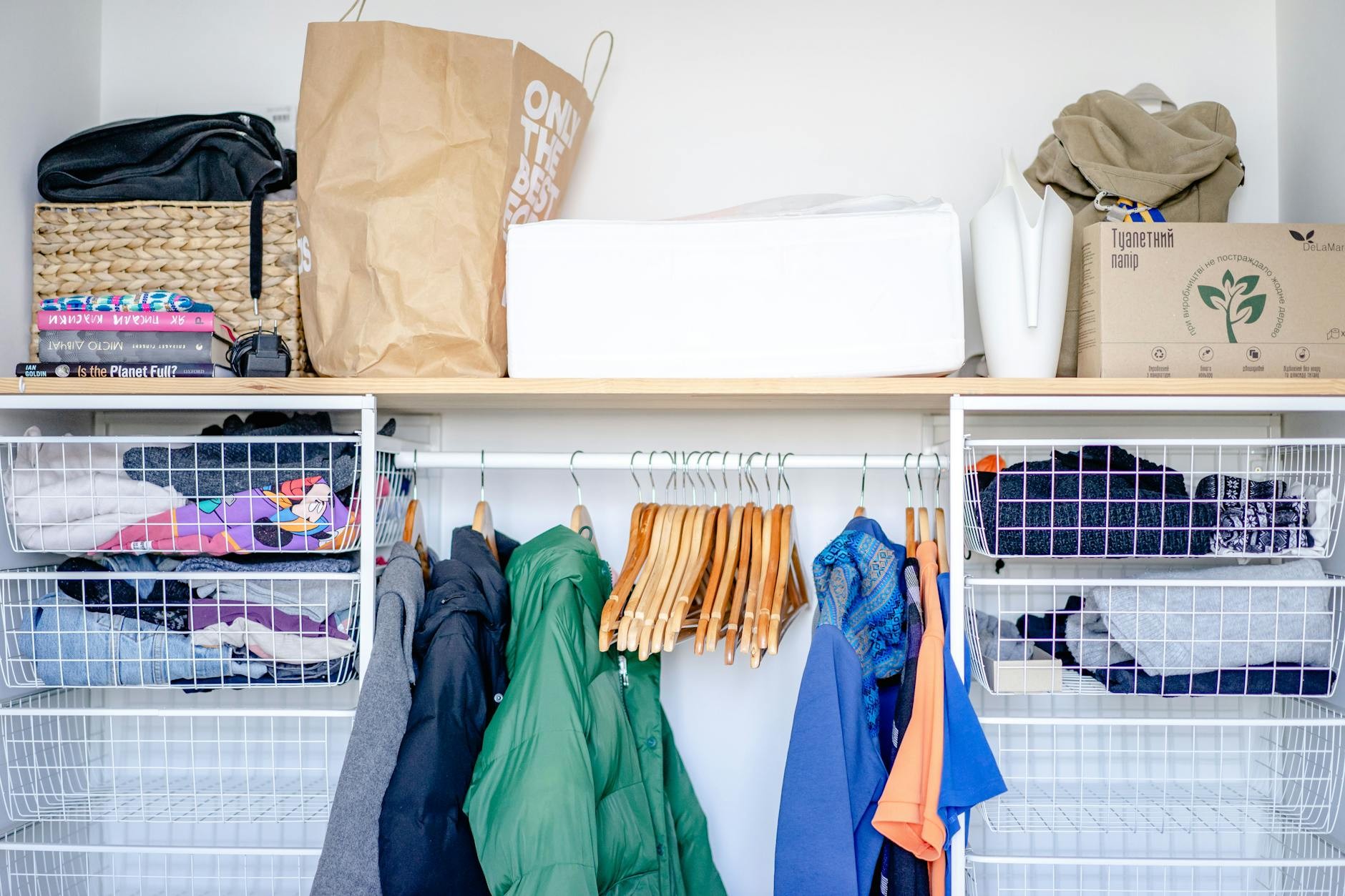
The Container Store’s Elfa system ($500-800 installed) saved my 1925 house with zero closet space. Blogger Shu recommends using 2-2.5 feet of depth for suitcases and off-season linens. I built floor-to-ceiling shelving that holds my entire wardrobe and freed up garage space.
Vertical storage is the secret weapon for old homes or apartments with terrible layouts. The Elfa system is modular, so I customized it with double hang rods, deep shelves, and pull-out drawers. It looks built-in but I can take it with me when I move.
Pro tip: install your tallest shelves first and work your way down. Use the top shelves for truly off-season items—not things you might need next week. I keep my Christmas decorations and winter coats up there from April to October.
9. Create Toss Bins Without Lids

Dollar store large baskets ($1-3 each) are labeled “Daily Skincare,” “Makeup,” “Hair Tools,” “First Aid,” “Extras,” and “Travel Sizes” in my bathroom cabinet. Clutterbug warns that lidded bins fail for quick users—people who don’t have time to unscrew a lid every morning. I need to grab my moisturizer in three seconds or I’ll skip it entirely.
The no-lid rule changed my life. I used to have stackable bins with lids, and they became junk drawers because I’d toss things on top instead of opening them. Now everything has a designated basket, and I can see what’s inside at a glance.
Common mistake: making categories too specific. I tried separate baskets for day cream and night cream, and it was ridiculous. Keep categories broad enough that you don’t need 47 containers. Also, these baskets aren’t meant for heavy items. I broke one by stuffing it with full-size shampoo bottles.

HuggieGems Metal 4 Pack Magnetic Spice Storage Rack
Honestly, HuggieGems Metal 4 Pack Magnetic Spice Storage Rack Organizer for Refr surprised me — sturdier than it looks in the photos, and over 145 buyers gave it 4.5 stars.
10. Purge to Three Vases Maximum

Unless you’re hosting multiple bouquets weekly, you don’t need more than three vases. I kept three IKEA FADO clear glass vases ($5 each) in small, medium, and large sizes. That covers grocery store bouquets, garden flowers, and fancy arrangements.
I used to have eleven vases. Eleven! And I bought flowers maybe twice a year. The rest of the time, those vases took up cabinet space and collected dust. When I decluttered, I realized I’d been holding onto vases from my college dorm, weddings, and events. None of them sparked joy—they sparked guilt.
Pro tip: if you don’t buy flowers regularly, you definitely don’t need more than three vases. The IKEA FADO vases are perfect because they’re cheap enough that I don’t stress about breaking them but nice enough to look good on my table.
11. Use Skincare Fridges for Bathroom Routines

The Cooluli Mini Fridge ($50-70) holds nine products and keeps my skincare fresh. I bought one last year after my expensive eye cream went rancid in my hot bathroom. Ingredients like vitamin C and retinol degrade in heat and light, so keeping them cool extends their shelf life.
I keep my skincare fridge on my bathroom counter, and it’s become my favorite part of my morning routine. Cold jade roller? Amazing. Chilled under-eye patches? Life-changing. It also forces me to keep only the products I actually use because space is limited.
Pro tip: don’t store makeup in here unless you want it to separate weirdly. Stick to skincare, face mists, and tools. Clean it monthly—skincare products can leak, and you don’t want a sticky mess. Mine has a removable shelf that I wipe down with rubbing alcohol.
12. Recycle Dead Batteries Quarterly

I keep a dedicated Rubbermaid 6-quart bin ($5) in my garage labeled “Dead Batteries” and recycle them quarterly at my local hardware store. I used to toss dead batteries in my junk drawer “temporarily” and then forget about them for years. Not safe, not smart.
The quarterly schedule works because it’s often enough that the bin doesn’t overflow but not so frequent that it feels like a chore. Plus, batteries contain toxic materials that shouldn’t go in regular trash, so recycling them is the responsible move.
Common mistake: mixing dead and live batteries in the same drawer. I did this for years and ended up testing every battery with a battery tester (which I then lost). Now dead batteries go straight into the recycling bin, and live batteries stay in their original packaging.
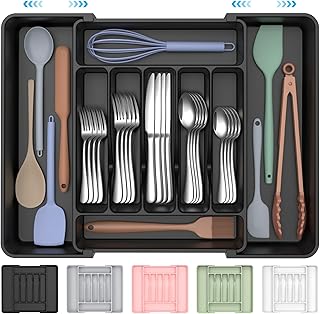
ukeetap Extra Large Expandable Silverware Organizer
ukeetap Extra Large Expandable Silverware Organizer punches above its price — 46 buyers rated it 4.5 stars. I would buy it again.
13. Limit Throw Blankets to One Per Seat Plus Guest Extra

I keep three Pendleton Eco-Wise Wool Throws ($100-150 each) in my living room: one on each couch seat and one in the guest bedroom. That’s it. The declutter rule is one per seat plus a guest extra. I used to have seven blankets strewn around my living room, and it looked messy.
The “homeless” multiple blankets phenomenon is real. You buy one for the couch, one for movie nights, one because it was on sale, and suddenly you’re running a blanket orphanage. I decluttered to my three favorites and donated the rest.
Pro tip: invest in quality over quantity. Pendleton blankets are warm, beautiful, and last forever. Keep your guest extra in a closet—not draped on furniture. It’s there when you need it but doesn’t add to visual clutter.
14. Toss Unmatched Socks Immediately

I switched to uniform Bombas Ankle Socks (6-pack for $45) three years ago, and it cut my laundry matching time by 80%. The pro tip is simple: identical socks eliminate the “eaten sock” pile. I used to have a drawer full of single socks waiting for their partners to return from the dryer dimension. Spoiler: they never came back.
Now I buy the same brand, same style, same color. Every sock matches every other sock. I have black Bombas for work, gray Bombas for exercise, and white Bombas for casual. When one gets a hole, I toss it, and the remaining sock still matches the other 47 socks in my drawer.
Common mistake: people keep buying new socks without purging old ones. Your sock drawer shouldn’t require archaeological excavation. Bombas are pricey but they last. Cheap socks get holes in six months and then you’re back to the mismatched pile.
15. Zone Declutter Weekly Using KonMari Method

Shu Box advises tackling one small zone weekly—like a single 2×2-foot shelf—instead of trying to organize an entire room at once. I use the KonMari method for items I’m unsure about: I box them with a 30-day “maybe” date written on the box. If I haven’t opened it in 30 days, it gets donated.
I started doing this in my kitchen pantry, one shelf at a time. Week one was the top shelf (expired spices and mystery cans from 2016). Week two was the middle shelf (baking supplies I never use). By week four, my entire pantry was organized, and I didn’t have a single breakdown.
Pro tip: set a timer for 15 minutes and stop when it goes off. The “maybe” box is genius for indecisive people like me. I’m not committing to getting rid of something forever—I’m just testing whether I actually need it. Turns out, I never need it.
Organizing your home isn’t a one-and-done thing. It’s a constant practice. But these 15 storage solutions have made my daily life so much easier that I actually enjoy maintaining them. Start with one idea—maybe it’s the magnetic spice rack or the sock purge—and see how it feels. You don’t have to overhaul your entire house this weekend.
The biggest lesson I’ve learned is that storage solutions need to match your actual behavior, not your aspirational behavior. I’m never going to be the person who folds fitted sheets into perfect squares, so I stopped trying. I shove them in a basket and move on with my life. Find what works for you, ditch what doesn’t, and save this article for when you need a reminder that your home doesn’t need to be perfect—it just needs to function.

EUDELE Adhesive Shower Caddy
EUDELE Adhesive Shower Caddy has been one of the most consistently praised picks in this category. 461 reviewers averaged 4.5/5.
Frequently Asked Questions
What are the best affordable home storage ideas for small spaces?
Magnetic caddies on fridge doors ($15-20), Command hooks for drop zones ($8 for 4-pack), and dollar store bins without lids ($1-3 each) maximize vertical space without expensive renovations. Focus on using overlooked surfaces like appliance sides and wall space instead of buying more furniture.
How do I organize my home without buying a lot of storage containers?
Start by decluttering first—purge to one water bottle per person, match food storage lids 1:1, and limit throw blankets to one per seat. You’ll need 50% fewer containers once you eliminate excess items. Then use what you have: repurpose shoeboxes, use hooks instead of shelves, and maximize under-bed space.
What storage materials are trending for 2026?
Natural, sustainable materials like bamboo drawer organizers ($25-35) and water hyacinth baskets ($40-60) are replacing plastic bins. Experts predict magnetic storage on appliances and temperature-controlled organizers like skincare fridges ($50-70) will dominate for functionality and eco-friendliness.
How often should I declutter my home storage areas?
Zone declutter one small area weekly (like a single shelf) using the KonMari method with 30-day “maybe” boxes. Check water bottles and batteries quarterly for purging. This prevents overwhelm and maintains organization better than annual whole-house cleanouts that leave you exhausted and surrounded by piles.