
What’s Inside
- Prioritize the Purge Before You Buy Anything
- Invest in Adjustable Small Kids Closet Organization Systems
- Lower the Primary Hanging Rods to 30 Inches
- Divide and Conquer with 4-Inch Drawer Dividers
- Embrace Opaque Bins with Clear Repositionable Labels
- Maximize Vertical Space with Over-The-Door Shoe Organizers
- Choose Plastic Over Velvet for Everyday Kids Hangers
- Create Seasonal Swaps with 66-Quart Lidded Bins
- Build a Drop Zone Bin System for Bottoms
- Install $5 Tension Rods for Accessories
- Designate Zones with Color-Coded Hangers
- Mount a Hamper Inside the Closet Door
- Utilize the Back of the Door for Backpack Hooks
- Involve Your Kid in the Labeling Process
- Establish a 5-Minute Weekly Maintenance Routine
- Master Small Kids Closet Organization with Vacuum Bags
Last Tuesday morning I found myself sitting on the floor of my six-year-old’s room, staring at a mountain of wrinkled khakis and mismatched socks. I realized my approach to small kids closet organization was completely broken. The wire shelf was sagging under the weight of winter coats we hadn’t worn since 2023. A plastic tub of outgrown 4T shirts smelled faintly of stale plastic and old laundry detergent. I’ve spent years organizing pantries and home offices, but kids’ spaces are an entirely different beast because the inventory changes every six months. If you’re tired of shoving the door closed and praying it stays shut, I’m sharing the exact methods I use now. I tried the Pinterest-perfect acrylic bins for months before figuring out they just collect dust and sticky fingerprints. Skip the fragile stuff. We need durable, adaptable systems that actually withstand a toddler pulling on them. Let’s walk through the specific tools and measurements that make a tiny closet functional.
1. Prioritize the Purge Before You Buy Anything

Before you drive to The Container Store and spend your weekend budget, you’ve got to empty the entire space. I mean everything. Pull out the clothes, the broken hangers, the stray Lego pieces hiding in the dark corners. Professional organizer Robyn Reynolds notes that parents often keep too much, especially with fast-growing children. I learned this the hard way last fall when I bought three new organizational bins for my daughter’s closet, only to realize half the clothes going into them were already too short for her. You’re just paying to store clutter if you skip this step. Sort everything into keep, donate, sell, and store piles. I buy the 40-count box of Hefty Strong large black trash bags at Target for $11.49 to use for donations so I can’t second-guess my choices when I see a cute sweater poking out. The texture of those cheap wire hangers you get from the dry cleaners always snags small cotton shirts. Throw those away immediately. Focus on quality over quantity. A child only needs about ten to twelve functional everyday outfits. Once you pare down the volume, you’ll see exactly how much actual storage space you’re working with. It’s usually more than you think once the outgrown items are gone. I spent three hours last Saturday helping a client empty a standard reach-in closet, and we found fourteen identical pairs of 3T jeans. Fourteen. They were shoved to the back of the top shelf, completely forgotten. When you pull every single item out into the daylight, you force yourself to confront your actual inventory.
2. Invest in Adjustable Small Kids Closet Organization Systems

Kids grow fast, and their clothing dimensions change drastically between toddlerhood and elementary school. A fixed wooden rod installed for a three-year-old won’t work for a ten-year-old’s longer pants and bulky winter coats. I highly recommend investing in track-based closet systems with adjustable shelves and hanging rods. The Elfa Classic system from The Container Store is my standard recommendation for clients. A basic Elfa Classic 4-foot Kid’s Closet setup ranges from $909 to $951.75 depending on the drawer components you select. The initial price stings. I avoided it for two years and wasted at least $300 on flimsy freestanding racks that eventually collapsed under the weight of heavy wet denim. The beauty of a modular system is that you can move the shelves up an inch at a time as your child’s shirts get longer. The steel tracks feel incredibly sturdy, and the epoxy coating doesn’t chip when you accidentally bang a wooden hanger against it. If you’re tackling small kids closet organization on a tighter budget, the Rubbermaid Configurations kit from Walmart costs around $120 and offers similar adjustability, though the metal gauge is noticeably thinner. Both options prevent the need for a complete closet tear-out every three years. Adjustability is non-negotiable when dealing with children’s spaces. When installing these systems, always anchor the top track directly into the wall studs. I tried using drywall anchors for a client’s setup once, and the entire unit ripped out of the wall when her son decided to climb the shelves like a ladder.
3. Lower the Primary Hanging Rods to 30 Inches

Most builder-grade closets feature a single hanging rod installed at 66 inches from the floor. That’s completely useless for a four-year-old. If they can’t reach their clothes, you’re signing up to be their personal dresser for the next five years. Install a second, lower hanging rod exactly 30 to 40 inches from the floor. This height allows a small child to easily reach their everyday shirts and jackets. I installed a tension-mounted doubler rod in my son’s closet last year. The metallic clinking sound of him pulling his own fleece jacket off the rack on a chilly morning was a massive victory. Building independence makes morning school routines significantly smoother. You want to reserve the upper rod, the one out of their reach, for off-season items, formal wear, or clothes they aren’t grown into yet. The lower rod should only contain items they’re allowed to wear right now. I tried keeping Sunday clothes on the bottom rod once, and my daughter wore a velvet holiday dress to preschool on a Tuesday. Keep the accessible zones strict. It’s a simple measurement adjustment that completely changes how the space functions on a daily basis. If you don’t want to drill new holes for a permanent rod, you can buy a hanging closet rod doubler. Target sells a great metal one by Brightroom for about $16. It hooks directly onto the top rod and hangs down, instantly doubling your hanging space without any tools. The horizontal bar is fully adjustable, so you can tweak the height until it sits perfectly at your child’s eye level.
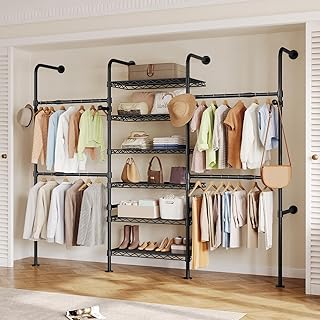
Closet Organizers and Storage
Closet Organizers and Storage has been one of the most consistently praised picks in this category. 39 reviewers averaged 4.5/5.
4. Divide and Conquer with 4-Inch Drawer Dividers

Small kids’ clothes are notorious for turning into a tangled fabric soup inside dresser drawers. Tiny socks, underwear, and accessories simply don’t stay folded. You need physical barriers to keep categories separated. I use fabric bins like the Criusia Foldable Organizer 6-pack or the Joyoldelf Sock Drawer Organizer. You can usually find these on Amazon or at Target for under $8. They slide right onto closet shelves or inside built-in drawers. For actual wooden drawers, adjustable bamboo or plastic dividers are highly effective. I buy the plastic ones from Walmart that are 4 inches high and expand from 10.2 to 16.6 inches. The spring-loaded mechanism snaps firmly against the drawer walls. Before I used these, I’d spend ten minutes digging through a dark drawer trying to find a matching pair of Paw Patrol socks while the school bus was literally driving down our street. The dividers create rigid little compartments. You can dedicate one slot to underwear, one to white socks, and one to colored socks. It’s visually clean, and young children can easily understand the boundaries. The 4-inch height is crucial because anything shorter lets rolled socks spill over the top into the next section. I made the mistake of buying 2-inch dividers initially, thinking they’d be enough for toddler clothes. They weren’t. The moment my son rummaged for his favorite Batman underwear, the dividers shifted, and the categories completely mixed together. Always measure the interior height of your drawer and buy dividers that reach as close to the top edge as possible. It prevents the dreaded sock-spillover effect.
5. Embrace Opaque Bins with Clear Repositionable Labels

Visual clutter makes a small closet feel suffocating. Stacking loose items on open shelves rarely works for long. Use bins or baskets for toys, out-of-season clothes, or specific categories like pajamas. Target’s Brightroom brand offers fantastic storage bins ranging from $7.65 for small plastic tubs to $45 for large coiled rope baskets. I prefer opaque bins because they hide the chaotic colors of children’s items. However, opaque bins require strict labeling. If you don’t label them, you won’t remember what’s inside, and you’ll end up tearing through three bins just to find swim trunks. For younger children who can’t read yet, use picture labels. A simple line drawing of a sock or a shirt works perfectly. For older kids, text labels boost literacy and reinforce spelling. You can cut custom vinyl labels using a Cricut Joy machine if you’ve got one. If you don’t want to craft, purchase pre-printed sets. The NEAT Method Closet & Mudroom Label Set costs around $14 and includes 72 repositionable labels. The adhesive is strong but peels off cleanly when you need to swap a “3T Pants” bin for a “4T Pants” bin. I tried using cheap masking tape and a Sharpie for bin labels a few years ago. The tape dried out, peeled off at the corners, and left a sticky, yellow residue all over my expensive acrylic bins. It looked terrible. Spend the extra few dollars on high-quality vinyl labels or dedicated label-maker tape. The Brother P-Touch label maker is about $35 at Staples, and the laminated tape withstands sticky toddler fingers and humid closet environments without peeling. You might also like: 15 Kids Closet Organization Ideas That Actually Work
6. Maximize Vertical Space with Over-The-Door Shoe Organizers

When floor space is non-existent, you’ve got to look at the walls and the doors. Wall-mounted cabinets or hanging organizers are heavily trending right now for maximizing tight spaces. My favorite trick is repurposing a heavy-duty over-the-door shoe organizer. Don’t use it for shoes. Kids’ shoes are tiny and often get lost in the deep pockets. Instead, use the clear vinyl pockets for small, hard-to-store items. I keep rolled belts, winter beanies, mittens, and even small stuffed animals in ours. You can buy a basic 24-pocket clear organizer at Kroger or Target for about $12.99. The clear plastic lets you see exactly what’s inside without digging. I hung one on the inside of my daughter’s closet door last winter. Before that, her winter gloves were shoved into a wicker basket on the top shelf, and we inevitably lost one of every pair. The plastic smell of the organizer fades after a day or two out of the package. Just make sure you buy one with sturdy metal hooks that fit over your specific door thickness. Some cheap plastic hooks snap under the weight of heavy winter gear. If your closet has bi-fold doors instead of standard swing doors, you can’t use the over-the-door hooks. In that case, I cut the shoe organizer in half horizontally. I use heavy-duty wall anchors and screws to mount the two halves directly onto the bare drywall inside the closet, right below the hanging clothes. It utilizes that awkward empty wall space near the floor and keeps accessories completely visible. You might also like: 15 Small Closet Organization Ideas That Actually Work
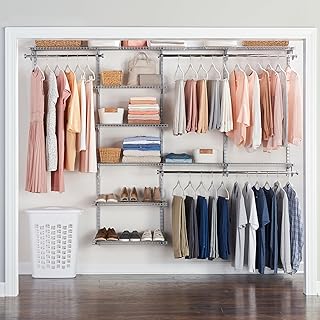
Rubbermaid Configurations Deluxe Custom Closet Kit 4-8 Ft.
A dependable everyday pick — Rubbermaid Configurations Deluxe Custom Closet Kit 4-8 Ft. Adjustable pulls in 81 ratings at 4.5 stars. Not flashy, just solid.
7. Choose Plastic Over Velvet for Everyday Kids Hangers

The internet loves the aesthetic of slim velvet hangers. They look uniform and save space, which is great for adult closets. But professional organizer Kristin MacRae specifically suggests using tubular plastic hangers for kids’ everyday clothes. Velvet hangers have a high-friction surface. This means a five-year-old can’t easily yank a t-shirt off the hanger. They will pull, the shirt will stretch, and the hanger will snap. I learned this after replacing a dozen broken velvet hangers in one month. Standard plastic kids’ hangers allow garments to slide off smoothly. You can buy a 60-pack of white plastic kids hangers at Target for about $12. Save the non-slip velvet kids’ hangers for delicate garments, slippery dresses, or heavy winter coats. Brands like 3sprouts or Member’s Mark sell 30 to 50 packs of kid-sized velvet hangers at Costco for $9 to $20. They measure around 12 inches wide and 8.25 inches high, which perfectly fits toddler through elementary sizes. Keep a mix of both types, but rely heavily on the plastic ones for the items your child accesses daily. It reduces frustration for everyone involved. Never use adult-sized hangers for children’s clothing. I tried hanging my son’s 4T shirts on standard 17-inch plastic hangers to save money. The wide shoulders stretched out the necklines of his shirts, leaving them looking baggy and misshapen. Investing in properly sized 12-inch hangers protects the fabric and allows you to fit significantly more garments onto a single rod because the shoulders don’t awkwardly overlap. You might also like: 13 Closet Organization Ideas Small Bedrooms That Actually Work
8. Create Seasonal Swaps with 66-Quart Lidded Bins

You shouldn’t keep heavy wool sweaters hanging next to linen shorts in July. Small closets simply don’t have the square footage to hold a full year’s wardrobe at once. Store out-of-season clothes in large, clear plastic containers with tight-fitting lids. The top shelf of the closet is the ideal spot for this dead storage. I use the Sterilite 66-quart clear latching boxes. You can grab them at Walmart for about $11.98 each. The clear plastic lets you vaguely see the colors inside, but the real key is aggressive labeling. Use a thick black Sharpie on a piece of masking tape to label the boxes with future sizes, like “3-6 months” or “12-18 months.” This completely streamlines hand-me-down management. When my youngest son abruptly outgrew his 2T pants last spring, I didn’t panic. I just pulled down the 3T bin from the top shelf. The clothes smell a bit like trapped air when you first open the lid, so I usually toss a cedar block inside before sealing them up. Moving off-season items out of the daily visual field frees up prime real estate for the clothing your child is actually wearing right now. I strongly advise against using opaque cardboard boxes for off-season storage. I stored a batch of winter coats in a heavy-duty moving box in the top of a closet once. A tiny roof leak dripped directly onto the box, and because I couldn’t see inside, the coats sat in damp darkness for months. The mildew smell ruined three expensive jackets. Always use waterproof, clear plastic with secure latches.
9. Build a Drop Zone Bin System for Bottoms

I’m going to share a controversial opinion: folding kids’ pants and shorts is a complete waste of time. They’re tiny, they don’t hold a crease, and kids destroy the stacks the second they look for a specific pair of sweatpants. Instead of folding every single item, implement a drop box bin system. Dedicate three deep bins on a low shelf: one for jeans, one for athletic shorts, and one for pajamas. When you do laundry, you simply toss the clean items directly into their respective bins. Target’s Pillowfort brand offers stackable storage bins with wide open fronts that cost around $15 each. They work perfectly for this. This method is incredibly fast for parents, and more importantly, it’s easy for kids to use. It encourages them to put their own clothes away successfully. I started doing this last year, and it cut my laundry put-away time in half. The clothes aren’t perfectly pressed, but kids’ clothes rarely need to be. The mental relief of not maintaining perfect stacks of 4T leggings is worth a few minor wrinkles. If you’re worried about wrinkling, reserve the drop bins strictly for knits, denim, and athletic wear. Keep button-down shirts and formal trousers on hangers. I tried tossing linen summer button-downs into a drop bin, and they emerged looking like crumpled paper bags. But for everyday play clothes, the drop system completely removes the friction of daily tidying. You won’t dread laundry day nearly as much.

Timate P3 Wall Mounted Closet Organizer System with 5
Honestly, Timate P3 Wall Mounted Closet Organizer System with 5 Hanging Rods surprised me — sturdier than it looks in the photos, and over 7 buyers gave it 4.5 stars.
10. Install $5 Tension Rods for Accessories

If you’ve got a weird, narrow gap between a shelf and a wall, don’t let it go to waste. A surprising and cheap trick is to use standard spring-loaded tension rods to create instant additional hanging space. You can buy short tension rods at Walmart or Target for about $5. I wedge them between the closet wall and the side of a built-in bookshelf. They’re perfect for hanging lightweight accessories. You can loop belts, scarves, or even clip hair bows directly onto the rod. I use one in my closet for necklaces, but in a kid’s room, it’s great for hanging up those bulky dress-up necklaces or lightweight hats. The rubber ends grip the drywall without requiring any screws or drilling. If you decide you don’t like it, or if your child’s storage needs change, you just twist it and take it down. I tried using adhesive hooks for belts previously, but the adhesive eventually failed and ripped a chunk of paint off the wall. Tension rods won’t damage your paint, provided you don’t over-tighten them. It’s a low-risk, high-reward storage hack. I also use a heavy-duty tension rod across the very bottom of the closet, about three inches off the floor. It acts as a makeshift shoe rack. You rest the heels of the shoes on the rod and the toes on the floor. It keeps the shoes angled upward, making them easy to see, and prevents them from turning into a chaotic pile in the corner.
11. Designate Zones with Color-Coded Hangers

A closet without designated zones quickly devolves into a chaotic mess. You’ve got to break the space down into specific areas for tops, pants, shoes, and accessories. If everything has a defined neighborhood, they’re much more likely to return to their proper place. For younger children, color-coding is a highly effective way to enforce these zones. Buy a pack of blue hangers for shirts and a pack of green hangers for pants. When it’s time to put laundry away, you just tell them to put the blue hangers on the left side of the rod and the green hangers on the right. It turns a boring chore into a matching game. I bought a multi-color pack of heavy-duty plastic hangers from Amazon for $18.99. The bright colors look cheerful against the white closet walls. It provides a visual cue that helps kids maintain the system without constant verbal reminders from you. Don’t overcomplicate the zones. I once tried dividing my daughter’s closet by season, sleeve length, and exact color gradient. It looked beautiful for exactly one afternoon. By Tuesday, she had shoved a yellow tank top into the middle of the winter sweaters. Broad categories like “tops,” “bottoms,” and “dresses” are manageable. Micro-organizing is a fast track to frustration when dealing with small kids closet organization.
12. Mount a Hamper Inside the Closet Door

Dirty clothes belong in the closet, not on the bedroom floor. If you make the hamper difficult to access, kids won’t use it. I highly recommend incorporating a laundry system directly within the closet footprint. Attach a small canvas laundry bag or a slim hamper to the back of the closet door. You can use heavy-duty Command hooks to hang a bag with reinforced grommets. If you’ve got floor space, place a designated, open-top bin inside the closet. I bought a tall, narrow mesh hamper from Sprouts for $14.99. It fits perfectly in the corner beneath the short-hanging shirts. Making it easy to use is critical. We play “dirty laundry basketball” where my son tries to toss his socks into the open hamper from across the room. It sounds silly, but gamifying the process actually works. Before I moved the hamper into the closet, it sat in the corner of his room, and he’d just drop his clothes right next to it instead of inside it. By keeping the dirty laundry hidden behind the closed closet door, the main bedroom instantly feels cleaner and less cluttered. Avoid hampers with complex lids or tiny openings. I bought a beautiful woven basket with a heavy lid for laundry, and my kids simply piled their dirty clothes on top of the lid because they were too lazy to lift it. An open-top design removes the physical barrier. If you’re worried about odors, sprinkle a quarter cup of baking soda into the bottom of the hamper once a week.

Kmiectse Clear Storage Bins with Lids
Honestly, Kmiectse Clear Storage Bins with Lids – 4 Tier Plastic Bins with Wheel surprised me — sturdier than it looks in the photos, and over 2 buyers gave it 4.5 stars.
13. Utilize the Back of the Door for Backpack Hooks

The back of the closet door is incredibly valuable real estate that most people completely ignore. If you’ve got a standard swing door, you’ve got to be using it. Install sturdy metal hooks for items that are used daily but are too bulky to hang on standard hangers. Backpacks, thick terrycloth bathrobes, and heavy winter jackets are perfect candidates for door hooks. I drilled a piece of 1×4 pine board into the solid core of our closet door and attached three matte black metal hooks I found at Home Depot for $4 each. This setup holds my kids’ heavy school backpacks without ripping out of the wood. If you’ve got hollow-core doors, you must use special hollow-door anchors, or the hooks will pull right out the first time your kid yanks their bag down. I made that mistake in our old apartment and left a gaping hole in the door. Having backpacks hanging on the door keeps them off the floor and prevents the straps from getting tangled in the shoe bins. It creates a dedicated “landing zone” for school gear. Make sure you measure the clearance between the back of the door and the closet shelves before installing large hooks. I installed a row of protruding hooks on a door once, hung a thick winter coat on it, and then couldn’t close the door because the coat hit the edge of the wooden shelf inside. Keep the hooks high enough to clear the internal shelving structure.
14. Involve Your Kid in the Labeling Process

If you organize a child’s space while they’re at school and present it to them as a finished product, they won’t respect the system. They don’t know where anything goes, and they feel zero ownership over the space. Expert opinion strongly suggests involving children in the organization process. Let them help you sort the clothes. Let them decide if the dinosaur shirts should live in the top drawer or the bottom drawer. When I reorganized my daughter’s closet last spring, I gave her a $3 pack of Avery blank sticker labels from Kroger and a pack of markers. She drew terrible, scribbly pictures of socks and pants, and we stuck them onto the front of her plastic bins. Because she made the labels herself, she was incredibly proud of them. She actually wanted to put her laundry away just so she could use “her” bins. The labels looked messy, and my perfectionist brain twitched a little bit, but the functionality was flawless. When kids have a say in how their environment is structured, they’re significantly more likely to keep it tidy. Don’t force them to make decisions about items they’re emotionally attached to during the initial purge. If they want to keep a frayed, stained superhero cape, let them keep it in a designated memory bin. Giving them control over the small details builds trust. I tried throwing away my son’s ripped pajama top without asking, and the resulting meltdown derailed the entire organization project for three days.
15. Establish a 5-Minute Weekly Maintenance Routine

No organizational system is entirely self-sustaining. Without maintenance, a perfectly sorted closet will revert to chaos in about three weeks. You’ve got to establish a regular, quick clean-up routine. Every Sunday evening before bath time, we spend exactly five minutes resetting the closet. I set a timer on my phone. We pick up any clothes that fell off hangers, push the bins back into alignment, and make sure the dirty laundry is actually inside the hamper. Professional organizer Kristin MacRae recommends evaluating the entire closet system two to three times a year. Kids’ needs evolve quickly. A bin setup that worked perfectly for a toddler might be frustrating for a first grader who needs more hanging space for school uniforms. I usually do a major evaluation in August before school starts, and again in March when the weather starts shifting. If I notice a specific drawer is constantly messy, I know the system isn’t working, and I need to adjust the dividers or change the folding method. Consistent, minor maintenance prevents the need for massive, exhausting weekend overhauls. During these evaluations, I keep a $5 canvas tote bag from Trader Joe’s permanently stationed in the corner of the closet. The moment I notice a shirt is too tight or pants are too short, I toss them directly into the bag. Once the bag is full, it goes straight into my trunk to drop off at Goodwill. This rolling purge method keeps the closet from overflowing.

SNSLXH 5 Pack Stackable Closet Storage Basket
A dependable everyday pick — SNSLXH 5 Pack Stackable Closet Storage Basket pulls in 4 ratings at 4.5 stars. Not flashy, just solid.
16. Master Small Kids Closet Organization with Vacuum Bags

When you’re dealing with hand-me-downs or bulky winter gear, standard plastic bins might still take up too much room. This is where vacuum storage bags become essential. I use the Spacesaver Premium Vacuum Storage Bags. You can get a six-pack of the jumbo size on Amazon for around $25. They’re perfect for compressing puffy winter coats, thick fleece blankets, and massive piles of outgrown clothes that you’re saving for a younger sibling. You just pack the clothes in, seal the double-zip closure, and use your household vacuum hose to suck all the air out. A stack of clothes that was two feet high shrinks down to a hard, flat brick that’s about four inches thick. I slide these compressed bags under the bottom shelf of the closet or even under the child’s bed. I tried cheap dollar-store vacuum bags once, and they slowly leaked air over a month, expanding and popping the closet door open from the inside. Stick to name-brand bags with heavy-duty plastic valves. They protect the fabrics from dust and moisture while reclaiming massive amounts of cubic footage in a tiny closet. Before sealing the bags, make sure every single item is completely dry. I packed away a stack of freshly laundered sweaters that were still slightly damp at the seams. Six months later, I opened the vacuum bag and was hit with a wall of mildew. I had to throw the entire batch away. Toss a dryer sheet into the bag before you vacuum the air out to keep everything smelling fresh.
Tackling small kids closet organization isn’t about creating a showroom space; it’s about building a system that actually works for your daily life. I’ve spent years fighting with flimsy hangers and overflowing bins, and I promise that investing in durable, adjustable solutions pays off in the long run. Try implementing just two or three of these strategies this weekend. Start with the purge, lower the hanging rods, and add some drawer dividers. You’ll be amazed at how much smoother your mornings become. If you found these tips helpful, pin this article to your home organization boards so you can reference the measurements and product names later.
Frequently Asked Questions
How do you organize a small kids closet on a budget?
You can maximize space cheaply by installing $5 tension rods for accessories, using $15 over-the-door shoe organizers for small toys, and repurposing inexpensive stackable bins as a drop-zone for everyday pants instead of folding them.
What age should kids start helping with closet organization?
Toddlers can start helping by tossing clothes into open-top drop bins. By preschool age, they can sort clothing by color or category, and even help draw picture labels for their storage baskets to build ownership of the space.
How often should I purge my child’s closet?
Professional organizers recommend doing a thorough evaluation two to three times a year, typically during seasonal shifts in August and March. Keeping a permanent donation bag in the closet also helps manage outgrown items continuously.
Are velvet hangers better for kids clothes?
While velvet hangers save space, standard tubular plastic hangers are actually better for everyday kids’ clothes. The high-friction surface of velvet makes it difficult for young children to pull shirts off, often leading to stretched necklines and broken hangers.
