
What’s Inside
- Declutter Ruthlessly Before You Buy Anything
- Find the Golden Height for Your Top Shelf Closet Organization
- Use Matching Labeled Bins to Hide the Visual Clutter
- Switch to Clear Acrylic Bins for Tiny Accessories
- Protect Soft Goods with Breathable Fabric Cases
- Install Acrylic Dividers to Stop the Toppling Piles
- Upgrade to Modular Shelving for Long-Term Flexibility
- Integrate Discreet Storage for a Clean Aesthetic
- Maximize Vertical Space with Hanging Organizers
- Evict Everyday Items to Master Top Shelf Closet Organization
- Stop Overstuffing Your Expensive Storage Bins
- Add Motion-Activated LED Lighting for Visibility
- Shrink Bulky Bedding with Vacuum Storage Bags
Last February, I was on my tiptoes, reaching for a heavy wool blanket. I missed the fabric, hooked my finger on a duffel bag strap, and watched as an avalanche of dusty sweaters and gear crashed onto my head. Top shelf organization is usually an afterthought, but that purple bruise on my forehead forced a change. I spent three weekends pulling everything down, measuring my drywall, and figuring out why my old setup failed. Most people treat that space like a junk drawer. You toss a shoebox up there and slam the door. But if you structure it right, that dead space is the most valuable real estate in your bedroom.
I did this wrong for months. I bought cheap wire baskets that snagged my silk blouses. I stacked jeans until they toppled over like a bad game of Jenga. I even tried heavy wooden crates that were impossible to lift. I finally realized that this zone needs lightweight materials, exact measurements, and a strict rule about what stays. I filled four Trader Joe’s bags with donations and started from scratch. If you’re tired of dodging falling sweaters, here are the steps, measurements, and bins I used to fix the mess.
1. Declutter Ruthlessly Before You Buy Anything

Don’t drive to the store yet. Empty the whole shelf. I mean everything. Last spring, I found three single gloves, a broken umbrella, and cedar rings that hadn’t smelled like anything since 2019. You can’t organize junk. Buying expensive baskets just to hide garbage is a waste of cash. I grabbed a box of 13-gallon Kirkland trash bags from Costco—about $21.99 for 200, and they don’t rip—and started sorting.
I made three piles: keep, donate, and trash. The keep pile was small. Most of what we shove up there is stuff we feel guilty throwing away. I had to be honest about a pair of stiff leather boots I hadn’t worn in four years because they pinched my toes. They went straight to the donation bag. Wiping down the bare shelf with a damp cloth is a vital reset. You need to see the space to know what fits. Don’t skip this, or you’ll buy six bins when you only need two.
2. Find the Golden Height for Your Top Shelf Closet Organization

Most closets have shelves at a height that only works for a giant. For real functionality, the top shelf should sit 80 to 84 inches from the floor. This gives you enough clearance for hanging rods while letting you reach your bins without dragging out a step stool every morning. I learned that the hard way when my shelf was at 88 inches.
I bought a Stanley 25-foot tape measure at Walmart for $8.98 and realized my shelf was way too high. I unscrewed the brackets and moved the plank down four inches. It took forty minutes and a little spackle for the old holes, but the difference was immediate. Measure the depth, too. Standard depths are 12 to 16 inches. A 12-inch shelf is smarter for a reach-in closet. If your shelf is 16 inches deep, things just disappear into a dark, dusty void. If you’re installing a new one, buy a 12-inch white melamine board from Home Depot for about $15.00 and cut it to size.
3. Use Matching Labeled Bins to Hide the Visual Clutter

Visual noise makes a closet feel messy, even if it’s clean. I started with a mix of Amazon boxes and a plastic tub missing its lid. It looked like a recycling bin. You need matching bins that span the length of the shelf. I went to Target and grabbed six of the Brightroom 13″ x 13″ Fabric Bins in charcoal gray. They’re $10.00 each.
The rigid sides don’t collapse when I pull them down with one hand. That matters when you’re balancing on your toes. I also bought black chalkboard clip-on labels from Amazon for $9.99. Labeling is mandatory. I skipped it at first and ended up pulling down four bins just to find my running gloves. Write what’s inside with a white chalk marker. Don’t write “Winter.” Write “Thick Wool Sweaters.” The matching charcoal fabric hides all the chaotic colors, making the closet look like a custom build instead of a quick weekend job.

AWTATOS Cube Storage Organizer Storage 12 Cube Bookshelf
If you want something that just works, AWTATOS Cube Storage Organizer Storage 12 Cube Bookshelf DIY Plastic C is a safe bet (28 reviews, 4.5 stars).
4. Switch to Clear Acrylic Bins for Tiny Accessories

Fabric bins hide bulky items well, but they’re bad for small accessories. I used to keep evening clutches and silk scarves in an opaque box. I’d forget what I owned and end up buying a velvet clutch for a wedding, only to find an identical one buried at the bottom of a bin. For things you need to see, clear acrylic is the way to go. You might also like: 13 Bathroom Closet Organization Ideas for Every Budget
I bought three of The Container Store’s Luxe Acrylic Bins. They’re pricey at $24.99 each, but the thick plastic doesn’t scratch or turn yellow like the cheap stuff. If you’re on a budget, the Mainstays 12 Qt Clear Plastic Storage Bin at Walmart is only $5.48. I use these for small, colorful items. Hard plastic scrapes against wood, so I cut a piece of grippy rubber shelf liner—$6.00 a roll at Target—and put it under each bin. It stops them from sliding around when I bump the shelf. You might also like: 15 Cozy DIY Closet Organization Ideas for Any Style
5. Protect Soft Goods with Breathable Fabric Cases

Storing delicate textiles on raw wood or wire is a mistake. I ruined a $150 cashmere sweater by leaving it on a wire shelf. The metal pressed creases into the wool, and the rough edges snagged the sleeve. For linens and delicate seasonal clothes, you need breathable fabric enclosures that keep dust out without trapping moisture. Plastic tubs can trap humidity and leave your clothes smelling like a basement. You might also like: 15 Creative Dollar Tree Hacks Organizing Ideas for a Fresh New Look
I switched to IKEA HEMMAFIXARE storage cases. The medium size is $14.99 and measures 13.5 by 20 inches. The fabric is a breathable polyester blend over a wire frame. I use these for off-season bedding and winter sweaters. The zipper is thick and doesn’t catch, though the pull feels a little flimsy. The soft exterior means nothing gets snagged, and I can stack two if I have the room. I also toss a small cedar block—$4.99 for a pack of 4 at Target—into each case to keep moths away.
6. Install Acrylic Dividers to Stop the Toppling Piles

If you prefer to keep jeans or blankets folded directly on the shelf, you’ll deal with the leaning tower problem. I tried stacking denim six pairs high. Every time I pulled a pair from the middle, the stack collapsed. The fix is simple: clear acrylic shelf dividers. These create rigid walls that keep your stacks straight.
I bought a set of four clear acrylic dividers from The Container Store for $19.99. They slide onto standard 1-inch wooden shelves with a tension grip. No tools required. I spaced mine 10 inches apart. This fits a pair of Levi’s or a bath towel perfectly. I tried a cheaper wire version first, but the metal dug into my shelf and chipped the paint. The flat acrylic base of The Container Store version distributes pressure evenly. Now, I can pull a sweater from the bottom, and the acrylic wall holds the rest in place. It takes two minutes to install.
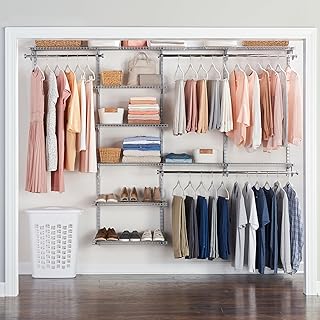
Rubbermaid Configurations Deluxe Custom Closet Kit 4-8 Ft.
A dependable everyday pick — Rubbermaid Configurations Deluxe Custom Closet Kit 4-8 Ft. Adjustable pulls in 81 ratings at 4.5 stars. Not flashy, just solid.
7. Upgrade to Modular Shelving for Long-Term Flexibility

A big trend for 2026 is moving away from fixed closet fixtures. When I bought my house, the top shelf was nailed to the wall with thick wooden cleats. When I bought tall leather boots, I couldn’t stand them up because the shelf was an inch too low. I had to lay them flat, which creased the leather. Fixed shelving forces you to adapt to the closet, not the other way around.
I ripped out the wood and installed a modular system. I used freedomRail components. The steel tracks and a 24-inch ventilated shelf cost about $45.00. The tracks screw into the studs, and the brackets clip into the slots. If I buy taller bins next winter, I can pop the shelf out and move it up two inches in thirty seconds. This modularity prevents the mistake of buying bins that are half an inch too tall to fit. The steel is strong, holding up to 170 pounds per linear foot, so I don’t worry about it bowing.
8. Integrate Discreet Storage for a Clean Aesthetic

Not everything on your shelf is pretty. I have random cables, a heating pad, and an ugly travel pillow. I used to shove these in a corner, but it ruined the look of the closet. The 2026 style leans into “boutique-style” closets, which means hiding utilitarian items in lidded containers.
I stopped at a home goods store and found a solution. I went with the Target Y-Weave Medium Decorative Storage Basket with a matching lid. The basket is $6.00 and the lid is $2.00. The plastic resin looks like wicker but wipes clean. I bought three in white and put them on the far left. Because they have opaque lids, you can’t see the mess of tangled cords. The lids also let me stack lightweight items on top, maximizing the vertical space.
9. Maximize Vertical Space with Hanging Organizers

If you have high ceilings, you might have three or four feet of empty air above your shelf. Leaving that empty is a waste, but stacking bins four feet high is dangerous. I tried stacking three boxes once and had to use a broom handle to knock the top one down. The smarter move is to use hanging fabric organizers suspended from a shelf bracket.
I bought the Brightroom 6-Shelf Hanging Organizer from Target for $18.00. Instead of hanging it on my clothing rod, I installed a heavy-duty metal shelf bracket—$7.50 at Home Depot—upside down on the wall above my shelf. I looped the velcro strap through the bracket. Now, I have six cubbies floating above my main shelf. I use these for rolled-up t-shirts, baseball caps, and workout towels. It uses the dead air space perfectly. Just make sure the bracket is screwed into a stud.

Yociyoga 4-Tier Stackable Closet Organizers and Storage
Honestly, Yociyoga 4-Tier Stackable Closet Organizers and Storage Basket surprised me — sturdier than it looks in the photos, and over 427 buyers gave it 4.5 stars.
10. Evict Everyday Items to Master Top Shelf Closet Organization

The fastest way to ruin an organized shelf is to put things up there that you need every morning. I used to keep my favorite jeans on the top shelf. Every day at 7:00 AM, I was yanking them down, knocking over my sweaters, and messing up the bins. By Friday, the shelf was a disaster. Top shelf organization relies on one rule: it’s for off-season or infrequent items only.
I went through and evicted anything I use more than once a month. My daily jeans moved to a drawer. Now, the top shelf holds my $250 North Face winter parka—stored in a bin during the summer—my carry-on luggage, and sentimental cards. Last October, I found a crumpled Whole Foods receipt from 2021 in my parka pocket, which proved how rarely I touch that stuff. Because I only reach up there a few times a year, the bins stay aligned, the stacks stay neat, and I never fight with a heavy box before I’ve had my coffee.
11. Stop Overstuffing Your Expensive Storage Bins

There is a temptation to cram one more hoodie into a bin to avoid buying a second one. I’m guilty of this. Last winter, I forced three king-size quilts into a single fabric bin. I pushed down with all my weight to zip it. Two days later, the side seam of the $15.00 bin blew out, spilling a quilt onto the floor.
Follow the 80 percent rule. Never fill a bin past 80 percent capacity. If you have to apply force to close a lid or slide a bin back, you have too much stuff. Overstuffing destroys your gear, wrinkles your clothes, and prevents air circulation, which leads to musty odors. When I reorganized, I bought an extra bin and split my blankets. The bins now slide effortlessly. If you run out of space, don’t buy a bigger bin—donate more items.
12. Add Motion-Activated LED Lighting for Visibility

Closets are dark, and the top shelf is usually in deep shadows. I used to use my iPhone flashlight to see inside my bins, which meant I only had one hand free. A major upgrade that takes ten minutes is installing motion-activated LED lighting.
I bought a three-pack of battery-operated LED light bars from Amazon for $22.99. They use AAA batteries, so no electrician is needed. I peeled the adhesive backing off and stuck one light bar to the ceiling above the shelf, and another under the front lip of the shelf. I set them to “motion sensor” mode. Now, the second I open the door and reach up, the shelf is flooded with light. I chose the 4000K daylight temperature instead of warm yellow, because it makes it much easier to tell a navy blue sweater from a black one in the morning.

Ulif E10 Clothes Rack(With Stretchable Hanger
Ulif E10 Clothes Rack(With Stretchable Hanger Rod)Freestanding Clothin has been one of the most consistently praised picks in this category. 958 reviewers averaged 4.5/5.
13. Shrink Bulky Bedding with Vacuum Storage Bags

Space is finite, and winter textiles eat it up. A synthetic down duvet can take an entire 15-inch section of your shelf. I used to fold my spare duvet and shove it up there, watching it expand and push my other bins aside. The only way to win is to remove the air.
I bought a box of Spacesaver Premium Vacuum Storage Bags—the Jumbo size, $29.99 for 6 on Amazon. I folded the duvet, slid it into the bag, and sealed it. Then, I took my Dyson V8, removed the brush head, and put the suction tube over the valve. Within thirty seconds, that massive duvet shrank into a flat plastic pancake two inches thick. The sound of the plastic shrinking is incredibly satisfying. I fit two king-size duvets and four winter coats into a bin that previously held one blanket. It protects the fabric and maximizes every square inch of your shelf.
Organizing this zone takes effort and measuring, but the daily peace of mind is worth it. I don’t flinch when I open my closet anymore, and I haven’t had a duffel bag fall on my head since I did this. Last weekend, I grabbed a cold kombucha from Kroger, stood in my room, and admired the perfectly aligned charcoal bins. If you’re tired of the chaos, pick three of these strategies, grab a tape measure, and fix it this weekend. Save this guide for your next project, and let me know which system works best for your space.
Frequently Asked Questions
What is the best height for top shelf closet organization?
For standard closets, the top shelf should sit 80 to 84 inches from the floor. This height allows enough clearance for hanging clothes below while keeping the storage bins accessible without needing a tall ladder.
What should I store on the top shelf of my closet?
Reserve the top shelf strictly for off-season clothing, heavy winter bedding, sentimental boxes, and travel luggage. Avoid storing everyday items up there to prevent daily frustration and messy, toppling piles.
Are clear bins or fabric bins better for top shelves?
It depends on the items. Use clear acrylic bins for small accessories so you can see them easily. Use matching opaque fabric bins for bulky or visually messy items like cords, off-season sweaters, and spare blankets.
How do I stop folded clothes from falling over on a high shelf?
Install clear acrylic shelf dividers. These slide directly onto standard 1-inch wooden shelves and act as rigid vertical walls, keeping stacks of jeans or sweaters perfectly straight and preventing them from tipping over.
