
What’s Inside
- Initiate with a “Reverse Declutter” for Clarity
- Embrace the “One In, One Out” Rule Consistently
- Invest in Uniform, Slim-Line Hangers
- Maximize Vertical Space with Adjustable Systems for Minimalist Closet Organization Ideas
- Adopt “File Folding” for Drawers and Shelves
- Curate a Capsule Wardrobe (15-50 Items)
- Choose a Cohesive Neutral Color Palette
- Utilize Drawer Dividers for Small Items
- Store Off-Season Items Out of Sight for Better Minimalist Closet Organization Ideas
- Avoid Overstuffing Hanging Rods and Shelves
- Implement a “Daily Drawer” or “Go-To Rail”
- Invest in Quality Over Quantity
- Don’t Buy Organizers Without a Plan
- Utilize Cascading Hanger Hooks for Vertical Hanging
- Ensure Adequate Lighting
Last Tuesday at Whole Foods, I was staring at a $14 jar of almond butter when I realized my sweater was on inside out. The tag was scratching my neck. That morning, a pile of denim had literally collapsed on my head while I searched for clean jeans in my dark, crammed closet. I just grabbed the first gray thing I saw and bolted. That was my breaking point. If you want minimalist closet organization ideas that actually work, you’ve got to stop treating your closet like a landfill. Most minimalist closet organization ideas focus on buying matching acrylic bins, but that just creates organized hoarding. I’m going to walk you through exactly how I fixed my own disaster zone. No fluff. Just the exact systems I use.
1. Initiate with a “Reverse Declutter” for Clarity

I tried the traditional method of pulling everything out and dumping it on the bed back in 2022. It took twelve hours. I ended up crying on the floor surrounded by college t-shirts and shoving it all back in at midnight. Don’t do that. Instead, do a reverse declutter. You pull out only the items you wear the most. Your wardrobe heroes. I did this last month and realized I only wear about fourteen specific items on rotation. Once you pull out the heavy hitters, the remaining clothes look entirely different. You suddenly see all the stiff, scratchy polyester blouses you avoid. I bought a $12.99 heavy-duty rolling rack from Target just to hold my heroes while I sorted the rest. Leaving the unwanted stuff in the closet first prevents decision fatigue. It’s a methodical way to see what actually fits your body right now. Stylist Allison Bornstein suggests this method, and it works because it forces you to focus on what you actually like wearing, rather than what you feel guilty about discarding. When your closet is packed, your brain stops registering individual items. By removing the favorites first, you break that visual blindness. The items left behind are usually the ones you’ve outgrown, the ones with tags still on, or the ones that require complicated dry cleaning. It makes the actual purge phase infinitely easier.
2. Embrace the “One In, One Out” Rule Consistently

This sounds simple, but it requires actual discipline. I bought a heavy wool coat at Costco last winter for $49.99. The moment it came through the front door, I had to choose an old coat to donate. If you don’t do this, the volume of fabric in your house will slowly expand until you can’t close your doors. I keep a dedicated cardboard box on the floor of my closet specifically for donations. When I buy something new, the old item goes straight into the box. I don’t wait. I don’t put it in a maybe pile. It goes in the box. When the box is full, I drop it off. I tried the one in, two out rule for a while, but it felt too restrictive and I ended up rebuying things I actually needed. One in, one out maintains equilibrium. It forces you to ask if the new $35 Zara sweater is actually better than the one you already own. You won’t buy cheap impulse items if you know it means sacrificing a piece you already like. It also prevents the guilt of unworn clothes piling up. I used to hold onto jeans that were three sizes too small just in case. Now, if I buy a new pair of denim that fits my current body, an old pair leaves the house. It’s a non-negotiable boundary.
3. Invest in Uniform, Slim-Line Hangers

The visual noise of mismatched wire, plastic, and wooden hangers will ruin any closet. I spent years fighting with those thick plastic tubular hangers from Walmart. They take up a ridiculous amount of horizontal space and leave weird dents in the shoulders of soft sweaters. I eventually switched to uniform, slim-line velvet hangers. Specifically, I use the SONGMICS Slim Velvet Hangers. You can get a 50-pack on Amazon for $25.99. They save about thirty percent of your rail space and stop silk shirts from sliding off onto the floor. For heavy winter coats and structured blazers, however, the velvet ones snap. I learned that the hard way when three of them broke under my wool peacoats, leaving sharp plastic shards on the floor. For heavy garments, I use the Mawa Silhouette Ultra-Slim Shirt Hanger. They cost $45 for a 20-pack. They are 15.75 inches across and hold up to 8 pounds without leaving those awful shoulder bumps. Yes, it’s an investment, but replacing all your hangers is the fastest way to make a closet look intentional. You can’t achieve a clean look with dry cleaner wire hangers mixed with broken plastic ones. Consistency is what creates that high-end, organized aesthetic, even if the clothes themselves are just basic t-shirts.
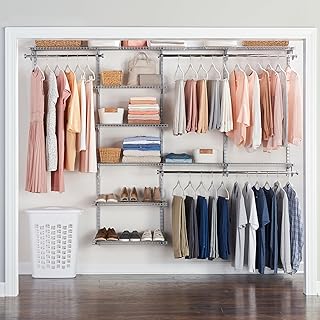
Rubbermaid Configurations Deluxe Custom Closet Kit 4-8 Ft.
A dependable everyday pick — Rubbermaid Configurations Deluxe Custom Closet Kit 4-8 Ft. Adjustable pulls in 81 ratings at 4.5 stars. Not flashy, just solid.
4. Maximize Vertical Space with Adjustable Systems for Minimalist Closet Organization Ideas

Most builder-grade closets have one single rod with a shelf above it. It’s a massive waste of vertical space. You end up with four feet of empty air below your shirts, where shoes just pile up in a chaotic mountain. When it comes to minimalist closet organization ideas, adjustable systems are non-negotiable. I ripped out my wire shelving and installed the IKEA PAX wardrobe system. The frames start around $110, but the real value is the modular components. I added pull-out mesh baskets for $25 each and a double-hang rod setup. If you don’t live near an IKEA, The Container Store’s Elfa system is another solid option, though pricier. I bought a basic Elfa setup for my guest room closet for $450. The beauty of these systems is that you can move the shelves as your wardrobe changes. When I stopped wearing long maxi dresses, I just moved the bottom rod up six inches to fit a row of shoe boxes underneath. You can’t do that with fixed MDF boards. A static closet is a dead closet. Your storage needs to adapt to your life. If you get a new job that requires blazers instead of scrubs, your closet rod heights need to shift to accommodate that change without requiring a full renovation.
5. Adopt “File Folding” for Drawers and Shelves

Stacking clothes in a tall pile is a guaranteed way to create a mess. You pull out the bottom t-shirt, and the whole stack topples over. I used to do this with my gym clothes until I realized I was only wearing the top three shirts because I was too lazy to dig through the messy pile. I switched to the KonMari method of file folding. You fold the item into a small rectangle and stand it upright. You can see every single item at a glance. I do this for t-shirts, sweaters, and denim. It takes exactly the same amount of time to fold, but it saves you ten minutes of digging in the morning. I use the 11-inch deep drawers in my IKEA MALM dresser (which cost $199) for this. The only negative is that very silky or thin fabrics won’t stand up on their own. For those, you still have to hang them or they just collapse into a wrinkled puddle in the drawer. File folding works best for structured cotton and heavy knits. I also use this method for my workout leggings. I fold them in half, then into thirds, and stand them up. I can instantly spot my black leggings versus my navy ones without unrolling anything.
6. Curate a Capsule Wardrobe (15-50 Items)

A massive closet full of clothes you don’t wear isn’t a wardrobe. It’s an archive. The current trend for 2026 is the capsule wardrobe. Experts usually recommend a core capsule of 15-30 pieces for a work wardrobe, or up to 50 items total. This excludes gym clothes, pajamas, and underwear. I currently run a 38-piece capsule. It forces you to focus on versatile, high-quality pieces that actually fit. I started this after a trip to Trader Joe’s. I was wearing a cheap, itchy sweater that shed lint all over my car seat and my groceries. I realized I owned forty sweaters and only liked two of them. Building a capsule means you have less laundry, fewer decisions, and more physical space. I highly recommend tracking what you wear for a month before you decide on your final 50 items. You’ll be shocked by how few pieces you actually reach for on a daily basis. Don’t guess. Look at the actual data of what you pull out of the hamper. I keep a small notebook in my closet and just tally what I wear. It turns out I was holding onto fifteen floral dresses I hadn’t worn since 2019. The capsule method eliminates that dead weight. You might also like: 12 Small Home Organization for Every Budget
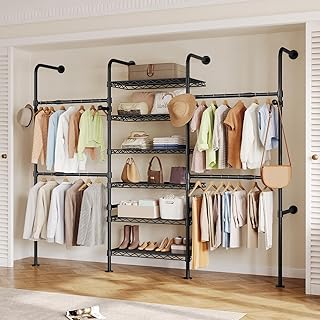
Closet Organizers and Storage
Closet Organizers and Storage punches above its price — 39 buyers rated it 4.5 stars. I would buy it again.
7. Choose a Cohesive Neutral Color Palette

If you buy a bright fuchsia blouse, you have to buy specific pants and specific shoes to match it. That creates closet bloat. For a truly functional wardrobe, you need a core neutral color palette. I stick to black, white, camel, and olive green. Every top I own matches every bottom I own. I can get dressed in the dark. I learned this lesson after buying a $68 mustard yellow skirt from Anthropologie. It hung in my closet for two years because I didn’t own a single top that looked right with it. A cohesive palette means you can mix and match effortlessly. You don’t have to be boring. You can add texture with a chunky cable knit or a smooth leather belt. But keeping the base colors neutral is the foundation of a minimalist closet. If you want a pop of color, do it with a $15 scarf or a pair of earrings, not a bulky winter coat that takes up a foot of hanging space. Neutrals are just mathematically more efficient. When I pack for a week-long business trip, I only need to bring a carry-on because every single piece works together. It removes the stress of outfit planning entirely. You might also like: 13 Organization Ideas For The Home Bedroom You Need to See
8. Utilize Drawer Dividers for Small Items

Sock and underwear drawers are usually the first things to descend into chaos. You can’t file-fold a thong. You need physical barriers. I use drawer dividers to compartmentalize small items. I bought the IKEA STUK boxes. They cost about $7.99 each and have a stiff cardboard core covered in fabric. They fit perfectly inside standard drawers. I also use the PURRPINGLA boxes, which come in a set of three for $14.99. If you want something rigid, The Home Edit All-Purpose Deep Bin with Divider from Walmart ($24.98) is incredibly durable. Before I bought these, my belts and socks were a tangled knot. I once spent five minutes looking for a matching black ankle sock while I was already late for an appointment. Dividers stop items from migrating to the back of the drawer. Just make sure you actually measure the internal height and depth of your drawers before buying anything. I bought a set of bamboo dividers from Amazon once that were half an inch too tall, and the drawer wouldn’t close. I had to return them. Measure twice, and account for the track hardware inside the drawer before you buy any rigid acrylic organizers.
9. Store Off-Season Items Out of Sight for Better Minimalist Closet Organization Ideas

Keeping heavy wool sweaters next to linen shorts is a recipe for visual clutter. You only need to see the clothes you can actually wear right now. I rotate my seasonal clothing twice a year. I use The Container Store’s Clear Storage Boxes for this. The sweater-sized boxes are $17.99 each. I prefer clear bins because I can see exactly what’s inside without having to open them or rely on labels that peel off. I stack these on the very top shelf of my closet, near the ceiling. If you don’t have high shelves, under-bed storage bins work just as well. I bought a rolling under-bed bin from Target for $22. I pack away my heavy coats and boots in April, and swap them for swimsuits and sundresses. This instantly frees up fifty percent of my hanging space. It’s one of the most effective minimalist closet organization ideas because it physically removes the bulk from your daily view. Visual silence is just as important as physical space. When you open your closet in July, you shouldn’t have to push past a heavy down parka to get to your t-shirts. Keep the current season front and center. You might also like: 14 Organization Ideas For The Home Closet Worth Trying

Timate P3 Wall Mounted Closet Organizer System with 5
If you want something that just works, Timate P3 Wall Mounted Closet Organizer System with 5 Hanging Rods is a safe bet (7 reviews, 4.5 stars).
10. Avoid Overstuffing Hanging Rods and Shelves

If you’ve got to use physical force to wedge a hanger onto the rod, you have too much stuff. Professional organizers recommend leaving about one inch of space between hanging items. Clothes need room to breathe. When you pack them too tightly, the fabrics crush together, causing deep wrinkles and sometimes even transferring dye. I ruined a $120 white silk blouse because it was jammed next to a pair of dark wash raw denim jeans for six months. The indigo rubbed off onto the silk. Now, I keep my hangers spaced out. I can easily slide an item out without dragging three other shirts with it. This applies to shelves, too. Don’t stack sweaters so high that they scrape the shelf above them. If you can’t maintain the one-inch rule, you either need to declutter more items or install an additional rod. There’s no magic bin that solves an overstuffed rod. You can’t out-organize a hoarding problem. You just have to reduce the inventory. I regularly slide all my hangers to one side of the rod. If they don’t move smoothly, I know it’s time to pull out the donation box and cull a few items.
11. Implement a “Daily Drawer” or “Go-To Rail”

Let’s be honest, decision fatigue is a real problem at 6:00 AM. To combat this, I set up a go-to rail in my closet. It’s a small, 18-inch section of the hanging rod right at the front. Every Sunday evening, I check the weather and pull out five complete outfits for the work week. I hang them on that specific rail. I also have a small shallow drawer dedicated to the underwear, socks, and bras I’ll need for those outfits. This takes me about fifteen minutes on Sunday, but it saves me endless frustration during the week. I don’t stand there staring blankly at my clothes anymore. I did this after a particularly stressful morning where I couldn’t find my keys, the dog threw up, and I ended up wearing two different black shoes to a client meeting. The daily rail removes the friction from your morning routine. It’s a tiny physical boundary that yields massive mental relief. When you limit your early morning choices, you preserve your energy for actual work. I even hang my accessories, like a specific belt or scarf, on the same hanger as the outfit so I don’t have to hunt for them.
12. Invest in Quality Over Quantity

Fast fashion is the enemy of a minimalist closet. You buy a $12 polyester shirt from Shein, wash it twice, and the seams twist. Then it hangs in your closet for a year because you feel guilty throwing it away. I stopped buying cheap synthetics three years ago. Now, I prioritize well-made items from natural fabrics like wool, cotton, linen, and leather. They cost more upfront, but they last for years. I own a 100 percent merino wool sweater from Everlane that cost $130. I’ve worn it at least eighty times, and it hasn’t pilled once. Compare that to an acrylic blend sweater I bought at Kroger of all places on a road trip because I was freezing. It cost $25, pilled instantly, and made me sweat profusely. Natural fibers regulate your body temperature and drape better. When you buy quality, you naturally buy less because of the price point. That constraint is exactly what keeps your closet lean and functional. Quality acts as a natural gatekeeper. You won’t impulse buy five cheap tops if you’re saving for one beautifully tailored linen button-down. It naturally slows down the rate at which items enter your home.

Yociyoga 4-Tier Stackable Closet Organizers and Storage
Honestly, Yociyoga 4-Tier Stackable Closet Organizers and Storage Basket surprised me — sturdier than it looks in the photos, and over 427 buyers gave it 4.5 stars.
13. Don’t Buy Organizers Without a Plan

I see this mistake constantly. People get frustrated with their messy closet, drive to The Container Store, and drop $300 on matching acrylic bins. They bring them home, stuff their junk into the bins, and put them back on the shelf. Those baskets aren’t helping. That isn’t organizing. That’s just decanting your clutter into expensive plastic. Emily Kate Johnson, an expert organizer, warns that buying a basket won’t automatically organize your space. It often adds more clutter. I did this exact thing in 2021. I bought six large woven baskets from Target at $25 a piece. I shoved all my random scarves, belts, and hats into them. Six months later, the baskets were full of dust and I couldn’t find anything. You have to declutter first. Then you assess what you have left. Only then do you measure your space and buy a specific container for a specific category of items. Never buy storage solutions on impulse. Measure twice, buy once, and only buy exactly what you need. If you buy a bin before you know what’s going in it, you will inevitably find random junk to fill it. It’s a trap that just wastes your money.
14. Utilize Cascading Hanger Hooks for Vertical Hanging

If you’ve got a tall closet but can’t install a second rod, you need to use cascading hooks. These are small plastic or velvet hooks that slip over the neck of a hanger, allowing you to hang another hanger directly below it. I use the Slim-Line Hangers mini velvet cascading hooks. You can get a pack of 30 on Amazon for $11.99. I use them to hang my matching suit jackets and pants together. I also use them for skirts. You can chain three or four items vertically. It triples your hanging space in that specific spot. The negative is that it makes the clothing quite heavy to lift all at once, and it can look a bit bulky if you do it across the entire rod. I only use them for items that belong together, like sets or identical black work trousers. It keeps them grouped and utilizes that dead air space near the floor. Just don’t overload them or the top hanger will snap under the tension. I once tried to chain five heavy denim skirts together and the plastic hook shattered, sending everything crashing onto my shoes. Keep it to three items max.
15. Ensure Adequate Lighting

You can’t organize what you can’t see. Most standard closets have a single, terrible flush-mount light fixture in the center of the ceiling. It casts shadows everywhere. I spent years mistaking navy blue pants for black pants because my closet was so dark. Good lighting is critical. I bought a set of rechargeable motion-sensor LED light strips from Amazon for $35.99. They attach to the bottom of the shelves with adhesive magnets. Every time I open the closet door, the shelves light up. It completely changes how the space feels. I also swapped the harsh fluorescent bulb in the ceiling for a warm 3000K LED bulb. Avoid daylight bulbs in the closet unless you want it to feel like a hospital operating room. Proper lighting prevents items from getting lost in the dark corners and makes the whole routine of getting dressed feel much more intentional and calm. You’ll actually want to keep it organized when it looks like a boutique instead of a cave. I even added a small battery-operated puck light near my shoe rack at the bottom, so I don’t have to use my phone flashlight to find my black loafers.
Minimalist closet organization isn’t about throwing away everything you own until you only have three beige shirts left. It’s about building a system where every single item has a purpose and a designated spot. I tried living with the chaos for years, and the daily stress just wasn’t worth it. I’d rather have a small, functional wardrobe than a massive, chaotic one. Start with the reverse declutter. Pull out your heavy hitters this weekend and see how much space you actually have. I’m telling you, getting dressed in a streamlined, well-lit space changes the entire trajectory of your morning.
If you found these tips helpful, pin this article to your home organization board so you can reference the specific measurements and brands when you’re ready to tackle your own closet.

SNSLXH 5 Pack Stackable Closet Storage Basket
If you want something that just works, SNSLXH 5 Pack Stackable Closet Storage Basket is a safe bet (4 reviews, 4.5 stars).
Frequently Asked Questions
What is the first step in minimalist closet organization?
Always start with a reverse declutter. Instead of emptying the entire closet, pull out only the items you wear most frequently. This highlights your true style and makes it much easier to identify and donate the stiff, scratchy, or ill-fitting clothes left behind.
How many items should be in a minimalist capsule wardrobe?
While there isn’t a strict rule, most experts recommend keeping between 15 to 50 core items. This count usually excludes sleepwear, underwear, and workout gear. I’ve found that a 38-piece wardrobe provides plenty of variety without causing morning decision fatigue.
Are velvet hangers really worth the investment?
Yes, uniform slim-line velvet hangers are essential. They save about thirty percent of your horizontal rod space compared to bulky plastic hangers. They also prevent silky fabrics from slipping off. Just use heavier wooden or structured hangers for thick winter coats.
How do I store off-season clothing effectively?
Store off-season clothes in clear, stackable bins on the highest shelves of your closet or in rolling under-bed storage. Moving heavy winter coats and boots out of your daily view instantly frees up hanging space and drastically reduces visual clutter.
