
What’s Inside
- Prioritize a Countertop Over Appliances for Folding
- Opt for Adjustable Laundry Room Organization Shelves
- Mix Open Shelving With Closed Storage Cabinets
- Ensure Adequate Shelf Depth for Bulky Detergents
- Install Your Shelves at Ergonomic Heights
- Utilize Vertical Space With Floor-to-Ceiling Solutions
- Incorporate Pull-Out Shelves Above Machines
- Invest in Moisture-Resistant Laundry Room Organization Shelves
- Combat Clutter With Cohesive Glass Storage Jars
- Add a Built-in Drying Rod Beneath Your Shelf
- Consider Metal Shelving for Durability
- Avoid Overstuffing to Maintain Proper Airflow
- Utilize Over-the-Door Storage for Shallow Items
- Budget Carefully for Custom vs Stock Cabinetry
- Incorporate Hidden Storage for Hampers
- Squeeze in a Rolling Cart for Narrow Gaps
My first attempt at organizing my laundry room ended with a $14.99 bottle of detergent smashing onto my bare foot. That cheap particleboard shelf from Walmart snapped right in half under the weight of wet towels. Blue goo seeped into my tile grout, and the room smelled like fake spring rain for three weeks. It’s a disaster I wouldn’t wish on anyone. I spent the next month figuring out how to build a utility space that actually holds weight without failing. If you’re tired of balancing stain removers on a vibrating washing machine, you need a new system. I learned the hard way that a utility room demands specific materials and weight capacities. You can’t expect thin wood to support massive jugs. Let’s look at the actual measurements and materials you need to build a space that lasts.
1. Prioritize a Countertop Over Appliances for Folding

Putting a countertop over your front-loading machines creates a perfect folding station. I used to fold on top of my dryer. Socks would always vibrate off the edge and vanish into the dust behind the machine. I bought a 25.5-inch deep unfinished birch butcher block from Home Depot for $189. I sanded it with 220-grit paper and added three coats of polyurethane to stop moisture damage. The wood adds warmth to a room that usually feels cold. Resting this slab on your washer and dryer stops laundry piles from migrating to your dining table. Just leave a one-inch gap between the machines and the wood to account for vibrations. I attached a 1×2 pine cleat to the walls for support. Before this, I constantly fished clean underwear out from behind the machine with a coat hanger. This solid surface blocks that gap for good. I’ve used this setup for two years, and the finish still looks new.
2. Opt for Adjustable Laundry Room Organization Shelves

Adjustable shelves give you the flexibility to adapt as you switch products. I started with fixed wooden shelves. Six months later, I switched from small bottles to a 152-count tub of Kirkland pods from Costco that cost $29.99. The tub was an inch too tall for the shelf. I had to rip the whole unit out and patch the drywall. Now, I use the IKEA BOAXEL system. The wall tracks are $12 each, and the brackets are $3. You screw the metal tracks directly into the studs. If you buy a taller bottle, you just unclip the bracket and move it up. The metal is rigid. You don’t have to worry about sagging when you load up heavy vinegar jugs or bulk dryer sheets. The powder-coated finish wipes clean with a microfiber cloth if you spill. The click of the bracket tells you it’s locked. It’s the little things.
3. Mix Open Shelving With Closed Storage Cabinets

Mixing open shelves with closed cabinets hides the ugly plastic bottles while keeping daily items handy. Open shelves look great with woven baskets but messy with a crusty scrub brush. I bought two Project Source 30-inch white wall cabinets from Lowe’s for $119 each. I mounted them high to store toxic chemicals and bulk bags. Below that, I installed a 10-inch deep floating pine shelf. That open shelf holds things I reach for every day. I don’t want to open a door with wet hands just to grab a wool dryer ball. I keep my lint brush and a glass jar of safety pins there. I also added a $16.99 Water Hyacinth basket from The Container Store for stray socks. The contrast between white cabinets and pine looks balanced. You get organized aesthetics on the bottom and the messy reality hidden on top. The bleach smell stays behind the doors.

Expandable Industrial Pipe Clothing Rack
If you want something that just works, Expandable Industrial Pipe Clothing Rack is a safe bet (16 reviews, 4.5 stars).
4. Ensure Adequate Shelf Depth for Bulky Detergents

Most people install shelves that are way too shallow. For laundry essentials, go 10 to 14 inches deep. I made the mistake of buying decorative 8-inch shelves from Target for $15 because they looked cute. A 150-ounce bottle needs at least 9.5 inches of depth. My bottles hung off the edge, making the shelf unstable. Every spin cycle caused the bottles to clatter and inch closer to the floor. I replaced them with Rubbermaid 12-inch deep wire shelves from Home Depot for $24.98. That depth fits large jugs, borax boxes, and baskets without any overhang. If you store folded bath towels, go even deeper. A folded towel needs a 20-inch shelf to sit flat. Measure your largest bottle or widest towel before you drill any holes. You won’t regret the extra space.
5. Install Your Shelves at Ergonomic Heights

Keep your most-used items between 60 to 72 inches from the floor to save your back. I used to keep heavy jugs near the floor. Bending to lift thirty pounds while holding a toddler led to a pulled back muscle last November. Keep heavy items at chest height. If you’re installing a shelf above your washer and dryer, leave 18 to 24 inches of clearance. This gives you room to open a top-loading lid without hitting the shelf. I used Knape & Vogt heavy-duty steel brackets for $8.49 each to mount my main shelf at 62 inches. I used a stud finder to anchor them securely. This height lets me reach the back without standing on my tiptoes. For kids or shorter folks, add a secondary shelf at 54 inches. Keep lightweight items like dryer sheets near the ceiling.
6. Utilize Vertical Space With Floor-to-Ceiling Solutions

Taking storage to the ceiling maximizes every inch of a small room. My laundry room is a tiny five-by-six-foot space. Leaving the top two feet empty is a waste. I bought a tall IKEA PAX wardrobe frame for $100 and wedged it into a corner. It reaches my eight-foot ceiling. I use the top shelves for winter duvets and guest pillows. You need a step stool to reach them, but it clears out your bedroom closets. The tall lines draw the eye up, making the room feel larger. If you use open shelving, run them all the way up. Just be sure to anchor the top shelves into the studs. You’ll likely stack heavy out-of-season boxes there, and drywall anchors won’t hold that weight safely. You might also like: 15 Inspiring Small Space Laundry Room Ideas to Steal Right Now
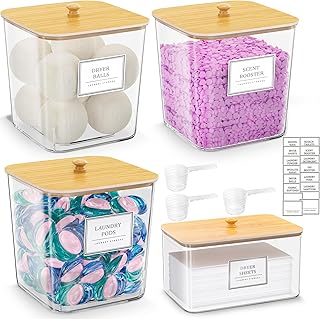
HomePekite Laundry Pods Storage Container
If you want something that just works, HomePekite Laundry Pods Storage Container is a safe bet (16 reviews, 4.5 stars).
7. Incorporate Pull-Out Shelves Above Machines

A pull-out shelf above your appliances acts like a drawer for your most-used items. Reaching into a dark cabinet for stain remover is frustrating. I constantly lost small items like buttons in the back corners. I installed a Rev-A-Shelf pull-out wire basket from Target for $45.99. It mounts to the bottom of my cabinet and slides on steel glides. I keep stain sticks and essential oils in this tray. When I’m treating a shirt, I just pull the drawer out and grab what I need. The tracks lock so it won’t slide open when the washer shakes. It uses that awkward six-inch gap between the machine and the cabinets. It’s a great upgrade that takes twenty minutes with a power drill. You might also like: 13 Tiny Closet Organization Ideas That Actually Work
8. Invest in Moisture-Resistant Laundry Room Organization Shelves

Laundry rooms are humid, which destroys cheap materials. I originally used raw particleboard. Within eight months, steam from hot cycles caused the edges to swell and flake. The shelves looked like they had a skin condition, and wood flakes kept falling into my laundry. You must choose sealed hardwood, plywood, or metal. I replaced mine with solid pine boards. Before installing, I coated them with Minwax Polycrylic sealer, which costs $21.98 for a quart at Lowe’s. The clear coat creates a plastic-like shell. When fabric softener drips, it just beads up instead of soaking into the wood. You can wipe it off with a paper towel. If you paint, use a high-gloss exterior paint because flat wall paint absorbs moisture and stains. You might also like: 15 Cozy Room Cleaning Tips Organizing Ideas to Steal Right Now
9. Combat Clutter With Cohesive Glass Storage Jars

Decanting supplies into matching jars kills visual chaos. Commercial packaging is loud and covered in neon labels. Having clashing colors on an open shelf makes the room look messy. I bought three Anchor Hocking 1-gallon glass jars from Walmart for $14.97 each. I dump my powdered detergent and dryer balls into them. The thick glass feels substantial, and the wide mouth makes scooping easy. The metallic sound of the scoop hitting the glass is satisfying. The uniform jars create a calm look. The only downside is that glass is breakable. I dropped a lid on my tile floor last year and it shattered. Keep the heavy jars on a lower shelf so you aren’t reaching over your head with slippery hands.
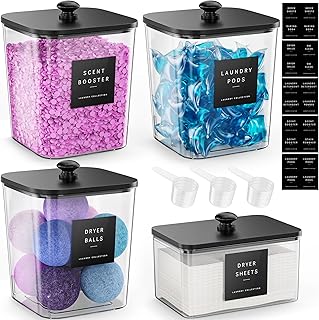
4 Pack Laundry Pods Container
Honestly, 4 Pack Laundry Pods Container surprised me — sturdier than it looks in the photos, and over 523 buyers gave it 4.5 stars.
10. Add a Built-in Drying Rod Beneath Your Shelf

Installing a metal rod under your lowest shelf gives you a spot to air-dry delicates. I used to drape leggings over my dining chairs, which ruined the wood finish. The wet clothes would drip and create a slipping hazard. I bought an Everbilt 48-inch closet pole from Home Depot for $13.48. I mounted the pole sockets to the cleats supporting my shelf. This rod holds ten damp garments on hangers. It replaces those bulky drying racks that pinch your fingers and hog the floor. You just pull a shirt from the washer, hang it, and hook it on the rod. Any drips fall into the sink or onto the countertop. Install the rod at least ten inches from the wall so clothes hang straight without touching the drywall.
11. Consider Metal Shelving for Durability

Powder-coated metal shelving is indestructible and handles heavy weight without bowing. Wooden shelves are nice, but a long span of pine will eventually sag under thirty pounds of detergent. I upgraded my main wall with a Shelfology Bender metal shelf that cost $145. It’s made of heavy-gauge steel with a matte black finish. The metal is cold to the touch and impervious to chemical spills. When I spilled bleach on it, I just wiped it off; the finish didn’t change. Metal shelves have a slim profile, giving the room a crisp look. They match modern appliances perfectly. Installation requires hitting studs precisely because the shelf is heavy. It took two people to hold it level while I drove the screws in, but the stability is worth the effort.
12. Avoid Overstuffing to Maintain Proper Airflow

Packing shelves too tightly invites mold. I used to cram as many bath towels as possible onto my top shelf. They were jammed against the ceiling with zero airflow. After a humid summer, I pulled down a towel and noticed a musty mildew smell. The moisture from the dryer vent had seeped into the cotton. You have to leave breathing room. I now leave a two-inch gap between stacks and the walls. I also place DampRid moisture absorber cups, which cost $4.49 at Kroger, on the back corners of my shelves. These cups pull humidity out of the stagnant air. You’ll be shocked by how much water collects in those cups after a month. Proper airflow keeps linens smelling fresh instead of like a basement.

3-Tier Hanging Laundry Basket Organizer:Foldable Wire Shelf
Honestly, 3-Tier Hanging Laundry Basket Organizer:Foldable Wire Shelf Laundry Ro surprised me — sturdier than it looks in the photos, and over 536 buyers gave it 4.5 stars.
13. Utilize Over-the-Door Storage for Shallow Items

The back of your door offers massive vertical space for shallow storage. I ignored my door for years, leaving lint rollers shoved in corners. I bought an Elfa Utility Door & Wall Rack from The Container Store for $115. It hooks over the top and bottom of the door, requiring zero screws. The baskets are four inches deep. This is the perfect depth for starch cans, stain remover, and lint rollers. Because the baskets are shallow, small items don’t get buried. The rack holds all the random clutter that clutters your main shelves. When you close the door, the mess disappears. Just check that your hinges are tight. The rack adds weight, which caused my hinge to squeak until I used WD-40.
14. Budget Carefully for Custom vs Stock Cabinetry

Understanding the price difference between custom and stock cabinetry helps you plan. I once got a quote from a cabinet maker for $1,200 per linear foot. I politely declined. Instead, I bought Hampton Bay stock cabinets from Home Depot. They typically range from $100 to $300 per linear foot. You have to assemble them, and they come in specific widths like 18 or 24 inches. You might have a small gap at the end of the wall, but you can cover that with a strip of filler wood. The stock cabinets use cheaper hinges, but they hold towels just fine. If you’re on a budget, spend your money on high-quality hardware and floating shelves, and save cash by using stock cabinets for closed storage.
15. Incorporate Hidden Storage for Hampers

Hiding dirty laundry hampers in tilt-out cabinets makes the room look clean. Staring at a basket of sweaty gym socks ruins the room’s aesthetic. The smell of running shirts used to hit me the second I walked in. I installed a Rev-A-Shelf tilt-out hamper basket for $62.99 into a base cabinet. The door hinges at the bottom. When you pull the handle, the door tilts out to reveal a wire basket. You just toss dirty clothes inside. When closed, it looks like a drawer. The basket lifts out so you can carry it to the machine. It keeps odors contained and reclaims floor space. It’s a bit tricky to measure for the hinges, but hiding the clothes is worth the afternoon of work.

ROMOON Laundry Hamper Sorter Cart: 4-Section Organizer with
If you want something that just works, ROMOON Laundry Hamper Sorter Cart: 4-Section Organizer with Heavy-Duty is a safe bet (187 reviews, 4.5 stars).
16. Squeeze in a Rolling Cart for Narrow Gaps

A slim rolling cart fixes the useless gap between appliances. I have five and a half inches of space between my washer and the wall. It was just wide enough to collect dust bunnies, but too narrow for a shelf. I bought a Spacekeeper 4-tier slim rolling cart on Amazon for $22.99. It’s 5.1 inches wide and rolls on tiny wheels. I load the shelves with dryer sheets, mesh laundry bags, and fabric softener. When I need something, I slide the cart out. The wheels glide easily on my tile. When I’m done, I push it back into the gap to hide the clutter. It’s the easiest way to gain three shelves of storage without drilling a single hole.
Building a functional utility space doesn’t require a massive budget, but it does need precise planning. I spent months fighting with sagging particleboard before I invested in proper brackets, deep boards, and metal racks. Skip the cheap plastic units that wobble. Take an afternoon to screw heavy-duty brackets into your studs, buy solid wood, and seal it well. Your back will thank you when you’re folding towels at a comfortable height. If you found these tips helpful, save this article for the next time you’re in the lumber aisle trying to remember how deep a shelf needs to be.
Frequently Asked Questions
How deep should laundry room shelves be?
For standard detergent bottles and boxes, shelves should be 10 to 14 inches deep. If you plan to store bulky folded bath towels, you need a depth of at least 20 inches to prevent the towels from hanging over the front edge.
What is the best material for utility room shelving?
You need moisture-resistant materials like sealed hardwood, marine-grade plywood, or powder-coated metal. Avoid raw particleboard, as the high humidity from the dryer and hot water cycles will cause it to bubble, warp, and flake apart over time.
How high above the washer and dryer should shelves be?
Leave at least 18 to 24 inches of vertical clearance between the top of your machines and the bottom of your first shelf. This provides enough physical room to fully open a top-loading washer lid and comfortably reach items stored in the back.
Are adjustable shelving systems better for laundry rooms?
Yes, adjustable track systems like IKEA BOAXEL or Elfa allow you to change the shelf height if you switch from a small liquid detergent bottle to a massive bulk box of powder. Fixed shelves lock you into one specific layout permanently.
