What’s Inside
- The IKEA Trofast System Is My Ultimate Kids Toy Storage Idea
- Adaptable Shelving With The IKEA Kallax
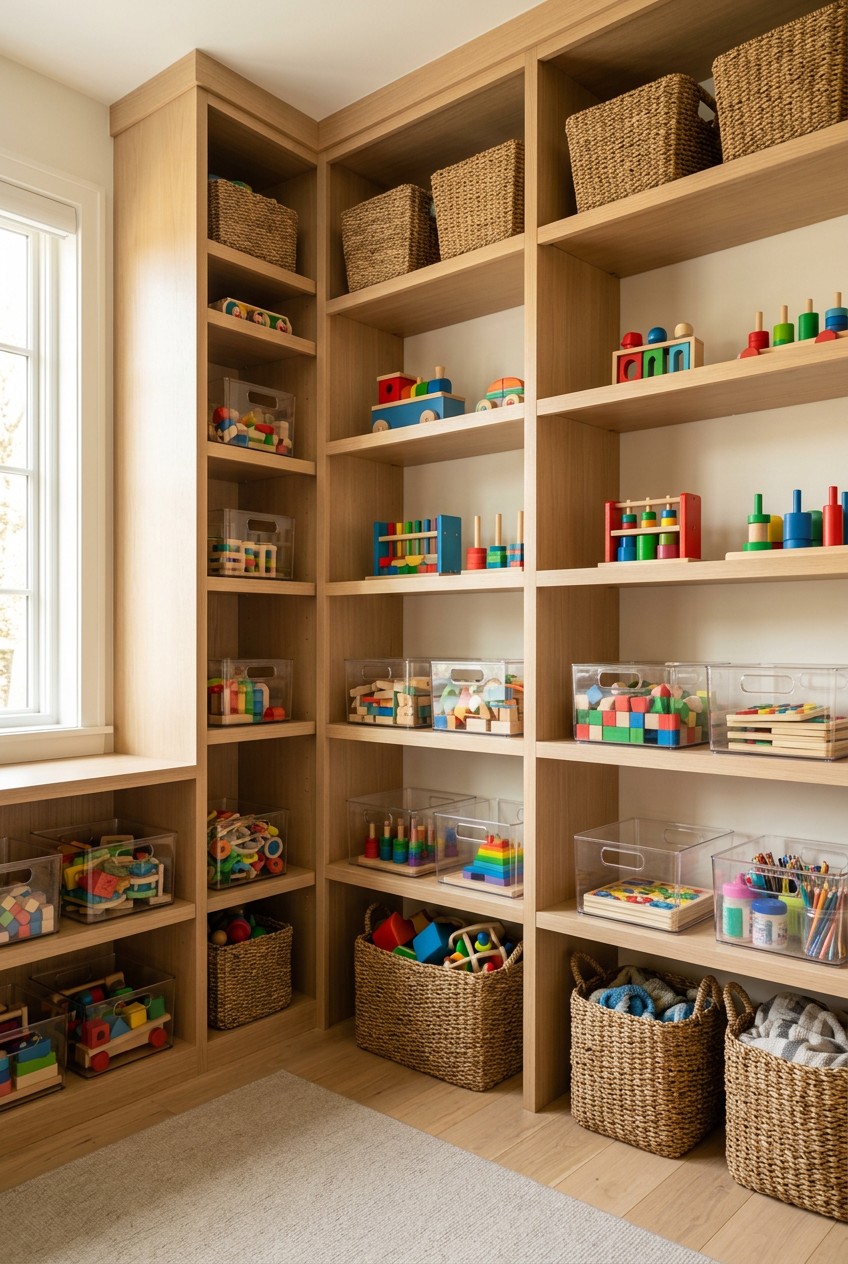
- Clear Stackable Bins Stop The Rummaging
- Implementing A Strict Toy Rotation System
- Montessori-Inspired Open Shelving Works
- Picture And Text Labels Make Cleanup A Game
- Sneaky Multi-Purpose Furniture For Shared Spaces
- Vertical Wall-Mounted Storage For Small Rooms
- Avoid The Opaque Bin Trap
- Let Your Kids Help With The Organizing
- Safety First With Heavy Toy Chests
- Portable Rolling Carts And Soft Baskets Are The Best Kids Toy Storage Ideas
Last Tuesday at Whole Foods, I pulled my wallet out of my purse to pay for a $4.99 carton of oat milk, and a sticky, neon green plastic lizard fell right onto the black rubber conveyor belt. The cashier stared at me. I stared at the lizard. That humiliating, slightly hilarious moment is why I’m obsessed with finding realistic kids toy storage ideas. If you don’t have solid systems in place, your house quickly becomes a giant, chaotic playroom where rogue action figures hide in your grocery bags.
I’ve been a home organization coach for years, and I can tell you that managing children’s clutter is the number one thing my clients cry about. I get it. I used to trip over wooden train tracks in my own living room every single morning. I tried this wrong for months before figuring it out. I bought flimsy cardboard boxes that ripped. I bought massive, heavy chests that just became bottomless pits of broken crayons and loose puzzle pieces. It was a disaster. I learned that the hard way.
You don’t need a perfectly curated, beige-on-beige playroom that looks like a museum. You just need practical systems that actually work. You need bins that kids can open, shelves they can reach, and a logical flow that makes cleanup take five minutes instead of two hours. I’m going to walk you through exactly what works, what to buy, and what massive mistakes you need to avoid.
1. The IKEA Trofast System Is My Ultimate Kids Toy Storage Idea

If I had to pick just one piece of furniture to solve your clutter problems, it’s the IKEA Trofast system. I’m serious. This modular system features a sturdy solid pine frame and thick plastic bins that slide into pre-cut grooves. It’s highly recommended by professional organizers like MacCannell, and I swear by it for wrangling massive collections of tiny items.
Prices for these combinations range from $50 to $150 depending on the size and configuration. I bought the stepped pine frame for $99.99 last year, and it changed how we handle LEGOs. The low height allows children to access their toys and, more importantly, put them away without your help. The plastic tubs come in different depths. I use the shallow 4-inch deep white tubs ($4.00 each) for small action figures and the deeper 9-inch tubs ($6.00 each) for bulky wooden blocks.
A common mistake I see parents make is buying the frame and only getting the deepest bins. Don’t do this. When you use massive bins for tiny toys, all the small pieces sink to the bottom. Your kid will just dump the entire heavy bin onto the floor to find one specific 2-inch plastic wheel. Mix and match the bin sizes. The fresh pine smells great, and the bright white plastic bins wipe clean with a damp cloth when they inevitably get covered in sticky fingerprints.
2. Adaptable Shelving With The IKEA Kallax

Another incredible option is the IKEA Kallax shelf unit. These start around $35 for a small 2×2 cube unit and go up to $70 for the 2×4 version. I love these because they have a clean, modern design that doesn’t scream “toddler zone.” Professional organizer Sarah Grant suggests starting the 2×4 unit horizontally on its side for younger kids. I did exactly this when my kids were toddlers.
When it sits horizontally, the top surface is only about 30 inches off the floor. It creates the perfect low surface for displaying large wooden farm animals or setting up a small dollhouse. As your kids grow, you can stand the unit up vertically to save floor space and make room for a desk. It adapts as they age.
I learned a hard lesson with these shelves, though. I once bought cheap, generic 11-inch fabric bins from a discount store to put inside the 13-inch Kallax cubbies. They looked terrible, sagged, and left awkward gaps where dust collected. You need to buy bins that actually fit the 13-inch by 13-inch dimensions. Target sells their Brightroom 13-inch fabric cube storage bins for $10 each, and they slide in snugly, hiding the brightly colored plastic mess behind a neat, textured gray fabric front.
3. Clear Stackable Bins Stop The Rummaging

I used to buy dark, opaque bins for everything because I wanted to hide the visual noise. That was a mistake. When kids can’t see what’s inside a box, they’ll rip the lid off and dump the entire contents onto your rug just to see what’s in there. I’d spend an hour cleaning up, only to have them destroy the room in three minutes. Trust me.
You need to opt for clear, stackable bins for visual organization. I love the iDesign Linus Cube Bins available at The Container Store. The prices vary, but they typically run $20 to $40 each. Yes, they’re a bit pricey, but the thick, crystal-clear acrylic is durable. If you drop one on a hardwood floor, it won’t shatter.
If you’re on a tighter budget, look for the Translucent SmartStore Totes, which start around $8. I bought a stack of these at my local Container Store last month. The translucent plastic allows children to see the contents easily without rummaging. You can clearly see the bright yellow and red plastic bricks through the side of the box. This helps with quick identification and encourages independent cleanup. When they see exactly where the Magna-Tiles belong, they’re much more likely to put them back.

Bathroom Counter Organizer and Storage
Honestly, Bathroom Counter Organizer and Storage surprised me — sturdier than it looks in the photos, and over 12 buyers gave it 4.5 stars.
4. Implementing A Strict Toy Rotation System

If your child’s room looks like a toy store exploded, you don’t necessarily need more storage. You probably just need fewer toys out at one time. Experts recommend rotating toys every two to four weeks. I started doing this three years ago, and it saved my sanity. Keep 8 to 10 well-chosen toys on display, and store the rest out of sight in labeled bins. You might also like: 20 Gorgeous DIY Waste Materials Home Decor Ideas for Any Style
I use large 18-gallon Sterilite plastic tubs (about $9.98 each at Walmart) to store the out-of-rotation toys in my garage. It prevents overstimulation, enhances their creativity, and improves their attention span. When a toddler is faced with 50 toys, they bounce from one to the next every thirty seconds. When they only have eight, they’ll actually sit down and build a complex tower for twenty minutes. You might also like: 20 Brilliant Indian Home Makeover Ideas for Any Style
The best part is that when you bring a bin of “old” toys inside from the garage after four weeks, it feels like Christmas morning. They’re thrilled to see toys they haven’t touched in a month. Just make sure you clean the garage dust off the lids before bringing them inside. I once brought a bin in without wiping it down, and a dead spider fell onto the carpet. My kids screamed, and the magic of toy rotation was ruined for the afternoon. You might also like: 15 Brilliant Home Organization Ideas to Transform Your Space
5. Montessori-Inspired Open Shelving Works

Skip the giant, deep toy boxes. They’re where toys go to die. Instead, prioritize Montessori-inspired open shelving. You want low, open shelves that are exactly at a child’s eye level. This allows them to see, choose, and return toys independently. It builds a sense of responsibility.
I was buying organic apples at Sprouts a few weeks ago, watching a mother struggle with a toddler who wanted to pull every item off the bottom grocery shelf. It reminded me exactly of how kids interact with toys at home. They want to touch what they see. Unlike traditional toy boxes where items are piled up, hidden, and tangled together, open shelving encourages purposeful play.
I use a simple 3-tier birch wood shelf that is only 24 inches tall. I place one specific toy or activity on each open section. I’ll put a 12-piece wooden puzzle on the left, a stack of four board books in the middle, and a small basket of wooden cars on the right. There is plenty of space between the items. It looks inviting. When my kids finish with the puzzle, they know exactly where the empty wooden square is on the shelf, so they put it back. It’s almost magical how well this works when you give them visual boundaries.
6. Picture And Text Labels Make Cleanup A Game

You can’t expect a three-year-old to read a fancy cursive label that says “Automobiles.” You have to meet them where they are. Creating custom labels with both pictures and text for your storage bins is essential, especially for younger children. This helps them identify where each toy belongs and turns cleanup time into a matching game.
I bought a basic Brother P-Touch label maker for $34.99 at Target, but for the picture labels, I just print them on my home printer. I take a real photograph of the exact toy, print it out on printer paper, cut it into a 2-inch square, and use clear packing tape to stick it to the front of the IKEA Trofast tubs. I write the word “CARS” in thick black marker below the picture.
The sensory experience of peeling the backing off a fresh label is satisfying. But the real joy is watching a toddler look at a stray toy, find the matching picture, and drop the toy in. I tried using generic clip-art for a while, but it didn’t work nearly as well. Kids are literal. They need to see a picture of their exact toy to make the connection.

Sevenblue 3 Pack Under Sink Organizers
Honestly, Sevenblue 3 Pack Under Sink Organizers surprised me — sturdier than it looks in the photos, and over 39 buyers gave it 4.5 stars.
7. Sneaky Multi-Purpose Furniture For Shared Spaces

If you live in a smaller home, your living room is probably also the playroom. You don’t want your main living space to look like a preschool classroom. You need to invest in multi-purpose furniture for shared spaces. I love using furniture that doubles as hidden storage.
Storage ottoman benches are a brilliant solution. You can find beautiful, tufted faux-leather or linen options at places like Target or Costco. Most good storage ottomans range from $50 to $200. I bought a dark gray linen storage bench for $129 at Costco last year. It sits under my front window. The fabric has a durable texture that hides stains perfectly.
When guests come over, it just looks like a stylish place to sit and put on your shoes. But lift the padded lid, and it is hollow inside. I use it to hide all the oversized, awkwardly shaped plastic toys that don’t fit in standard bins. Large plastic fire trucks, keyboards, and dinosaur figures all get tossed in there. It hides the toys completely while providing extra seating, making the space adult-friendly the second the kids go to bed.
8. Vertical Wall-Mounted Storage For Small Rooms

When floor space is limited, you have to think vertically. Stacking things on the floor just creates tripping hazards and clutter. I learned this when organizing a tiny 10-foot by 10-foot bedroom. We couldn’t fit another bookshelf on the floor, so we went up the walls.
Install floating shelves for books or displaying delicate LEGO creations. I like the simple white floating shelves from IKEA (the LACK series, starting around $19.99). Just make sure you anchor them into the wall studs. I once tried to use cheap plastic drywall anchors for a shelf full of heavy books. I ended up with drywall dust on my face and a massive hole in the wall when the shelf ripped out.
You can also use clear over-the-door shoe organizers for small items. I bought a 24-pocket clear vinyl organizer for $12.99 at Target. It hangs on the back of the closet door and is perfect for sorting Barbie dolls, action figures, or craft supplies. You can also mount a simple metal towel bar (around $15 at a hardware store) low on the wall and add S-hooks to hang dress-up costumes. It keeps the slippery princess dresses off the floor and easily accessible.
9. Avoid The Opaque Bin Trap

Professional organizer Kallie Branciforte warns that simply buying more bins, especially opaque ones, often leads to more hidden clutter rather than true organization. I agree. Most people get this wrong. They feel overwhelmed, so they drive to Target, buy ten large, solid-colored plastic tubs, and shove everything inside.
That isn’t organizing. That’s just moving your piles of junk into expensive plastic squares. When you use solid, non-transparent bins with heavy lids, you’re creating a black hole. You’ll forget what’s in there. Your kids will forget what’s in there. Months later, you’ll open it up and find a gross mix of crushed goldfish crackers, broken crayons, and half-finished puzzles.
Instead of buying more bins right away, focus on decluttering. Sit down on the floor and aggressively sort through the piles. Throw away the broken plastic toys. Donate the baby toys your four-year-old has outgrown. Only after you’ve reduced the volume should you go buy storage. And when you do, stick to clear acrylic or open baskets so the contents remain visible.

REIBII 55.5" W Storage Shelves 3200LBS Metal Shelving 5
Honestly, REIBII 55.5″ W Storage Shelves 3200LBS Metal Shelving 5 Tier Wire Shel surprised me — sturdier than it looks in the photos, and over 544 buyers gave it 4.5 stars.
10. Let Your Kids Help With The Organizing

Don’t organize toys while your kids are sleeping. I know it’s tempting. I know it’s faster. But if you do it without them, they won’t understand the system, and they’ll destroy it in five minutes the next morning. You have to involve children in the organization process. It took me years to figure out.
Let them help categorize and decide where toys should go. A core Montessori principle is that every single item should have a designated and permanent storage place. Whether it’s a specific low bookshelf for storybooks or a labeled bin for building sets, consistently storing items in the same spot helps children learn order. It makes cleanup intuitive.
Last month, I sat on the floor with my daughter sorting through a pile of broken crayons. I asked her, “Should the crayons go in the red cup or the blue bin?” She chose the red cup. Because she made that choice, she felt ownership over it. Now, she actually puts her crayons back in the red cup. It teaches them vital organizational skills and drastically increases their likelihood of maintaining the system. It prevents so much daily frustration for both of you.
11. Safety First With Heavy Toy Chests

If you absolutely must use a large toy chest for bulky items, you have to prioritize safety. I can’t stress this enough. I grew up with a massive, vintage wooden trunk. The lid weighed about twenty pounds. One day, it slammed down on my fingers, and the sharp, stabbing pain is something I still remember clearly decades later.
If opting for a toy chest, ensure it has a high-quality safety-hinged lid that prevents it from slamming shut. This protects tiny fingers from getting crushed. Additionally, look for models with air holes or a gap under the lid to prevent suffocation in case a small child decides to climb inside.
The Melissa & Doug Wooden Toy Chest is a fantastic example of doing this right. It retails between $100 and $150. It has a slow-closing safety hinge that holds the heavy wooden lid open at any angle. It won’t drop until you push it down. It also features a specific cutout gap along the front edge so that even if it’s fully closed, air can circulate inside. It has a smooth, glossy white finish that looks great in a bedroom, and it holds up to 71 pounds of toys safely.
12. Portable Rolling Carts And Soft Baskets Are The Best Kids Toy Storage Ideas

Sometimes toys need to travel. Kids don’t want to stay in their bedrooms; they want to be where you are. A three-tier rolling cart is the perfect solution. The IKEA RÅSKOG cart runs about $30 to $40 and is incredibly sturdy steel. It can be easily moved between the kitchen, living room, and bedroom. It’s ideal for storing 4 oz bottles of acrylic paint, construction paper, and markers. You just roll the cart to the kitchen table for craft time, and roll it away into a closet when they finish.
For large items like stuffed animals and blankets, you need large, soft woven baskets. I love the Pillowfort Quilted Kids’ Storage Baskets from Target. They cost around $20 to $40. They’re made of soft cotton rope, meaning there are no sharp edges for a toddler to fall against. They allow for a quick “dump and go” cleanup method right before company comes over.
However, you must store “messy” or supervised items out of reach. Keep items like slime, loose glitter, or tiny beads in opaque bins with locking lids on the top shelf of a closet. I once left a container of neon pink slime in a low floor basket. My youngest found it, and I spent three hours scrubbing dried, crusty pink goo out of my beige living room carpet. Keep the messy stuff high up, and leave the soft baskets on the floor for the safe, everyday toys.
Honestly, organizing your home doesn’t have to be a nightmare. Start by decluttering the broken junk, grab a few IKEA Trofast bins, and set up a simple rotation system. I’d love to hear which of these kids toy storage ideas you try first. Be sure to save and pin this article so you can reference these exact product prices and tips the next time you’re standing in the aisle at Target feeling overwhelmed!

4 Tier Storage Bins with Lids
Honestly, 4 Tier Storage Bins with Lids surprised me — sturdier than it looks in the photos, and over 63 buyers gave it 4.5 stars.
Frequently Asked Questions
What is the best way to store small toys like LEGOs?
I highly recommend the IKEA Trofast system for small pieces. Use the shallow 4-inch plastic bins so small pieces don’t sink to the bottom. Clear acrylic bins with tight lids also work wonderfully for keeping tiny sets contained.
How often should I rotate my kids’ toys?
Experts suggest rotating toys every two to four weeks. Keep 8 to 10 toys out on display and store the rest out of sight in large plastic tubs. This prevents overstimulation and makes old toys feel brand new.
Are toy chests safe for toddlers?
Traditional toy chests can be dangerous if the lid is heavy. Always choose a chest with a slow-closing safety hinge and air gaps, like the Melissa & Doug Wooden Toy Chest, to prevent crushed fingers and suffocation risks.
How can I organize toys in a shared living room?
Use multi-purpose furniture like storage ottoman benches. They hide bulky toys completely while providing extra seating. Pair these with soft cotton rope baskets that look stylish but allow for quick cleanup of stuffed animals and blankets.
