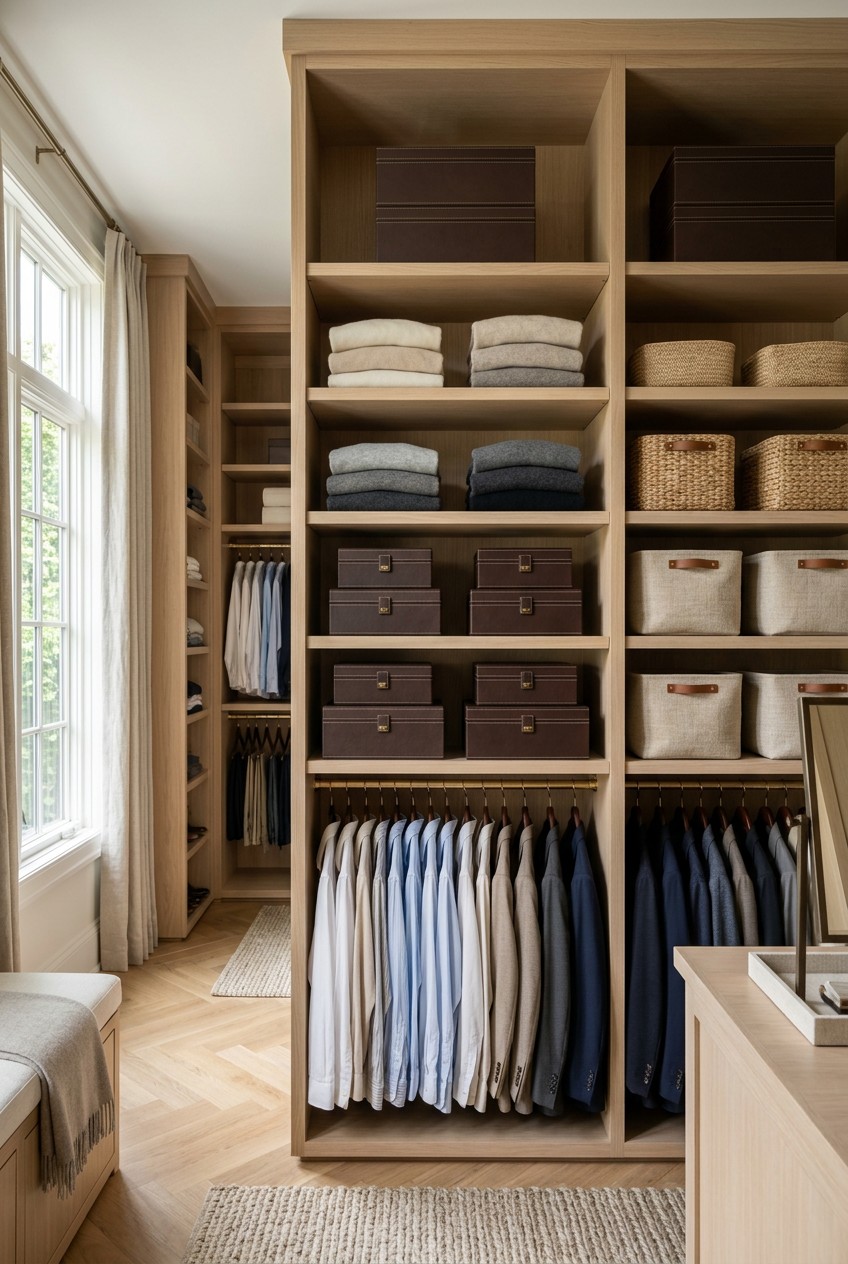
What’s Inside
- Start with a Ruthless Purge – The Foundation of Closet Shelf Organization
- Maximize Vertical Space with Adjustable Shelving
- Implement Clear Dividers for Flawless Closet Shelf Organization
- Utilize Clear, Stackable Bins for Seasonal Items
- Discover the Power of Under-Shelf Organizers
- Embrace Sustainable Materials Like Bamboo
- Integrate Smart Lighting for Enhanced Visibility
- Categorize and Zone Your Shelves Like an Expert
- Avoid Overstuffing Shelves – Give Items Breathing Room
- Utilize Door-Mounted Organizers for Small Accessories
- Implement a Seasonal Rotation Strategy
- Invest in Matching Slim Hangers to Free Up Shelf Space
- Consider Smart Closet Technology for Inventory Management
- Repurpose and DIY for Budget-Friendly Solutions
Last Tuesday, I opened my bedroom closet and a 4-pound stack of winter sweaters immediately collapsed onto my face. They smelled like old cedar and desperation. If you’re struggling with closet organization, you’ve got to start by admitting when your current system isn’t working. Mine was a disaster. I spent months shoving things toward the back before I figured out a better way. I’ve wasted hundreds on the wrong bins and broken shelves. I’d rather spend an hour fixing it right than a week digging through clutter. Let’s skip the generic advice. I’m going to show you what actually works and why you should stop buying cheap plastic garbage.
1. Start with a Ruthless Purge – The Foundation of Closet Shelf Organization

I used to think a $14.99 woven basket from Target would magically fix my shelves. It won’t. If you don’t decide what to keep first, you’re just organizing trash. I learned that the hard way last month when I pulled out a bin and found three pairs of jeans that haven’t fit since 2019. They smelled like stale dust. Pull everything off your shelves. Yes, everything. Pile it on your bed. If you haven’t worn a shirt in a year, bag it for donation. Drop it at Goodwill. Don’t just stuff it back into the dark corners. Most people get this wrong; they buy the bins first. A stuffed shelf is impossible to use. If you have to yank a sweater out from the bottom of a pile, you’re doing it wrong. I recommend grabbing some 30-gallon Hefty trash bags. They’re about $11.49 for a box of 40 at Walmart. Fill them up. Get rid of the torn shirts and single socks. Your shelves need room to breathe. Once I finished my purge, I realized I only needed half the storage space I thought I did. It’s the most crucial step. Don’t skip it.
2. Maximize Vertical Space with Adjustable Shelving

Don’t let the empty air above your clothes go to waste. I see it all the time: a single fixed shelf with three feet of dead space above it. It drives me crazy. I’m a massive fan of the Elfa system from The Container Store. It’s an investment, with prefab systems ranging from $200 to $2,200. You can also just buy individual adjustable shelves for $15 to $60. I installed a basic Elfa track in my hallway closet last winter. The metal tracks felt cold and heavy, but they snapped into place perfectly. Moving a shelf up two inches so my tall boots fit feels incredible. If you’re on a tighter budget, the IKEA PAX system is a fantastic option. You can buy extra KOMPLEMENT shelves for about $15.00 each. I tried using cheap, fixed wire shelving in my old apartment and it was a nightmare. The rough wires left indentations on my shirts. Adjustable solid shelves solve this. You can lower a shelf for t-shirts, then raise the next one for a tall storage bin. It’s fully customized to your wardrobe. I’ve ripped out so many fixed shelves for clients. It’s always worth the effort.
3. Implement Clear Dividers for Flawless Closet Shelf Organization

Let’s talk about the sweater avalanche. You stack five folded sweaters, and three days later, they’re slumped over like a tired toddler. To stop the collapse, you need shelf dividers. I swear by mDesign Clear Acrylic Closet Shelf Dividers. You can grab a 4-pack on Amazon for $23.49. They slide onto any standard wood shelf up to 0.75 inches thick. No tools required. The thick acrylic feels sturdy and practically disappears. I tried cheap plastic ones from a dollar store once; they snapped the second I pushed a stack of denim against them. Total waste. The clear acrylic ones keep your folded clothes neat and prevent stacks from leaning. I even use them to keep my structured purses upright so they don’t lose their shape. Slide a divider every 10 inches along the shelf. It creates beautiful, customized cubbies. It looks like a high-end boutique instead of a rummage sale. If you’re stacking anything higher than 4 inches, you need these. I won’t organize a closet without them.

AWTATOS Cube Storage Organizer Storage 12 Cube Bookshelf
AWTATOS Cube Storage Organizer Storage 12 Cube Bookshelf DIY Plastic C has been one of the most consistently praised picks in this category. 28 reviewers averaged 4.5/5.
4. Utilize Clear, Stackable Bins for Seasonal Items

For high shelves, loose items are your worst enemy. You need clear, stackable storage bins. Skip the opaque plastic. If you can’t see what’s inside, you’ll forget what you own. I learned this when I packed winter scarves in a solid gray bin and ended up buying three new ones at Target the next year. Such a stupid mistake. Now, I use Our Shoe Box and Our Sweater Box bins from The Container Store. The sweater boxes are $11.99 each and measure 15.6 inches by 11.3 inches. They hold four chunky sweaters. Look for bins with extra depth for those deep shelves. Some even have tiny wheels and pull handles, which helps when dragging a heavy bin down from a top shelf. The snap-on lids keep out that dusty closet smell. I keep my heavy coats and wool socks in these during the summer. I can spot my bright red wool socks instantly. Most options run under $25. It’s a small price to protect clothes from dust. Plus, they stack perfectly. I’ve bought at least thirty over the years.
5. Discover the Power of Under-Shelf Organizers

This trick makes people gasp when they see my closet. Most people ignore the empty air hanging under their shelves. I’m talking about under-shelf wire baskets. I bought the SUFAUY 4-Pack Under Cabinet Shelf Basket set for $24.99, and it’s brilliant. They slide onto shelves up to 1.4 inches thick. I use them for rolled-up silk scarves, sunglasses, and small clutches. The matte black finish grips the shelf tightly. If you need something heavy-duty, the AmonHouseware 2-Pack Under Shelf Basket Organizer is about $34.99 and offers adjustable height. I use one for my small workout towels. It creates instant storage out of thin air. A quick warning: don’t overload these with heavy items like denim. I tried putting five pairs of jeans in a cheap wire basket once and bent the metal arms permanently. Keep it to lightweight accessories. It’s the perfect spot for things you need to grab quickly. It breaks up the vertical space and keeps tiny items from getting lost behind bulky sweaters. You might also like: 15 Gorgeous Hacks Home Organization to Inspire Your Next Project
6. Embrace Sustainable Materials Like Bamboo

I used to buy the cheapest plastic bins. My closet sounded like a noisy factory whenever I moved a bin. It was awful. Now, I’m transitioning to sustainable materials. It looks better and doesn’t off-gas chemical smells. Replace cracked plastic with bamboo dividers or fabric baskets. I recently bought a set of three Goodpick Organic Cotton Rope Baskets for $26.99 on Amazon. The woven cotton is soft and won’t scratch my shelves. I use them for workout leggings, standing them vertically. Bamboo shelving also proves durable. I keep a small Seville Classics Bamboo 3-Tier Organizer ($39.99) on my shelf for jewelry and perfumes. The natural wood grain adds warmth to a space that usually looks like boring drywall. If you own small items like buttons or collar stays, use recycled glass jars. I cleaned out Bonne Maman jam jars—about $5.99 at Sprouts—and peeled off the labels. The heavy glass feels luxurious. It’s a massive upgrade. You might also like: 15 Creative Dollar Tree Hacks Organizing Ideas for a Fresh New Look
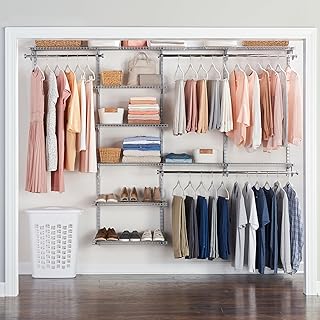
Rubbermaid Configurations Deluxe Custom Closet Kit 4-8 Ft.
If you want something that just works, Rubbermaid Configurations Deluxe Custom Closet Kit 4-8 Ft. Adjustable is a safe bet (81 reviews, 4.5 stars).
7. Integrate Smart Lighting for Enhanced Visibility

Ever tried to tell the difference between navy and black in a dim closet at 6:00 AM? I once wore one navy sock and one black sock to a client meeting. I was mortified. You need proper lighting. Built-in lighting is a huge trend, but you don’t need an electrician. I use EZVALO Motion Sensor Cabinet Lights. A 3-pack is $39.99. They’re rechargeable LED puck lights that attach with a magnetic strip. I stuck them to the ceiling and under my lowest shelf. The second I open the door, they click on. The bright, cool-white light illuminates every corner. No more fumbling for a pull string. When I’m done, they turn off after 15 seconds. It makes my basic reach-in closet look like a custom build. Keeping the space bright makes it feel less cluttered. If you have deep shelves, put a light strip at the back. It eliminates that scary bottomless pit effect. Charge them every few weeks; I plug mine in on Sunday afternoons using a USB-C cable. You might also like: 15 Cozy Room Cleaning Tips Organizing Ideas to Steal Right Now
8. Categorize and Zone Your Shelves Like an Expert

You can’t just throw things on a shelf. You need a system. Professional organizers call this creating zones. I divide my shelves by category and frequency of use. My prime real estate—the shelf at eye level—is for everyday casual wear. This zone holds my t-shirts and favorite jeans. The shelf above is for workwear: cardigans and trousers. Always fold heavy sweaters. Hanging them will permanently stretch the shoulders and leave those weird hanger bumps. I ruined a $150 cashmere sweater from Nordstrom doing that. Never again. The highest shelves are for seasonal items, and the lowest are for heavy accessories and shoes. This system saves me so much time. If I need a workout shirt, I know exactly where to look. It also stops me from mixing clean clothes with items I’ve worn once. I keep a small canvas bin—a $9.00 Threshold bin from Target—in my casual zone for those worn-once items. It keeps them off the bedroom chair.
9. Avoid Overstuffing Shelves – Give Items Breathing Room

This mistake happens constantly. Clients cram twenty shirts onto a shelf meant for ten. If you have to force a sweater into a stack, your shelf is overstuffed. I used to do this with my workout gear. I packed my leggings so tightly that when I pulled out one pair, the whole stack exploded. It’s infuriating. You must leave empty space. I aim for at least two inches of visible space on the sides of my stacks. It gives items breathing room and lets you grab what you need easily. This applies to hanging clothes, too. If you can’t slide a hanger back and forth, your rod is too full. Aim for an inch between each hanger to prevent wrinkling. If clothes sit smashed together, they smell stale, and the friction causes delicate fabrics to pill. I lost a beautiful silk blouse because it stayed crushed against a sequined dress for six months. Respect your clothes. Give them space. If you lack room, go back to step one and purge.

AMKUFO 6 Pack-Closet-Organizers-and-Storage
A dependable everyday pick — AMKUFO 6 Pack-Closet-Organizers-and-Storage pulls in 52 ratings at 4.5 stars. Not flashy, just solid.
10. Utilize Door-Mounted Organizers for Small Accessories

If you store tiny accessories on deep shelves, you’re wasting space. Belts, scarves, and ties don’t belong on a 15-inch deep shelf. They’ll just unroll into a mess. Look at the back of your door. It’s prime, unused real estate. I bought the Elfa Utility Door & Wall Rack from The Container Store for about $140.00. It hangs over the top of the door. No drilling needed, which is perfect for renters. I attached shallow metal baskets for belts, sunglasses, and small bags. The metal mesh is sturdy and doesn’t bang against the door. Before this, I used a cheap over-the-door shoe organizer with plastic pockets. It functioned okay, but the plastic ripped and it looked terrible. A dedicated rack frees up massive amounts of shelf space for bulkier items like sweaters. If you don’t want to spend over $100, buy a simple Command Hook rack for $15.99 at Walmart. Get those annoying items off your main shelves. It’s worth it.
11. Implement a Seasonal Rotation Strategy

You shouldn’t be staring at heavy wool coats in July. If your closet holds your entire wardrobe, it’s going to feel crowded. Every April and October, I spend an hour swapping my shelves. I pack away off-season clothing. I recommend Spacesaver Premium Vacuum Storage Bags. A 6-pack of jumbo bags is $35.99 on Amazon. Fold your coats and blankets, seal the closure, and use your vacuum hose to suck the air out. It shrinks to a flat, rock-hard pancake. It reduces volume by about 80 percent. I slide these into clear bins on the highest, least accessible shelf. Out of sight, out of mind. This ensures only items I need take up my prime, eye-level space. It makes my routine so much smoother. I tried leaving everything out one year because I felt lazy. I spent ten minutes every morning pushing coats out of the way to find a summer cardigan. Rotate your stuff. It doubles your usable shelf space.
12. Invest in Matching Slim Hangers to Free Up Shelf Space

You might wonder why I’m talking about hangers. Here’s the secret: if your hanging rod is a disaster of thick, mismatched plastic, you’re probably folding things that should be hung because you’re out of rod space. By fixing your hangers, you reclaim rod space, allowing you to move items off your shelves. I threw away my bulky tubular hangers and replaced them with Amazon Basics Slim Velvet Hangers. A pack of 50 costs $21.59. They’re 0.2 inches thick. The velvet grips delicate silk shirts so they don’t end up in a wrinkled puddle. Be careful, though—putting wet clothes on them can cause dye transfer. Only hang dry clothes. By switching to slim hangers, I gained almost a foot of extra rod space. I managed to hang all my cardigans, freeing up an entire shelf for my shoe collection. Consistency is key. When all your hangers match, the visual noise disappears, and your closet looks calmer and more expensive.

5 Tier Closet Hanging Organizer
A dependable everyday pick — 5 Tier Closet Hanging Organizer pulls in 1 ratings at 4.5 stars. Not flashy, just solid.
13. Consider Smart Closet Technology for Inventory Management

Okay, this might sound intense, but it’s amazing. If you have deep shelves where things get lost, you need to track what you own. Digital inventory apps are a huge trend. I use an app called Whering; it’s free. Spend an afternoon snapping photos of your clothes. The app removes the background and categorizes everything into a digital wardrobe. Now, instead of tearing apart my shelves to see if my green sweater is clean, I just check my phone. It tracks what I own, when I last wore it, and offers outfit suggestions based on the weather. I used to buy duplicates because I’d forget what was buried in the back. Last year, I found three identical black turtlenecks hidden behind a bin. Now, my digital inventory stops me from overshopping. It keeps my shelves from getting overstuffed. If you’re serious about maintaining organization, you need to know exactly what sits on those shelves without digging through them manually. I use this app every day.
14. Repurpose and DIY for Budget-Friendly Solutions

You don’t need to spend five hundred dollars at a specialty store to get organized. Some of my favorite solutions are free. Repurposing items you own feels smart. I needed a way to store chunky belts but didn’t want another plastic bin. I found a vintage wooden cigar box at a thrift store for $4.00. It smells like cedar, and the dark wood looks beautiful on my white shelf. It holds six rolled-up belts perfectly. You can also use metal shower curtain rings—a 12-pack is $2.50 at Target—and clip them onto a wooden hanger. You can hang ten tank tops from one hanger, freeing up shelf space. I also use the soda can tab trick. Slip the tab from a soda can over the hook of a hanger, and you can hang a second hanger from it, cascading them down. It saves horizontal space. Don’t be afraid to get creative. Just make sure what you repurpose stays clean and fits your dimensions. A cardboard box looks trashy, but a covered vintage chest looks intentional. I’ve saved hundreds doing this.
Getting your shelves under control isn’t about buying a magic product. It’s about being intentional. I’ve spent years fighting my own closet, and these strategies finally gave me peace of mind. Start with that ruthless purge this weekend. I promise you’ll feel ten pounds lighter. If you found these tips helpful, save this post or pin it to your home organization board on Pinterest so you can reference it later when you’re standing in the aisle at Costco. You’ve got this. Let’s make your closet a space you actually enjoy opening every morning.
Frequently Asked Questions
What’s the best way to start closet shelf organization?
Start by completely emptying your shelves and doing a ruthless purge. If you haven’t worn an item in six months, donate it. Don’t buy bins until you know exactly what you’re keeping.
How do I keep folded sweaters from falling over?
You need clear acrylic shelf dividers. They slide directly onto your wooden shelves and create rigid boundaries. This keeps your stacks of jeans and sweaters perfectly upright and prevents the dreaded clothing avalanche.
Are under-shelf baskets worth it?
Yes, they’re incredible for maximizing vertical space. They slide right onto your existing shelf, creating instant storage underneath for lightweight items like silk scarves, small towels, or sunglasses without taking up surface space.
What should I store on the highest closet shelves?
Reserve your highest shelves for out-of-season clothing and rarely used items. Use clear, stackable plastic bins or vacuum-sealed bags to keep everything dust-free. This frees up your eye-level shelves for everyday wear.
