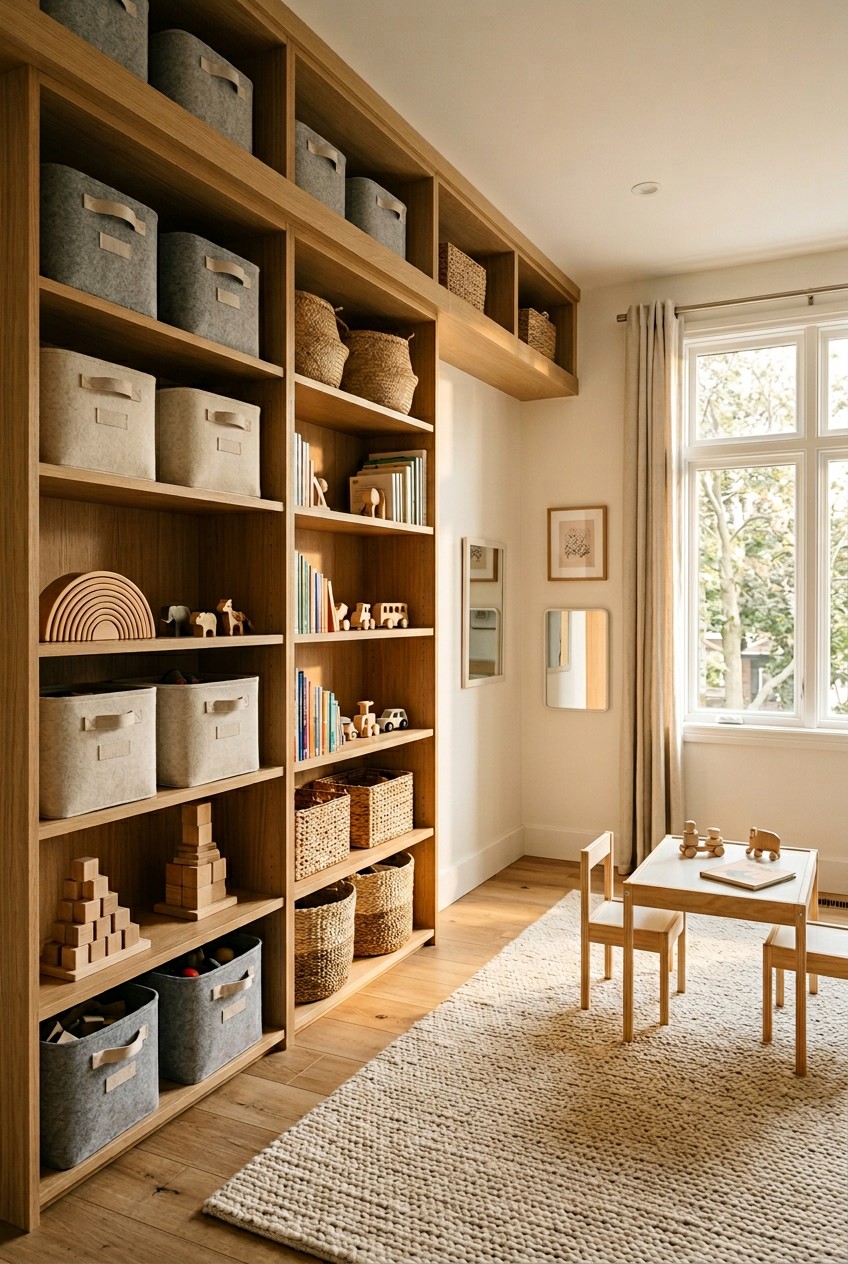
What’s Inside
- Embrace Vertical Storage with IKEA TROFAST Systems (Top Toy Storage Ideas For Small Spaces)
- Implement a Toy Rotation System for Novelty and Less Clutter
- Utilize Under-Bed Storage with Wheeled Bins
- Invest in Multi-Functional Furniture with Hidden Storage
- Go Vertical with Wall-Mounted Pegboards and Shelves
- Categorize and Contain with Clear, Labeled Bins
- Utilize Over-the-Door Organizers for Small Items
- Repurpose Old Furniture Creatively
- Consider Rolling Carts for Mobile Play Stations
- Avoid Deep Baskets for Mixed Toys (Expert Opinion)
- Maximize Closet Space with Adjustable Systems
- Incorporate Decorative Baskets for Living Room Integration (More Toy Storage Ideas For Small Spaces)
- Utilize Corner Storage Organizers
- The “One In, One Out” Rule (Expert Advice)
- Consider Stackable Storage Bins with Interlocking Features
- Use Magnetic Strips for Metal Toys and Matchbox Cars
Last Tuesday at Target, I stepped on a rogue plastic stegosaurus barefoot in the checkout aisle, and the sharp pain ruined my morning. It brought back memories of my own living room three years ago, when finding toy storage for small spaces felt impossible. I lived in an 800-square-foot apartment that smelled of spilled apple juice, stale goldfish crackers, and pure desperation. Toys covered every inch of my cheap gray rug. I couldn’t walk from the kitchen to the sofa without tripping over a wooden block or a singing plastic farm animal. I shoved everything into a massive cardboard box for months before realizing that strategy just creates a black hole of broken plastic. If you’re drowning in clutter right now, I get the frustration. You aren’t failing at parenting just because your living room looks like a daycare exploded. You just need better systems. Let’s fix this mess.
1. Embrace Vertical Storage with IKEA TROFAST Systems (Top Toy Storage Ideas For Small Spaces)

When floor space is tight, you have to look up. I swear by maximizing empty wall space with modular systems, and the IKEA TROFAST is the king here. These units come in various sizes to fit weird corners. You can grab the low, single combination frame (20.5 inches high by 12.625 inches wide by 17.375 inches deep) or the vertical, tall option (57.5 inches high by 17.375 inches wide by 11.75 inches deep). They feature lightweight, pull-out plastic bins that slide on grooves. I recommend the X-Small bins (4 inches high by 11.75 inches wide by 7.75 inches deep) for crayons and tiny action figures. They’re easy for kids to pull out and put away on their own. Prices for TROFAST frames and bins usually range from $20 to $100. I used a heavy wooden toy chest for months before figuring out it was a mistake. My kids constantly smashed their fingers under the lid, and they couldn’t reach the toys at the bottom. The TROFAST system fixes that. The plastic bins wipe clean with a damp cloth, and the solid pine frames look decent in a small living room. Trust me.
2. Implement a Toy Rotation System for Novelty and Less Clutter

This method is popular, and for good reason. Toy rotation involves storing 50 to 60 percent of your kids’ toys out of sight in a closet or garage, swapping them out weekly or biweekly. This keeps toys feeling brand new, cuts down on daily clutter, and helps children focus. Professional organizer Amanda Titchenal recommends this to keep things fresh and maintain a tidier home. I started doing this last year. I bought three opaque plastic tubs from Walmart for $12 each, filled them with the toys my kids ignored, and shoved them in the hallway closet. The first week was rough. My youngest threw a tantrum in the middle of Whole Foods because she remembered a plastic phone I’d boxed up. But after that, the vibe in our apartment shifted. The kids actually played with the toys that were out instead of dumping them on the floor. When I bring a “new” box out every other Sunday, they act like it’s a holiday. It’s the cheapest way to buy yourself some peace.
3. Utilize Under-Bed Storage with Wheeled Bins

The space under your beds is almost always overlooked, but it offers massive storage potential for small apartments. You need to opt for low-profile, wheeled storage bins. I usually grab IRIS or Sterilite brands from Target, which come in capacities from 28-quart to 200-quart sizes. If you want something more durable, brands like VEVOR offer heavy-duty 2-packs of under-bed storage with wheels. These measure about 25.6 inches by 18.1 inches by 7.1 inches and cost around $44.99. These flat bins are ideal for bulky toys, seasonal items, or huge wooden train sets. I used to shove toys under the bed without bins. That was a mistake. Toys would get covered in thick, gray dust bunnies, and I’d scrape my knuckles on the bed frame trying to fish them out. The wheeled bins change everything. You just grab the plastic handle, roll the wheels out, and grab what you need. It keeps toys clean and gets them off your floor.

Sterilite 4 Pack Ultra Latching Box, Storage Bins with Lids
A dependable everyday pick — Sterilite 4 Pack Ultra Latching Box pulls in 126 ratings at 4.5 stars. Not flashy, just solid.
4. Invest in Multi-Functional Furniture with Hidden Storage

When you live in a tiny house, you can’t afford furniture that only does one job. You need furniture that serves a dual purpose to save space. I’m talking about storage ottomans, thick wooden benches with hidden compartments, or coffee tables with lift-top mechanisms. These pieces conceal brightly colored plastic toys while providing seating or surface area. For example, a sturdy banquette bench with a lift-up seat can hide dozens of bulky board games and 500-piece puzzles. Last month, I was at Costco and spotted a dark brown faux leather storage ottoman for $89.99. I bought it on impulse, and it fixed my living room clutter. The faux leather feels soft but wipes clean when my toddler spills sticky grape juice on it. Before this, I tried a flimsy fabric storage cube. It was a disaster. The sides caved in within two weeks, looking like a crushed cardboard box. Skip the cheap fabric cubes. Invest in solid furniture with heavy hinges. It hides the mess in plain sight and gives you a place to rest your feet.
5. Go Vertical with Wall-Mounted Pegboards and Shelves

When your floor space is maxed out, look at your blank walls. Installing heavy-duty pegboards is one of my favorite tricks for small bedrooms. I recommend the IKEA SKÅDIS pegboard system. A standard white pegboard panel costs about $22.99, and you can buy endless attachments. You just mount it to the wall and attach small metal hooks, elastic cords, and shallow plastic baskets. It creates a modular storage system for messy art supplies, small wooden toys, or dress-up clothes. You can also install shallow floating shelves that are only 6 to 8 inches deep. These are perfect for displaying books or toy collections without encroaching on walking space. I tried installing 12-inch shelves once, and I constantly bumped my shoulder into the sharp wooden corners. It was painful. Shallow shelves eliminate that hazard. The sensory experience of a pegboard is great, too. I love the clinking sound of the metal hooks snapping into the board. It keeps all those tiny, sharp pieces off the floor so you aren’t stepping on them in the dark.
6. Categorize and Contain with Clear, Labeled Bins

A common mistake is using huge, unorganized bins for everything. When you toss every toy into one giant box, kids have to dump the entire thing out to find one red car. Instead, sort toys by type into clear plastic bins. Separate the blocks, the dolls, and the vehicles. This allows children to see what’s inside, making cleanup and finding toys simpler. Professional organizer Amanda Titchenal suggests removing toys from their bulky original packaging and labeling the clear bins. Even if your kids can’t read yet, you can print pictures and tape them to the front. I buy Sterilite 6-quart clear plastic shoebox bins from Walmart. They cost $1.48 each. I bought twenty last week. The clear plastic lets you see the toys, and the white lids snap on tightly. I used to keep puzzle pieces in their original cardboard boxes, but the boxes would rip, and pieces would scatter. Moving them into these clear bins stopped the puzzle piece avalanche. It’s a tiny change that yields massive results for your sanity. You might also like: 15 Clever Kitchen Small Space Ideas That Changed Everything

Sevenblue 3 Pack Under Sink Organizers
If you want something that just works, Sevenblue 3 Pack Under Sink Organizers is a safe bet (39 reviews, 4.5 stars).
7. Utilize Over-the-Door Organizers for Small Items

The back of an interior door is prime, unused vertical real estate in small apartments. You can repurpose clear pocket shoe organizers to hold small action figures, craft supplies, or doll accessories. This keeps hundreds of tiny items visible and accessible without taking up floor or shelf space. I was wandering through Kroger last month and found a 24-pocket clear shoe organizer for $9.99. I took it home, hung it over my hallway closet door, and shoved all my kids’ tiny plastic figurines into the pockets. The thick plastic feels sturdy, and the metal hooks slide over standard door frames. Before I tried this, I kept those figures in a deep fabric bin. My kids would dig through it aggressively, creating a loud, scratching noise that drove me crazy, and they’d dump the whole thing on the rug. The over-the-door organizer stops the dumping. They can see the figure they want, grab it, and put it back. It’s efficient. You might also like: 20 Stunning Tool Storage Organizing Ideas for a Fresh New Look
8. Repurpose Old Furniture Creatively

You don’t always have to buy new plastic storage. You can give new life to old bookcases, vintage trunks, or forgotten cabinets. A vintage wooden soda crate, for instance, can become a “totable storage crate” with built-in handles, making it easy for kids to carry toys to their play area and back. A few months ago, I was shopping at Sprouts and they were selling old wooden display crates for $5 each. I bought two. They smelled of pine and dirt. I sanded down the rough edges so my kids wouldn’t get splinters and painted them yellow. Now, they sit under the living room window holding a collection of wooden train tracks. I tried using flimsy cardboard boxes for this before, but they tore at the corners and looked like garbage. Repurposing a solid wood crate adds character to your room while solving a storage issue. Plus, the heavy wood feels substantial and won’t tip over when a toddler leans on it. You might also like: 15 Creative Hacks Organizing Ideas You Need to See
9. Consider Rolling Carts for Mobile Play Stations

A slim, multi-tiered rolling cart can change how your kids play in a small space. I’m obsessed with the IKEA RÅSKOG utility cart, which costs $39.99. It serves as a perfect mobile play station for Legos, art supplies, or action figures. It can be wheeled out into the center of the room for playtime and then tucked away into a closet or corner when they finish. The cart has a smooth, powder-coated metal texture that feels durable, and the squeaky little caster wheels glide over hardwood and low-pile carpet. I used to make my kids do their painting at the kitchen table, which meant I’d find wet acrylic paint smeared on my dining chairs. It was awful. Now, I load all the paints, brushes, and paper onto the cart. We roll it into the kitchen, they do their projects, and we roll the mess straight into the utility closet. The deep metal trays keep the paint bottles from tipping over onto the floor.

8 Pack Extra Large Heavy Duty Moving Bags
8 Pack Extra Large Heavy Duty Moving Bags has been one of the most consistently praised picks in this category. 17 reviewers averaged 4.5/5.
10. Avoid Deep Baskets for Mixed Toys (Expert Opinion)

Professional organizers warn against using deep baskets for mixed toys, and I agree. Deep baskets become “everything bins” where small items get lost at the bottom. Instead, opt for shallow, wide bins (roughly 12 to 16 inches across) for easy scanning. I learned this the hard way. Two years ago, I bought a massive, beautiful woven wicker basket for the living room. It cost $60. I threw all the toys inside. Within a week, that basket became a terrifying black hole. It was filled with half-eaten lollipops, broken crayons, and sharp plastic dinosaur tails. Every time my son wanted a specific toy, he had to dump the heavy basket upside down, scattering debris everywhere. The scratchy wicker also snagged my sweaters when I cleaned it out. Skip the deep baskets. If you can’t see the bottom of the bin without digging, it’s too deep for a child. Stick to shallow containers where everything is visible at a glance.
11. Maximize Closet Space with Adjustable Systems

Closets are excellent for concealing toy clutter, but most only have one high shelf and a hanging rod. That’s a waste of vertical space. You need to maximize that space with adjustable shelving systems. Systems like Elfa from The Container Store allow for fully adjustable shelving. Prices for Elfa vary widely, often ranging from $100 to $500. If you’re on a budget, you can use a cheaper hack. I went to Target and bought a basic Room Essentials 3-shelf wooden bookcase for $20. I assembled it in my hallway and shoved the entire bookcase inside my narrow coat closet. It fit perfectly under the hanging coats. Suddenly, I had three solid shelves to store board games, puzzles, and building blocks out of sight. Before this, I was stacking boxes on the closet floor, and the leaning tower of cardboard would constantly collapse and trap the vacuum cleaner. Adding actual shelves inside a closet changes the entire geometry of your home.
12. Incorporate Decorative Baskets for Living Room Integration (More Toy Storage Ideas For Small Spaces)

If you have to store toys in shared living spaces, you can’t just use neon plastic bins everywhere. You need decorative baskets made of thick fabric, woven materials, or natural rattan. These materials blend with your adult decor, making the storage appear intentional rather than a desperate afterthought. Walmart offers a great selection of decorative storage baskets, often priced in the $10 to $30 range. I bought two large coiled cotton rope baskets there last month for $15.98 each. The thick cotton rope feels soft, and the neutral cream color matches my sofa. I use them to hold stuffed animals. Before I found these, I tried using a cheap wire laundry hamper. It looked terrible, and the metal wires scratched the paint off my baseboards when I dragged it around. The soft fabric baskets protect your walls, hide the neon plastic toys, and make your living room look cozy instead of chaotic.

Ukeetap Multi-Purpose Pull-Out Storage Organizers
Ukeetap Multi-Purpose Pull-Out Storage Organizers punches above its price — 52 buyers rated it 4.5 stars. I would buy it again.
13. Utilize Corner Storage Organizers

In a small bedroom, you can’t let your corners go to waste. Corners are usually dead zones, but they offer great vertical storage if you use the right products. I recommend products like the PUTSKA Corner Stuffed Animal Storage unit, which costs $34.99. It uses that wasted corner space, featuring adjustable heights ranging from 48 to 66 inches. It uses tight elastic cords to keep plush toys contained while keeping them off the floor. I used to buy those cheap nylon toy hammocks that you screw into the wall. I hated them. The netting felt sticky and cheap, and the hammock would eventually sag under the weight. I’d be sitting on the floor reading, and a heavy teddy bear would randomly drop onto my head. The vertical corner organizers with elastic cords are better. The kids can pull the thick elastic bands apart to shove a stuffed animal inside, and the tension snaps the cords back, trapping the toys securely against the wall.
14. The “One In, One Out” Rule (Expert Advice)

To prevent massive toy accumulation, professional organizers recommend the “one in, one out” rule. The concept is simple: whenever a new toy enters the home, an old one must be donated, sold, or stored. This strict boundary helps maintain a manageable toy count and teaches children lessons about decluttering. I’m not going to lie, implementing this was difficult at first. My kids wanted to hoard everything. Last month, after a birthday party, we brought home three new boxed toys. I took my kids to Trader Joe’s, bought them each a dark chocolate peanut butter cup as a bribe, and sat them down. I told them we couldn’t open the new toys until we picked three old toys to donate. There were tears. There was whining. But eventually, they picked out some old plastic cars they hadn’t touched in months. We bagged them up, and the relief of not adding more volume to our tiny apartment was immense. You have to be ruthless with this rule, or you’ll drown in plastic.
15. Consider Stackable Storage Bins with Interlocking Features

For efficient vertical storage, especially when dealing with categorized toys like thousands of Legos or wooden blocks, stackable bins are invaluable. You can’t just stack regular boxes, because they slide off each other. You need bins that come with specific interlocking features to ensure stability, even when aggressive children are rummaging through them. Target offers stackable laminate bins, like the Pillowfort 2-Compartment Kids’ Storage Bin, which retails for $45. I bought three of these and stacked them against my son’s bedroom wall. When you place one bin on top of the other, there’s a satisfying “click” sound as the wooden grooves lock together. The structure becomes rigid. Before I found interlocking bins, I tried stacking plastic shoeboxes on a dresser. One day, my son yanked the bottom box out, and the entire tower collapsed, sending hundreds of plastic blocks raining down onto the floor. It sounded like a bomb going off. The interlocking Pillowfort bins prevent those dangerous collapses entirely, keeping your vertical storage safe. Learned that the hard way.

Sterilite 4-Pack Ultra Latching Box, Storage Bins with Lids
If you want something that just works, Sterilite 4-Pack Ultra Latching Box is a safe bet (126 reviews, 4.5 stars).
16. Use Magnetic Strips for Metal Toys and Matchbox Cars

If your kids are obsessed with small metal cars, you know the agony of stepping on one at night. They’re like tiny, rolling torture devices. To get them off the floor, I recommend using heavy-duty magnetic strips mounted to the wall. I buy the IKEA KUNGSFORS magnetic knife strips for $19.99 each. They measure 22 inches long and feature a sleek, brushed stainless steel finish. You just screw them into the wall at your child’s eye level, and they can slap their metal Matchbox cars right onto the strip. The magnets are strong. You hear a sharp metal “smack” when the car connects, and it stays in place. I used to keep those cars in a deep plastic bucket. The kids would dump the bucket, and the cars would roll under the sofa, under the fridge, and into the air vents. The magnetic strip turns the cars into wall art. It keeps them organized, gets them off the floor, and makes cleanup a fun activity. Just make sure you’re mounting it into a wall stud so it won’t pull out.
I hope these toy storage ideas for small spaces help you reclaim your living room. I’ve been in that desperate, cluttered place, and I know how overwhelming it feels when you can’t even see your own floor. You don’t have to implement all 16 of these ideas today. Just pick one small project, like grabbing some clear bins or setting up a magnetic strip, and start there. You’ll be amazed at how much peace a little bit of organization brings to your daily routine. If you found this helpful, I’d love it if you saved this post or pinned it for later when you’re ready to tackle the next messy corner of your house!
Frequently Asked Questions
What is the best way to store toys in a small living room?
Use multi-functional furniture like storage ottomans or benches with hidden compartments. Incorporate decorative woven baskets that blend with your adult decor, and utilize vertical wall space with floating shelves to keep toys off the floor.
How does toy rotation work for small spaces?
Toy rotation involves packing away 50 to 60 percent of toys in opaque bins and storing them in a closet. Swap the toys out every few weeks to keep them feeling new and drastically reduce daily floor clutter.
Are deep toy boxes a good idea?
No, professional organizers advise against deep toy boxes. They become “everything bins” where items get lost at the bottom. Instead, use shallow, wide bins or clear categorized containers so kids can easily see and access their toys.
How can I store toys under a bed effectively?
Use low-profile, wheeled storage bins made of durable plastic. Wheeled bins prevent toys from gathering dust and make it incredibly easy for kids to roll them out for playtime and tuck them away when finished.
