What’s Inside
- Implement A Rotation System For Toy Closet Organization
- Declutter Ruthlessly Before Buying Anything
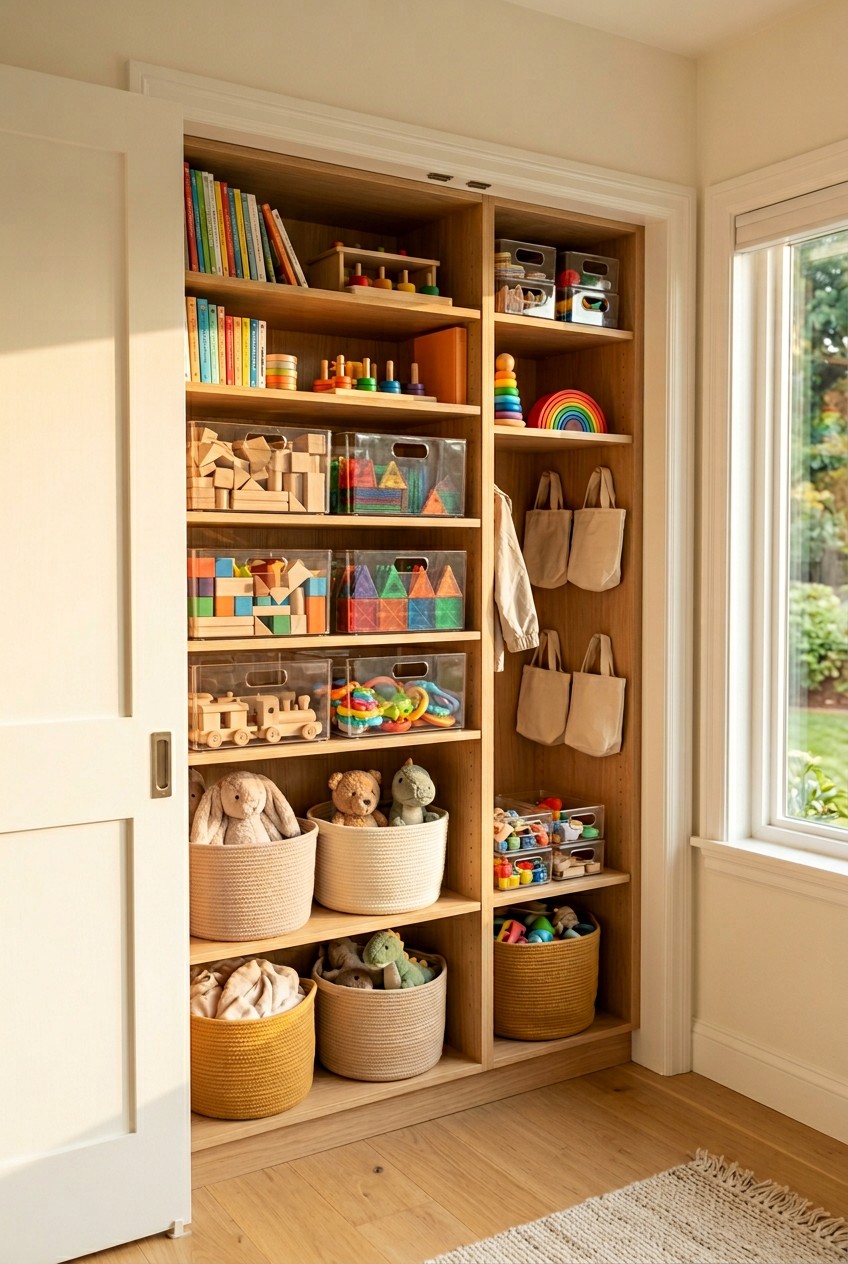
- Prioritize Clear, Open Storage Bins
- Categorize Toys by Type or Play Schema
- Label Everything Clearly with Pictures for Young Children
- Utilize Vertical Space with Shelving Units
- The Toy Library Concept For Toy Closet Organization
- Contain Small Pieces with Dedicated Solutions
- Designate a Little Pieces Basket
- Invest in Multi-Functional Furniture
- Avoid Oversized, Unsorted Bins
- Trend Alert 2026: Sustainable Storage and Low Access
Last Tuesday at 4:30 PM, I opened my six-year-old’s bedroom door and a heavy plastic dump truck fell off the top shelf and smacked right onto my foot. This painful failure forced me to finally figure out proper toy closet organization. I stood there rubbing my bruised toe, staring at a mountain of mismatched puzzle pieces, smelling that distinct, salty scent of dried-out Play-Doh mixed with dusty carpet. I tried ignoring this mess for months, but that falling truck was my breaking point. You can’t live with a closet that actively attacks you. Most people approach children’s storage all wrong. We buy giant plastic tubs, throw everything inside, and pray the closet door stays shut. I’ve been guilty of doing that for three years. But that method just creates a dark pit where expensive toys go to die. Your kids end up whining that they have nothing to play with.
I decided to tear the entire space apart. I spent hours testing different bins and rethinking how a child actually interacts with their belongings. I learned some hard lessons about what actually works and what just looks pretty on social media. Skip the cheap cardboard boxes. They rip in two days and look like wet garbage. I’m going to walk you through exactly how I fixed this disaster zone. I’ll give you the exact measurements, the specific brands I bought, and the daily habits that keep this space from turning back into a plastic wasteland.
1. Implement A Rotation System For Toy Closet Organization

I swear by the toy rotation system, an expert-backed approach that changed how my kids play. The concept is simple. Keep only a small selection of toys available at a time (usually 5 to 10 items) while the rest are stored away out of sight. I tried doing this wrong for months before figuring it out. I originally stuffed the extra toys into black garbage bags and threw them in the garage. Bad idea. They smelled like car exhaust, and I completely forgot what was inside. Now, I use the Sterilite 66 Qt ClearView Latch Box ($11.98 at Target). I bought four of these exact bins.
Every three weeks, I swap the toys out. This prevents overstimulation and encourages deeper engagement. When I pull out the bin of wooden train tracks they haven’t seen in a month, they act like it’s Christmas morning. It makes old toys feel brand new. Plus, having fewer items out makes cleanup take literally two minutes. When you’re setting this up, group the stored toys by category in those clear bins. Put 15 wooden blocks, 4 cars, and 1 puzzle in the current rotation. Store the rest. You won’t believe how much calmer your living room feels when there aren’t 400 plastic pieces screaming for your child’s attention.
2. Declutter Ruthlessly Before Buying Anything

Before you think about buying storage, gather all the toys in one room and sort them. Professional organizers say you can’t organize clutter, and they’re right. Too many toys actually hinder creative play. Last month, I took two heavy garbage bags full of toys to the Goodwill dropoff behind Whole Foods. It was hard to let go of things I spent good money on, but it had to happen.
I sat on my living room floor and created three piles: keep, donate, and trash. I found 4 oz of broken crayons that were basically dust. I found sticky slime that had permanently bonded to a plastic dinosaur. Throw that stuff away. Keep only high-quality, open-ended toys your children actually play with. Honestly, this changed how I view buying gifts, too. If it’s a cheap plastic toy that lights up and plays one annoying song, it goes in the donation bin. Kids don’t need 50 stuffed animals. They need a few good ones. Decluttering is physically exhausting—I learned that the hard way when my lower back hurt for two days—but it’s the mandatory first step. Don’t skip it, or you’re just buying expensive boxes to house garbage.
3. Prioritize Clear, Open Storage Bins

This is a rule I learned the hard way. I used to buy beautiful, opaque woven baskets because they matched my living room decor. Big mistake. I bought solid gray fabric bins at Walmart for $8.98 each, and my kids never touched them. To a child, an opaque box might as well not exist. If they can’t see the toys, they won’t play with them, and they definitely won’t put them away properly.
You need to opt for clear, open-topped bins over opaque boxes or heavy traditional toy chests. Children are highly visual creatures. I swapped all my fancy baskets for Brightroom 4L Stacking Clear Bins with Lids (they cost exactly $6.00 at Target). I also love the Iris Clear Deep Document Cases for flat items like puzzles. I took the lids off the Brightroom bins for everyday access. When kids can see the bright red fire truck sitting clearly in its designated bin, they grab it. When they’re done, they know exactly where that red truck goes because the bin is transparent. Toy chests with heavy wooden lids are actually dangerous for little fingers anyway. Stick to clear acrylic or plastic. It doesn’t look as Pinterest-perfect as matching wicker baskets, but it actually functions in the real world.

AMKUFO 6 Pack-Closet-Organizers-and-Storage
Honestly, AMKUFO 6 Pack-Closet-Organizers-and-Storage surprised me — sturdier than it looks in the photos, and over 52 buyers gave it 4.5 stars.
4. Categorize Toys by Type or Play Schema

If you just throw random toys into a clear bin, you’re still going to have a mess. You have to group similar toys together. This helps children find what they need and simplifies the dreaded cleanup time. I categorize by play schema. I have one specific bin for “Toys with Wheels,” another for “Building Toys,” and another for “Art Supplies.” You might also like: 15 Inspiring Home Makeover Ideas You Haven’t Thought Of
When I was first sorting these categories, I reused thick paper bags from Sprouts. I lined up six brown grocery bags on the hallway floor and tossed items in to see how the categories naturally formed. The sound of tossing heavy wooden blocks into a paper bag is surprisingly loud, by the way. Once I had my categories, I transferred them to the permanent plastic bins. Don’t make the categories too specific. If you have a bin just for “Blue Hot Wheels,” you’re going to drive yourself crazy trying to maintain it. Keep it broad. “Vehicles” is a great category. “Dolls and Accessories” is another. This broad categorization allows kids to clean up quickly without overthinking it. It’s a foolproof system that even a toddler can grasp. You might also like: 15 Inspiring Small Space Laundry Room Ideas to Steal Right Now
5. Label Everything Clearly with Pictures for Young Children

Once you have your clear bins and your broad categories, you must label every single bin or shelf. Most people get this wrong by just writing the word “Blocks” on a piece of masking tape. I tried that. The tape peeled off in three days, left a gross sticky residue that collected dog hair, and my four-year-old couldn’t read the word anyway. You might also like: 15 Inspiring Cozy Home Hacks That Changed Everything
For pre-readers, you absolutely must include a picture of the toy category alongside the word. This empowers children to participate in cleanup and find items independently. I bought a Brother P-Touch Cube Plus label maker ($59.99 on Amazon) and it’s worth every penny. But before I had that, I just took photos of the toys with my phone. I printed the photos on standard printer paper, cut them into 2-inch squares, and used clear packing tape to secure them to the front of the bins. I taped a picture of a LEGO brick next to the word “LEGO.” It changed everything. When I say “put the blocks away,” my kids just match the physical block in their hand to the picture of the block on the bin. It removes all the guesswork and stops the constant whining of “I don’t know where it goes.”
6. Utilize Vertical Space with Shelving Units

Closets are usually tall and narrow, which means you have to maximize vertical space. Leaving a massive gap of empty air above a low row of bins is a huge waste of real estate. I highly recommend installing vertical shelving units to take advantage of the height. I bought the IKEA TROFAST storage combination with boxes (white on white, measuring exactly 39×17 3/8×22 inches). The frame itself costs around $94.99 depending on the bin configuration.
Putting it together was a bit of a nightmare. I stripped a screw with my drill because I was rushing, and I pinched my finger in the sliding track. But once it was built and shoved into the closet, it was perfect. The TROFAST system is modular, so it can be adapted as children grow. You can swap out shallow bins for deep ones. I put the toys they use every single day on the bottom three tracks. I put the messy stuff (like the 8 oz bottles of washable paint and the kinetic sand) on the very top tracks where they can’t reach them without my help. If you don’t have an IKEA nearby, you can easily repurpose an old bookshelf. Just make sure you anchor it to the wall. I can’t stress that enough. Kids will try to climb shelves, and you don’t want a heavy piece of furniture tipping over.
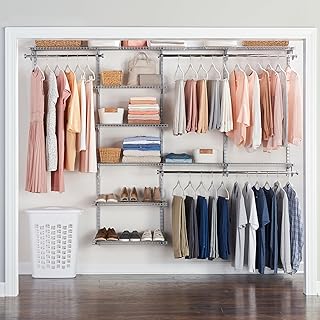
Rubbermaid Configurations Deluxe Custom Closet Kit 4-8 Ft.
Rubbermaid Configurations Deluxe Custom Closet Kit 4-8 Ft. Adjustable has been one of the most consistently praised picks in this category. 81 reviewers averaged 4.5/5.
7. The Toy Library Concept For Toy Closet Organization

This is a lesser-known but effective strategy for toy closet organization. The “toy library” involves storing individual, complex toy sets in separate, labeled bins inside a closed cabinet or the top shelf of a closet. Think of things like a large Magna-Tiles set, a complicated marble run, or a specific board game.
I started doing this after a disastrous trip to Costco. I brought home a massive 100-piece magnetic tile set, and within two hours, the pieces were scattered across three different rooms. Now, I keep these sets in their own dedicated boxes. I actually used empty cardboard apple boxes from Costco at first, but they looked terrible, so I upgraded to plastic latch boxes. The rule in our house is that children have to “check out” a limited number of boxes to play with. Usually, it’s just one box at a time. If they want the marble run, they have to put the Magna-Tiles back in their box and return it to the library shelf first. This minimizes mess drastically and increases their excitement when new sets are introduced. It takes a few weeks of strict enforcement for kids to get used to the checkout system, but once they do, your floors will be clear of tiny plastic hazards.
8. Contain Small Pieces with Dedicated Solutions

Nothing is worse than stepping on a tiny Barbie shoe or a rogue LEGO piece in the middle of the night. It’s a specific kind of physical pain that I wouldn’t wish on anyone. You have to prevent these tiny toy pieces from scattering by storing them in smaller, heavily contained units. Throwing small accessories into a large bin is a guaranteed way to lose them forever.
I personally use FAMOVELL Clear Storage Containers for this. They measure exactly 14.25 inches by 10.51 inches by 2.83 inches and cost about $18.99 for a set. They have tight latches that kids can still open, but they won’t spill if dropped. I use these for Barbie clothes, Polly Pockets, and small action figure weapons. For things like wooden puzzle pieces or wooden train tracks, I use mesh laundry bags. I found a set of 5 small mesh bags at Target for $7.99. The mesh is brilliant because the kids can see exactly what’s inside, but the zipper keeps everything contained. I tried using Ziploc bags for a while, but the kids just ripped the plastic seams within a week. The mesh bags are durable, washable, and fit perfectly inside the larger categorized bins on the closet shelves.
9. Designate a Little Pieces Basket

Even with the best systems in place, you’re going to find random, unidentifiable toy parts on your floor. A rogue dice, a single red LEGO brick, the left arm of a dinosaur. If you try to put every single tiny piece back into its exact home the second you find it, you’ll go insane.
Instead, I designate a “Little Pieces” basket. I keep a small, easily accessible woven basket right on the bottom shelf of the toy closet. I actually repurposed a cute little seagrass basket I bought at Trader Joe’s for $4.99 near their plant section. Whenever I’m vacuuming or walking through the room and spot a random piece, I just toss it into the basket. It makes daily tidying so much faster. Then, every two weeks on a Sunday afternoon, I sit down with the basket and sort those pieces back into their proper homes. Usually, my kids will come looking for a missing piece, and I just point them to the basket. Nine times out of ten, it’s sitting right there at the bottom. It’s a huge mental relief to know you have a designated dumping ground for the strays that doesn’t ruin your overall organization system.

5 Tier Closet Hanging Organizer
A dependable everyday pick — 5 Tier Closet Hanging Organizer pulls in 1 ratings at 4.5 stars. Not flashy, just solid.
10. Invest in Multi-Functional Furniture

If your toy closet is overflowing, you need to bleed some of that storage into the main living areas, but you have to do it smartly. For shared spaces like living rooms or playrooms, you should choose furniture that doubles as storage. I’m talking about ottomans with hidden compartments or low storage benches.
I went to The Container Store and bought their wooden stacking bins. They range from $24.99 to $39.99 depending on the size. I stacked two of the large ones sideways in our living room corner, threw a custom cushion on top, and turned it into a low reading bench. Inside those bins, I store all the bulky stuffed animals and oversized trucks that were taking up too much room in the actual closet. The wood texture looks high-end and blends perfectly with my adult home decor. Nobody knows it’s secretly hiding 15 squishmallows. It discreetly stores toys while giving the kids a cozy place to sit and read. Just be careful with ottomans that have heavy hinges. I got my finger caught in a cheap storage ottoman once, and it bruised my nail bed for a month. Always look for soft-close hinges if you’re buying furniture that kids will open and close.
11. Avoid Oversized, Unsorted Bins

This is the most common mistake I see when I help friends organize their homes. A major mistake is using huge, deep bins that inevitably become dumping pits. Two years ago, I bought a massive 30-gallon plastic tub from Kroger for $15.99. I thought it was a great deal. I threw every single toy my son owned into that giant tub.
It was a disaster. Toys got completely mixed up, the heavy wooden toys crushed the fragile plastic ones, and tiny pieces fell to the very bottom. Whenever my son wanted a specific action figure, he would literally dump the entire 30-gallon tub upside down on the carpet. The scraping sound of him digging through that plastic bin drove me up the wall. Huge bins discourage children from putting toys away properly because it feels overwhelming, and it makes it impossible to find specific items. You have to use smaller, categorized bins. Even if it means buying ten small boxes instead of one giant tub, do it. The giant tub is a lazy solution that creates ten times more work for you in the long run. Learn from my massive Kroger tub mistake and stick to shoe-box sized containers for most items.
12. Trend Alert 2026: Sustainable Storage and Low Access

As we move into 2026, there’s a shift happening in home organization. There’s a strong trend towards sustainable and eco-friendly products, moving away from the cheap, brittle plastics of the past. If you’re buying new storage this year, opt for toy storage made from natural materials. I’ve been slowly swapping out some of my older plastic bins for beautiful wooden crates, bamboo baskets, and durable heavy-weight fabric storage bags.
I recently bought two Pehr canvas bins (they run about $36.00 each). They are made from thick, durable cotton canvas and they are completely biodegradable. They look stylish on a closet shelf. Alongside sustainability, the other major trend is low, accessible storage. This is a Montessori-inspired approach. You must ensure that the majority of everyday toy storage is at your child’s eye level and within their easy reach. If they have to drag a dining chair into the closet to reach their favorite puzzle, your system is failing them. Low, open shelves encourage independent play and, more importantly, independent cleanup. I moved all the heavy wooden blocks to the very bottom shelf, just two inches off the floor. It stopped the complaining about cleanup time because everything is physically easy for them to reach.
Organizing a toy closet isn’t a one-and-done weekend project. Professional organizers recommend regular decluttering schedules to prevent the mess from returning. I do a quick 2-minute cleanup daily, and it keeps the chaos at bay. I highly recommend you try the clear bins and the picture labels first. Those two changes alone will save you so much space and sanity. If you found this helpful, definitely save or pin this article so you can reference the exact bin sizes and brands the next time you’re standing in the storage aisle at Target!

AWTATOS Cube Storage Organizer Storage 12 Cube Bookshelf
A dependable everyday pick — AWTATOS Cube Storage Organizer Storage 12 Cube Bookshelf DIY Plastic C pulls in 28 ratings at 4.5 stars. Not flashy, just solid.
Frequently Asked Questions
What is the best way to start toy closet organization?
The best first step is ruthless decluttering. Gather all toys, throw away broken items, and donate outgrown pieces. You can’t organize clutter, so reducing the total volume is essential before buying any storage bins.
How does a toy rotation system work?
A rotation system involves keeping only 5 to 10 toys accessible while storing the rest in clear bins out of sight. You swap the toys every 2 to 4 weeks to prevent overstimulation and renew your child’s interest.
Why should I use clear bins for toy storage?
Clear bins allow children to easily see what is inside. If toys are hidden in opaque boxes, kids often forget about them or dump the entire box to find one item. Visual access encourages independent play and cleanup.
How do I label toy bins for kids who can’t read?
For pre-readers, print a clear picture of the toy category and tape it next to the written word on the bin. This visual cue helps toddlers and preschoolers independently match the toy to its correct home during cleanup.
