What’s Inside
- 1. Ruthlessly Declutter Your Food Storage Containers
- 2. Limit Water Bottles to One Primary Plus One Backup
- 3. Install Custom Closets That Reach the Ceiling
- 4. Hire a KonMari Consultant for Targeted Sessions
- 5. Ditch Dressers for Open Cubby Systems
- 6. Cover Wire Shelves with Adhesive Liner
- 7. Use AI for Organizing Task Breakdown
- 8. Switch to Natural Material Storage
- 9. Keep Only Three Favorite Vases
- 10. Limit Throw Blankets to One Per Seating Area
- 11. Toss Unmatched Socks Immediately
- 12. Create Everyday Bins for Quick-Toss Items
- 13. Declutter These 26 Items Fast
- 14. Maximize Kid Zones with Vertical Shelving
- 15. Box Unsure Keepers with a 90-Day Deadline
Let’s be real—your kitchen probably looks like a food storage container graveyard. You’re not alone. If you’re looking for practical home makeover ideas that actually stick, you’re in the right place. I’ve spent years helping people transform chaotic spaces, and these tips are tried-and-true, not just Pinterest fluff.
1. Ruthlessly Declutter Your Food Storage Containers
Here’s my rule: toss any container without a matching lid. Seriously. This 1:1 ratio completely overhauled my kitchen drawer situation.
Most people think they need thirty containers “just in case,” but you really only need 10-12 sets for daily use. I keep exactly ten, and I’ve never wished for more. Stick to stackable sets in three sizes max.
Big mistake? Hoarding takeout containers. You won’t use them. They warp in the dishwasher and never seal properly. I donated mine to a local food bank that actually needed them.
Pro tip: store lids upright in a small bin in one drawer. It’s a game changer for finding what you need without creating an avalanche every morning.
2. Limit Water Bottles to One Primary Plus One Backup
This sounds harsh until you count how many water bottles are hiding in your cabinets. For a family of two, you need four total. That’s it.
I see this all the time: people hoard “just in case” extras that multiply like rabbits. Half of them are smelly, moldy, or missing parts. Excess breeds clutter, not preparedness.
I use one insulated bottle daily and keep one backup per person. When my primary needs washing, I grab the backup. Simple rotation system that works.
Honestly, toss any bottle with that weird plastic smell or stains you can’t scrub out. If it’s missing parts, let it go. You’re never hunting down replacement parts online.
3. Install Custom Closets That Reach the Ceiling
I installed a Container Store custom closet system last year, and it completely changed my storage capacity. We’re talking ceiling-high units that are 2 to 2.5 feet deep, perfect for luggage and seasonal items.
The investment runs $2,000 to $5,000, but it maximizes vertical space most people waste. This approach has been used in Italian home designs for decades.
Pro tip: put heavy suitcases on lower shelves and lighter seasonal decor up top. I use clear bins labeled by season so I’m not guessing what’s inside.
Most people make the mistake of installing standard-height systems that leave two feet of dead space above. That wasted space could hold an entire season’s worth of clothing or holiday decorations. The Container Store folks will measure and design for free, which makes the process painless.

Lifewit 6 Pack Clothes Storage Bins with Lids
Lifewit 6 Pack Clothes Storage Bins with Lids punches above its price — 1,072 buyers rated it 4.5 stars. I would buy it again.
4. Hire a KonMari Consultant for Targeted Sessions
I was skeptical about the KonMari method until I worked with a certified consultant. They’re available locally or virtually for $100 to $200 per session, focusing on sparking joy in 26 targeted home areas weekly.
The biggest mistake? Trying to purge entire rooms at once. It’s overwhelming and why most organizing attempts fail by day three. Instead, tackle one zone at a time: one drawer, one shelf, one category.
I started with my sock drawer (took twenty minutes), and the immediate win motivated me to keep going. My consultant taught me to hold each item and feel whether it sparked joy, which sounds weird but works.
Common mistake: rushing through the process. Take six months to work through your home methodically. The results stick because you’re building sustainable habits, not just shuffling stuff around temporarily.
5. Ditch Dressers for Open Cubby Systems
This goes against traditional advice, but hear me out. I replaced my dresser with an IKEA Trofast cubby system with labeled bins, costing $50 to $100 total.
If you’re a visual person (what Clutterbug calls a “butterfly” organizer type), hidden drawers are your enemy. You need to see your stuff. Those 13 to 18-inch bins sit perfectly in cubbies, and I can grab what I need without digging.
I use one bin for workout clothes, one for pajamas, one for casual shirts. Everything’s visible at a glance. My getting-ready time dropped from fifteen minutes to five because I’m not rummaging through drawer piles.
Pro tip: add hooks on the side for tomorrow’s outfit or frequently worn items. The open shelving approach works especially well for kids who can’t remember what’s buried in drawers.
6. Cover Wire Shelves with Adhesive Liner

Those ugly wire closet shelves drive me crazy. Small items fall through, and they look terrible. I discovered this DIY hack that pros recommend: cover them with adhesive liner or fabric.
Con-Tact brand liner costs about $10 per roll and covers 18 by 54-inch shelves perfectly. I used it in my bathroom linen closet, and it looks custom and expensive now. The liner prevents bottles from tipping through the wire gaps too.
Common mistake: trying to apply liner in one piece. Cut it into manageable sections, peel slowly, and smooth as you go. I learned this the hard way after creating a wrinkled mess on my first attempt.
Honestly, this tiny upgrade makes your storage look intentional and pretty post-declutter. You can find patterns that match your decor or go with classic white for a clean look. Takes maybe thirty minutes per closet.

Criusia Over the Door Organizer
If you want something that just works, Criusia Over the Door Organizer is a safe bet (200 reviews, 4.5 stars).
7. Use AI for Organizing Task Breakdown
This is the 2026 trend I’m excited about. I started using specific ChatGPT prompts like “List 5 healthy dinners under 30 minutes with 5 ingredients or less” to break down overwhelming tasks.
Perri Kersh of Neat Freak says AI breaks tasks efficiently without replacing professional organizers, and I agree. It’s a tool, not a solution. I use it for meal planning, closet inventory lists, and donation category brainstorming.
Pro tip: be specific with your prompts. Instead of “organize my kitchen,” try “create a step-by-step plan to organize a 10×12 kitchen with limited cabinet space in 30-minute daily sessions.” You’ll get actionable advice instead of generic fluff.
I use it when I’m stuck on a client’s tricky space. The AI suggests angles I haven’t considered, then I adapt them to real life. It’s like having a brainstorming partner available 24/7.
8. Switch to Natural Material Storage
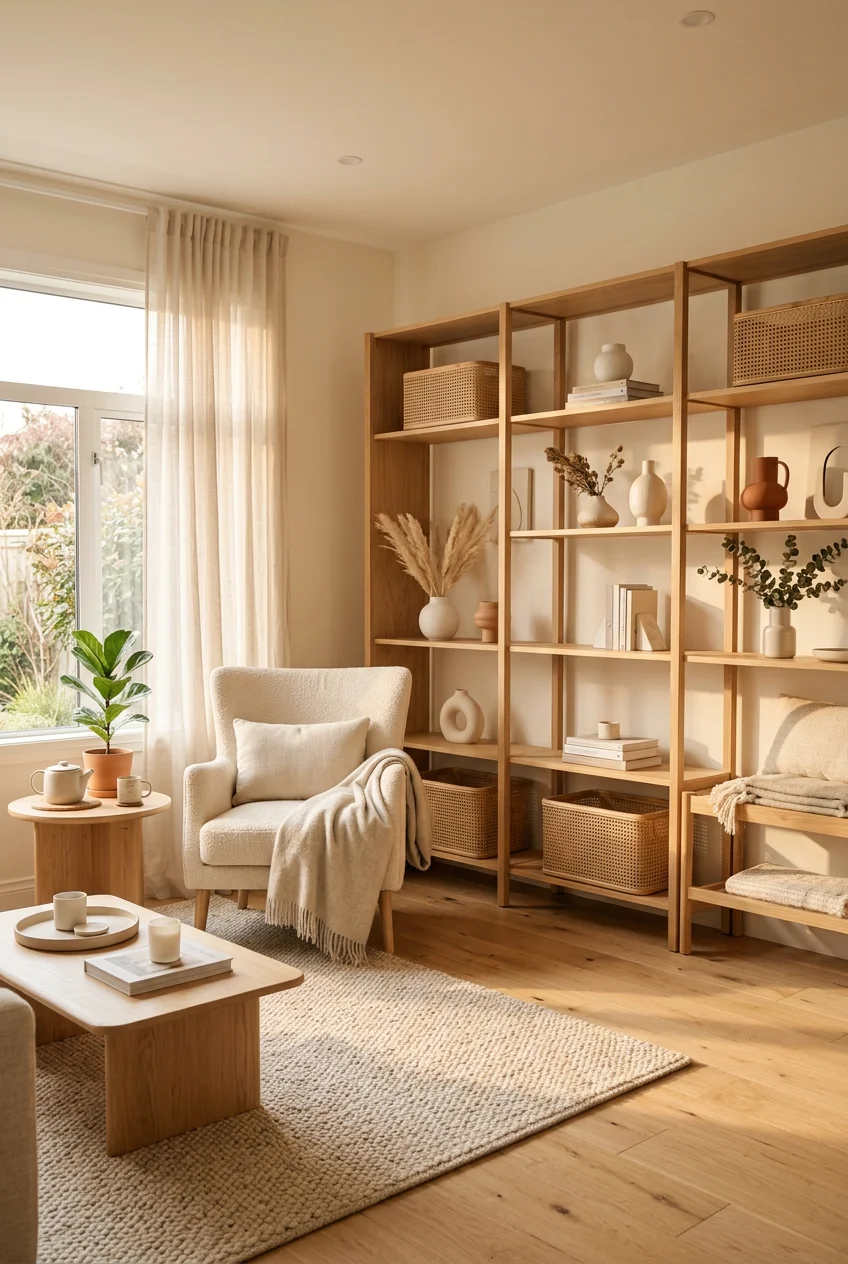
I’m replacing all my plastic bins with natural materials, and it’s making my home feel different. Bamboo bins like Yamazaki Home’s 12 by 9-inch trays cost $20 to $40 each, and water hyacinth baskets add texture.
Kelly Tait of Bee Organized says this 2026 eco-trend reduces plastic while organizing visually, and she’s right. Natural materials look intentional on open shelving instead of like you’re running a storage unit.
I use bamboo trays in my bathroom for corralling skincare products. They’re easy to wipe clean and don’t look cheap like plastic organizers. The water hyacinth baskets work great for throw blankets in my living room.
Common mistake: mixing too many material types in one space. Pick one or two natural materials per room and stick with them for a cohesive look.
9. Keep Only Three Favorite Vases
This surprised me, but most homes rarely host multiple bouquets at once. I limited myself to three favorite vases, and I haven’t missed the dozen I donated.
Here’s the thing: flowers often come with disposable vases from florists anyway. That alone can cut vase clutter by 70% if you recycle those instead of storing them.
I kept one tall vase for statement arrangements, one medium for grocery store bouquets, and one small bud vase. That covers every realistic scenario.
Pro tip: if you receive flowers in a nice vase, swap it for one of your current three. Constant rotation means you’re using what you love instead of storing “just okay” options forever.

Durmmur 2 Pack Hat Racks for Baseball Caps
Durmmur 2 Pack Hat Racks for Baseball Caps punches above its price — 109 buyers rated it 4.5 stars. I would buy it again.
10. Limit Throw Blankets to One Per Seating Area
Throw blankets multiply like magic. I counted seven in my living room before I got serious about this. The rule: one per seating area plus one guest extra.
For a typical living room, that’s three to four blankets maximum. They pile up because we don’t notice the accumulation until there’s a “homeless” stack on every surface.
I keep one chunky knit on the sofa, one lighter throw on the reading chair, and two extras in a basket for guests. That’s it. When one needs washing, I rotate from the basket.
Common mistake: keeping blankets you don’t actually like using. If it’s scratchy, too heavy, or the wrong color, donate it. You’re curating favorites, not running a blanket museum.
11. Toss Unmatched Socks Immediately

I’m ruthless about socks now. Unmatched ones get tossed immediately, or I buy uniform sets like Bombas kids’ packs at $20 for six pairs.
Matching socks speeds up laundry by 50% because you’re not playing detective with every load. When everything’s identical, lost singles become complete non-issues.
I switched my entire family to uniform sock sets: black crew socks for my husband, white ankle socks for me, and fun patterned sets for my kids where any two from the pack match.
Pro tip: dedicate one small basket to “sock hospital” for potential matches. If its partner doesn’t show up within two weeks, toss the orphan. No mercy.
12. Create Everyday Bins for Quick-Toss Items
The Clutterbug method emphasizes big, labeled visuals over small dividers for speed. I use 15-gallon Sterilite totes at $15 each for quick-toss shoes and bathroom essentials.
These aren’t meant to be perfectly organized. They’re catch-alls for items you use daily and don’t want to put away properly every single time. It’s organized enough without being fussy.
I have one by the front door for shoes we wear constantly, one in the bathroom for hair tools, and one in the mudroom for sports equipment. Everything has a home, but the home is low-maintenance.
Common mistake: making your system too complicated to maintain. If you can’t toss something in a bin in three seconds, you won’t use the system.

HuggieGems Metal 4 Pack Magnetic Spice Storage Rack
Honestly, HuggieGems Metal 4 Pack Magnetic Spice Storage Rack Organizer for Refr surprised me — sturdier than it looks in the photos, and over 145 buyers gave it 4.5 stars.
13. Declutter These 26 Items Fast
Before buying any organizing systems, declutter first. This is the pre-org step pros insist on. I have a go-to list: expired meds, torn clothes, duplicate measuring cups (keep one to two sets), and old cords.
The rule: if unused for two-plus years, donate it. I did this sweep last month and filled three donation bags in under an hour. It’s shocking how much we keep “just in case” that never gets used.
Other quick wins: mystery keys, dried-up pens, unread magazines older than six months, promotional tote bags, and hotel toiletries you’ll never use.
Pro tip: set a timer for fifteen minutes and tackle one category. The time limit prevents perfectionism paralysis.
14. Maximize Kid Zones with Vertical Shelving
I installed Container Store shelving in my kids’ room for $300 to $800, and it converted a cramped office into a functional bedroom. Using full wall height for toys is the secret.
This approach mimics efficient European builds where space is premium. Instead of toy boxes on the floor, everything goes vertical. Lower shelves for daily toys, upper shelves for rotation items or keepsakes.
I use clear bins on lower shelves so my kids can see their Legos, dolls, and cars. Upper shelves hold puzzles and games we rotate monthly. It keeps things fresh without buying new stuff constantly.
Common mistake: putting everything within kid reach. They don’t need access to every toy simultaneously. Rotation from upper shelves creates novelty and reduces the overwhelm of too many choices.
15. Box Unsure Keepers with a 90-Day Deadline
This is my favorite trick for sentimental items or things I’m uncertain about. Box them with a clear 90-day discard date written on top. If untouched, it’s gone.
This avoids regret while preventing “maybe” piles, which is a top mistake in organizing projects. You’re not making a permanent decision today. You’re testing whether you actually need or want these items.
I did this with old college textbooks and craft supplies. After three months, I hadn’t opened either box. Donated them without a second thought because the test proved I didn’t need them.
Pro tip: write the contents on the box exterior so you’re not tempted to peek. The whole point is seeing if you naturally reach for these items. If you forget what’s inside, that’s your answer right there.
These fifteen strategies aren’t complicated, but they work because they’re based on real organizing principles, not Pinterest fantasies. I use every single one in my own home and with clients. Start with whatever idea feels most doable today, then build momentum from that first win. Save this for when you’re ready to tackle the next area. Your future self will thank you for starting now instead of waiting for the perfect moment that never comes.

ukeetap Extra Large Expandable Silverware Organizer
ukeetap Extra Large Expandable Silverware Organizer punches above its price — 46 buyers rated it 4.5 stars. I would buy it again.
Frequently Asked Questions
What’s the first step in a home makeover project?
Declutter before buying any organizing systems. Purge expired items, duplicates, and anything unused for two-plus years. This prevents you from organizing clutter you don’t need, which wastes money and space. Most people skip this crucial step and wonder why their systems fail.
How much should I budget for custom closet systems?
Container Store custom closets typically cost $2,000 to $5,000 depending on space size and complexity. Ceiling-height units maximize vertical storage for seasonal items and luggage. Many retailers offer free design consultations and measurements, making the investment more manageable and tailored to your needs.
Are natural material storage bins worth the extra cost?
Yes, if you have open shelving or visible storage. Bamboo bins and water hyacinth baskets cost $20 to $40 each but look intentional rather than temporary. They’re also eco-friendly and more durable than plastic. For hidden storage, cheaper plastic bins work fine since aesthetics don’t matter.
How many food storage containers does a household actually need?
Experts recommend 10 to 12 matched sets per household for daily use. Choose stackable containers in three sizes maximum with a strict 1:1 container-to-lid ratio. This prevents drawer chaos and ensures you can always find what you need quickly without avalanches.