What’s Inside
- Declutter Ruthlessly Before You Buy Anything
- Measure Your Space Precisely (And Do It Twice)
- Maximize Vertical Space with Stackable Solutions
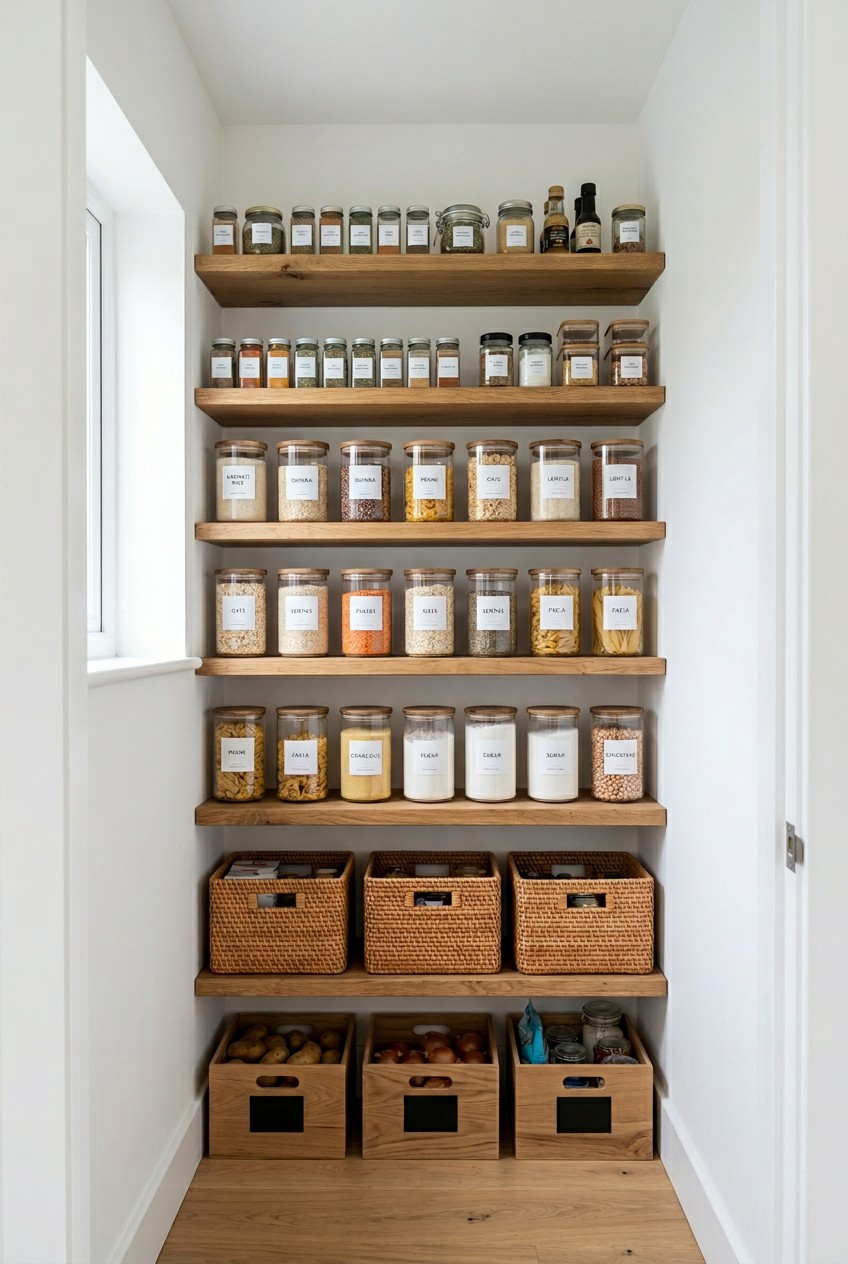
- Decant Dry Goods into Uniform Clear Containers
- Create Designated Zones and Label Everything
- Utilize the Back of the Pantry Door for Extra Storage
- Use Expandable Bamboo Racks for Cans and Spices
- Add Under-Shelf Wire Baskets for Flat Items
- Turntables Are Essential for Awkward Deep Corners
- Store Heavy Backstock in Deep Floor Bins
- Repurpose Magazine Files for Root Vegetables and Foil
- Hang Command Hooks for Aprons and Reusable Bags
- The Best Tiny Pantry Organization Ideas Start Small
Last Tuesday at Whole Foods, I grabbed three jars of Justin’s Classic Almond Butter for $8.99 each. I was sure I was out. When I got home to my cramped apartment kitchen, I shoved a box of crackers aside and found four half-empty jars of the exact same almond butter hiding in a dark corner. That was the breaking point. I realized I needed realistic tiny pantry organization ideas before I wasted another paycheck on duplicate groceries. If your kitchen storage feels like a chaotic black hole of stale chips and mystery cans, I feel your pain. I tried fixing this wrong for months before figuring it out. I bought random baskets that didn’t fit. I crammed things in until the door wouldn’t shut. But eventually, I cracked the code. Let’s fix your kitchen with these practical methods that actually make sense for small spaces.
1. Declutter Ruthlessly Before You Buy Anything

Before bringing in any new systems, you’ve got to empty your entire pantry. You can’t organize clutter; you can only rearrange it. I learned this the hard way last October. I drove to Target and bought a massive cart full of pretty acrylic bins, thinking they’d magically fix my mess. I spent $85 on stuff I didn’t even need. When I got home, I realized I was just putting expired 15 oz cans of soup into expensive plastic boxes. It was useless. You’ve got to take every single item out first. Spread it all out on your kitchen counter. Check the expiration dates on everything. Throw away that half-eaten bag of stale tortilla chips. Toss the rock-hard brown sugar. For this messy process, I highly recommend grabbing a box of Hefty Ultra Strong 13-Gallon Trash Bags ($11.49 for a 40-count box). You won’t regret having thick bags when you toss out heavy, expired glass jars. Sort your remaining items into keep, toss, or donate piles. Be honest. Don’t keep a 16 oz bag of obscure lentil pasta you haven’t touched in six months. It tastes like wet cardboard anyway. Skip the guilt and get rid of it. Those unused items just consume valuable space in a small closet. Once you wipe down the bare shelves with a mix of 1/2 cup white vinegar and 2 cups warm water, you’re ready for the next step.
2. Measure Your Space Precisely (And Do It Twice)

A common mistake is buying organizers that don’t fit, leading to more visual clutter. I did exactly this when I lived in my old studio. I bought four massive wire baskets that were half an inch too deep. The pantry door wouldn’t close. I stubbed my toe on the protruding metal every morning for three weeks before I returned them. Before buying anything, you need to measure shelf width, height, and depth. Twice. Note any awkward obstructions like door hinges, thick brackets, or light switches. Li McGinnis, founder of The Organizing Genius, suggests drawing a diagram or taking a photo of your pantry and writing the exact measurements directly onto the image. This is a brilliant pro tip. I use my Stanley 25-Foot PowerLock Tape Measure ($9.97 at Walmart) for this. It’s cheap and reliable. Don’t guess. A 10-inch deep shelf won’t hold an 11-inch bin, no matter how hard you push. Write down the clearance between shelves, too. If you only have 8 inches of height, you can’t buy 10-inch tall cereal containers. Take your phone with the marked-up photo to the store. It saves you from making multiple return trips and wasting your Saturday afternoon in line at the customer service desk.
3. Maximize Vertical Space with Stackable Solutions

In a small kitchen, vertical space is your best friend. This is one of the most effective tiny pantry organization ideas I’ve ever used. Most shelves have at least 12 inches of vertical clearance, but we only use the bottom 5 inches for cans and boxes. The rest is just dead, empty air. You need to build up. I use stackable clear bins for almost everything now. My favorites are the iDesign Linus Pantry Bins. They come in various sizes, but the 10″x8″x5″ version (typically $14.99 per bin at Target) is perfect for stacking protein bars, applesauce pouches, and small snack bags. You can also use The Home Edit Stacking Pantry Bins if you prefer their look. I love clear plastic because I can see exactly how many 1.5 oz bags of Goldfish crackers my kids have left. No more guessing before grocery day. Another pro tip is to buy items that interlock securely so they won’t topple over when you grab something in a hurry. I used to buy cheap dollar store bins that didn’t stack properly. They slid around and eventually crashed onto the floor, spilling 12 oz of raw almonds everywhere. Spend a few extra dollars on sturdy, interlocking bins. It makes a massive difference in how your space functions. Trust me on this.

3-Tier Hanging Laundry Basket Organizer:Foldable Wire Shelf
3-Tier Hanging Laundry Basket Organizer:Foldable Wire Shelf Laundry Ro punches above its price — 518 buyers rated it 4.5 stars. I would buy it again.
4. Decant Dry Goods into Uniform Clear Containers

Decanting dry goods into clear, uniform containers creates a clean look while saving precious space. It also makes items much easier to find. I started doing this after a disastrous baking incident last December. I reached into my pantry for a 5 lb bag of flour, and the paper bag ripped. I spent two hours vacuuming fine white powder out of the floorboards. Never again. Now, I immediately transfer my baking supplies and grains into OXO Good Grips POP Containers. They have a strong airtight seal and a modular design. The 4.4 Qt size ($22.99) holds exactly one standard bag of flour or sugar. The 1.1 Qt size ($12.99) is perfect for 16 oz bags of lentils or quinoa I buy from the bulk bins at Sprouts. Getting rid of the bulky original packaging minimizes visual clutter and saves room. Cardboard boxes are mostly empty air. For a more sustainable option, I also love ComSaf Glass Storage Jars with airtight bamboo lids ($28.99 for a set of 3). Just make sure you cut out the expiration date and cooking instructions from the original box. I tape them to the bottom of the clear container so I don’t forget how much water to add to my brown rice. You might also like: 15 Inspiring Small Space Laundry Room Ideas to Steal Right Now
5. Create Designated Zones and Label Everything

Create mini departments inside your pantry. Think of it like a tiny grocery store. I group similar items together to prevent duplicate purchases and streamline my morning prep. I have specific zones for Breakfast, Snacks, Baking, and Dinners. Before I did this, I would find a 15 oz can of black beans sitting next to a box of instant oatmeal. It made zero sense. Grouping items saves you time when you’re rushing to pack lunches at 7 AM. To make these zones permanent, you absolutely must label everything. For a clean, minimalist look, I use waterproof labels on all my containers. I print them myself using a Brother P-Touch PTH110 Label Maker ($34.99). It’s incredibly easy to use. I label the bins, not the shelves, so I can move things around if my storage needs change. When I buy a massive 30-count box of fruit snacks from Costco, I immediately dump them into the bin labeled Kids Snacks. Everyone in the house knows exactly where to find them, and more importantly, they know exactly where to put them away. This simple habit stops your family from randomly shoving items onto the nearest empty shelf and destroying your hard work. You might also like: 15 Cozy DIY Closet Organization Ideas for Any Style
6. Utilize the Back of the Pantry Door for Extra Storage

Don’t overlook the valuable real estate on the inside of your pantry door. This is a massive missed opportunity. I lived with a tiny, narrow pantry for three years before I realized I could use the door. I installed a heavy-duty over-the-door rack, and it instantly doubled my storage capacity. I bought the Smart Design 8-Tier Over The Door Organizer ($39.99 on Amazon). It hooks right over the top of the door, requiring zero tools or drilling. I use the shallow baskets to store small, annoying items that usually get lost on deep shelves. It holds my 2 oz spice jars, boxes of aluminum foil, plastic wrap, and small bottles of hot sauce. A quick negative to watch out for is weight distribution. Don’t put heavy glass jars or massive 32 oz bottles of olive oil on a door rack. I did that once, and the weight made the door swing open violently, slamming into the wall and denting the drywall. Keep the heavy stuff on the bottom shelves. Reserve the door organizer for lightweight, grab-and-go items. It frees up so much primary shelf space for your larger bins and appliances. You might also like: 15 Clever Kitchen Small Space Ideas That Changed Everything
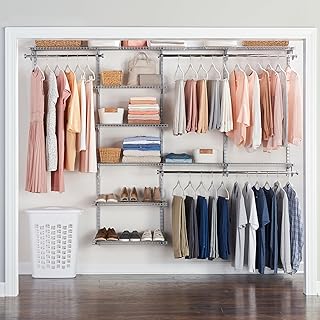
Rubbermaid Configurations Deluxe Custom Closet Kit 4-8 Ft.
Rubbermaid Configurations Deluxe Custom Closet Kit 4-8 Ft. Adjustable has been one of the most consistently praised picks in this category. 81 reviewers averaged 4.5/5.
7. Use Expandable Bamboo Racks for Cans and Spices

Canned goods and small spice jars are notoriously difficult to keep organized. They get pushed to the back of the shelf, where they sit in the dark and expire. Last spring, I found a dusty 14.5 oz can of diced tomatoes from Kroger that expired in 2021. It was hiding behind a giant box of cereal. To fix this, you need to create stadium seating for your cans and jars. I highly recommend the Simple Houseware 3-Tier Expandable Bamboo Spice Rack ($19.99). You can stretch it out to fit the exact width of your shelf. Placing your cans on these tiered steps makes every single label visible at a glance. You won’t buy a fourth can of kidney beans because you can clearly see the three you already own. The Home Edit also makes a great clear plastic 3-Tier Shelf for around $32.99 if you prefer the acrylic look over bamboo. I use the bamboo version because it adds a nice touch of warmth. I put my 15 oz cans of soup on the bottom tier, 10 oz cans of Rotel in the middle, and small 4 oz cans of green chiles on top. It’s perfectly organized and satisfying.
8. Add Under-Shelf Wire Baskets for Flat Items

Those few inches of empty space directly beneath your shelves are a goldmine. Most people ignore this area. I use under-shelf baskets to hold flat, awkward items that don’t stack well. I bought a two-pack of SimpleHouseware Under Shelf Baskets ($14.97) and slid them onto my middle pantry shelf. They are perfect for storing packages of tortillas, pita bread, and those flat 8 oz bags of shredded cheese from Trader Joe’s. Before I got these baskets, my tortillas always ended up crushed under heavier items, resulting in a crumbly mess when I tried to make tacos. The wire baskets keep them protected and accessible. Just make sure your shelf is less than 1.25 inches thick, or the basket arms won’t slide on properly. I learned that the hard way at my sister’s house. I bought her a set, and her custom wooden shelves were too thick. We ended up having to return them. Measure your shelf thickness before you order. If they fit, they are a fantastic way to squeeze extra storage out of a cramped space without taking up any existing footprint.
9. Turntables Are Essential for Awkward Deep Corners

Deep corners are where good ingredients go to die. It’s impossible to reach into the back of a deep pantry shelf without knocking over five other things. The solution is simple. You need turntables, also known as Lazy Susans. I place one in every difficult corner of my kitchen. I love the Copco 12-Inch Non-Skid Pantry Cabinet Turntable ($9.99 at Target). The non-skid rubber lining is crucial. I once bought a cheap, slick plastic turntable, and when I spun it, a 16 oz bottle of soy sauce flew off and shattered on my tile floor. The rubber grip keeps everything safely in place. I use turntables for all my sticky cooking oils, vinegars, and large condiment bottles. Instead of digging blindly for the sesame oil, I just give the turntable a quick spin. It brings the exact bottle I need right to the front. You can also use smaller 9-inch turntables for baking extracts, 2 oz bottles of food coloring, and sprinkles. It keeps all those tiny, easily lost items corralled in one spinning zone. Honestly, this changed how I cook dinner because I no longer waste ten minutes searching for ingredients.

Galasily 3 Pack Laundry Detergent Dispenser Container with
If you want something that just works, Galasily 3 Pack Laundry Detergent Dispenser Container with Tray is a safe bet (114 reviews, 4.5 stars).
10. Store Heavy Backstock in Deep Floor Bins

The floor of your pantry is prime real estate for heavy, bulky items that don’t fit on standard shelves. Don’t just throw loose bags of potatoes or massive jugs of oil on the floor. It looks messy and makes it impossible to sweep or mop. Instead, use large, deep bins with wheels or smooth bottoms. I use the Sterilite 66 Qt Clear Storage Box ($12.98 at Walmart) for my heavy backstock. I slide it right under the bottom shelf. This is where I keep my massive 10 lb bags of rice, extra 32 oz bottles of chicken broth, and heavy 64 oz jugs of olive oil. Keeping these heavy items down low prevents shelf sagging and eliminates the risk of dropping a heavy glass jar on your foot. A common mistake is buying floor bins without lids if you have pets. My golden retriever used to sneak into the pantry and chew through bags of flour stored on the floor. Now, I strictly use bins with secure latching lids. It keeps the dog out and protects my bulk groceries from dust and pests. Just pull the bin out like a drawer when you need to restock your main shelves.
11. Repurpose Magazine Files for Root Vegetables and Foil

This is one of my favorite unconventional storage hacks. Standard plastic bins are often too wide for narrow gaps between shelves. When I have a weird 4-inch gap, I use a magazine file. I specifically buy the Madesmart Classic Plastic Magazine File ($11.99). They are tall, narrow, and sturdy. I use one to stand up all my long, awkward boxes of aluminum foil, parchment paper, and plastic wrap. Storing them vertically takes up a fraction of the space compared to laying them flat. I also use these magazine files for storing root vegetables. I keep one file for 3 lbs of yellow onions and another for 5 lbs of russet potatoes. The open top allows for air circulation, which prevents the vegetables from rotting quickly, and the tall sides keep the flaky onion skins contained instead of shedding all over my clean shelves. Just don’t store your onions and potatoes in the same file. I did that once, and the gases from the onions caused the potatoes to sprout and turn mushy within a week. Keep them in separate magazine files on opposite sides of the shelf.
12. Hang Command Hooks for Aprons and Reusable Bags

Every single vertical surface in a tiny pantry should be put to work, including the bare walls next to the shelves. I rely heavily on Command Hooks for this. They are cheap, easy to install, and don’t damage the paint when you inevitably decide to move them. I buy the Command Large Utility Hooks ($4.98 for a 2-pack). I stick them on the narrow strips of wall space just inside the pantry frame. This is the perfect spot to hang bulky items that don’t belong on a shelf. I hang my heavy canvas grocery bags on one hook and my favorite denim cooking apron on another. Before I did this, my reusable bags from Whole Foods were always crumpled up in a massive, ugly ball on the pantry floor. It drove me crazy. Hanging them flat against the wall keeps them out of the way but accessible when I’m running out the door to go grocery shopping. You can also use small Command Hooks to hang lightweight items like a plastic grocery bag dispenser, measuring spoons, or a small dustpan and brush for sweeping up spilled sugar.

AMKUFO 6 Pack-Closet-Organizers-and-Storage
If you want something that just works, AMKUFO 6 Pack-Closet-Organizers-and-Storage is a safe bet (52 reviews, 4.5 stars).
13. The Best Tiny Pantry Organization Ideas Start Small

When you look at perfectly styled kitchens on social media, it’s easy to get overwhelmed. You don’t have to buy fifty expensive acrylic bins in one day. The most sustainable tiny pantry organization ideas are the ones you implement slowly. Start with just one shelf. I recommend starting with your snack shelf because it gets the most daily traffic. Empty it out, wipe it down, and add just two or three iDesign Linus Pantry Bins ($14.99). Group your 1.5 oz granola bars and small bags of pretzels. See how that system feels for a week. If it works for you and your family, move on to the next shelf. I tried to organize my entire kitchen in a single Saturday once, and I ended up sitting on the floor crying surrounded by 40 cans of soup. It’s too much decision fatigue. Take it one zone at a time. Buy your OXO containers ($12.99) for baking supplies next month. Grab the Copco turntable ($9.99) for your oils the month after that. Slow, intentional changes are what actually stick. Your space will slowly turn into a functional, stress-free zone without draining your bank account all at once. Took me years to figure out.
I hope these tips help you reclaim your kitchen space. I’m telling you, once you stop fighting your small pantry and start working with it, cooking becomes so much easier. If you found these ideas helpful, please save this post or pin it for your next weekend project. You’ve got this!
Frequently Asked Questions
How do I organize a tiny pantry with deep shelves?
Use clear, deep storage bins that act like drawers. Pulling the bin out lets you see everything in the back without knocking items over. Turntables are also excellent for deep corners to keep oils and sauces accessible.
What are the best containers for tiny pantry organization ideas?
Stackable, clear, airtight containers are best. Brands like OXO Good Grips or iDesign Linus bins maximize vertical space and let you see your inventory instantly, preventing overbuying and reducing bulky cardboard packaging.
How can I add more storage to a small pantry?
Maximize unused vertical space by adding under-shelf wire baskets for flat items like tortillas. Install a heavy-duty over-the-door organizer for spices and wraps, and use stackable bins to fill the empty air between shelves.
Should I decant everything in a small pantry?
Not everything needs decanting. Focus on bulky dry goods like flour, sugar, pasta, and rice where the original packaging wastes space. Keep individually wrapped snacks in open bins for easy grab-and-go access.
