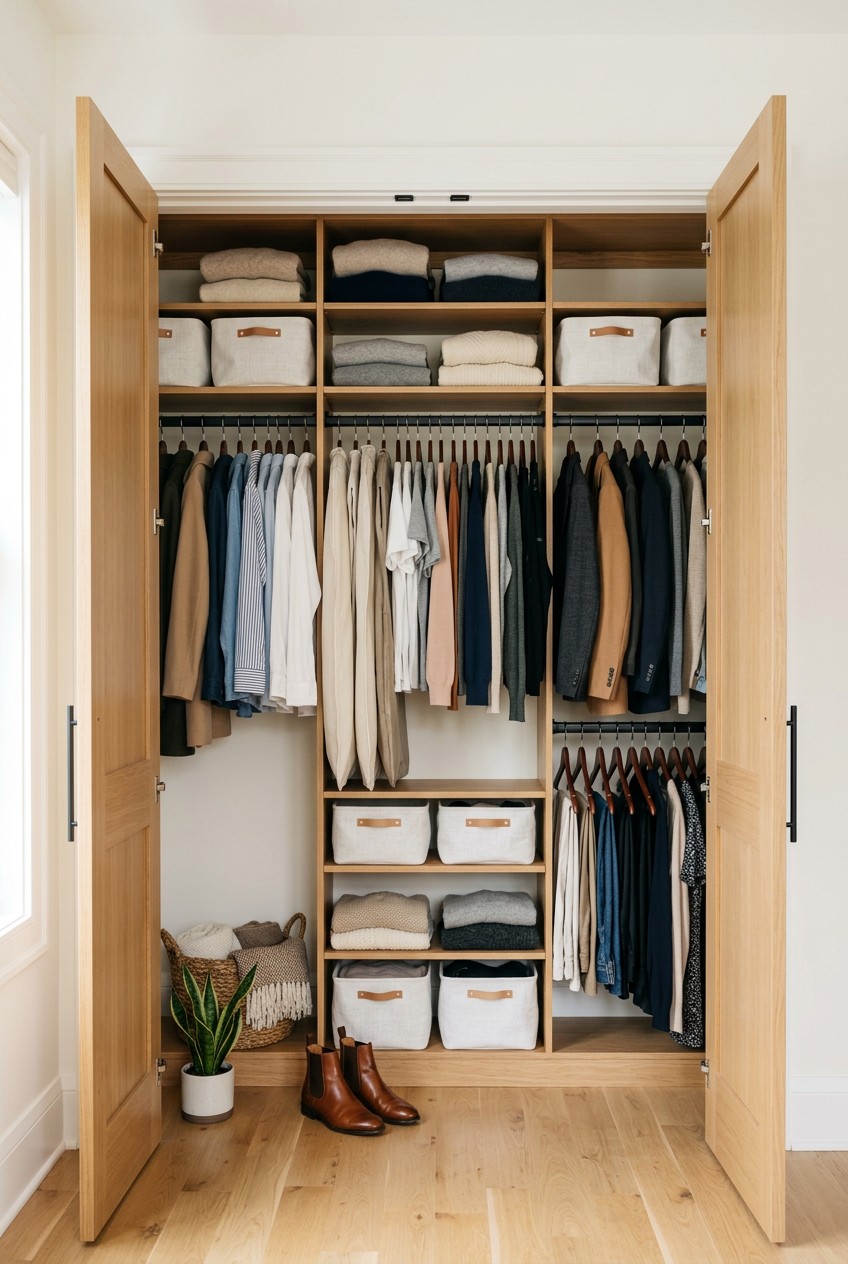
What’s Inside
- Declutter Ruthlessly Before You Do Anything Else
- Maximize Vertical Space with Double Hanging Rods
- Invest in Slim, Non-Slip Velvet Hangers
- Utilize Adjustable Shelving Systems for Ultimate Flexibility
- Incorporate Pull-Out Drawers and Trays (A Massive 2026 Trend)
- Optimize Drawer Organization with Bamboo Dividers
- Harness the Power of KonMari Folding for Shirts and Pants
- Don’t Forget the Back of the Reach In Closet Door
- Implement Smart Motion-Sensor Lighting
- Categorize and Zone Your Wardrobe Like a Boutique
- Utilize Clear, Stackable Bins for Top Shelves
- Avoid Overstuffing Shelves (Leave Breathing Room)
- Consider a Capsule Wardrobe Approach for 2026
- Strategic Shoe Storage (Ditch the Floor Pile)
- Don’t Buy Organizers Without a Solid Plan First
Last Tuesday, I opened my bedroom door and found a literal avalanche of bulky winter sweaters that had burst through my flimsy bi-fold doors. I knew right then that my closet organization was a total disaster. I’m Hannah, a home organization coach who still makes massive mistakes in her own house. I stared at the pile, feeling overwhelmed by the sheer volume of fabric. The musty smell of cramped, forgotten wool hit my nose, and I knew I had to fix this mess immediately. Most people think you need a massive walk-in wardrobe to have an organized life, but that’s not true. You just need a plan and the right tools. I’ve spent years figuring out how to squeeze every inch of space out of standard, frustratingly small closets. I tried doing this wrong for months, wasting money on products that didn’t fit and systems that fell apart. Let’s walk through exactly how to fix your closet, using real measurements, specific products, and techniques that actually hold up to daily life.
1. Declutter Ruthlessly Before You Do Anything Else

Before you buy a single acrylic bin or fancy hanger, you have to purge your belongings. Professional organizer Lorie Marrero says decluttering is the crucial first step to maximizing space, and she’s right. I used to skip this part. I’d just buy more baskets to hide my mess. I tried this wrong for months, and it always resulted in overflowing bins. Last month, I grabbed an iced coffee from Whole Foods, put on a loud playlist, and pulled every single item out of my closet. I threw it all on my bed. The smell of stale dust and forgotten perfume was honestly overwhelming. I sorted everything into three piles: keep, donate, and discard. You want to declutter seasonally to prevent massive accumulation, especially for items you haven’t worn in six to twelve months. I filled four 13-gallon Hefty trash bags with clothes that didn’t fit, had stains, or were just terribly out of style. Skip the emotional attachment to jeans from ten years ago. They’re just taking up valuable real estate. My biggest mistake was keeping things just in case I needed them for a random costume party. It’s a terrible mindset that clutters your physical and mental space. If you don’t wear it, donate it. Trust me.
2. Maximize Vertical Space with Double Hanging Rods

The builder-standard closet is usually one single wire rod with one flimsy shelf. This is a waste of space. Install a second hanging rod to double your capacity for shirts, blouses, and folded pants. I swear by modular systems for this. I installed the ClosetMaid SuiteSymphony starter kit, which costs exactly $149.98 at most hardware stores. It allows for easy addition of double rods and adjustable shelving. Make sure the upper rod is high enough so your clothes hang freely without bunching up. Typically, setting the top rod at 80 inches from the floor and the bottom rod at 40 inches works perfectly. I tried a cheap, spring-loaded tension rod from Walmart once, and it collapsed at 2 AM under the weight of my denim jackets. It sounded like a bomb went off in my bedroom. Don’t make that mistake. Bolt your hardware directly into the wall studs. Keeping items off the floor makes vacuuming easier and makes the space look custom.
3. Invest in Slim, Non-Slip Velvet Hangers

Replace all your bulky plastic or mismatched wire hangers with slim velvet hangers now. This simple swap will help you gain up to 50% more hanging space on your rod. I buy the Amazon Basics velvet hangers. A 50-pack costs $25.99, and they measure exactly 17.5 x 9.2 x 0.2 inches. The soft, flocked texture prevents silky blouses and wide-neck shirts from slipping off and landing in a wrinkled heap. Plus, they create a uniform look that calms the eye. For petite individuals or if you have a lot of delicate cardigans, I recommend buying 14-inch wide velvet hangers instead of the standard size. This prevents the ends of the hangers from stretching out the shoulders of your garments and leaving those weird, permanent bumps. I used to hoard thick wooden hangers because I thought they looked luxurious, but they took up so much horizontal space that my clothes were crushed together. The velvet hangers are thin, strong, and changed how my closet functions.

AMKUFO 6 Pack-Closet-Organizers-and-Storage
AMKUFO 6 Pack-Closet-Organizers-and-Storage punches above its price — 52 buyers rated it 4.5 stars. I would buy it again.
4. Utilize Adjustable Shelving Systems for Ultimate Flexibility

Static shelves are the enemy of good organization. Install an adjustable shelving system that extends as close to your ceiling as possible to store folded items or seasonal storage boxes. I installed IKEA’s BOAXEL system in my guest room closet, and a basic setup cost me about $120.00. The Container Store’s Elfa system is another incredible option if you have a larger budget. These track-based systems offer total flexibility, allowing you to adjust the shelf height in one-inch increments as your wardrobe needs change. This avoids the common mistake of having massive, wasted vertical space above a single, low shelf. I once tried stacking six thick winter sweaters on a standard shelf, and the tower constantly tipped over. Now, I space my adjustable shelves exactly 10 inches apart. This fits a neat stack of three sweaters perfectly without any risk of them toppling over. The cold metal tracks are sturdy, and being able to move a shelf up two inches to fit a new pair of boots is satisfying.
5. Incorporate Pull-Out Drawers and Trays (A Massive 2026 Trend)

A major design trend for 2026 is integrating pull-out drawers, sliding trays, and slide-out shelves directly into standard closets. These additions make a small space easier to manage and add serious order without increasing your square footage. They’re perfect for folded items, delicate accessories, and even flat shoes, keeping visual clutter out of sight but accessible. I bought three Elfa mesh pull-out drawers from The Container Store for $44.99 each. The smooth, metallic gliding sound they make when you pull them open feels high-end. Before I installed these, I kept my socks and undergarments in open fabric bins on a shelf. It always looked messy, and dust would settle on my clean clothes. The mesh drawers provide ventilation while keeping everything contained. If you’re building a custom reach-in closet, insist on adding at least two deep drawers. You won’t regret it. It eliminates the need for a bulky freestanding dresser in your bedroom, freeing up floor space. You might also like: 15 Creative Hacks Organizing Ideas You Need to See
6. Optimize Drawer Organization with Bamboo Dividers

Once you have drawers, you must use dividers to compartmentalize folded clothes, socks, underwear, and belts. Without dividers, a drawer becomes a chaotic junk pit within three days. I use expandable bamboo drawer dividers from Lifewit, which cost $22.99 for a set of four. They have strong tension springs that hold them in place, and the bamboo wood looks beautiful against my clothes. Expert Brenda Scott notes that these dividers stop items from sliding all over the place when you open and close the drawer, providing a sense of control. If you prefer a softer option, fabric bins work wonderfully too. I bought the Simple Houseware Closet Underwear Drawer Organizer, which is a 4-pack for $16.87. I use the small square compartments to roll my socks individually. I used to just toss all my workout gear into one big drawer. I’d spend five minutes every morning digging for a matching sports bra while my coffee got cold. Now, the dividers keep my leggings separated from my tops, and getting dressed takes exactly thirty seconds. You might also like: 15 Clever Kitchen Small Space Ideas That Changed Everything
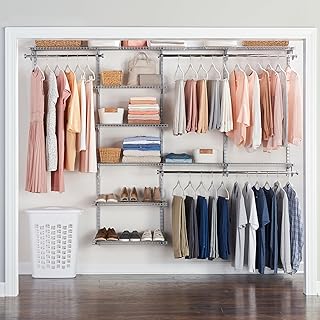
Rubbermaid Configurations Deluxe Custom Closet Kit 4-8 Ft.
Rubbermaid Configurations Deluxe Custom Closet Kit 4-8 Ft. Adjustable punches above its price — 81 buyers rated it 4.5 stars. I would buy it again.
7. Harness the Power of KonMari Folding for Shirts and Pants

For items stored in your new drawers or on your adjustable shelves, you need to employ the KonMari folding method. This technique involves folding your clothes into small, self-standing rectangular packets, allowing you to store them vertically in rows rather than stacking them horizontally. This maximizes your available space and ensures you can see every single item you own at a glance. It prevents your favorite t-shirts from getting lost and crushed at the bottom of heavy piles. The first time I tried this, my hands cramped up because I was overthinking the folds, but it quickly becomes muscle memory. You fold the edges of the shirt inward to make a long rectangle, then fold it in half, and fold it in thirds. The result is a neat little package that stands up on its own. I love the visual detail of seeing the colorful edges of all my graphic tees lined up like files in a cabinet. It makes packing for trips easier, too, because you just grab the little packets and drop them into your suitcase. You might also like: 15 Inspiring Home Makeover Ideas You Haven’t Thought Of
8. Don’t Forget the Back of the Reach In Closet Door

The back of a standard closet door is almost always overlooked, but it offers significant storage potential that you’re probably wasting. Install a sturdy over-the-door shoe organizer immediately. I bought the Simple Houseware 24-pocket clear organizer for $14.99. It holds exactly 12 pairs of bulky sneakers or 24 pairs of thin sandals. Even if you don’t use it for shoes, the clear plastic pockets are incredible for storing rolled belts, silk scarves, small clutch purses, and even backup toiletries. I used to hang my heavy robes on a single nail on the back of my door, which eventually ripped a hole right through the cheap hollow-core wood. That was a frustrating repair job. Now, I use an over-the-door rack with six metal hooks that distributes the weight properly. It costs about $20.00 and requires zero tools to install. You just slip it over the top edge of the door. The metal hooks are perfect for holding the outfit I plan to wear the next day, saving me time during busy mornings.
9. Implement Smart Motion-Sensor Lighting

A well-lit closet is essential for visibility and creating a luxurious feel. A massive interior design trend for 2026 is integrating motion-sensor LED lighting inside built-in wardrobes. This smart lighting activates upon entry and can even be wired into your drawers and shelves. I bought a Govee 16.4-foot LED strip lighting kit for $29.99. It has an adhesive backing, so I just peeled the tape and stuck it directly under my front door frame and along the top shelf. Getting dressed in the dark used to be my daily nightmare. I’d constantly mix up my navy blue pants with my black pants because the single overhead bedroom light didn’t reach inside my closet. The bright, cool-white glow of the LEDs illuminates every corner perfectly. The motion sensor is a lifesaver when your hands are full of laundry. Just make sure you clean the wall surface with rubbing alcohol before sticking the light strips down, or they’ll peel off within a week. I learned that the hard way.

AWTATOS Cube Storage Organizer Storage 12 Cube Bookshelf
AWTATOS Cube Storage Organizer Storage 12 Cube Bookshelf DIY Plastic C has been one of the most consistently praised picks in this category. 28 reviewers averaged 4.5/5.
10. Categorize and Zone Your Wardrobe Like a Boutique

Group similar clothing items together to create functional zones. Put all your long-sleeve shirts with long-sleeve shirts, and pants with pants. Then, sub-categorize those sections by color, going from light to dark. This boutique-style approach is a huge 2026 trend because it makes finding specific items quicker and helps you visually assess your entire wardrobe inventory. I was drinking a cold brew coffee from Kroger last month when I looked at my freshly color-coded closet and realized I owned six nearly identical black cardigans. I had no idea because they were previously scattered across three different racks. Grouping by color highlights your shopping redundancies immediately. Consider creating distinct physical zones for different occasions, too. I keep my heavy gym gear on the far left side, my casual daily wear in the center, and my formal dresses on the far right. This prevents my sweaty running jackets from touching my expensive silk blouses. It creates a natural flow when you’re picking out an outfit, guiding your eye where it needs to go.
11. Utilize Clear, Stackable Bins for Top Shelves

For items stored on your highest, hard-to-reach shelves, or for off-season bulky clothing, you must use clear, stackable containers. This allows you to easily see the contents without having to pull down every single heavy bin just to find a specific pair of gloves. This prevents items from being forgotten for years. I highly recommend the ClosetMaid stackable clear organizers, which run about $34.50 for a set of two large bins. They measure 15 x 15 x 11 inches. Do not use opaque plastic totes for your closet. I made this mistake for years. I lost a favorite cashmere scarf for two entire winters because I packed it away in a solid gray plastic tub and forgot it existed. I thought I’d lost it at a restaurant. When I finally opened the gray tub to store summer swimsuits, there it was. Clear bins eliminate this problem entirely. Add a simple white label to the front of the clear bin for extra clarity. The visual neatness of perfectly stacked, matching clear boxes is satisfying.
12. Avoid Overstuffing Shelves (Leave Breathing Room)

A common mistake people make is packing their shelves too tightly, making it nearly impossible to access the items pushed to the back. Professional organizer Emily Kate Johnson advises leaving enough empty space to easily slip your hand in and retrieve items without disturbing the rest of the stack. I always aim to leave at least two inches of clear vertical space between the top of my folded clothes and the bottom of the next shelf. If your shelves are consistently overflowing and clothes are spilling over the edges, it’s a giant sign that you need to declutter further or add more physical storage solutions. I used to jam my denim jeans onto a shelf so tightly that pulling one pair out would drag three other pairs onto the floor. It defeated the purpose of folding them. Clothes also need air circulation. If you pack them too tight, they trap moisture and develop a stale, musty odor. Give your garments room to breathe, and your closet will function better.

VIPEK V5 Heavy Duty Clothes Rack
Honestly, VIPEK V5 Heavy Duty Clothes Rack surprised me — sturdier than it looks in the photos, and over 56 buyers gave it 4.5 stars.
13. Consider a Capsule Wardrobe Approach for 2026

A significant shift we’re seeing for 2026 is the capsule closet revolution, which focuses on the concept that less is more. A capsule wardrobe means you curate a tight collection of 30 to 40 highly versatile pieces that all coordinate perfectly. This reduces visual clutter and eliminates morning decision fatigue. This approach, advocated by many top organizers, maximizes the utility of every item you own. I used to stand in front of a packed closet and cry because I felt like I had nothing to wear. My clothes didn’t match, and nothing fit right. Last spring, I went to Sprouts Farmers Market wearing a perfectly coordinated outfit of a white linen shirt, tailored jeans, and leather loafers. I felt amazing, and I realized I only needed a few good outfits, not a hundred mediocre ones. Stripping my wardrobe down to 35 core pieces was terrifying at first, but it transformed my morning routine. I don’t waste time thinking about outfits anymore. Everything just works together naturally.
14. Strategic Shoe Storage (Ditch the Floor Pile)

Instead of kicking your shoes off and piling them in a tangled heap on the closet floor, you need to use dedicated shoe racks or individual clear shoe boxes. A messy floor pile ruins the shape of your shoes and makes it impossible to find a matching pair when you’re running late. I use individual clear drop-front shoe boxes from The Container Store. They cost $11.99 each and measure 11 x 14 x 7 inches. They stack perfectly and keep my expensive sneakers dust-free while remaining visible. For a cheaper option, a simple 3-tier metal shoe rack from Target costs about $24.99 and gets your shoes off the floor. I once stepped barefoot onto a stray stiletto heel hidden in a pile of clothes on my closet floor. I bruised my arch so badly I couldn’t wear normal shoes for a week. That was the exact moment I swore I’d never leave shoes loose on the floor again. Some 2026 trends even suggest building a floor-to-ceiling shoe wall as a focal point, which looks incredible if you have the vertical space.
15. Don’t Buy Organizers Without a Solid Plan First

The most common mistake people make is running out and purchasing organization products impulsively because they look pretty on social media. As expert Emily Kate Johnson correctly states, buying a basket or a cute bin won’t automatically organize your closet. In fact, it can add even more clutter. You must have a plan. First, declutter everything. Then, grab a measuring tape. I use a heavy-duty 25-foot Stanley measuring tape that I bought for $14.99. You need to measure the exact length, depth, and height of your shelves and floor space. Write these numbers down on your phone. Finally, choose products that specifically address your storage needs and fit your closet’s exact dimensions. I once bought a gorgeous, $60 woven seagrass basket at Costco. I didn’t measure my shelf first. I brought it home, and it was two inches too deep, so my closet door wouldn’t close. I was furious at myself. Always measure twice and buy once. It saves you money, time, and endless frustration.
Tackling your reach-in closet organization doesn’t have to be a miserable weekend chore. By starting with a purge, maximizing your vertical space, and investing in the right slim hangers and adjustable systems, you can easily create a space that feels like a custom boutique. I strongly recommend starting with just one small section, like your shoe storage or your drawer dividers, so you don’t get overwhelmed. Once you experience the relief of opening a perfectly organized closet door, you won’t ever want to go back to the messy floor piles. If you found these tips helpful, please save this article and pin your favorite ideas to your home organization boards on Pinterest so you can reference the exact product measurements later!

Ulif E10 Clothes Rack(With Stretchable Hanger
If you want something that just works, Ulif E10 Clothes Rack(With Stretchable Hanger Rod)Freestanding Clothin is a safe bet (926 reviews, 4.5 stars).
Frequently Asked Questions
How do I maximize space in a standard reach in closet?
The best way to maximize space for reach in closet organization is to install double hanging rods. This instantly doubles your capacity for shorter garments like shirts and folded pants, utilizing wasted vertical space.
What are the best hangers for a small closet?
Slim, non-slip velvet hangers are ideal for small closets. They take up significantly less horizontal space than thick wooden or plastic hangers, allowing you to fit up to 50% more clothing on your rod.
How should I store shoes in a reach-in closet?
Avoid piling shoes on the floor. Use clear, stackable drop-front shoe boxes to keep them dust-free and visible, or hang a clear 24-pocket organizer on the back of your closet door to save floor space.
What is the first step in organizing a messy closet?
Always start by ruthlessly decluttering. Remove every item, sort them into keep, donate, and discard piles, and purge anything you haven’t worn in the last year before buying any new storage bins.
