
What’s Inside
- The “Clean Slate” Declutter Rule
- Maximize Vertical Space with SKÅDIS Pegboards
- Optimize ALEX Drawers with DIY Foam Dividers
- Embrace the “Digital-First” Trend to Ditch Paper
- Conceal Cables with IKEA Cable Management
- Implement the “One-Touch Rule” for Active Papers
- Create Specific Zones for Different Tasks
- Raise Your Monitor with the ELLOVEN Stand
- Integrate Biophilic Design for Mental Wellness
- Utilize LACK Shelves for Smooth Extensions
- Designate a Mobile “Sidekick” with the RÅSKOG Cart
- Group Items by Function, Not Just Category
- Choose Eco-Conscious Materials Like TJENA
- Maintain a Long-Term “Mini-Reset” Routine
Last November, I sat staring at a mountain of crumpled receipts, three half-empty coffee mugs, and a tangled mess of laptop chargers that literally trapped my computer mouse. My attempt at IKEA desk organization had completely failed. The beautiful catalog picture I tried to replicate in my home office turned into a dumping ground within a single week. I’m Hannah, and I organize homes for a living. You’d think I’d know better. But I fell into the classic trap of buying pretty containers before actually figuring out how my daily workflow operates. I bought bins for the sake of buying bins. If you’re currently drowning in paper piles and tangled cords, don’t rush out to buy more plastic just yet. I’m walking you through exactly what works, what fails miserably, and the specific measurements you need to finally get your workspace under control.
1. The “Clean Slate” Declutter Rule

Before you buy a single bin, you have to strip the surface bare. I mean everything. Last Tuesday at Target, I watched a woman buy $80 worth of clear acrylic organizers to “fix” her desk. I wanted to tap her shoulder and tell her she’s doing it backward. You can’t organize trash. Clutter is a massive predictor of procrastination. I tried organizing around my existing mess for months before figuring this out. My desk felt permanently cramped and visually loud.
Now, I pull everything off. I wipe down the laminate surface with a microfiber cloth and a spray of Meyer’s Lemon Multi-Surface Cleaner ($4.29 for 16 oz at Kroger). The sharp, zesty lemon smell alone resets my brain. Only return items you actively touch every single day. If you only use that heavy-duty stapler once a month, it doesn’t earn premium desktop real estate. Store it away. I learned that the hard way when I kept a massive, heavy tape dispenser out just because it matched my brass lamp. It just collected dust, scratched the desk surface, and got in my way while I was typing. Be ruthless with what gets to stay.
2. Maximize Vertical Space with SKÅDIS Pegboards

Staring at a blank wall above your monitor is wasted potential. Installing an IKEA SKÅDIS pegboard system above your workspace solves the “no drawer” problem beautifully. This is a massive 2026 trend for a reason. You utilize wall space for storage, keeping your flat desktop completely clear for actual work. I bought the 22×22 inch white SKÅDIS board for $29.99 back in October. My Olay moisturizer started pilling under my makeup, and I realized I needed a dedicated spot for my mid-day skincare refresh items right at my desk, rather than running to the bathroom.
The setup is incredibly modular. I added three clear containers (they run about $4 each) to hold my lip balm, a few pens, and a spare charging cable. The tradeoff here is the installation process. The wall anchors aren’t included in the box, which is annoying. I had to make a separate trip to Home Depot to buy heavy-duty drywall anchors ($4.50 for a pack). But once it’s up, it holds perfectly steady. I’ve used this exact setup for two years now. It keeps things visible but off the flat surface where I need to spread out my client floor plans.
3. Optimize ALEX Drawers with DIY Foam Dividers

The IKEA ALEX drawer unit is practically standard issue for home offices. I bought the white 5-drawer unit (14 1/8×27 1/2 inches) for around $90. It’s excellent for hidden storage. The two top drawers are 2.5 inches high, and the bottom three are 4.5 inches high. But here’s the honest negative. If you just throw things in there, it becomes a dark abyss of tangled cords and loose paperclips within a week.
I tried the expensive acrylic inserts first, but they never fit the drawer dimensions perfectly. They slid around loudly every time I pulled the handle. Instead, I make custom dividers using standard white foam board. You can grab a large 20×30 inch sheet for under $2 at Walmart. Just measure your items, score the foam board with a metal ruler and a box cutter, and snap it to size. A dab of hot glue holds the grid together. I did this for my top drawer to separate my highlighters from my dry erase markers. It costs almost nothing, and the compartments fit your exact tools perfectly without wasting a single inch of space.
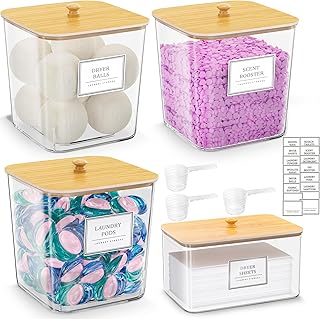
HomePekite Laundry Pods Storage Container
A dependable everyday pick — HomePekite Laundry Pods Storage Container pulls in 16 ratings at 4.5 stars. Not flashy, just solid.
4. Embrace the “Digital-First” Trend to Ditch Paper

Moving towards a paperless system is a huge 2026 trend, mostly because physical paper is the enemy of a clean aesthetic. I used to keep stacks of client invoices on my desk, thinking seeing them would remind me to pay them. It just made me anxious and took up room I needed for my coffee mug. Now, I scan physical documents immediately.
I use the Adobe Scan app on my phone, but a dedicated scanner works too. Then, I shred the physical copy unless I legally need to keep it. I bought an Amazon Basics 8-Sheet Cross-Cut Paper Shredder for $42.99, and it sits right under my desk. The key here is organizing your digital files in a logical folder hierarchy in your cloud storage, mirroring how you’d arrange a physical filing cabinet. I structure my Google Drive with main folders for “Taxes,” “Clients,” and “Receipts.” The tradeoff is that you have to be disciplined about scanning immediately. If you let the papers pile up in a “to scan” tray, you’ve just created a new type of clutter.
5. Conceal Cables with IKEA Cable Management

Untidy cables look terrible and trap dust bunnies like nothing else. I spent a Saturday last month pulling my desk away from the wall to vacuum, and the sheer volume of tangled cords made me want to scream. Hiding cables is a major focus for 2026 home office trends. I installed the IKEA SIGNUM cable trunking right under my desk surface. It costs about $19.99 and acts like a wire hammock for your surge protector and the bulky power bricks. You might also like: 13 Organization Ideas For The Home Bedroom You Need to See
You just screw it directly into the underside of the desktop. For the smaller cables that need to stay on top of the desk, like my phone charger and monitor cable, I use KALKSTUFF cable holders. They are inexpensive and stick right to the edge of the desk. The adhesive on the KALKSTUFF isn’t the strongest, honestly. I had one pop off after a week, so I replaced the sticky pad with a piece of 3M double-sided tape ($5.49 at Target). It holds perfectly now. Keeping cords off the floor means my robot vacuum can actually do its job without getting strangled. You might also like: 15 Home Office Organization Ideas for Every Budget
6. Implement the “One-Touch Rule” for Active Papers

The most common mistake people make with paper is “piling instead of filing.” You pick up a piece of mail, look at it, and set it down on the corner of your desk. By Friday, you have a leaning tower of stress consisting of medical bills, jury duty notices, and junk mail. I combat this with the “one-touch rule.” When I handle a piece of paper, I immediately act on it if it takes under two minutes. If not, I file it in its designated spot. You might also like: 20 Brilliant Indian Home Makeover Ideas for Any Style
I use the IKEA KVISSLE letter tray for my active projects. It costs $29.99 and has a vertical, tiered design that saves a ton of flat desk space. The white metal and cork liners look incredibly sharp, too. I designated the top slot for “Needs Action Today” and the bottom for “Filing.” The cork prevents the papers from sliding out the front, which is a brilliant design choice. I tried a cheap plastic tray from Staples before this, and it cracked within a month. The KVISSLE is heavy steel. It won’t budge when you toss a thick catalog into it.

3-Tier Hanging Laundry Basket Organizer:Foldable Wire Shelf
Honestly, 3-Tier Hanging Laundry Basket Organizer:Foldable Wire Shelf Laundry Ro surprised me — sturdier than it looks in the photos, and over 527 buyers gave it 4.5 stars.
7. Create Specific Zones for Different Tasks

Treating your entire desk surface as one big multi-purpose area is a mistake. It leads to your keyboard being pushed out of the way so you can eat lunch, which pushes your notebook onto the floor. I designate specific work areas on my desk to support my workflow. I maintain a strict “computer zone” in the center, a “writing zone” to the left, and a “reference zone” on the right.
My writing zone just holds a Rhodia dot pad ($9.50) and a single pen cup. My reference zone has a small stand for my iPad where I keep my calendar open. This physical boundary system stops the desk from becoming a single, overwhelming hub. I bought a large felt desk pad from Grovemade (around $50, made of 3.1mm thick merino wool) to visually anchor the computer zone. It gives a distinct textural difference to the center of the desk. When my mouse is on the felt, I’m doing digital work. When I slide over to the bare laminate on the left, I’m brainstorming on paper. It sounds overly simple, but your brain responds to these physical cues. Trust me on this.
8. Raise Your Monitor with the ELLOVEN Stand

Neck pain is the fastest way to ruin your productivity. I spent months hunching over my laptop before I finally invested in a proper monitor setup. Raising your screen to eye level is non-negotiable. I use the IKEA ELLOVEN Monitor Stand with Drawer. It costs $29.99 and solves two problems at once. It fixes the monitor height, and it provides a discreet hiding spot for the tiny items that usually clutter a desk.
The drawer is shallow, but it perfectly fits my reading glasses, a few sticky notes, and a spare USB drive. The bamboo drawer front adds a nice warmth to an otherwise stark white desk. One negative is that the drawer doesn’t have a soft-close mechanism or rollers. It’s just wood sliding on metal tracks, so it sounds a bit scratchy if you pull it out too fast. But for the price, the dual function of ergonomics and hidden storage is unmatched. I slide my keyboard completely underneath the stand at the end of the day to reclaim my desk surface.
9. Integrate Biophilic Design for Mental Wellness

Sterile, purely functional desks are out. A trending approach in 2026 is wellness-inspired organization, specifically biophilic design. This just means bringing elements of nature into your workspace to soften the harsh tech environment and actually improve your focus. I’m terrible at keeping plants alive. I killed a succulent in college and swore off indoor gardening entirely.
But I decided to try again to break up the harsh plastic lines of my dual monitors. I bought a small, easy-care Pothos plant from Sprouts for $6.99 and dropped it into an IKEA KLOTLÖNN plant pot ($8.99). The textured concrete look of the pot contrasts nicely with the smooth desk surface. Having something alive on my desk genuinely lowers my stress levels during long Zoom calls. If you absolutely can’t do real plants, even a high-quality faux plant or natural wood accents help. I keep a small bamboo tray ($12.99 from Target) holding my water glass just to bring in another organic material. The texture makes the space feel less like a corporate cubicle and more like a home. No exaggeration.
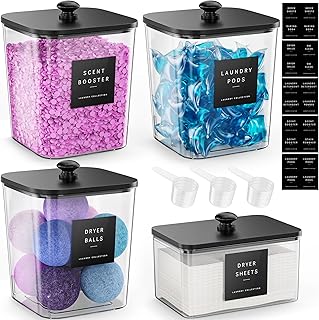
4 Pack Laundry Pods Container
Honestly, 4 Pack Laundry Pods Container surprised me — sturdier than it looks in the photos, and over 509 buyers gave it 4.5 stars.
10. Utilize LACK Shelves for Smooth Extensions

Everyone knows about IKEA LACK shelves. They start at $6.99 and are usually hung high on the wall to display framed photos or books. But here is a lesser-known trick that completely changed how I use my small office. Instead of mounting the LACK shelf at eye level, I mounted a short one exactly flush with the height of my desk, right next to it. It acts as a smooth, extended workspace.
I use this extension specifically to hold my heavy laser printer. It gets the bulky machine completely off my main desktop, but it’s still perfectly within arm’s reach. The LACK shelves have hidden mounting hardware, so it looks like a custom floating extension of the desk itself. The main issue with LACK shelves is their weight limit. You can’t sit on them, and you shouldn’t load them with heavy encyclopedias. The hollow core design means they will sag if you overload them. But for a standard home printer or a secondary monitor, it’s a brilliant, cheap hack to instantly gain more surface area.
11. Designate a Mobile “Sidekick” with the RÅSKOG Cart

Sometimes, you have items you need constantly, but keeping them on the desk makes the space feel claustrophobic. My solution is the IKEA RÅSKOG utility cart. It’s a 3-tier mobile storage unit that costs about $39.99. I use it as a mobile “sidekick” for my desk. I keep all my label-making supplies, extra printer paper, and heavy camera gear in the three tiers.
When I’m actively working on a project, I roll the cart right next to my chair. When I’m done, I roll it into the closet. It keeps frequently used tools accessible but entirely off the main desk surface. The metal mesh bottoms of the tiers are great because dust doesn’t pool in the corners. I bought the black version to match my filing cabinet. One warning: the wheels on the RÅSKOG are hard plastic. If you have soft hardwood floors, they might leave faint tracks if you roll it around heavily loaded. I ended up buying a cheap clear plastic floor mat from Costco ($24.99) to protect my flooring under the desk and cart area.
12. Group Items by Function, Not Just Category

A huge mistake I see clients make is organizing strictly by category. They put all the electronics in one drawer and all the paper goods in another. This sounds logical until you realize how you actually work. Instead, you need to group items by function. For instance, I created a “charging essentials” pouch.
It holds my Anker power bank ($39.99), my specific USB-C cables, and a wall block. Even though the power bank is a device and the cable is an accessory, they serve the exact same function. I keep them together in a small zippered bag in my bottom ALEX drawer. I do the same for my “mail processing” items. My stamps, return address labels, and a heavy metal letter opener are all grouped in one small bamboo tray. When I need to mail a contract, I grab the whole tray. I don’t have to hunt through the pen cup for the opener and my wallet for the stamps. Organizing by action rather than object type drastically speeds up your daily workflow.

iDesign Laundry Detergent Holder
iDesign Laundry Detergent Holder has been one of the most consistently praised picks in this category. 12 reviewers averaged 4.5/5.
13. Choose Eco-Conscious Materials Like TJENA

Plastic acrylic organizers had a massive moment over the last five years, but we’re actively moving away from them. Aligning with the 2026 eco-conscious organization trend means opting for materials that aren’t destined to sit in a landfill for a millennium. I swapped out my cracked plastic bins for the IKEA TJENA series. These storage boxes are made with 80% recycled paper.
They feel surprisingly sturdy, almost like a hard cardboard composite. I use the black magazine files ($4.99 for a 2-pack) to hold my reference catalogs. They look matte and sophisticated on the shelf. The obvious tradeoff with recycled paper products is water resistance. Do not put a TJENA box anywhere near your coffee mug. I accidentally spilled half a cup of iced cold brew on one last month, and the bottom warped permanently. I had to throw it out. But at that price point, and knowing it’s recyclable, it didn’t hurt too much. Choosing bamboo, metal, or recycled paper organizers grounds the office and feels much more intentional than cheap plastic.
14. Maintain a Long-Term “Mini-Reset” Routine

You can buy every clever IKEA desk organization product in the store, but if you don’t change your habits, your desk will be a disaster again by Friday. Abandon the idea of a permanent quick fix. You have to adopt a daily maintenance strategy. I dedicate exactly 5 minutes at the end of every single workday to a “mini-reset.”
I close all my browser tabs, wipe down the monitor screen, put my pens back in the cup, and slide my chair in. I use a slightly damp cloth to wipe away the coffee rings. It’s a hard boundary that signals the workday is officially over. I started doing this after I realized I was starting every morning feeling stressed just looking at the leftover mess from the day before. It prevents the slow, creeping accumulation of clutter. If you leave a mug on Monday, you’ll leave a plate on Tuesday. The mini-reset stops the cycle dead. It’s not about being perfectly pristine; it’s about resetting the baseline so you can actually focus when you sit down tomorrow morning.
Organizing your workspace isn’t about making it look like a sterile museum exhibit. It’s about removing the friction from your day. I’ve tried almost every system out there, and combining the hidden storage of the ALEX drawers with the vertical power of the SKÅDIS pegboard is the most functional setup I’ve found. Don’t rush out and buy everything at once. Start with the clean slate declutter, figure out your actual pain points, and then add the specific pieces that solve them. If you found these tips helpful, definitely pin this post to your home office board for your next IKEA run. Let’s get your desk working for you, not against you.
Frequently Asked Questions
How do I organize my IKEA ALEX drawers cheaply?
Skip the expensive acrylic inserts that slide around. Instead, buy a $2 sheet of foam board from Walmart, score it with a box cutter, and use hot glue to create custom compartments that perfectly fit your drawer dimensions.
What is the best IKEA product for hiding desk cables?
The IKEA SIGNUM cable trunking ($19.99) is excellent. It screws directly under your desktop and acts as a wire hammock to hold bulky surge protectors and power bricks off the floor.
Can I use an IKEA pegboard for desk organization?
Yes, the SKÅDIS pegboard is perfect for maximizing vertical space. Mounting a 22×22 inch board above your monitor keeps daily essentials visible but completely off your flat work surface.
How do I keep my IKEA desk from getting cluttered again?
Implement a 5-minute daily ‘mini-reset.’ At the end of every workday, put your pens away, wipe down coffee rings, and clear active papers. This prevents the slow accumulation of weekly clutter.
