
What’s Inside
- Embrace the Capsule Wardrobe Concept for Kid Closet Organization Ideas
- Maximize Vertical Space with Modular Systems
- Keep Everyday Items Within Your Child’s Reach
- Implement Clear Picture Labels on Bins and Drawers
- Utilize Closet Dividers for Organized Hanging Clothes
- Invest in Slim Non-Slip Velvet Hangers
- Use Vertical Hanging Organizers for Small Items
- Integrate Pull-Out Mesh Drawers for Concealed Storage
- Purge Regularly to Maintain Your Kid Closet Organization Ideas
- Avoid Overstuffing Shelves and Drawers
- Repurpose Over-the-Door Shoe Organizers for Toys
- Create a Daily Outfit System with a Weekly Organizer
- Utilize the Back of the Closet Door for Heavy Items
- Consider Freestanding Clothing Racks for Dress-Up Gear
Last Tuesday morning, I stood in my seven-year-old’s bedroom staring at a mountain of wrinkled uniform polos and single socks while searching for kid closet organization ideas on my phone. The sliding doors were jammed off their tracks because a rogue plastic dinosaur got wedged in the runner. That specific moment of 7:15 AM panic made me rethink all my previous storage strategies. I used to just buy matching plastic bins from Target and shove them on the top shelf. That strategy failed miserably. The bins were too heavy, the lids cracked, and my kid couldn’t reach anything without dragging a wobbly step stool across the carpet. I spent the next three months testing different systems. Most of them failed. But I figured out a few structural changes that actually hold up to daily use by a child. I learned that the hard way. Here are the exact layouts, products, and dimensions that finally stopped the morning meltdowns.
1. Embrace the Capsule Wardrobe Concept for Kid Closet Organization Ideas

I tried the massive wardrobe approach for my oldest child. We previously owned three different heavy oak dressers stuffed with graphic tees, stiff denim jeans, and holiday sweaters. It took twenty minutes just to pick an outfit. I shifted to a capsule wardrobe system last year. I limit the closet to 25 to 50 versatile pieces per season. I buy a stack of solid color Cat & Jack t-shirts from Target for exactly $5.00 each, paired with four pairs of soft neutral jogger pants. Everything matches. You don’t need forty shirts for a child who only wears their top five favorites anyway. Reducing the sheer volume of fabric is the first step in any functional closet system. I spent three hours last October pulling out clothes that hadn’t been worn since spring. I filled four 13-gallon Hefty trash bags for donation. The visual relief in the closet was immediate. Less inventory means fewer decisions at 7:00 AM. It also means the laundry never gets completely out of control because there simply aren’t enough clothes to let it pile up for three weeks. If you skip this purging step, no amount of expensive bins will save your space.
2. Maximize Vertical Space with Modular Systems

Builder-grade closets usually feature one single sticky wire shelf and a wooden hanging rod placed 65 inches off the floor. That layout is entirely useless for a toddler. I ripped out the wire shelving in my son’s room and installed the Elfa Classic 4-Foot Kid’s Closet system from The Container Store. The setup cost me $951.75. It felt like a massive upfront expense, but the modular steel tracks are entirely adjustable. As he grows from a 3T to a men’s medium, I just unclip the metal brackets and move the rods higher. I installed a double hang system to double the capacity. The bottom rod sits exactly 36 inches from the carpet. The top rod sits at 70 inches for out-of-season heavy winter jackets. If you don’t want to drill into drywall, the IKEA SMÅSTAD wardrobe is a solid freestanding alternative. I bought one for our playroom for $210.00. The interior fittings adjust on a simple peg system. Don’t leave empty vertical air above the single rod. That’s wasted real estate. Install shelves all the way up to the 8-foot ceiling line for items you only need twice a year, like ski bibs and heavy boots.
3. Keep Everyday Items Within Your Child’s Reach

I spent months putting my daughter’s socks and underwear in a beautiful woven water hyacinth basket on the very top shelf of her closet. I had to physically hand her underwear every single morning. I realized my mistake and moved the daily essentials down to her eye level. The bottom hanging rod should be positioned 30 to 40 inches from the floor for a toddler. I placed three Mainstays fabric bins from Walmart, which cost $4.88 each, on a low wooden shelf positioned 24 inches off the ground. One bin holds socks, one holds underwear, and one holds cotton pajamas. She can grab what she needs without asking for help. The texture of the fabric bins is soft enough that she won’t scratch her hands, unlike the rigid acrylic ones I tried first. The clear acrylic bins from HomeGoods looked nicer, but they cracked into sharp shards when she dropped one on the hardwood floor. Stick to soft-sided storage for the lower zones. Independence requires physical accessibility. If they can’t reach the drawer, they won’t put their own laundry away. It’s a simple ergonomic fix that saves me ten minutes every morning.
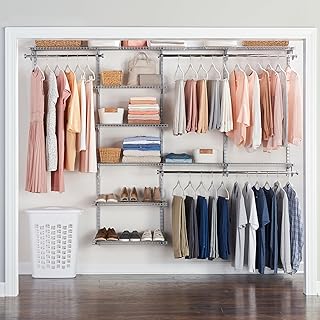
Rubbermaid Configurations Deluxe Custom Closet Kit 4-8 Ft.
Rubbermaid Configurations Deluxe Custom Closet Kit 4-8 Ft. Adjustable has been one of the most consistently praised picks in this category. 81 reviewers averaged 4.5/5.
4. Implement Clear Picture Labels on Bins and Drawers

Text labels are useless for a three-year-old. I bought a Brother P-Touch label maker for $34.99 and went crazy labeling every drawer in the nursery with neat black text. My kid still shoved pants into the shirt drawer because he couldn’t read the word ‘pants’. I switched to visual labeling. I bought a set of printable picture labels on Etsy for $7.50. The PDF included simple, bold line drawings of socks, sweaters, and shorts. I printed them on heavy 110-pound white cardstock and attached them to the front of the bins using clear heavy-duty packing tape. The visual cue completely changed how we do laundry. I hand him a stack of folded shorts, and he matches the physical item to the picture of the shorts on the bin. It functions like a simple matching game. For older kids, text labels work fine. But for the preschool crowd, you need pictures. Don’t buy the expensive custom vinyl decals for this phase. Kids peel them off with their fingernails. The cardstock and packing tape method is cheap, highly durable, and easy to swap out when they transition to different clothing sizes.
5. Utilize Closet Dividers for Organized Hanging Clothes

A long row of hanging clothes quickly turns into a jumbled mess of mixed sizes. I used to dig through thirty tiny cotton shirts trying to find the 18-month size while my baby screamed on the changing pad. I fixed this by installing closet dividers directly on the hanging rod. I bought the Baby Buddy Size-It Closet Organizer Dividers for $11.49 on Amazon. They are brightly colored plastic rings that snap tightly over the standard 1.25-inch wooden dowel. I sort the hanging clothes by size, moving from 2T on the far left to 4T on the far right. You can also use them to divide clothing by type, separating long-sleeve knit shirts from short-sleeve graphic tees. I tried the aesthetically pleasing wooden dividers from Tinyme first. They cost $25.00 and looked beautiful on Instagram, but they were a quarter-inch thick and took up too much horizontal space on the rod. The cheap plastic rings slide easier and take up a fraction of an inch. When you’re raising two kids sharing one tiny 5-foot closet, every single inch of rod space matters. The plastic ones just function better. You might also like: 15 Creative Hacks Organizing Ideas You Need to See
6. Invest in Slim Non-Slip Velvet Hangers

The thick tubular plastic hangers from Target are cheap, but they’re ruining your closet capacity. I previously owned a mismatched collection of thick white plastic hangers and those terrible clip hangers that come free with store purchases. The clothes kept slipping off the plastic and landing in a dusty pile on the floor. I threw them all away last spring. I replaced them with The Container Store’s Kid’s Non-Slip Velvet Hangers. A pack of 10 costs exactly $9.99. They measure exactly 11.75 inches wide, which is the perfect proportion for children’s clothing. The velvet texture grips the cotton fabric, so wide-neck sweaters actually stay on the hanger. More importantly, the ultra-slim profile allowed me to fit 30 percent more clothing on the exact same rod. The velvet does collect lint, which is a minor annoyance. I’ve got to run a sticky lint roller over the black velvet hangers every few months. But the space savings and the visual uniformity make it a worthwhile trade. A single uniform hanger style instantly makes the closet look professionally organized, even if the clothes aren’t perfectly spaced. You might also like: 16 Bedroom Closet Organization Ideas for Every Budget

Kmiectse Clear Storage Bins with Lids
Kmiectse Clear Storage Bins with Lids – 4 Tier Plastic Bins with Wheel has been one of the most consistently praised picks in this category. 2 reviewers averaged 4.5/5.
7. Use Vertical Hanging Organizers for Small Items

When you don’t have enough built-in wooden shelves, you’ve got to create your own. I live in a house built in 1950, and the secondary bedroom closets are basically narrow vertical drywall boxes. I bought a YOUDENOVA 6-Shelf Hanging Closet Organizer for $19.99. It features two heavy-duty metal hooks that drape right over the hanging rod. It drops down 42 inches and provides six individual fabric cubbies. I use this specific organizer to hold my son’s school uniforms. I place a complete outfit, including the navy polo shirt, khaki shorts, and white socks, into each cubby on Sunday night. The mesh side pockets are perfect for holding his woven belts. I made a mistake with my first hanging organizer. I bought a cheap $8.00 version from a discount store. The shelves were made of flimsy cardboard. After three weeks of holding heavy denim jeans, the cardboard bowed in the middle and the whole unit sagged to the left. Spend the extra twelve dollars to get a unit with rigid MDF board inserts in the shelves. It holds its shape under weight and won’t buckle. You might also like: 14 Organization Ideas For The Home Closet Worth Trying
8. Integrate Pull-Out Mesh Drawers for Concealed Storage

Open shelving looks great in catalogs, but it rarely looks good in real life. Kids don’t fold their t-shirts into perfect retail-store stacks. They crumple them into tight, wrinkled balls. I use pull-out mesh drawers to hide the reality of my children’s folding skills. I installed a freestanding stack of Elfa Mesh Drawers from The Container Store inside the closet. The 4-runner steel frame and medium drawers cost me about $185.00 total. The tight white steel mesh hides the wrinkles and the chaotic color patterns, but still allows air circulation so the damp sports clothes don’t get musty. I use these drawers for items that are difficult to fold neatly, like nylon bathing suits, athletic shorts, and thick winter beanies. For the very top shelf, I use large lidded plastic bins from Costco. I bought a 4-pack of the 12-gallon Greenmade storage bins for $34.99. The tight latching lids keep the dust out of the out-of-season heavy winter coats. Don’t use open wicker baskets on the top shelf. They just collect a thick layer of grey dust over six months and make the clothes smell stale.
9. Purge Regularly to Maintain Your Kid Closet Organization Ideas

You can buy all the expensive acrylic organizers in the world, but if the closet is stuffed with clothes that don’t fit, the system will fail. Children grow at an alarming rate. A pair of sweatpants that fit perfectly in September will be two inches too short by December. I schedule a mandatory closet purge every three months. I mark it on my digital calendar so I can’t ignore it. I go through every single drawer and pull out anything with a grass stain, a hole in the knee, or a too-tight waistband. I keep a permanent, dedicated cardboard box on the floor in the back right corner of the closet. When I notice a shirt is too small during the morning rush, I immediately toss it into that box. I don’t put it back in the drawer. When the box is full, I tape it up and drop it at the Goodwill donation center behind Kroger. If you don’t keep a dedicated donation bin directly in the closet, you will inevitably put the outgrown item back on the hanger because you’re too tired to walk it out to the garage.

AWTATOS Cube Storage Organizer Storage 12 Cube Bookshelf
AWTATOS Cube Storage Organizer Storage 12 Cube Bookshelf DIY Plastic C has been one of the most consistently praised picks in this category. 28 reviewers averaged 4.5/5.
10. Avoid Overstuffing Shelves and Drawers

I used to cram as many folded sweaters onto a shelf as physically possible. I stacked them ten units high, all the way to the bottom of the shelf above it. It looked incredibly efficient until my daughter tried to pull a pink knit sweater from the middle of the stack. The entire tower collapsed, knocking three other stacks onto the floor. Professional organizers rely on the 80 percent rule. You should never fill a drawer or a shelf past 80 percent capacity. You need physical empty space to maneuver items in and out without destroying the adjacent piles. I now limit my shelf stacks to five folded items maximum. I use clear acrylic vertical shelf dividers from Target. They cost $14.00 for a two-pack. I slide them tightly onto the 3/4-inch wooden shelf board. These rigid dividers act like walls, preventing the stack of denim jeans from tipping over into the stack of soft sweatpants. If a drawer forces you to push down forcefully on the clothes just to get the tracks to close, you own too much inventory. Take five things out immediately.
11. Repurpose Over-the-Door Shoe Organizers for Toys

Stuffed animals are the absolute enemy of a clean room. They don’t stack, they take up massive amounts of volume, and they constantly end up shoved under the bed collecting dust bunnies. I stopped trying to put them in wooden toy boxes. Instead, I bought a Whitmor 24-Pocket Over-The-Door Shoe Organizer from Amazon for $12.99. I hung it on the inside face of the closet door using the included metal over-door brackets. I didn’t put a single pair of shoes in it. I shoved a Beanie Boo or a small plush toy into every single clear vinyl pocket. The clear plastic makes it easy for my kid to see exactly where the green dinosaur is without dumping out a massive bin onto the floor. This single hack completely cleared off the top shelf of the closet. I also use these pockets for winter gloves, knit hats, and small plastic action figures. The vinyl pockets do stretch out over time if you force items that are too large into them. Stick to items that are roughly the size of a standard 16-ounce water bottle or smaller to prevent tearing the seams.
12. Create a Daily Outfit System with a Weekly Organizer

Morning decision fatigue is a real problem in my house. Arguing over whether a striped neon shirt matches plaid shorts at 6:45 AM ruins the entire mood of the day. I eliminated this fight by purchasing the Handy Laundry Weekly Clothes Organizer. It costs exactly $14.99 and features five stacked fabric shelves, each clearly labeled with a day of the week from Monday to Friday. Every Sunday afternoon after I finish folding the hot laundry, my son and I load the organizer together. We pick out five complete outfits down to the specific socks and underwear. We slide Monday’s outfit into the top slot, Tuesday’s into the second, and so on. When he wakes up, he just reaches into the slot for that specific day. There is zero negotiation. I tried doing this with individual plastic bins lined up on the bedroom floor, but they took up way too much square footage and we tripped over them constantly. The vertical hanging organizer uses minimal rod space and solves the biggest daily friction point in our entire household routine.

Ulif E10 Clothes Rack(With Stretchable Hanger
Honestly, Ulif E10 Clothes Rack(With Stretchable Hanger Rod)Freestanding Clothin surprised me — sturdier than it looks in the photos, and over 958 buyers gave it 4.5 stars.
13. Utilize the Back of the Closet Door for Heavy Items

The back of the closet door is usually completely ignored. It represents at least fifteen square feet of highly usable vertical storage. I initially tried to install heavy metal hooks by drilling directly into the door. That was a total disaster. Most modern interior doors are hollow core. The metal screws ripped right out of the thin wood veneer, leaving jagged, ugly holes. I patched the holes with wood filler and switched to adhesive hooks. I bought a 6-pack of Large 3M Command Hooks from Target for $16.48. I placed them in a staggered pattern on the back of the door. The top row sits at 60 inches for my heavy canvas tote bags. The bottom row sits at 36 inches for my kid’s fleece jackets and terrycloth bathrobes. The staggered placement prevents the bulky items from overlapping and preventing the door from closing properly. Just make sure you aggressively clean the door surface with rubbing alcohol before applying the adhesive strips. If you skip the alcohol prep, the hooks will peel off within a week under the weight of a damp winter coat.
14. Consider Freestanding Clothing Racks for Dress-Up Gear

Mixing Batman costumes and glittery princess dresses in with everyday school clothes is a terrible idea. The scratchy tulle skirts snag on the metal zippers of the school jackets, and the bulky foam muscle suits take up half the hanging rod. I removed all the dress-up gear from the main closet entirely. I bought a Guidecraft Freestanding Dress Up Storage Rack for $149.95. I set it up in the corner of the playroom instead. It has a wooden hanging rod for the costumes and a deep bottom bin for the plastic swords and tiaras. Separating the play clothes from the functional clothes visually signals to the child what is appropriate to wear to the grocery store. I made the mistake of leaving a Spider-Man suit in the main closet last year. My son tried to wear it to a dentist appointment, resulting in a twenty-minute crying standoff in the driveway. Keep the costumes in a completely different zone. It protects the delicate play fabrics from getting ruined and streamlines the actual functional wardrobe so they aren’t distracted while getting dressed.
Organizing a child’s space isn’t about creating a perfect, magazine-worthy aesthetic. It’s about building a durable framework that can survive the daily tornado of a seven-year-old getting dressed. I spent years fighting with cracked plastic bins and collapsed piles of jeans before I finally accepted that kids need low rods, visual labels, and strict limits on inventory. Start small. You don’t have to rip out your drywall and install a thousand-dollar Elfa system today. Buy the $9.99 velvet hangers and purge the outgrown clothes. Those two steps alone will radically change how the space functions. If you found these strategies helpful, pin this article to your home organization board so you can reference the exact measurements and product prices the next time you’re standing in the storage aisle at Target staring at a wall of bins.
Frequently Asked Questions
How do you organize a kid’s closet on a budget?
Start by purging outgrown clothes to reduce inventory. Use cheap tension rods to create a second, lower hanging space. Repurpose cardboard boxes with printable labels from Etsy, and buy $5 fabric bins from Walmart instead of expensive acrylic organizers.
What is the best height for a kid’s closet rod?
For toddlers and young children, install the lower hanging rod between 30 and 40 inches from the floor. This exact height allows them to reach their own shirts and jackets independently without needing a step stool.
How do you keep kids from messing up folded clothes?
Use pull-out mesh drawers or fabric bins instead of open shelving. Kids struggle to maintain perfect retail-style folds. Concealed drawers hide the wrinkles, while clear acrylic shelf dividers prevent stacks of pants from tipping over.
Are velvet hangers worth it for kid closet organization ideas?
Yes. Slim velvet hangers prevent wide-neck shirts from slipping onto the floor. More importantly, their ultra-thin profile allows you to fit 30 percent more clothing on the exact same rod compared to bulky tubular plastic hangers.
