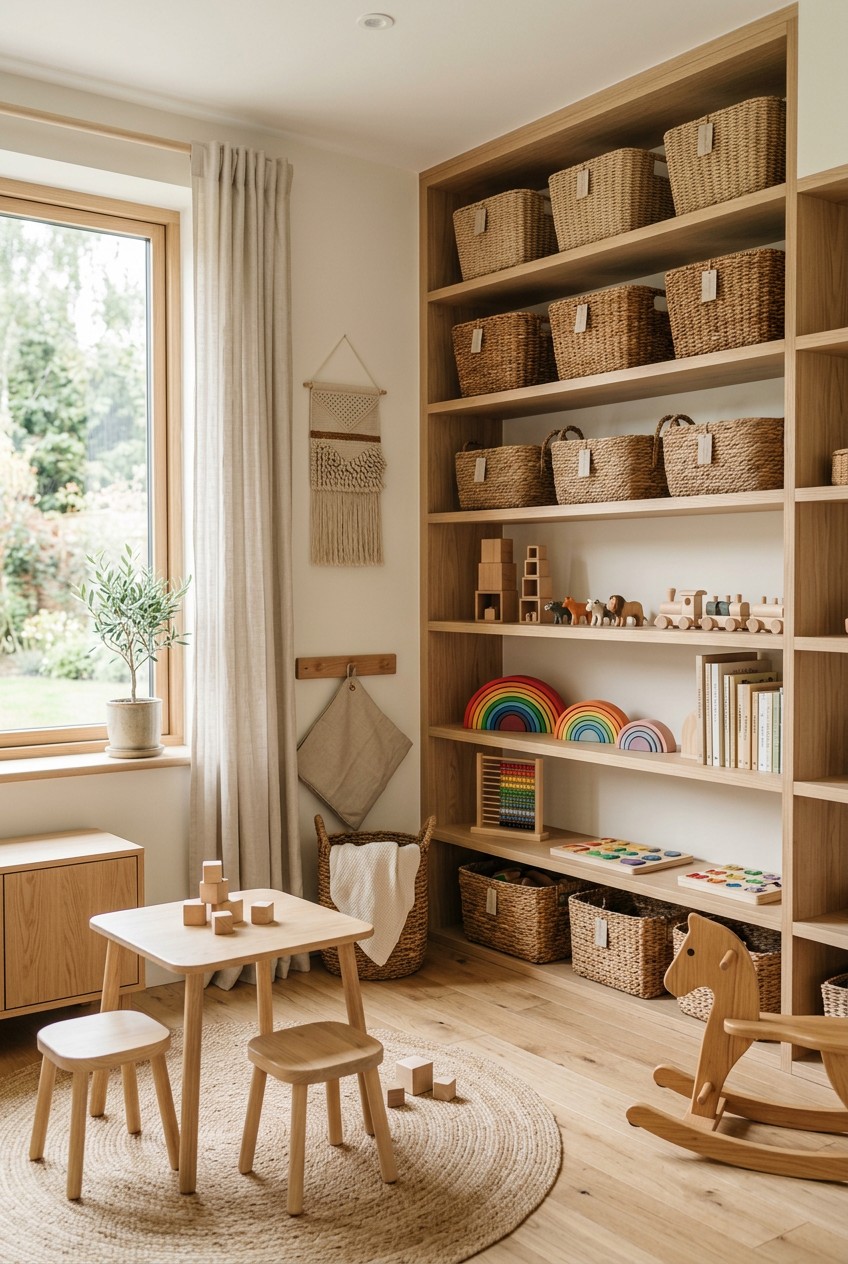
What’s Inside
- Embrace the Montessori Toy Rotation Method
- Prioritize Clear Bins for Easy Identification
- Label Everything with Pictures for Young Children
- Utilize Modular Systems for Adaptability
- Categorize Toys Logically with Your Child’s Input
- Maximize Vertical Space with Shelving and Wall Storage
- Opt for Open Bins Over Lidded Ones for Frequent Access
- Remove Toys from Original Packaging
- Create Dedicated “Zones” for Different Activities
- Implement a Regular Decluttering Schedule
- Utilize Multi-Functional Furniture for Hidden Storage
- Avoid Overfilling Bins to Maintain Accessibility
- Consider Under-Bed Storage for Less-Used Items
- Use Corner Storage Hammocks for Stuffed Animals
- Involve Kids in the Organization Process
Last Tuesday at 2 AM, I stepped barefoot onto a rogue plastic dinosaur spine. That sharp, blinding pain made me realize my current kids’ toy storage situation was a mess. I’m not exaggerating when I say I sat on the hallway floor and cried over a tiny green Triceratops. My house felt like a plastic explosion. The sticky residue of old tape on broken cardboard boxes, the loud clatter of wooden blocks tumbling out of overstuffed closets, the faint, chemical smell of cheap plastic off-gassing in the corner. It was entirely too much. I’ve spent the last four years buying every cute basket and bin on the market, but nothing actually worked. I’d organize it perfectly on Sunday, and by Monday afternoon, the playroom looked like a tornado hit it. You’re probably nodding along right now. Kids’ toy storage doesn’t have to be this miserable, daily battle. I finally stopped buying random cute baskets and started implementing actual systems that make sense for small hands and short attention spans. I’ll share the exact bins, shelves, and brutal decluttering rules that finally gave me my living room floor back.
1. Embrace the Montessori Toy Rotation Method

Last month I tried rotating toys and completely failed because I hid them in a black trash bag. My son thought I threw his stuff away and cried for an hour. Learned that the hard way. Now I use opaque bins stored safely out of sight in the hall closet. Experts recommend rotating 4 to 5 toys at a time. This keeps play fresh and prevents visual clutter. The Lovevery Montessori Playshelf is great for this. It’s made of solid Baltic birch wood and costs exactly $250 on their site. It has hidden storage in the back. You put the out-of-rotation stuff back there. I’ve noticed my kids play significantly longer when there are fewer options. It’s wild. They actually focus deeply on a single puzzle instead of trashing the room. The wood on the Lovevery shelf smells amazing, like a real lumber yard, not that harsh chemical glue smell. Skip the cheap particle board shelves. They chip after two weeks of toddler abuse. I bought a cheap discount shelf once. It wobbled so badly I had to drag it to the curb. Stick to sturdy wood. Toy rotation is the only way I keep my sanity intact during long rainy weekends.
2. Prioritize Clear Bins for Easy Identification

You’re probably buying those cute, colorful fabric bins with the little animal faces on them. Stop. I did that for two years. My kids would just dump every single bin onto the floor because they couldn’t see what was inside. It sounded like a massive plastic avalanche every single afternoon. Prioritize clear bins for easy identification. The Brightroom 4L Stacking Clear Bin with Lid from Target is my favorite storage solution. It costs exactly $6.00. The dimensions are 10.15 by 6.81 by 4.52 inches. They stack perfectly on standard shelves. If you need something bigger for chunky cars, grab the 11L version for $11.00. I’ve bought dozens of these over the years. You can also hit up The Container Store for their clear shoe boxes, but the Target ones are cheaper and feature thicker plastic. Pro tip: take the lids off for everyday toys. The lids just get lost under the sofa anyway. When kids can see the bright green Magna-Tiles through the clear plastic, they grab that specific bin. No more dumping. Honestly, this changed how I handle afternoon cleanups. It’s a small switch but it saves me 20 minutes of sorting every single night.
3. Label Everything with Pictures for Young Children

For toddlers who can’t read yet, text labels are useless. I learned this the hard way when I spent three hours printing beautiful, minimalist cursive labels for my daughter’s playroom. She ignored them completely and shoved play-dough into the puzzle bin. Label everything with pictures instead. I take my iPhone, snap a clear photo of the exact toys, print it on regular computer paper, and stick it on with clear packing tape. You can also use a Polaroid camera if you’re feeling fancy. I snap a picture of the wooden train tracks, cut it out with scissors, and tape it right to the front of the plastic bin. It’s brilliant. Sometimes I even use hot glue to attach a physical object directly to the bin. I glued a single green LEGO brick to the LEGO bin. The rough texture helps them recognize it immediately. This empowers kids to clean up their own messes without constantly asking you where things go. They match the toy to the picture. It’s like a matching game. I did this last Sunday after grabbing groceries at Sprouts. I sat on the floor, ate a handful of almonds, and labeled ten bins in twenty minutes.

Bathroom Counter Organizer and Storage
Bathroom Counter Organizer and Storage punches above its price — 12 buyers rated it 4.5 stars. I would buy it again.
4. Utilize Modular Systems for Adaptability

Kids outgrow toys so fast. What works for chunky wooden blocks won’t work for tiny action figures three years later. You need a modular system that grows with them. The IKEA TROFAST series is the king of kids’ toy storage. The standard frame measures 36 5/8 by 17 3/8 by 20 1/2 inches. It costs between $79 and $119 depending on the wood finish. I prefer the white stained pine. It feels slightly textured and hides inevitable crayon scratches well. The plastic bins slide in and out on little wooden grooves. You can swap a deep bin for two shallow ones in seconds. I’ve had my TROFAST unit for four years. It survived a cross-country move and two heavy toddlers climbing on it daily. It’s sturdy. The IKEA KALLAX shelf is another great option, but I find the TROFAST sliding grooves easier for small, clumsy hands to manage. Don’t buy the generic knockoffs online. I ordered a fake TROFAST once and the cheap plastic bins shattered when dropped on our hardwood floor. The real IKEA bins are slightly flexible and bounce. They won’t crack under pressure.
5. Categorize Toys Logically with Your Child’s Input

Most people get this wrong. They try to organize toys by brand or educational value. Kids don’t care about that. Categorize toys logically with your child’s input. Michelle Urban says you have to ask the kid how they want things sorted. I sat down with my son last Tuesday. I had a massive pile of mixed building toys. I wanted to put all the blocks together in one giant bin. He wanted to sort them strictly by color. So we did it his way. We made a bin for red pieces, a bin for blue pieces, and so on. He actually maintains it now. When they have a say, they take ownership of the mess. We sat on the rug, eating some chewy organic strawberry fruit snacks I bought at Whole Foods, and sorted for an hour. It was actually fun. If you force your adult logic on a four-year-old, you’re setting yourself up for failure. Let them decide if the plastic dinosaur goes with the cars or the farm animals. Their little brains work differently. It’s fascinating to watch them create their own unique categories. You might also like: 15 Inspiring Cozy Home Hacks That Changed Everything
6. Maximize Vertical Space with Shelving and Wall Storage

Floor space is prime real estate in a playroom. If you leave everything on the floor, the room feels tiny, cramped, and chaotic. Maximize vertical space with shelving and wall storage. I personally swear by the IKEA LACK floating shelves. They cost about $29.99 for the 43-inch version. I mount them high up to display fragile Lego sets and completed puzzles. This keeps them safe from destructive younger siblings. For heavy-duty vertical storage, the Elfa Kids Playroom Shelving system from The Container Store is amazing. It’s a serious investment. A basic setup runs around $450. But it mounts to a single top track, so you only drill a few holes in the drywall. The metal shelves feel solid. I hang little white metal baskets on the Elfa pegboard for markers and crayons. You can also use a simple wooden peg rail. I bought a Shaker-style peg rail on Etsy for $35. I hang sturdy canvas tote bags from the wooden pegs. Each bag holds a different set of dress-up clothes. It gets the bulky, scratchy tulle skirts off the floor and looks adorable. You might also like: 20 Creative DIY Garage Organization Ideas That Changed Everything

Durmmur 2 Pack Hat Racks for Baseball Caps
A dependable everyday pick — Durmmur 2 Pack Hat Racks for Baseball Caps pulls in 109 ratings at 4.5 stars. Not flashy, just solid.
7. Opt for Open Bins Over Lidded Ones for Frequent Access

Lids are the enemy of quick cleanups. I used to buy those heavy-duty storage totes with the locking latch lids. My kids hated them. They would pinch their tiny fingers trying to open the stiff plastic latches. Then they’d just leave the lids scattered across the room like plastic landmines. Opt for open bins over lidded ones for frequent access. If a toy is played with every single day, it needs to live in an open container. Professional organizers agree on this rule. The less friction there is between the toy and the bin, the more likely your kid will actually put it away. I use the Target Brightroom woven plastic baskets. They cost $8.00 each. They have a nice textured feel, almost like real rattan, but you can wipe them clean with a damp, soapy cloth. I keep three of these lined up under the living room window. One holds heavy library books, one holds wooden trains, and one holds stuffed dogs. It takes my daughter exactly ten seconds to toss her toys into the open baskets before dinner. No lids. No pinched fingers. No excuses. You might also like: 15 Clever Kitchen Small Space Ideas That Changed Everything
8. Remove Toys from Original Packaging

Cardboard board game boxes are terrible. They rip, they crush, and they take up way too much space on your shelves. Amanda Titchenal recommends taking toys out of their original bulky packaging. I fully agree. Remove toys from original packaging immediately. I buy heavy-duty zippered mesh pouches on Amazon. You can get a pack of 12 in various sizes for $12.99. I take all the Monopoly pieces, the stiff folding board, and the paper money, and shove them into a large mesh pouch. I cut the title off the cardboard box and slip it inside so we know exactly what game it is. The pouches take up a quarter of the space. I dumped an entire shelf of crushed, ripped board game boxes into the recycling bin last month. It felt good. The mesh pouches have colorful zippers so you can color-code them easily. Red zippers for card games, blue zippers for board games. I keep them all in a large fabric basket from Walmart that cost $14.98. The metal zipper pulls jingle a little when you dig through the basket. It’s so much easier than fighting with torn cardboard flaps.
9. Create Dedicated “Zones” for Different Activities

Kids need visual boundaries. If you don’t define the space, the entire house becomes a chaotic playroom. Create dedicated zones for different activities. I set up a specific art zone in the corner of our dining room. I use the IKEA RÅSKOG utility cart. It costs $39.99 and comes in a gorgeous matte black or white metal finish. It rolls smoothly on four heavy-duty caster wheels. The top tier holds crayons and markers in little metal cups. The middle tier holds stacks of construction paper. The bottom tier holds smelly play-dough and clay. When my kids want to color, I roll the cart right up to the kitchen table. When they’re done, I roll it back into the corner. It contains the messy supplies perfectly. I also keep a little stash of Trader Joe’s peanut butter pretzels on the middle shelf for art-time snacking. Those salty, crunchy pretzels are a lifesaver. Having a mobile zone means the loose glitter and sticky glue don’t migrate to the living room rug. I tried keeping art supplies in a stationary cabinet once. The kids would carry handfuls of markers across the house, dropping them everywhere. The rolling cart solved that problem overnight.

Sakugi Storage Shelves – 5 Tier Shelf Organizer
Sakugi Storage Shelves – 5 Tier Shelf Organizer has been one of the most consistently praised picks in this category. 31 reviewers averaged 4.5/5.
10. Implement a Regular Decluttering Schedule

You can’t organize clutter. If you have too much stuff, no amount of expensive bins will save you. Implement a regular decluttering schedule. Michelle Urban suggests doing a massive purge before birthdays and holidays. I follow the strict one in, one out rule. If my son gets a bright new remote-control car, an old, ignored toy has to go. We bag up the donations in heavy black trash bags and drive them to Goodwill together in the minivan. I make sure my kids see the actual process. Last Saturday, we cleared out two full garbage bags of broken plastic junk and outgrown baby toys. The house felt instantly lighter. The air literally felt cleaner. Don’t wait until you’re drowning in toys to declutter. Schedule it on your calendar. I do a mini-purge on the first Sunday of every month. It takes exactly 15 minutes. I grab a trash bag and walk through the playroom. Anything broken, missing essential pieces, or ignored for months gets tossed or donated. I used to feel guilty throwing away expensive gifts from relatives. I don’t anymore. My peace of mind is worth more than a plastic singing turtle.
11. Utilize Multi-Functional Furniture for Hidden Storage

If your kids’ toys are taking over your main living space, you need furniture that works double duty. Utilize multi-functional furniture for hidden storage. I love the KidKraft Store Austin Toy Box. It costs around $129.99 on Amazon or Wayfair. It comes in a crisp white wood finish and looks like a beautiful entryway bench. I keep it right by our front door. The heavy lid has a safety hinge so it won’t slam on little fingers. That slow-close hinge is crucial. I’ve heard stories about heavy wooden lids crushing hands. Inside the bench, I stash all the bulky wooden blocks and loud train tracks. On top, I throw a couple of soft, velvet throw pillows. Guests sit on it to take off their shoes, completely unaware that it’s hiding a hundred brightly colored wooden blocks. I also use a large tufted ottoman in the living room. It cost $89 at Target. The top lifts off to reveal a massive empty cavity. I throw all the random loose action figures in there right before company comes over. It’s my secret weapon for a frantic five-minute tidy.
12. Avoid Overfilling Bins to Maintain Accessibility

This is a huge mistake I see constantly. Parents buy the right bins, but they stuff them to the absolute brim. Avoid overfilling bins to maintain accessibility. If a kid has to play a frustrating game of Tetris just to put away their Magna-Tiles, they won’t do it. They’ll just leave them scattered on the rug. Professional organizers recommend leaving at least 20 percent of the bin completely empty. It needs visual breathing room. I learned this hard lesson when I tried to cram fifty heavy Hot Wheels cars into a tiny plastic shoebox. The lid wouldn’t shut. My son would pull out one car, and ten others would spill onto the hardwood floor with a loud, annoying plastic clatter. It was infuriating. Now, I use larger bins and keep them loosely filled. When my daughter tosses her wooden pretend food into the kitchen bin, it makes a satisfying thud because there’s actually room for it to land. If a bin starts overflowing, that’s my cue to declutter. I don’t buy a bigger bin. I get rid of the excess toys. It’s a hard boundary to enforce, but it’s absolutely necessary. Took me years to figure out.

IRIS USA 13 QT Plastic Storage Box with Lid and Latches
Honestly, IRIS USA 13 QT Plastic Storage Box with Lid and Latches – 6 Pack – BPA surprised me — sturdier than it looks in the photos, and over 627 buyers gave it 4.5 stars.
13. Consider Under-Bed Storage for Less-Used Items

Don’t ignore the dark, dusty space under the beds. It’s a goldmine for hidden storage. Consider under-bed storage for less-used items. I use the Walmart Sterilite 60 Quart Clear Underbed Storage Boxes. They cost exactly $17.98 each. They measure 34.62 by 18.75 by 7 inches. They slide smoothly on thick carpet or bare hardwood. I use these massive boxes for seasonal items. Right now, all the summer water guns, bulky pool toys, and dusty sidewalk chalk are packed away under my son’s bed. The clear plastic means I can see exactly what’s inside without pulling the whole heavy box out. I also use these boxes for sentimental baby toys I’m not ready to part with yet. Just make sure you measure the exact clearance under your bed before you buy anything. I bought a set of beautiful woven under-bed baskets from a local boutique once. They were half an inch too tall and got completely stuck under the wooden bed frame. I scratched the floorboards trying to yank them out. Stick to the low-profile plastic bins. They glide perfectly and keep the gross dust bunnies out.
14. Use Corner Storage Hammocks for Stuffed Animals

Stuffed animals multiply when you aren’t looking. I swear they do. They take up massive amounts of floor space and look incredibly messy piled in a corner. Use corner storage hammocks for stuffed animals. I bought the Lilly’s Love Stuffed Animal Hammock on Amazon for $14.95. It comes with three heavy-duty metal screw-in hooks. You find an empty corner, screw the hooks deep into the drywall anchors, and stretch the white mesh net across. It holds a ridiculous amount of plushies. We even fit a giant five-foot fluffy teddy bear my husband brought home from Costco. That massive bear cost $39.99 and took up half the bedroom floor until we hoisted it up into the hammock. The mesh stretches tight and keeps the toys visible but completely out of the way. It adds a cute, cozy vibe to the room. The kids can still reach the bottom animals, but the top ones are securely stored. Just make sure you use the plastic drywall anchors. I tried to skip them once, and the whole hammock ripped out of the wall in the middle of the night. It sounded like a burglar was breaking into the house.
15. Involve Kids in the Organization Process

The biggest organizing failure is doing it all yourself while your kids watch cartoons in the other room. You have to teach them the system. Involve kids in the organization process. If they don’t know where things go, they can’t help you clean. Make it a loud, energetic game. I set a digital timer on my phone for exactly five minutes. I yell, “Go!” and we race to see who can fill their bins the fastest. The frantic energy is hilarious. They scramble around grabbing toys. The tactile feeling of tossing heavy blocks into plastic bins becomes a fun challenge instead of a boring chore. I also let them pick out the label colors. Last week at Kroger, I let my daughter pick out a pack of sticky neon star stickers to decorate her new art bin. She was so proud of it. She actually wants to put her crayons away now because she loves looking at her brightly decorated bin. If you build the system with them, they respect it. If you build it for them, they destroy it. It’s really that simple. Give them the right tools, show them the ropes, and step back.
Organizing your kids’ stuff doesn’t have to feel like a losing battle every single day. I’ve tried every trendy trick in the book, and these 15 methods are the ones that actually stick long-term. You don’t need a pristine, magazine-perfect house. You just need a functional system that makes sense for your family. Stop tripping over sharp wooden blocks and start reclaiming your precious floor space today. I highly recommend starting with the clear Target bins and the printed picture labels. Those two simple changes alone will drop your daily stress levels instantly. Pin this article for your next weekend organizing project, and let me know which tip saves your sanity first! You’ve got this.
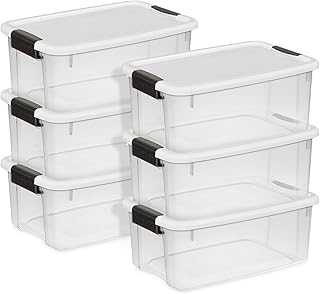
Sterilite 6-Pack Ultra Latching Box, Storage Bins with Lids
Sterilite 6-Pack Ultra Latching Box has been one of the most consistently praised picks in this category. 126 reviewers averaged 4.5/5.
Frequently Asked Questions
How do I organize kids toy storage in a small living room?
Use multi-functional furniture like storage ottomans or wooden benches with hidden compartments. Maximize vertical space with floating wall shelves. Keep everyday toys in beautiful woven baskets that blend with your decor.
What is the best way to label kids toy storage bins?
For toddlers, skip text and use picture labels. Snap a clear photo of the exact toys, print it, and tape it directly to the front of the bin. This visual cue helps young children clean up independently.
How many toys should be in a kids toy storage rotation?
Professional organizers recommend keeping 4 to 5 toys out at a time. Store the rest in opaque bins in a closet. Swap them out every few weeks to keep playtime fresh and reduce daily visual clutter.
Should I use bins with lids for kids toy storage?
For daily play items, always use open bins. Lids create unnecessary friction and deter kids from putting things away. Only use lidded bins for long-term storage, seasonal items, or out-of-rotation toys kept safely in closets.
