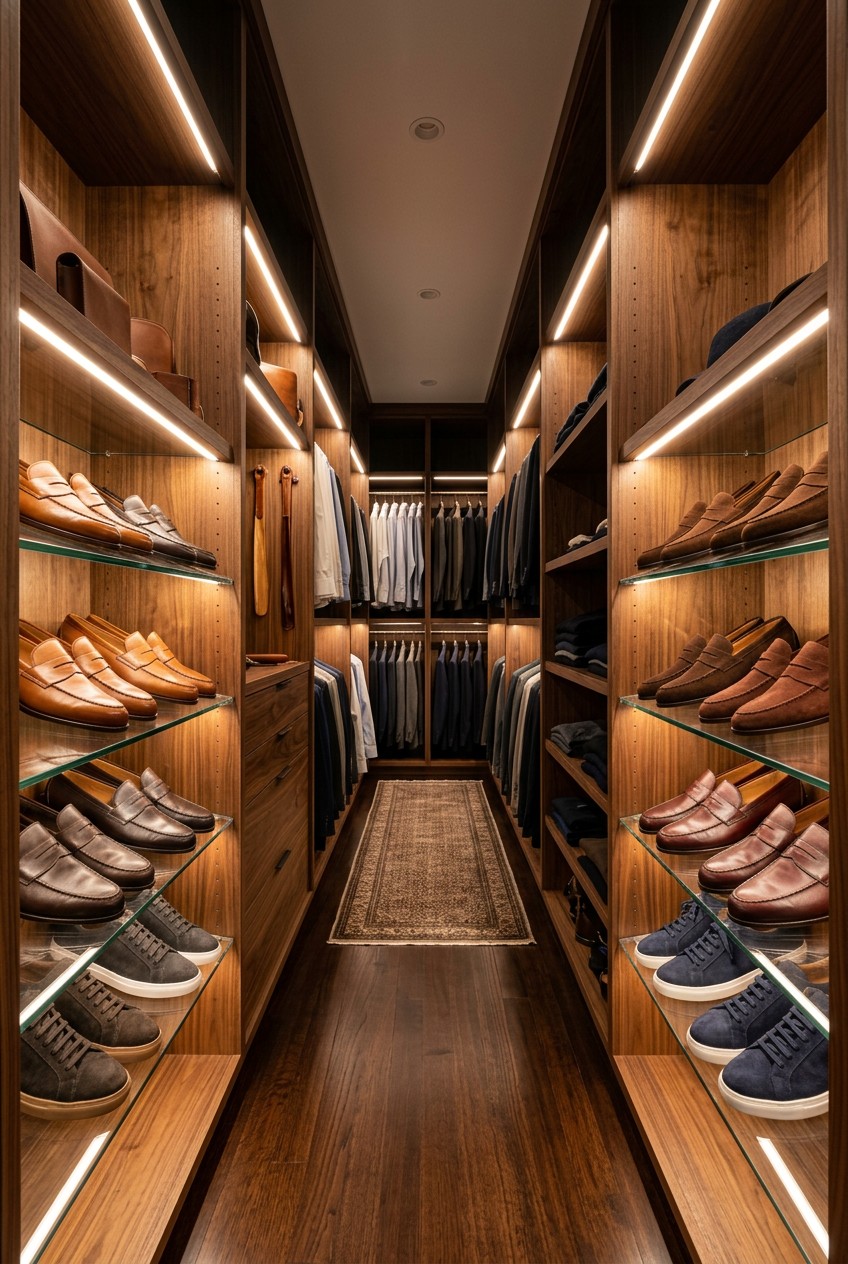
What’s Inside
- Embrace Clear Drop-Front Boxes For Ultimate Closet Shoe Organization
- Slide Seasonal Pairs Into Under-Bed Storage
- Stack Vertical Shoe Racks In Tiny Spaces
- Stop Storing Shoes Directly On The Floor
- Hang Heavy-Duty Over-The-Door Organizers
- Use Proper Boot Shapers To Prevent Creases
- Upgrade To Slanted Shelving With Toe Guards
- Categorize And Zone Your Footwear Collection
- Divide Drawers For Sandals And Small Accessories
- Build Sustainable Storage With Wooden Crates
- Ditch Wire Shelving For Solid Adjustable Shelves
- Install A Lazy Susan For Awkward Corners
- Use Cheap Clear Bins For Out-Of-Season Storage
Last Tuesday at Whole Foods, I hit a wall. I was staring at a display of honeycrisp apples, but my brain was stuck on the avalanche of sneakers that had trapped me in my own bedroom that morning. Closet shoe organization isn’t just about looking nice for guests. It’s about not tripping over a stray size 8 running shoe at 6 AM when you’re dying for coffee. I used to throw my flats into a corner and hope for the best. The result was a scuffed pile of leather that smelled like old gym socks and despair. I tried fixing it the wrong way for months. I bought flimsy wire racks that collapsed under three pairs of boots. I bought opaque boxes and forgot what I owned. My suede booties got crushed under heavy hiking boots. It was a disaster. Now, I’ve finally cracked the code to keeping my footwear visible, protected, and off the floor. If you’re tired of digging through a mountain of sneakers just to leave the house, I get it. Let’s fix that messy floor with some specific, tested methods that work in real life.
1. Embrace Clear Drop-Front Boxes For Ultimate Closet Shoe Organization

I swear by clear, stackable drop-front boxes. They’re the holy grail. Before these, I used the original cardboard boxes. I’d stack them five high, and whenever I needed the bottom pair, the whole tower crashed. It was infuriating. Now, I use The Container Store’s Everything Organizer Drop-Front Shoe Box. They cost $19.99 for one, or you can grab a case of 4 for $74.99. It’s an investment, but the hard plastic is clear, and the magnetic door clicks shut with a satisfying sound. Trust me.
If you’re on a budget, check out SESENO or Kuject on Amazon. A 12-pack runs about $53.84. Just check the dimensions first. I bought a cheap generic brand once, and they didn’t even fit my husband’s size 11 sneakers. You want boxes that fit men’s sizes up to 13 or women’s up to 12. The Kuject boxes are roughly 13.5 inches long, which gives plenty of room. The best part is the drop-front door. You don’t have to unstack anything. Just open the door, pull the shoes out, and go. It keeps the dust out and makes your closet look like a boutique.
2. Slide Seasonal Pairs Into Under-Bed Storage

Most people get this wrong: they keep snow boots and fuzzy slippers in their main closet in July. It’s a waste of space. For shoes you aren’t wearing, use under-bed storage. Last winter, I did a big Costco run and grabbed cheap fabric under-bed bins on an impulse. They ripped the second I pulled them from under my bed. The zippers snapped, and the fabric tore down the middle.
I learned my lesson and upgraded to the Lifewit Under Bed Shoe Storage Organizer. A set of two is around $25, and each holds up to 12 pairs. They have a clear vinyl top so I can see where my boots are hiding. If you have heavy boots or hard floors, look for wheels. The PHINOX under-bed container rolls smoothly and saves you from dragging fabric across the carpet. I use a 4 oz spray bottle of cedar oil and mist a cotton ball, tossing it into the bin before I zip it. It keeps boots smelling fresh and repels pests while they sit for six months.
3. Stack Vertical Shoe Racks In Tiny Spaces

If you have a tiny closet, horizontal space is your enemy. Build upward. I used to line shoes against the baseboards, which meant I could only fit six pairs. The rest piled up in a chaotic mound. To fix this, I bought the IKEA GREJIG shoe rack. It’s $4.00 per rack. They’re dark gray steel mesh with folding legs. The brilliant part is that you can stack three of them high.
I stacked three GREJIG racks in the narrow corner of my closet, turning a tiny footprint into storage for nine pairs. If you want something sturdier, look for bamboo or metal tiers. Verify the shelf height is at least 6.5 inches. I bought a wooden rack once where the shelves were only 5 inches apart, and I couldn’t squeeze my ankle boots in without scraping the leather. A 6.5-inch gap gives you clearance for high-tops or chunky heels. I keep a 2 oz bottle of leather conditioner on the top shelf so I remember to wipe down my boots.
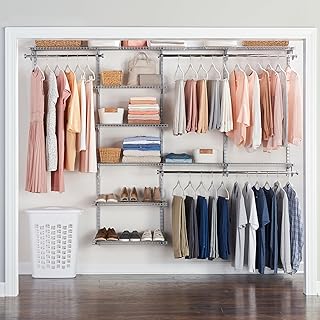
Rubbermaid Configurations Deluxe Custom Closet Kit 4-8 Ft.
Honestly, Rubbermaid Configurations Deluxe Custom Closet Kit 4-8 Ft. Adjustable surprised me — sturdier than it looks in the photos, and over 81 buyers gave it 4.5 stars.
4. Stop Storing Shoes Directly On The Floor

Honestly, this changed how I view my bedroom. Leaving shoes on the closet floor is the fastest way to ruin them. I used to do this. I’d come home exhausted, kick off my flats, and leave them on the carpet. Over time, they became a dust trap. I’d find dog hair on the suede, and I constantly tripped over them. One morning, I stepped on the heel of my favorite black pumps and snapped the stiletto off. That was a $90 mistake I won’t repeat. Learned that the hard way.
Professional organizers say the floor should be clear. When you dedicate specific shelving for every pair, you force yourself to put them away. It takes five seconds to place a shoe on a shelf rather than dropping it. I installed a floating wooden shelf 12 inches off the ground. Now, my vacuum glides under the shelf, keeping the floor spotless. My shoes are protected from dust bunnies, and I never worry about crushing sandals in the dark. It makes the space feel twice as large when you can see the baseboards. You might also like: 15 Creative Dollar Tree Hacks Organizing Ideas for a Fresh New Look
5. Hang Heavy-Duty Over-The-Door Organizers

For lightweight shoes like canvas sneakers and summer sandals, an over-the-door organizer is a lifesaver. But skip the cheap plastic ones. I bought a flimsy clear plastic organizer at a dollar store. I loaded it with wedges, and by morning, the metal hooks had bent, and the pockets had ripped. It was a disaster. You might also like: 15 Inspiring Home Makeover Ideas You Haven’t Thought Of
You need heavy-duty gear. I bought the GORILLA GRIP Over the Door Shoe Organizer at Target for about $14.99. It holds 24 pairs and is rated for 40 pounds. The pockets are breathable mesh, which is crucial. If you put damp gym shoes in solid plastic, they’ll grow mildew. The mesh allows air to circulate. I use this for all my flat sandals and running shoes. Each pocket is about 7.5 inches deep, which securely holds a size 9 sneaker. It frees up my valuable shelf space for nicer leather boots and heels. You might also like: 15 Cozy DIY Closet Organization Ideas for Any Style
6. Use Proper Boot Shapers To Prevent Creases

If you own tall boots, don’t let them flop over. I ruined a gorgeous pair of $150 suede boots because I left them slumped over all summer. When I pulled them out for fall, there was a permanent crease across the ankle, and the zipper was warped. It looked terrible, so I tossed them. That’s when I learned about boot shapers.
You don’t need expensive wooden shoe trees. I use like-it brand boot clips. They’re plastic inserts that slide into the boot shaft. You squeeze the handle, slide it in, and let go. The tension holds the boot perfectly upright, keeping the leather structure. They cost around $12 for two pairs. If you’re in a pinch, roll up a thick magazine or use paper towel tubes, but the dedicated shapers work better because they expand to fit the boot. Standing boots upright extends their life and makes your closet look tidy. I line my shaped boots on the top shelf, and they look like a display window.

5 Tier Closet Hanging Organizer
5 Tier Closet Hanging Organizer has been one of the most consistently praised picks in this category. 1 reviewers averaged 4.5/5.
7. Upgrade To Slanted Shelving With Toe Guards

If you’re doing a custom build or just want to upgrade, slanted shelving is the ultimate luxury. I thought flat shelves were fine until I visited a friend’s house. She had angled shelves with a small metal lip at the front. It allowed her to see the entire profile of the shoe, not just the heel.
When shelves are flat, you forget what the front of the shoe looks like, especially with black pumps. Slanted shelving fixes this. You need an angle of 15 to 20 degrees. The crucial part is the toe guard—a strip of wood or metal at the front edge that stops shoes from sliding. I retrofitted my flat shelves by buying small wooden wedges and attaching a 1-inch piece of trim to the front. It cost me $30 in materials. Now, I can spot the navy blue flats I need because the toe is angled toward me. It makes the space feel like a boutique.
8. Categorize And Zone Your Footwear Collection

A huge mistake is mixing muddy gardening shoes with expensive silk heels. You have to zone your closet. Last month, I did a grocery run to Sprouts in the rain. I came home with mud-caked rain boots and almost shoved them onto the shelf with my suede pumps. I stopped myself just in time.
I divide my closet into zones. The ‘Everyday Zone’ is at waist height. This is where I keep daily white sneakers, work flats, and slip-ons. It takes zero effort to grab them. The ‘Special Occasion Zone’ is on the top shelf, housing heels and formal boots I wear once a year. Finally, the ‘Dirty Zone’ isn’t in my bedroom closet. I keep a rubber mat by the garage door for muddy boots and wet running shoes. I keep a 16 oz bottle of cleaner and a rag nearby to wipe them down before they enter the house. Zoning means you aren’t digging past stilettos to find gym shoes at 5 AM.
9. Divide Drawers For Sandals And Small Accessories

If you have deep drawers, they usually turn into a dumping ground. My bottom dresser drawer used to be a mess of flip-flops, thin sandals, spare laces, and half-empty shoe polish. I’d blindly dig and pull out one green flip-flop and one black one. It was so frustrating.
To fix this, I bought Organize-It crystal clear plastic drawer dividers. They’re spring-loaded and snap into place, dividing a large drawer into six compartments. They cost around $18 for a set of two. I use one compartment for black sandals, one for flip-flops, and one for care accessories. I keep a 2 oz tin of shoe wax, a brush, and extra laces in the front. Because the dividers are clear, they disappear, making the drawer look clean. If you have foldable ballet flats, you can stand them vertically inside these sections. It saves space and keeps the leather from getting crushed.

AMKUFO 6 Pack-Closet-Organizers-and-Storage
AMKUFO 6 Pack-Closet-Organizers-and-Storage has been one of the most consistently praised picks in this category. 52 reviewers averaged 4.5/5.
10. Build Sustainable Storage With Wooden Crates

I’m a fan of sustainable storage. Buying endless amounts of plastic isn’t the only way. A few months ago, I was walking past Trader Joe’s and noticed they were giving away sturdy wooden apple crates. I asked the manager if I could take three, and he handed them over. I sanded the rough edges and gave them a coat of clear matte varnish.
I stacked these crates in the bottom of my closet. They created a rustic cubby system that holds heavier boots and chunky sneakers. The wood is strong, so it won’t warp like wire racks. If you can’t find free crates, you can buy unfinished wooden crates at craft stores for $15 each. Another option is bamboo. Bamboo racks are water-resistant and grow fast, making them a renewable resource. I have a 3-tier bamboo rack near my front door that holds up to wet shoes. It adds a warm, natural texture to the room instead of cold metal or sterile plastic.
11. Ditch Wire Shelving For Solid Adjustable Shelves

If your closet came with builder-grade wire shelving, rip it out. Wire shelving is the worst invention for shoe organization. I lived in an apartment with wire shelves, and it drove me crazy. My heels would slip through the gaps, leaving shoes dangling and scratching the leather. Even my flat sneakers would wobble every time I bumped the shelf.
Solid, adjustable shelving is the only way to go. I went to Walmart and bought a basic white wooden bookshelf for $35. I took the backing off and placed it inside my closet. Because the shelves are solid, my heels sit flat. The best part is the adjustability. I moved the bottom shelf to have a 10-inch gap for ankle boots, while the upper shelves have a 5-inch gap for sandals. This custom spacing eliminates dead air. Traditional fixed cubbies are often inefficient because they have too much bulky material. A simple, solid shelf gives you flexibility and protects your heels from getting chewed up by metal wires.
12. Install A Lazy Susan For Awkward Corners

Large walk-in closets often have deep, awkward corners where two shelves meet. This is a dead zone. I used to shove off-season shoes into this dark corner and forget they existed. I’d have to crawl onto the floor and reach all the way back just to pull out a dusty pair of wedges.
The smartest hack is installing a rotating Lazy Susan shoe shelf in that corner. You can buy revolving shoe carousels that fit a 24-inch by 24-inch corner. They feature multiple circular shelves that rotate 360 degrees. With a spin, you can access 20 pairs of shoes without reaching into the dark. If you don’t want a full tower, buy a 12-inch acrylic Lazy Susan for $15 and place it on your shelf. I use a small one to hold shoe care liquids—a 6 oz bottle of suede protector, a 4 oz bottle of sneaker cleaner, and a rag. I just spin it to grab what I need. It turns a useless dark corner into the most functional spot in the closet.

AWTATOS Cube Storage Organizer Storage 12 Cube Bookshelf
AWTATOS Cube Storage Organizer Storage 12 Cube Bookshelf DIY Plastic C has been one of the most consistently praised picks in this category. 28 reviewers averaged 4.5/5.
13. Use Cheap Clear Bins For Out-Of-Season Storage

If you don’t want to spend $20 per box on drop-front containers, there’s a cheaper alternative for out-of-season shoes. Before I upgraded, I used opaque plastic bins. I tried a hack where you take a Polaroid of the shoes and tape it to the front. It was tedious. The tape peeled, the photos faded, and it took way too much time.
Instead, I went to Kroger and spotted the Brightroom 6qt Clear Storage Boxes. They cost $1.25 each. They’re the perfect size for a pair of flats or light sneakers. Because they’re 100% transparent, I eliminated the need for labels. I can see instantly that my floral sandals are in the third box down. I bought 20 of them for just $25. They stack neatly on the top shelf. They aren’t drop-front, so you do have to unstack them, which is why I only use them for out-of-season footwear. It keeps them protected from dust and humidity for barely any money.
I hope these tips help you conquer your messy floors. Closet shoe organization doesn’t have to be a chore. Start small. Pull everything out, wipe your shelves, and pick one system to try first. Whether you splurge on magnetic drop-front boxes or grab some $1.25 bins, getting your shoes off the floor will make your bedroom feel calmer. I’d love to know which of these hacks you try first! Save this post for your next weekend project.
Frequently Asked Questions
What is the best way to start closet shoe organization?
Start by pulling every single pair out and decluttering. Group them by category, then measure your available shelf or floor space before buying any clear bins or vertical racks.
Are clear drop-front shoe boxes worth the money?
Yes. They protect your footwear from dust while keeping everything visible. You won’t have to unstack a massive tower of opaque bins just to find one specific pair of running shoes.
How do I store tall winter boots in a small closet?
Use tension rods or plastic boot shapers to keep them upright, then place them on the highest shelf or use rolling under-bed storage containers to free up your main closet areas.
Should I keep my shoes in their original cardboard boxes?
I don’t recommend it. Cardboard attracts pests like silverfish and makes it impossible to see what you actually own. Swap them for uniform clear plastic bins to save space and time.
