What’s Inside
- Stop Buying Bins Before You Learn How To Declutter Your Home Room By Room
- Master The Four-Box Method For Your Living Room
- Use The 5-Day Clutter Shakedown For The Kitchen
- Implement The One Of Each Rule For Core Kitchenware
- Optimize Your Pantry With In-Canister Measuring
- The Annual Purge Of Expired Fridge And Pantry Items
- Choose Sustainable Materials Over Flimsy Plastic
- Digitize Your Wardrobe To See What You Actually Wear
- Maximize Closet Space With Matching Velvet Hangers
- Adopt The One In, One Out Method For Your Bedroom
- Over-The-Door Organizers Are Crucial For Tiny Bathrooms
- Digital Decluttering Is Just As Important As Physical Clutter
- The Didn’t Know Rule For Hidden Office Clutter
Last Tuesday at Whole Foods, I dropped a $12.99 jar of organic almond butter right in the middle of aisle four because my reusable bags were a tangled, overflowing mess. That sticky, oily puddle on the linoleum was my breaking point. Figuring out how to declutter your home room by room isn’t just about making things look pretty on social media. It’s about not losing your mind over a shattered jar of nut butter in public. I used to be terrible at this. I’d buy fifty plastic bins at Target and shove my mess into them. It looked organized for exactly three days. Then the bins just became expensive trash cans. I’m Hannah, and I’m a home organization coach who learned the hard way that you can’t buy your way out of clutter. No exaggeration. You have to actually deal with it. I’m going to walk you through exactly how I tackle the mess, complete with the very specific, slightly embarrassing mistakes I’ve made along the way. Skip the complicated systems that take three hours to set up. Those just make you feel guilty when you inevitably stop using them. We’re keeping this simple, tactile, and realistic. Grab a heavy-duty trash bag and a strong cup of black coffee. Let’s get into the dirty work.
1. Stop Buying Bins Before You Learn How To Declutter Your Home Room By Room

A frequent error I see clients make is running straight to the container aisle before they even throw away a single piece of junk. I did this for years. I’d buy those $15.99 Brightroom acrylic bins from Target, convinced they’d fix my messy pantry. Instead, I just created organized hoarding. Professional organizers emphasize that you should first sort and purge your items. Only after you know precisely what you’re keeping, and its exact dimensions, should you invest in storage solutions. Otherwise, you’re just buying clutter to hold your clutter. Start by emptying the space completely. Wipe down the bare shelf. Feel the cold wood or wire under your hands. Then, aggressively decide what stays. I tried this wrong for months before figuring it out. I’d try to fit my giant 32 oz bags of rice into tiny 16 oz containers, and the leftover rice would just sit in a ripped bag next to the expensive bin. It’s ridiculous. Measure your actual remaining inventory. If you have three 15 oz cans of black beans left, buy a bin that fits exactly three 15 oz cans. Preventing the purchase of unnecessary items saves you money and keeps your shelves looking intentional. Trust me on this one. You won’t regret waiting to shop until the purging is done.
2. Master The Four-Box Method For Your Living Room

For any decluttering session, you need a rigid system. I personally swear by the four-box method. Set up four heavy-duty cardboard boxes. I grab mine for free from Costco during my weekend grocery runs. Label them clearly with a thick black Sharpie: “Keep,” “Donate,” “Trash,” and “Relocate.” The smell of that permanent marker means it’s time to get to work. As you handle each item in your living room, immediately place it into the appropriate box. Don’t set it down on the coffee table to think about it later. This simple system streamlines decision-making and ensures every item has a clear destination. I used to make piles on the floor. The piles would just sit there for two weeks until I got tired of tripping over them and shoved them back into a drawer. The boxes force a final decision. When the “Donate” box is full, put it straight into the trunk of your car. Don’t leave it by the front door. The “Relocate” box is crucial for the living room, because that space always ends up holding random things like stray socks, half-empty water bottles, and your kid’s math homework. Carry that specific box around the house at the end of your session and put those items where they actually belong. It’s a lifesaver.
3. Use The 5-Day Clutter Shakedown For The Kitchen

Avoid overwhelming yourself by trying to tackle an entire kitchen in one Saturday afternoon. You’ll just end up sitting on the kitchen floor at 4 PM, surrounded by pots and pans, crying into a cold cup of coffee. Instead, adopt expert Dana White’s “5-Day Clutter Shakedown” method. Focus on small, manageable zones for 30 minutes to an hour each day. For example, dedicate Monday to just one messy utensil drawer. Tuesday is for one specific pantry shelf. Wednesday is for the Tupperware cabinet. This approach builds momentum without the dreaded burnout. Last month, I spent 30 minutes on my baking cabinet. I pulled out a bag of flour that had a tiny hole in it, and a fine white dust coated my black leggings. It was annoying, but because I only committed to 30 minutes, I had the energy to wipe it up with a damp microfiber cloth and keep going. If I’d been working for six hours, I’d have just closed the cabinet door and walked away. Set a timer on your phone for 30 minutes. When the alarm sounds, you’re done for the day. Put away whatever you’re holding and walk out of the room. This strict time limit tricks your brain into working faster and prevents decision fatigue. I highly recommend starting with the easiest drawer first. The junk drawer is usually a good candidate. Throwing away dried-out pens and old receipts gives you an immediate dopamine hit. You’ll wake up the next day actually wanting to tackle the harder spaces.
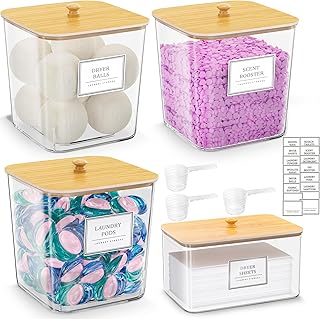
HomePekite Laundry Pods Storage Container
If you want something that just works, HomePekite Laundry Pods Storage Container is a safe bet (16 reviews, 4.5 stars).
4. Implement The One Of Each Rule For Core Kitchenware

This tip sounds extreme, but honestly this changed how I manage my kitchen completely. For high-use items like plates and bowls, consider keeping only one set per person in your household, plus a maximum of two additional sets for guests. For example, a family of four would aim for exactly 6 dinner plates and 6 bowls. This significantly reduces cabinet clutter and forces you to wash dishes regularly instead of letting them pile up in the sink until they smell like sour milk. I used to have a stack of 16 mismatched plates. We never used the bottom ten. They just sat there, gathering a weird greasy dust film that happens in kitchens. I donated the random ones and bought a beautiful set of heavy ceramic Fiestaware plates for $32.99 at Macy’s. The clinking sound they make when I stack them is so satisfying. When you only have 6 plates, you can’t ignore the dirty dishes. You have to wash them if you want to eat dinner. It sounds like a punishment, but it actually frees up so much vertical space in your cabinets. You can finally reach in and grab a plate without causing an avalanche of plastic bowls and chipped saucers. If you have young kids, this rule applies to their plastic cups too. Give them two cups each. Toss the other twenty promotional plastic cups you got from random events. They look terrible and take up too much room. You might also like: 15 Inspiring Home Makeover Ideas You Haven’t Thought Of
5. Optimize Your Pantry With In-Canister Measuring

If you bake or cook with bulk dry goods, this is a massive space saver. For bulk pantry staples like flour, sugar, or white rice, store a dedicated measuring cup directly inside its respective airtight canister. I buy the cheap 1-cup or 1/2-cup plastic scoops from Walmart for about $2.99 each. I drop a 1/2-cup scoop right into my 4 qt OXO Good Grips POP container full of rolled oats. This eliminates the need to hunt for measuring cups every morning when I’m half asleep trying to make oatmeal. It also keeps your main utensil drawer significantly less cluttered because you aren’t cramming a bulky set of measuring cups in there. I used to hate digging through my baking drawer, cutting my fingers on the sharp edge of a metal whisk just to find the 1-cup measure. Now, I just pop the lid off the flour container, and the scoop is sitting right there on top of the soft white powder. It’s a tiny adjustment, but it makes the physical act of cooking so much smoother. Plus, you don’t have to wash the measuring cup every single time if it only ever touches dry, clean flour. Just leave it in the bin. Make sure you use plastic scoops for this, not metal. Metal measuring cups can scratch the inside of acrylic containers and they make a terrible scraping noise against the plastic sides. Stick to the cheap plastic ones for in-canister storage. You might also like: 15 Creative Home Organizing Ideas You Haven’t Thought Of
6. The Annual Purge Of Expired Fridge And Pantry Items

Professional organizers suggest a strict yearly purge of expired kitchen items. I usually do this in January, right after the holiday cooking chaos. You need to check the tiny printed expiration dates on spices, condiments, and packaged foods. Open the jars. If that $8.99 jar of artisanal Dijon mustard smells like old pennies, throw it out immediately. I once found a bottle of soy sauce in the back of my fridge that expired three years ago. The cap was crusted shut with black salt crystals. It was disgusting. Don’t just stop at food, either. Replace worn-out kitchen tools. If your $45.00 T-fal non-stick pan has a scratched surface, you’re likely eating tiny flakes of Teflon with your scrambled eggs. Throw it in the trash. The same goes for dull knives that are beyond sharpening. A dull knife is actually more dangerous than a sharp one because you have to press down so hard to cut a tomato that the blade slips. I bought a basic $14.99 knife sharpener from Amazon, and if a blade won’t hold an edge after using it, the knife goes in the bin. Keeping useless, broken tools in your drawers just creates physical roadblocks when you’re trying to cook a simple meal. Take everything out of the fridge before you sort it. Wipe down the sticky glass shelves with a mixture of warm water and 2 tablespoons of Dawn dish soap. Putting fresh, unexpired food back onto a clean, sparkling shelf feels incredible. You might also like: 15 Inspiring Small Space Laundry Room Ideas to Steal Right Now

4 Tier Storage Bins with Lids
4 Tier Storage Bins with Lids has been one of the most consistently praised picks in this category. 63 reviewers averaged 4.5/5.
7. Choose Sustainable Materials Over Flimsy Plastic

When you finally do buy storage products, skip the cheap plastic. Instead, opt for eco-friendly organizing products made from bamboo, rattan, seagrass, or recycled glass. For instance, a set of bamboo drawer dividers for your kitchen or office can range from $15 to $40, while glass food storage containers typically cost $20 to $60 for a multi-piece set. I bought a stunning 18-piece Pyrex glass storage set for $34.99, and it looks so much better than stained plastic Tupperware. The heavy glass feels substantial in your hands, and it doesn’t hold onto the smell of garlic and onions like plastic does. When discarding your old plastic bins or worn-out clothes, prioritize donating to local charities or selling on platforms like Facebook Marketplace. You can also utilize specific textile recycling programs offered by brands like H&M for worn clothing. I took a trash bag full of ripped t-shirts to H&M last month and got a 15% off coupon for my trouble. The rough, organic texture of a seagrass basket sitting on a wooden shelf brings a sense of calm to a room that shiny, sterile plastic just can’t match. It costs a few dollars more upfront, but these natural materials last longer and age beautifully. If you have kids or pets, rattan baskets are great because they hide the visual chaos of bright plastic toys. Just toss the neon green blocks into a woven basket, and suddenly your living room looks like an adult actually lives there again.
8. Digitize Your Wardrobe To See What You Actually Wear

This is a newer concept, but it completely fixed my closet hoarding problem. Use apps like GetWardrobe on your phone to create a digital inventory of your clothing. You literally take photos of your items and create virtual outfits. This helps you visualize your wardrobe, avoid duplicate purchases, and identify clothes you rarely wear. It makes closet decluttering more functional and prevents decision fatigue. I spent a rainy Sunday afternoon taking pictures of my sweaters. I laid them flat on my white bedspread and snapped away. I realized I owned seven identical black crewneck sweaters. Seven. I couldn’t even tell them apart in the photos. I felt so dumb. I kept the softest cashmere one and donated the other six scratchy wool ones to a local women’s shelter. Seeing your clothes on a tiny screen removes the emotional attachment. You look at a floral blouse and think, “I haven’t worn that since 2019,” instead of holding the fabric and feeling guilty about how much you paid for it. It takes about two hours to photograph a standard closet, but the clarity you get is worth the effort. You’ll never stand in front of a full closet and cry about having nothing to wear again. Plus, when you’re standing in the dressing room at Target, you can just open the app and check if you already own a navy blue striped shirt before you spend $19.99 on another one. It stops impulse shopping in its tracks.
9. Maximize Closet Space With Matching Velvet Hangers

If you take only one piece of advice from this entire article, let it be this. Throw away your thick, mismatched plastic tubular hangers. Invest in slim, matching hangers. I buy the Amazon Basics velvet non-slip hangers. They are usually around $21.99 for a pack of 50. This creates a cohesive, high-end look and maximizes hanging space by up to 50% compared to bulky plastic hangers. The soft, fuzzy velvet texture grips silk blouses and wide-neck sweaters so they don’t slide off into a wrinkled puddle on the dusty closet floor. I used to fight with my clothes every morning. I’d pull a shirt, and the plastic hanger would snap, or it would snag on the wire hanger next to it. It sounded awful, like cheap plastic scraping on a metal rod. Now, I open my closet doors and everything sits at the exact same height. The visual noise is gone. When your hangers match, your brain registers the space as clean, even if the clothes themselves are brightly colored or patterned. It’s a visual trick that professional organizers use in every single luxury closet they design. Don’t mix colors, either. Pick black or beige and commit to it for the entire house. I tried to save money by keeping a few plastic hangers for heavy coats, but it ruined the aesthetic. I eventually bought heavy-duty wooden hangers for the coats and kept the velvet ones for shirts and pants. The consistency is everything.

OUTNILI Mop and Broom Holder Wall Mount
A dependable everyday pick — OUTNILI Mop and Broom Holder Wall Mount – Wood Broom Mop Hanger – Wall pulls in 45 ratings at 4.5 stars. Not flashy, just solid.
10. Adopt The One In, One Out Method For Your Bedroom

Once you get your bedroom clean, you have to fight to keep it that way. For every new clothing item, accessory, or piece of decor you bring into your bedroom, commit to donating or discarding an existing item. This simple rule prevents clutter from accumulating after a massive decluttering session and maintains balance. If I buy a new $45.00 heavy denim jacket from Levi’s, I have to find an old jacket or bulky sweater in my closet to get rid of immediately. I throw the old item directly onto my bed so I can’t ignore it. I have to put it in a donation bag before I can go to sleep that night. It forces you to evaluate how much you really want the new item. If you aren’t willing to part with something old, you probably shouldn’t buy the new thing. I broke this rule last year and bought three new throw pillows for my bed without getting rid of the old ones. Within a week, my bedroom floor was covered in pillows every night because there was no room for them on the mattress. I was literally tripping over a velvet lumbar pillow on my way to the bathroom at 2 AM. Stick to the rule. I like to reward myself for following this rule. If I successfully donate a bag of clothes, I let myself stop at Sprouts for a $4.99 fancy iced coffee on the way home. Positive reinforcement works on adults just as well as it works on toddlers.
11. Over-The-Door Organizers Are Crucial For Tiny Bathrooms

In smaller bathrooms, you have to utilize the often-overlooked vertical space behind doors. An over-the-door organizer with 6 to 8 clear plastic pockets typically costs around $17.99 at Walmart or Target. You can use it to store bulky toiletries, heavy hair tools, or cleaning supplies, getting them off your cramped countertops and out of dark, messy cabinets. I have a tiny bathroom with zero drawer space. I used to leave my curling iron on the counter, and the cord would knock my toothbrush onto the floor at least twice a week. It drove me crazy. I hung a clear pocket organizer over the door, and now my hairdryer, round brushes, and a 12 oz bottle of CeraVe lotion have a permanent home. While you’re organizing the bathroom, professional organizers advise an annual review of your products. Discard expired makeup, separated liquid foundation, and old sunscreen. I smelled a bottle of two-year-old sunscreen last summer, and it smelled like sour milk and chalk. If you put that on your skin, you’re asking for a breakout. Toss expired medications and dusty vitamins, too. A yearly check helps catch these things before they affect your health or ruin your morning routine. Don’t forget to wipe down the inside of the pockets every few months. Hair spray and dry shampoo can leave a sticky film on the clear plastic. I just use a generic Clorox wipe to clean them out, and it takes less than two minutes.
12. Digital Decluttering Is Just As Important As Physical Clutter

We don’t talk about digital clutter enough, but it causes just as much anxiety as a messy living room. Dedicate 15 minutes every Sunday evening to digital hygiene. Sit on the couch, grab your phone, and ruthlessly unsubscribe from unwanted email newsletters. Delete unused apps that are draining your battery. Organize your digital photos by deleting the 14 blurry shots you took trying to get a picture of your dog yawning. Delete old screenshots of recipes you’re never actually going to cook. Use consistent file naming conventions on your laptop. I name all my important documents with the date first, like “2026-03-15_TaxReturns”. It makes retrieval incredibly easy and reduces the panic of searching for a document five minutes before a meeting. I used to have a desktop screen completely covered in random icons and unnamed folders. Every time I opened my laptop, my chest felt tight with stress. I spent two hours dragging everything into properly labeled folders, and the relief was instant. Digital hoarding slows down your devices and your brain. Treat your phone’s home screen with the same respect you treat your kitchen counters. If you wouldn’t leave junk mail sitting on your counter for three years, don’t leave it in your inbox. Turn off push notifications for shopping apps, too. You don’t need an alert every time a store has a 10% off sale. That’s just digital noise begging you to buy more physical clutter that you’ll eventually have to clean up.

iDesign Laundry Detergent Holder
iDesign Laundry Detergent Holder has been one of the most consistently praised picks in this category. 12 reviewers averaged 4.5/5.
13. The Didn’t Know Rule For Hidden Office Clutter

When you’re digging through deep drawers, dusty storage boxes, or old digital folders, you need a strict rule for the weird stuff you find. If you discover an item you genuinely didn’t know you owned, it’s a massive red flag. It’s a strong indicator that the item doesn’t serve a purpose in your current life. Give yourself immediate permission to let it go. This rule, popularized by The Minimalists, is particularly effective for home office junk drawers. Last month, I was cleaning out my desk and found a rusty metal paperclip tin and three dried-out Sharpies I bought in 2018. I had no idea they were in there. My first instinct was to keep the tin because “I might need it.” But I hadn’t needed it in six years. I threw the entire thing in the trash. If you’re struggling to plan out your office organization, utilize AI tools like ChatGPT to break down large decluttering projects into manageable lists. You can prompt it with, “Create a daily decluttering plan for my home office over one week.” It will spit out a perfect, bite-sized schedule. Figuring out how to declutter your home room by room doesn’t mean you have to invent the strategy yourself. Use technology to do the heavy lifting, and use the “didn’t know” rule to ruthlessly cut the dead weight from your home. I actually printed out my AI-generated schedule and taped it to my office door. Checking off each task with a bright red pen felt like winning a tiny game every single day.
Getting your space under control isn’t a one-time event; it’s a daily practice of making better choices. I’ve spent hundreds of hours and way too much money trying to force complicated systems to work. The truth is, the simpler the system, the more likely you are to stick with it. Stop buying plastic bins you don’t need. Start using cardboard boxes to force decisions. Be ruthless with your expired food and your closet inventory. If you’re feeling overwhelmed, just pick one tiny drawer today. Set a timer for 15 minutes, throw away the dried-out pens, and call it a win. You don’t have to fix everything by sunset.
If this guide helped you figure out where to start, pin this article to your favorite home organization Pinterest board so you can find it next weekend when you’re ready to tackle the garage. You’ve got this, and I’m cheering you on from my perfectly organized, velvet-hangered closet.
Frequently Asked Questions
How do I start decluttering when I feel completely overwhelmed?
Start with the 5-Day Clutter Shakedown method. Pick one tiny, low-stress area like a single junk drawer or a bathroom shelf. Set a timer for 15 to 30 minutes. When the timer goes off, stop working. This builds momentum without causing burnout.
Should I buy storage bins before learning how to declutter your home room by room?
No. Buying storage products before you purge is the biggest mistake you can make. You must throw away, donate, and sort your items first. Only buy bins when you know the exact dimensions and quantity of what you are actually keeping.
What is the four-box method for home organization?
The four-box method involves setting up four labeled cardboard boxes: Keep, Donate, Trash, and Relocate. As you touch each item in a room, you must immediately place it into one of the boxes, forcing a quick decision and preventing piles on the floor.
How can I maintain a clean closet after decluttering it?
Adopt the one in, one out rule. For every new piece of clothing or accessory you purchase, you must immediately donate or throw away an older item. Using matching velvet hangers also helps maximize space and visually encourages you to keep it neat.
