
What’s Inside
- Prioritize Decluttering Before Buying Storage for Small Home Organization Ideas
- Maximize Vertical Space with Wall-Mounted Solutions
- Embrace Multifunctional Furniture for Small Home Organization Ideas
- Utilize Under-Bed Storage Effectively
- Implement Drawer Dividers for Micro-Organization
- Optimize Pantry Shelving Depths
- Adopt Magnetic Storage for Overlooked Surfaces
- Choose Sustainable and Natural Materials
- Leverage AI for Planning and Task Breakdown
- Avoid Round or Soft-Sided Containers
- Use Command Hooks for Damage-Free Hanging
- Implement Discreet Labeling and Force Rank Sentimental Items
I still remember the moment last Tuesday when I realized my kitchen was actively working against me. I needed real small home organization ideas, not just another trip to buy random bins, especially after a 16 oz bag of almonds from Trader Joe’s caused an avalanche in my cabinet. A plastic bin of flour shifted, tipped over, and dumped a white cloud directly onto my black socks. I sat on the floor and coughed up baking flour. When you live in a tight space, you don’t have room for error. I’ve spent the last three years figuring out how to make a 700-square-foot apartment function like a house twice its size.
I did this wrong for months. I bought the wrong containers, I ignored vertical space, and I kept things I didn’t need. It’s a process of trial and error. I’ve compiled the specific strategies that actually work. Skip the generic advice. You need precise measurements and realistic systems. Here are twelve concrete strategies for making your tiny space work for you.
1. Prioritize Decluttering Before Buying Storage for Small Home Organization Ideas

The most common mistake is heading straight to Target to buy a cart full of plastic bins before you even know what you’re storing. I’ve done this. I bought a stack of acrylic organizers in 2021, brought them home, and realized they didn’t fit my oversized spatulas or bulky winter sweaters. Professional organizers tell you to declutter before buying any storage. Trish Johnson, owner of This Organized Chaos, puts it perfectly. You don’t need more bins. You need less stuff.
I spent a Saturday morning last October dumping every single item from my bathroom vanity onto the floor. I threw away three expired bottles of sunscreen, a crusty bottle of lotion I bought at Whole Foods in 2019, and four dried-up mascaras. Once the garbage was gone, I realized I only needed to store about fifteen daily items. I didn’t need the $45 tiered organizer I had sitting in my online cart. I only needed two small trays.
Sorting and purging items you no longer use reveals your actual storage requirements. This prevents wasted money and saves precious cabinet space. It’s tedious work. You have to touch every single item. But skipping this step guarantees your new system will fail within a month. Start with a trash bag. Don’t buy a single container until you know exactly what is going inside it and how much space those items require. Learned that the hard way.
2. Maximize Vertical Space with Wall-Mounted Solutions

When you’re dealing with limited square footage, your walls are your biggest untapped resource. Smart storage for smaller living spaces relies on vertical solutions to combat limited floor space. I learned this the hard way when I tried to fit a bulky freestanding shelving unit into my narrow hallway. It blocked the path to the bathroom and I stubbed my toe every morning. I finally took it down and installed floating shelves. The difference was immediate.
If you need a recommendation, the IKEA SKADIS pegboard system is excellent. Individual boards are usually around $15 to $20. I bought three of the 30 by 22-inch white boards last winter. I mounted them above my desk to hold scissors, tape, and notebooks. I also put one in the kitchen for measuring cups and small utensils. It gets everything off the counter without eating up cabinet space.
Over-the-door organizers are another vertical strategy I use constantly. I bought a heavy-duty wire rack for the back of my pantry door. It holds 24 standard 15 oz cans of beans and tomatoes. It’s crucial to anchor these systems properly. I tried using cheap plastic drywall anchors once, and a shelf holding my heavy ceramic bowls ripped right out of the wall. Use heavy-duty toggle bolts if you’re hanging anything substantial. Wall space goes all the way to the ceiling. Put the items you only use once a year, like holiday baking tins, on the very top shelves.
3. Embrace Multifunctional Furniture for Small Home Organization Ideas

You can’t afford single-use furniture in a small home. Every piece needs to pull double duty. I used to have a standard glass coffee table. It looked nice, but it was just a surface taking up a massive footprint in my living room. I sold it on Facebook Marketplace and bought a solid wood trunk instead. Now, it holds four bulky winter blankets and two extra pillows, plus it works as a coffee table.
Another great example is the IKEA NORBERG wall-mount drop-leaf table. It costs around $50. I installed one in my bedroom corner. It functions as my laptop desk during the day. When I’m done working, I fold it flat against the wall, and I suddenly have floor space to roll out my yoga mat. Benches that store shoes are another necessity. I keep a wooden storage bench right by the front door. It holds six pairs of shoes out of sight and gives me a place to sit while I tie my boots.
When I’m shopping at stores like Costco or Walmart for furniture, I look for hidden compartments. If a bed frame doesn’t have drawers underneath, or if an ottoman doesn’t have a lid that lifts off, I won’t buy it. You’re paying for the footprint of the furniture. You might as well get storage volume included. It’s a simple rule that increases your home’s capacity.
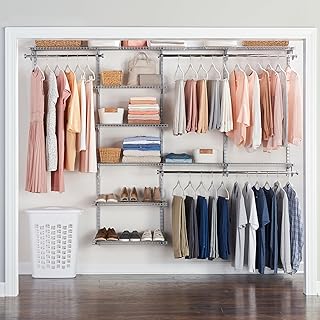
Rubbermaid Configurations Deluxe Custom Closet Kit 4-8 Ft.
Rubbermaid Configurations Deluxe Custom Closet Kit 4-8 Ft. Adjustable has been one of the most consistently praised picks in this category. 81 reviewers averaged 4.5/5.
4. Utilize Under-Bed Storage Effectively

The space under your bed is prime real estate, but most people treat it like a dusty wasteland for lost socks and old shoeboxes. It’s the perfect spot for items you don’t need daily, like out-of-season clothing or extra linens. You have to use the right containers, though. I used to shove soft fabric bags under my bed. They collected dust, the zippers broke, and mice chewed through one of them in my old apartment. Now, I strictly use hard-sided, lidded containers.
The Sterilite Ultra Storage 66 Qt. box with wheels is my standard choice. They usually run around $20 to $30 at Target. The hard plastic protects your belongings from dust and pests, and the wheels mean you aren’t dragging heavy plastic across your hardwood floors. Before you buy anything, you must measure the clearance under your bed frame. This is a common mistake. People buy bins that are 10 inches tall for a bed frame that only has an 8-inch clearance. Ensure your chosen bins are no taller than 6 to 8 inches to fit under most standard bed frames.
I keep four of these bins under my queen-sized bed. Two hold my thick winter sweaters, one holds extra sheets, and the last one holds my tax documents. It frees up an entire shelf in my bedroom closet. Just make sure you pull them out and vacuum behind them every few months. Dust bunnies accumulate quickly back there. You might also like: 13 Bathroom Closet Organization Ideas for Every Budget
5. Implement Drawer Dividers for Micro-Organization

A drawer without dividers is just a horizontal junk pile. I spent years digging through a tangled mess of wooden spoons, spatulas, and a random meat thermometer every time I tried to cook dinner. Prevent drawer chaos and maximize your capacity with adjustable dividers. I finally bought a set of bamboo drawer dividers from a brand called SpaceAid. They expand from 17 to 22 inches and include smaller inserts for further customization. They are ideal for kitchen utensils or organizing socks. You might also like: 16 Linen Closet Organization Ideas You Need to See
Homemaid Living also makes excellent Bamboo Drawer Dividers. They come in sets of four for less than $10 per divider. They expand to fit the exact depth of your drawer and feature foam ends. The foam is crucial. I bought cheap plastic dividers once without foam ends, and they scratched the interior paint of my dresser drawers every time they shifted. The tension springs in the bamboo versions hold them firmly in place. You might also like: 20 Charming Aesthetic Closet Organization Ideas You Need to See
I use them in my kitchen to separate the baking tools from the cooking utensils. I also use them in my bathroom vanity to keep my makeup brushes separate from my toothpaste. When everything has a specific, constrained slot, you can’t just toss things in randomly. The dividers force you to maintain the system. It takes ten minutes to install them, but it saves you from the daily frustration of a jammed drawer that won’t open because a potato masher is stuck.
6. Optimize Pantry Shelving Depths

Deep shelves are the enemy of small pantries. Items get pushed to the back, forgotten, and eventually expire. I once found a jar of capers from 2018 hiding behind a giant box of cereal on a 24-inch deep shelf. Avoid deep shelves where items can get lost in the dark corners. For spices and small bottles, shelves that are 4 to 7 inches deep are ideal for single-file storage. You can see every single label at a glance.
For everyday canned goods and jars, a depth of 12 to 14 inches works best. If you have deep shelves and you can’t change them, you need to add shallow inserts or tiered risers. I bought a three-tier acrylic riser for my canned goods. It lifts the cans in the back so I can see what I have. Professional organizers recommend a minimum walkway of 36 inches in walk-in pantries for comfortable movement.
If you’re cramming shelves into a tight closet, make sure you aren’t blocking your ability to actually stand in the space. I learned this when I tried to add a freestanding wire rack to my narrow laundry room. I had to turn sideways just to load the washing machine. I ended up removing it and installing shallow 6-inch shelves directly on the wall. It held all my stain removers and detergent without blocking the walkway. Keep it shallow, keep it visible.
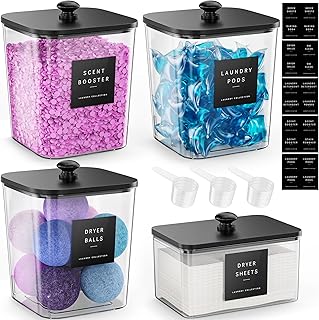
4 Pack Laundry Pods Container
Honestly, 4 Pack Laundry Pods Container surprised me — sturdier than it looks in the photos, and over 523 buyers gave it 4.5 stars.
7. Adopt Magnetic Storage for Overlooked Surfaces

When you run out of cabinet space and wall space, you have to start looking at the sides of your appliances. Utilizing magnetic surfaces like the side of a refrigerator or a metal cabinet door is a highly effective strategy for tight spaces. I have about eight inches of clearance between the side of my fridge and the wall. It was dead space until I bought a set of heavy-duty magnetized caddies. I use them to store my olive oil, salt, pepper, and the spices I reach for every day. It cleared off an entire shelf in my main cabinet.
You can also use magnetic containers for office supplies on a metal filing cabinet, or laundry essentials attached to the side of your washer. I bought a magnetic lint bin that sticks right to my dryer. It saves me from walking across the room to the trash can every time I clean the lint trap. You have to be careful with the weight limits, though. I tried putting a large 32 oz bottle of heavy laundry detergent on a cheap magnetic shelf, and it slid slowly down the side of the washing machine before crashing to the floor.
Buy caddies with strong, rare-earth magnets. Test the grip before you load them up with anything heavy or breakable. It’s a brilliant way to squeeze functional storage out of a surface you normally ignore.
8. Choose Sustainable and Natural Materials

I used to buy the cheapest clear plastic bins I could find. After a year, they looked terrible. They were scratched, cloudy, and a few of them warped under the weight of heavy items. I’ve completely shifted away from flimsy plastics towards eco-friendly materials like bamboo, rattan, seagrass, and glass. Clara Schoen, founder of The Home Organized, notes that these materials offer a cozy, textural appeal. They also hold up much better over time.
I swapped out my mismatched plastic food containers for a set of heavy glass jars with bamboo lids. I buy my rice, oats, and lentils from the bulk bins at Whole Foods or Sprouts, and I pour them directly into the glass jars. It looks infinitely better than a jumble of plastic bags, and the glass doesn’t absorb smells like plastic does. I also use sturdy seagrass baskets on the top shelves of my closets. They hide the visual clutter of random cables and seasonal accessories. They bring warmth to the space.
The tradeoff is that natural materials are heavier and usually more expensive up front. A good seagrass basket might cost $25 compared to a $5 plastic tub. But I’ve had my rattan baskets for four years, and they still look brand new. The plastic ones cracked and ended up in the recycling bin. Invest in materials that actually last.
9. Leverage AI for Planning and Task Breakdown

Organizing a disaster zone of a room is mentally exhausting. Sometimes the hardest part is just figuring out where to start. I started using AI tools like ChatGPT to help me break down the overwhelming projects. Perri Kersh, founder of Neat Freak Professional Organizing, suggests using AI to generate meal plans or optimize space utilization. I use it constantly for space planning.
Last spring, I stared at my chaotic 4×4 foot hall closet for twenty minutes, completely paralyzed. I pulled out my phone and typed a prompt into an AI app. I listed the dimensions of the closet and the exact items I needed to store: a vacuum, a mop, two winter coats, a toolbox, and a stack of board games. I asked it for a step-by-step plan to fit it all. It gave me a logical sequence. It told me to install a wall mount for the vacuum on the left wall, add a high shelf for the games, and put the coats on a tension rod on the right. It broke a huge, stressful task into five manageable steps.
I also use it for meal planning to reduce pantry clutter. I’ll type in the random ingredients I have left in my fridge, like half a cabbage, some carrots, and a block of tofu, and ask for a 30-minute recipe. It keeps me from buying more groceries when I already have food, which keeps my small fridge from overflowing. It’s a surprisingly practical tool for managing your household inventory.
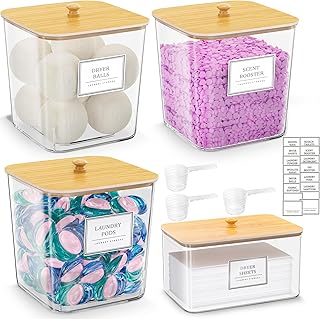
HomePekite Laundry Pods Storage Container
HomePekite Laundry Pods Storage Container punches above its price — 16 buyers rated it 4.5 stars. I would buy it again.
10. Avoid Round or Soft-Sided Containers

If you take one piece of advice from this article, let it be this. Stop buying round containers. Professional organizers advise against round containers and soft-sided bins for efficient storage. I learned this when I bought a set of beautiful, cylindrical glass canisters for my baking supplies. When I lined them up on my pantry shelf, I realized there were huge, empty triangles of wasted space between every single jar. Round shapes waste space, especially when placed next to other items on a shelf.
In a small apartment, you can’t afford to waste a single square inch. I donated the round jars and bought square, flat-sided acrylic containers instead. They sit flush against each other and flush against the back wall of the cabinet. I gained back almost 20 percent of my shelf space. The same rule applies to soft-sided bins. I bought soft fabric cubes for my closet shelves. They looked nice on day one.
By month three, they were slouching, bulging at the sides, and looking messy. They don’t hold their shape unless they are packed perfectly full. Opt for square or rectangular bins with rigid, flat sides. They maximize every inch of space and they maintain clean, straight lines on your shelves. It’s a small structural detail that makes a massive difference in how much a cabinet can actually hold.
11. Use Command Hooks for Damage-Free Hanging

If you’re a renter, or if you just hate patching drywall, Command Hooks are your best tool. They offer versatile hanging solutions without destroying your paint. I use them everywhere. I have a row of them inside my under-sink cabinet doors to hold my dish gloves and scrub brushes. I have one on the side of my nightstand to hold my phone charger cord so it doesn’t fall behind the bed.
You have to pay close attention to the weight capacities, though. This is where people mess up. Medium Utility Hooks hold up to 3 lbs, which is suitable for keys or small tools. Large Designer Hooks can hold up to 7.5 lbs. I use those for my heavy winter coats by the front door. Picture Hanging Strips, when used as a set of four, can support items up to 16 lbs. I use the strips to hang a heavy wooden mirror in my hallway.
The secret to making them stick is surface preparation. I used to just stick them to the wall, and they’d fall off a week later. You have to wipe the wall down with rubbing alcohol first, let it dry completely, and press the hook firmly for at least thirty seconds. Wait a full hour before hanging anything on it. If you follow the actual instructions on the package, they won’t fail. They turn blank walls and the insides of cabinet doors into functional storage instantly. Took me years to figure out.
12. Implement Discreet Labeling and Force Rank Sentimental Items

When I first started organizing my apartment, I bought a label maker and printed giant, bold labels for every single bin. CEREAL. PASTA. SOCKS. It looked like a kindergarten classroom. Large, high-contrast labels create a ton of visual clutter. The trend is moving towards subtle labeling. Marissa Hagemeyer of NEAT Method notes a shift from highly visible, oversized labels towards smaller options that state the contents without stealing focus.
I peeled off all my giant black-and-white labels and replaced them with small, clear p-touch tape labels with a thin, simple font. I place them at the very bottom edge of the bins. It maintains the organized system while contributing to a calmer, less visually cluttered aesthetic. The final piece of small space organization is managing sentimental items. You simply don’t have room for four boxes of high school yearbooks and childhood art projects.
Professional organizer Mindy Godding suggests force ranking sentimental items. I did this last winter. I pulled out my box of old letters and concert tickets. I forced myself to rank them from most important to least important. I kept the top twenty items in a small, beautiful archival box on my bookshelf. I took photos of the rest and threw the physical copies in the recycling bin. Place frequently accessed or most cherished items in prime spots, and let go of the items sitting at the bottom of the rank. It’s hard, but it’s necessary for living comfortably in a small footprint.
Living in a small space forces you to be intentional. You can’t just shove things in a closet and forget about them. I’ve spent years refining these systems in my own apartment, and I can tell you that getting the exact right drawer divider or the perfect flat-sided bin is worth the effort. It changes how you interact with your home every single day. I hope these strategies give you a clear starting point for your own space. Don’t try to tackle the whole house in one weekend. Start with one drawer or one cabinet. If you found these tips helpful, pin this article to your home organization board so you have the specific measurements and product names handy the next time you’re standing in the storage aisle at Target. You’ve got this.

3-Tier Hanging Laundry Basket Organizer:Foldable Wire Shelf
3-Tier Hanging Laundry Basket Organizer:Foldable Wire Shelf Laundry Ro punches above its price — 536 buyers rated it 4.5 stars. I would buy it again.
Frequently Asked Questions
What is the first step in small home organization?
The absolute first step is decluttering. Professional organizers recommend sorting and purging items you no longer use before buying any storage bins. This prevents you from wasting money on containers for items that should just be thrown away.
Why should I avoid round storage containers?
Round containers create empty, unusable triangles of space between them when lined up on a shelf. In a small home, you need to maximize every square inch. Square or rectangular flat-sided bins sit flush against each other, saving significant space.
How tall should under-bed storage bins be?
Under-bed storage bins should generally be no taller than 6 to 8 inches to fit comfortably under most standard bed frames. Always measure your specific bed’s clearance before purchasing hard-sided, lidded bins to ensure they slide easily.
What is the best depth for pantry shelves?
For spices and small bottles, shelves 4 to 7 inches deep are ideal to prevent items from getting lost. For standard canned goods and jars, a depth of 12 to 14 inches works best to keep everything visible.
