
What’s Inside
- Double Your Hanging Space for Better Small Nursery Closet Organization
- Implement Size Dividers for Clothing
- Opt for Slim, Non-Slip Velvet Hangers
- Maximize Drawer Efficiency with Expandable Dividers
- Utilize Vertical Storage with Modular Systems
- Designate a “Too Small” Basket
- Utilize the Back of the Closet Door
- Embrace Clear, Labeled Bins for Visibility
- File Fold Clothes for Maximum Drawer Space
- Prioritize Eco-Friendly and Non-Toxic Storage
- Create a Dedicated Changing Station within the Closet
- Install a Pegboard for Accessories
- Store Bulk Items Separately
- Consider Removing Closet Doors Entirely
- Utilize Multi-Functional Furniture
- Add a Lazy Susan for Small Nursery Closet Organization
I stood in the middle of my daughter’s room last Tuesday at 2 AM, holding a stack of dirty 4 oz bottles. I was frustrated because I couldn’t find a single clean 3-6 month sleep sack in the chaotic pile on her floor. Mastering small nursery closet organization wasn’t just an aesthetic goal for me. It was a basic survival requirement. When you’re operating on three hours of sleep, a functional closet prevents full-blown meltdowns. I tried doing this wrong for months. I bought deep opaque bins, stacked clothes in massive towers, and threw loose pacifiers into a giant basket. It looked like a natural disaster hit the room. After spending countless weekends rearranging shelves and testing different storage containers, I figured out what actually works. You don’t need a massive walk-in space to keep baby gear tidy. You just need strict boundaries and specific measurements. I’m going to walk you through exactly how I fix these tiny spaces. I’ll include the specific dimensions and brands that actually hold up to daily use. Trust me on this.
1. Double Your Hanging Space for Better Small Nursery Closet Organization

Let’s start with the vertical space. Most standard closets have a single hanging rod placed about 66 inches from the floor. Baby clothes usually only require an 18-inch vertical drop. If you leave the standard setup, you’re wasting over three feet of empty air below those tiny cardigans. I fixed this in my own house by installing a second hanging rod to instantly double the capacity for tiny baby garments. You can easily fit two tiers without items brushing the floor. I purchased the ClosetMaid adjustable rod for $16.99 at Target. It hooks directly onto the existing top rod and hangs down. The setup took me exactly three minutes. I will admit a small negative here. Because it hangs from nylon straps, the lower rod swings slightly if you pull a hanger off too aggressively. It annoyed me for the first week. If you want a rigid structure, you’ll need to drill holes and mount permanent brackets, or buy the Elfa Decor+ system from The Container Store. The Elfa system costs around $150 minimum for a basic setup and requires a drill, a level, and a lot of patience. I prefer the $16.99 temporary rod because you can remove it once your child’s clothes get longer. I hang shirts on the top tier and pants on the bottom tier.
2. Implement Size Dividers for Clothing

A common mistake is mixing sizes on the same rod. It leads to endless searching when you’re already exhausted. Babies grow fast. A newborn will cycle through three different clothing sizes in six months. I tried keeping everything grouped by color initially. That was a massive failure. I ended up trying to force my 16-pound six-month-old into a 0-3 month onesie after a blowout because I grabbed the wrong gray shirt in the dark. Learned that the hard way. Use labeled closet dividers on your hanging rods to sort clothes strictly by size. You need clear markers reading “0-3 Months,” “3-6 Months,” and “6-12 Months.” Brands like Cloud Island at Target offer highly durable 8-piece plastic sets for exactly $9.99. I highly recommend skipping the cheap cardboard dividers you see on Etsy. I bought a floral cardboard set for $12 last year. The cardboard warped within three weeks because of the humidity from the humidifier I run constantly in the nursery. The Cloud Island plastic rings snap firmly onto standard 1.25-inch wooden or wire rods and slide easily when you push items aside. This expert-backed tip saves time and completely eliminates the clutter of mixed sizing. When a baby outgrows a section, you just pull everything behind that specific divider and pack it away. If you have clothes that span awkward sizes, like 3-9 months, pick the starting age and hang it there so you don’t forget it exists.
3. Opt for Slim, Non-Slip Velvet Hangers

Replace the bulky plastic tubular hangers immediately. Standard plastic hangers take up about 0.3 inches of horizontal space each. When you’re dealing with a 36-inch wide closet rod, that plastic bulk eats up valuable real estate fast. I switched to slim, velvet-flocked baby hangers last October. These are typically 11.8 inches wide and only 0.2 inches thick. The velvet texture creates friction, which prevents tiny, slippery cotton clothes from sliding off onto the floor. I dropped a plastic hanger holding a silk christening gown last year. The sound of the hard plastic hitting the hardwood floor woke my sleeping baby. The velvet versions are completely silent. Brands like 3 Sprouts offer 30-packs for around $24.99, but if you need bulk, you can find 100-packs from brands like GoodtoU on Amazon for $23.99. Their compact profile helps conserve precious closet space. You can fit roughly 30 percent more garments on a single rod. One negative to note is that putting clothes on velvet hangers takes a fraction of a second longer because the fabric grips the velvet immediately. You can’t just slide a shirt on. You have to physically pull the neckline over the edges. It’s a minor tradeoff for the space you gain. I also suggest buying a single color, like plain gray or beige, so the closet looks visually uniform.
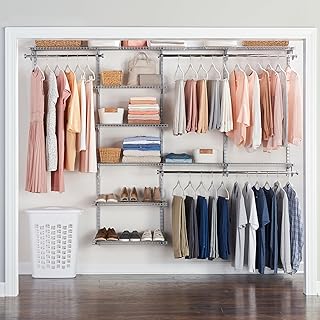
Rubbermaid Configurations Deluxe Custom Closet Kit 4-8 Ft.
If you want something that just works, Rubbermaid Configurations Deluxe Custom Closet Kit 4-8 Ft. Adjustable is a safe bet (81 reviews, 4.5 stars).
4. Maximize Drawer Efficiency with Expandable Dividers

If you have a small dresser tucked inside the closet, you need expandable drawer dividers to compartmentalize items like onesies, socks, and burp cloths. Without dividers, deep dresser drawers turn into clutter canyons. You start with neat stacks on laundry day, and by Thursday, it’s a tangled mess of fabric. I picked up some organic cotton burp cloths last Tuesday at Whole Foods for $12.99. I needed a specific, contained spot for them so they wouldn’t mix with dirty socks. OXO Tot Expandable Drawer Dividers are a reliable choice. They expand up to 17 inches and feature dense foam pads on the ends to protect and grip the drawer walls. A 2-pack typically costs $24.99. You just push down on the gray lever, slide the divider to the exact depth of your drawer, and pull the lever up to lock it in place. I tried a cheaper spring-loaded bamboo version first, but the tension was too high and it actually bowed the thin particleboard back of my IKEA dresser. The OXO ones have adjustable tension, which prevents structural damage to cheaper furniture. Use these to create narrow columns exactly the width of a folded onesie.
5. Utilize Vertical Storage with Modular Systems

For a custom feel without the custom price tag, you should look into modular systems. An IKEA PAX wardrobe unit measuring 75cm wide by 236cm tall integrated with KOMPLEMENT drawers and shelves can fix a builder-grade closet almost instantly. Professional organizers often turn to IKEA for such projects because the pre-drilled holes allow you to adjust shelf heights down to the centimeter. I installed a narrow PAX frame in my son’s room last spring. The frame itself cost $105, and adding four wire baskets and three solid shelves brought the total to around $250. This is significantly cheaper than hiring a custom closet company, which usually starts at $1,000. I won’t lie to you, the assembly process is tedious. The instructions are purely visual and confusing, and lifting a 236cm tall heavy particleboard frame requires two adults. I pinched my finger badly in the hinge mechanism during setup. But once it’s anchored to the wall, it gives you deep, usable vertical storage. You can dedicate the top shelves to items you rarely need, like seasonal coats, and keep the daily accessible drawers at waist height. Make sure you measure your ceiling height before buying the 236cm version. Standard 8-foot ceilings are 243cm, meaning you only have 7cm of clearance. If your floors are uneven, you won’t be able to tilt the frame up during assembly. You’ll have to build it standing up, which is incredibly frustrating in a tight space.
6. Designate a “Too Small” Basket

Babies grow incredibly fast, leading to a constant influx of outgrown clothes. If you leave outgrown clothes in the main rotation, you waste time every morning sorting through items that don’t fit. You need to keep a soft-sided, open-top basket on the closet floor or a lower shelf specifically for clothes your baby has outgrown. I use a Target Brightroom 13-inch fabric cube bin, which costs exactly $10.00. Every time I try to snap a onesie on my daughter and realize the fabric is pulling too tight at the bottom, I take it off and immediately toss it into this basket. I don’t fold it. I don’t put it back on a hanger. It goes straight into the discard pile. Once the bin fills up to the top rim, I dump the contents into a vacuum-seal bag, label the bag with the size, and store it in the attic. I figured this out after a run to Trader Joe’s last month. I was buying peanut butter pretzels and realized my daughter’s pants were three inches above her ankles. When we got home, I purged her entire pants section in ten minutes. The open top is crucial here. If the basket has a lid, you won’t use it. You need to be able to toss a shirt into the bin with one hand while holding a squirming toddler. You might also like: 13 Bathroom Closet Organization Ideas for Every Budget

Timate P3 Wall Mounted Closet Organizer System with 5
Timate P3 Wall Mounted Closet Organizer System with 5 Hanging Rods has been one of the most consistently praised picks in this category. 7 reviewers averaged 4.5/5.
7. Utilize the Back of the Closet Door

Don’t overlook the back of the door. This is highly valuable real estate in a tight room. An over-the-door organizer with clear pockets is perfect for storing small items like socks, bibs, headbands, or extra 2 oz tubes of diaper cream. I bought a standard 24-pocket clear vinyl shoe organizer for $14.99 on Amazon. The clear pockets are mandatory. If you use opaque fabric pockets, you’ll forget what you put in there and end up buying duplicate items. The Container Store’s Elfa Utility Door & Wall Rack is a much more durable, customizable option if you have the budget. It costs around $140 for the track and several metal mesh baskets. I initially tried the Elfa system, but the metal over-the-door hooks were too thick for my standard interior door frame. The door wouldn’t close properly, and it scraped the paint off the top door jamb. I had to return it and switch to the cheap vinyl organizer, which has ultra-thin metal hooks that clear the door jamb perfectly. I use the bottom row of pockets for small plush toys and the top rows for medical supplies like infant Tylenol and the nose frida, keeping them safely out of reach but instantly visible. You might also like: 13 Sliding Door Closet Organization Ideas You Need to See
8. Embrace Clear, Labeled Bins for Visibility

For items stored on shelves, especially higher up near the ceiling, you must use clear plastic bins with large, readable labels. This ensures you can see the contents at a glance, reducing the time you spend rummaging while holding a squirming infant. I bought a set of The Container Store’s Linus Shallow Drawer Organizers last winter. The 8×12 inch size costs $19.99 each. They are made of thick, durable plastic that doesn’t bend when you pull it down with one hand. I learned this lesson the hard way. I previously bought a stack of cheap, thin, opaque white bins at Walmart for $3.99 each. Because I couldn’t see inside them, I had to pull every single bin down to find the extra crib sheets. One of the Walmart bins cracked down the side after a month of use, leaving a sharp plastic edge that scratched my arm. Stick to high-quality clear acrylic. I recommend using a simple label maker with black text on white tape to mark the front of each bin. Label them broadly, like “Swaddles,” “Crib Sheets,” and “Sleep Sacks.” When you’re severely sleep-deprived, visual clarity is the only thing that keeps the system functioning. I also suggest avoiding bins with locking latches for everyday items. You don’t want to struggle with plastic clips at 3 AM. Open-top clear bins slide out easily and let you grab what you need in seconds. You might also like: 20 Stunning Tool Storage Organizing Ideas for a Fresh New Look
9. File Fold Clothes for Maximum Drawer Space

Instead of stacking clothes in traditional horizontal piles, you need to file fold onesies, pajamas, and pants vertically in your drawers or bins. This method maximizes space and allows you to see the top edge of every single item without digging. When you stack clothes horizontally, pulling a shirt from the bottom of the pile ruins the entire stack. The top items tumble backward, and within three days, the drawer is a wrinkled mess. To file fold a baby onesie, lay it flat, fold the sleeves in, fold it in half vertically, and then fold it into thirds horizontally. It should stand up on its own like a small fabric brick. I started doing this when my son was in 6-month clothing. It increased the capacity of his 15-inch deep drawer by almost forty percent. The negative here is the learning curve. It takes about an hour to train your hands to fold this way efficiently, and husbands notoriously hate doing it. My partner still occasionally tries to shove flat-folded pants into the file-folded rows, which ruins the tension holding the clothes upright. But once you get the hang of the folding rhythm, the visual clarity makes the extra laundry time completely justified.
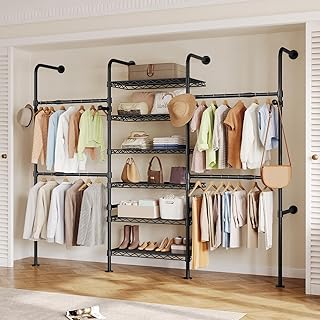
Closet Organizers and Storage
Closet Organizers and Storage punches above its price — 39 buyers rated it 4.5 stars. I would buy it again.
10. Prioritize Eco-Friendly and Non-Toxic Storage

Sustainable nursery practices are becoming standard, and your storage materials should reflect that. Opt for organic cotton rope baskets or bins made from recycled materials instead of cheap synthetic fabrics. I bought a set of three Makemake Organics cotton rope baskets for $45.00. They are unbleached, thick, and hold their shape perfectly even when empty. You can also look at Our Green House for similar options in the $30-$50 range. I made a massive mistake with my first child by buying brightly colored polyester storage cubes. When I took them out of the plastic wrapping, they off-gassed a terrible chemical smell for two weeks. I didn’t want my baby’s fresh cotton clothes absorbing that synthetic odor. I ended up throwing them away. Last week, I was doing a grocery run at Sprouts and found a beautiful, small woven seagrass basket in their home goods aisle for $14.99. I use it to hold natural baby wash and lotion on the top shelf of the closet. These natural materials are environmentally conscious, free from harmful chemicals, and they add a warm, textured aesthetic to the room that harsh plastic bins just can’t replicate. Just be aware that natural rope baskets are spot-clean only. If a bottle of baby oil leaks inside a cotton basket, the stain is permanent. I line the bottom of my lotion basket with a folded paper towel to catch drips.
11. Create a Dedicated Changing Station within the Closet

If your room layout allows it, placing a small dresser or a built-in changing table directly inside the closet is a highly effective strategy. This streamlines your daily routines by keeping all diapering essentials contained in one specific, hideable area. It frees up valuable floor space in the main bedroom. I moved a 31-inch wide IKEA MALM dresser into my daughter’s closet. It fit perfectly under the hanging rod, leaving exactly 36 inches of clearance for clothes to hang above it. I placed a standard contoured changing pad on top. All the diapers, wipes, and creams live in the top drawer of that dresser. A major tip here is to ensure you have adequate lighting. Closets are notoriously dark. I stuck a battery-operated motion-sensor LED light bar directly above the changing pad. It cost $19.99 on Amazon and attaches with a simple adhesive strip. The light clicks on automatically when I walk up to change a diaper in the dark. One downside to this setup is that you can’t close the closet doors while you’re actively changing the baby, which means you’re standing in the doorway. It can feel a bit cramped, but the massive gain in bedroom floor space makes it a worthwhile compromise.
12. Install a Pegboard for Accessories

For a surprising and highly customizable storage solution, install a small pegboard section on an unused side wall inside the closet. This is perfect for hanging headbands, sun hats, small toys, or frequently used burp cloths. Most closets have about 12 to 18 inches of blank drywall between the door frame and the side shelves. I utilized this dead space by mounting an IKEA SKADIS pegboard. The 14.25 by 22 inch white board costs $16.99. I bought a pack of the SKADIS white metal hooks for $5.00. I hang all of my daughter’s nylon bows on these hooks. Before the pegboard, I kept bows in a drawer, and the nylon bands would tangle into a massive knot. The pegboard keeps them separated and visually accessible. The installation requires drywall anchors, which aren’t included in the IKEA box. I learned this the hard way when I tried to screw the board directly into the drywall. It ripped out of the wall under the weight of a heavy winter coat, leaving a jagged hole I had to patch. Always use heavy-duty drywall anchors. Once properly anchored, a pegboard turns a blank wall into a highly functional accessory station. You can also buy small plastic cups that clip into the pegboard holes. I use one cup to hold baby nail clippers and a soft brush, keeping sharp grooming tools far out of reach from crawling toddlers.

Kmiectse Clear Storage Bins with Lids
Kmiectse Clear Storage Bins with Lids – 4 Tier Plastic Bins with Wheel punches above its price — 2 buyers rated it 4.5 stars. I would buy it again.
13. Store Bulk Items Separately

Avoid cluttering your primary nursery closet with large quantities of diapers, wipes, or extra formula boxes. You should only keep one active supply of these items in the immediate changing area and store bulk back stock in a less accessible location, like a high shelf in the hallway or a garage storage rack. I used to buy the massive 192-count boxes of Kirkland diapers at Costco for $34.99 and shove the entire cardboard box onto the floor of the nursery closet. It took up four square feet of floor space. I couldn’t reach the clothes hanging above it without leaning awkwardly over the cardboard box. It was a terrible system. Now, I keep exactly 30 diapers stacked neatly in a top drawer. The massive Costco box lives on a high shelf in the laundry room. I refill the nursery drawer once a week. This simple shift in inventory management instantly opens up the closet floor for things you actually need daily, like a laundry hamper or a row of baby shoes. Treat the nursery closet like a retail display. You only put out the items currently in use, and you keep the warehouse inventory hidden away in a secondary location.
14. Consider Removing Closet Doors Entirely

For very small rooms or to allow for deeper storage solutions, removing traditional swinging or bifold closet doors can create more usable space and an open, airy feel. Traditional doors require a massive clearance arc to swing open. Bifold doors are even worse because they bunch up on the sides, blocking access to the outer edges of the closet shelves. I took the bifold doors off my son’s closet last summer. It took five minutes with a flathead screwdriver to pop the pins out of the top track. Removing the doors allowed me to slide a 20-inch deep dresser into a space that previously only accommodated a 15-inch deep unit. The negative consequence is that you have to look at the closet contents all the time. If the closet is messy, the whole room feels messy. You also have to deal with the ugly hinge hardware left behind on the door frame. I eventually unscrewed the metal brackets and filled the holes with wood putty, which took an entire afternoon of sanding and painting. If you’re willing to commit to keeping the shelves highly organized, removing the doors is a massive structural improvement for a cramped room. If you hate the open look, you can install a tension rod and hang a heavy linen curtain. A curtain provides a soft visual barrier but pushes easily out of the way without blocking shelf corners.
15. Utilize Multi-Functional Furniture

While not strictly an internal closet product, investing in furniture that serves more than one purpose significantly reduces the burden on your small closet. A crib with built-in drawers underneath or a changing table that converts into a dresser can free up massive amounts of shelf space. I bought a Delta Children crib that features a trundle drawer built into the base. It cost $249.99. I use that wide, flat drawer to store heavy winter blankets, extra crib skirts, and thick sleep sacks that take up too much vertical space on closet hangers. By moving the bulky textiles out of the closet and under the bed, I freed up two entire closet shelves. The downside to under-crib drawers is that they sit very low to the ground. You have to get on your hands and knees to pull them out, and pet hair tends to accumulate in the track mechanism. I have to vacuum the tracks out once a month to keep the drawer sliding smoothly. However, the tradeoff is worth it. By shifting the heavy linens to a multi-functional piece of furniture, you reserve the prime eye-level closet space for daily clothing changes and immediate necessities. Before buying a crib with a drawer, measure the clearance of your room’s baseboards. If you have thick, decorative baseboards, the drawer face might scrape against them when you pull it open.

Yociyoga 4-Tier Stackable Closet Organizers and Storage
If you want something that just works, Yociyoga 4-Tier Stackable Closet Organizers and Storage Basket is a safe bet (427 reviews, 4.5 stars).
16. Add a Lazy Susan for Small Nursery Closet Organization

For small toiletries and medical supplies, a lazy susan is the most efficient storage tool you can put on a closet shelf. When you line up bottles of baby lotion, diaper cream, and saline spray in straight rows, the items in the back inevitably get knocked over when you reach for something in the front. I solved this by placing a 9-inch clear acrylic turntable on the top shelf. I bought the iDesign Linus Turntable for $15.99. It has a slight raised edge, which prevents bottles from flying off when you spin it. I did a quick run to Kroger last Friday and bought three different types of baby wash, a large tub of Aquaphor, and a bottle of baby oil. Every single item fit onto the 9-inch turntable perfectly. Instead of knocking over the baby oil to reach the Aquaphor, I just rotate the tray with one finger. I strongly advise against buying turntables with divided compartments. The fixed plastic dividers limit what you can fit. A large bottle of generic lotion won’t fit into a pre-molded pie slice compartment. Buy a flat, undivided lazy susan so you have total flexibility as your baby’s toiletry needs change over time. Keep the turntable pushed back at least two inches from the edge of the shelf. If it sits completely flush with the edge, a fast spin can send taller bottles tipping forward onto the floor.
Setting up a functional nursery doesn’t require a massive budget or a walk-in space. It requires strict boundaries, the right dimensions, and a refusal to keep things that don’t serve your daily routine. By implementing these specific strategies, you’re protecting your own sanity during those exhausting early months. I highly recommend starting with the velvet hangers and the size dividers. Those two changes take less than twenty minutes to execute and yield immediate results. If you found these tips helpful, pin this article to your nursery planning board so you have the exact brand names and measurements ready when you hit the store.
Frequently Asked Questions
How do you maximize space in a small nursery closet?
The most effective method is doubling your hanging space with an adjustable secondary rod. Since baby clothes only need an 18-inch vertical drop, a second rod instantly doubles capacity. Combining this with slim velvet hangers saves significant horizontal space on the rack.
Should I fold or hang baby onesies?
File folding onesies vertically in a dresser drawer is generally more space-efficient than hanging them. Hanging onesies eats up valuable rod space better suited for jackets, dresses, and bulky sweaters. Use expandable drawer dividers to keep the folded onesies standing upright.
What is the best way to store outgrown baby clothes?
Keep an open-top fabric bin on the floor of your nursery closet specifically for outgrown items. When you realize an item is too small, immediately toss it in the bin. Once full, transfer the contents to a labeled vacuum-seal bag for long-term storage.
Are clear or opaque storage bins better for nurseries?
Clear acrylic bins are vastly superior for small nursery closet organization. Opaque bins hide contents, forcing you to pull down multiple containers to find a specific item. Clear bins provide instant visual inventory, which is crucial when you’re sleep-deprived and holding a baby.
