
What’s Inside
- Install Shelf Liners for Solid Wire Shelf Closet Organization
- Utilize Clip-On Wire Shelf Dividers
- Embrace Matching Bins with Built-In Handles
- Maximize Vertical Space with Stackable Drop-Front Containers
- Double Your Hanging Space with Tension Rods
- Incorporate Hanging Cubbies for Lightweight Soft Items
- Add Pull-Out Mesh Drawers to Existing Racks
- Create a Faux Solid Wood Look with Foam Core
- Avoid the Common Mistake of Overloading Shelves
- Measure Accurately Before Buying Any Bins
- Group Like Items and Label Everything Clearly
- Prioritize Adjustable Tracks for Wire Shelf Closet Organization
- Utilize Divided Turntables for Small Accessories
- Strategic Placement: Zone Your Closet Vertically
- Rotate Seasonal Clothing and Declutter Bi-Annually
- Clip S-Hooks on the Front Lip for Quick Storage
Last Tuesday, I tried pulling a single folded cashmere sweater from my top shelf. The metal grating caught the delicate sleeve, unraveling a three-inch thread while the entire stack of winter clothes collapsed directly onto my face. If you’ve got builder-grade metal racks in your home, you already know the specific misery that makes wire shelf closet organization a survival skill. The open gaps leave permanent grid indentations on soft fabrics, and smaller items constantly slip through the cracks to the floor below. I spent two years fighting my own closet before I realized the basic structure wasn’t the problem. The issue was how I used it. You don’t need to rip out the metal and pay thousands for custom wood built-ins. You just need to understand the physics of wire racks and buy the right stabilizing accessories. Let’s look at sixteen practical ways to fix the chaos, complete with exact measurements and the specific products I use in my own house.
1. Install Shelf Liners for Solid Wire Shelf Closet Organization

The most immediate issue with metal grates is gravity. Small items fall through the gaps, and heavy folded clothes press down into the wires, leaving permanent grid imprints on your sweaters. I tried using cardboard scraps for months before figuring out that purpose-built liners stay flat. You want a firm, translucent plastic liner to create a stable surface without blocking the overhead light. I bought the Gorilla Grip Wire Shelf Liner in a 12-inch by 20-foot roll for $17.99 at Target last November. It comes tightly rolled, so you’ve got to lay it flat under some heavy books for a day before installation. Professional organizer Sara Bereika recommends firm liners specifically for ventilated shelves because they hold items steady and prevent tall bottles from toppling over. The Gorilla Grip material is thick enough that my heavy perfume bottles don’t wobble, and it cuts easily with standard kitchen scissors. If you’ve got deeper shelves, the EasyLiner Clear Classic Pantry liners come in 18, 20, and 24-inch widths. The exact measurement matters here. If the liner hangs over the front lip, it catches on your sleeves every time you reach up. I learned that the hard way when a slightly oversized piece of plastic scraped my forearm for weeks. Always cut the depth about a quarter inch shorter than the actual metal shelf. This small adjustment keeps the front edge smooth and prevents the liner from shifting when you slide boxes on and off.
2. Utilize Clip-On Wire Shelf Dividers

Folded stacks of clothing have a natural tendency to lean and topple, especially slippery fabrics like athletic wear or heavy items like denim. I used to spend twenty minutes every Sunday refolding my jeans, only to watch them slide into a messy pile by Wednesday. The solution is physical boundaries. I bought the mDesign Versatile Metal Wire Closet Shelf Dividers, which measure 12 by 16.4 by 6.3 inches high. A four-pack costs $24.99 at Target. These dividers feature a tension grip at the bottom that slides directly over the standard wire rungs. The installation takes roughly ten seconds per divider. You just push them down until they click into place. The 6.3-inch height is tall enough to support a stack of four pairs of jeans without bending. However, you need to check the thickness of your specific wire shelving before buying. These clips are designed for standard shelving wires that are about a quarter-inch thick. If you’ve got heavy-duty industrial racks, the clips won’t fit over the front lip. I tried forcing one onto a garage rack once and permanently bent the tension clip. Keep these strictly for standard bedroom or linen closets.
3. Embrace Matching Bins with Built-In Handles

Loose items like rolled belts, bathing suits, and scarves create visual noise that makes a closet feel chaotic, even when it’s technically clean. Containing these items in matching bins solves the visual clutter, but the specific type of bin is crucial. I strictly use The Home Edit by iDesign All-Purpose Bins, which cost $9.98 each at Walmart. They measure 10 by 10 by 6 inches. The clear acrylic means I don’t have to guess what’s inside, and the straight sides sit flush against each other, wasting zero shelf space. Most importantly, these bins have built-in cutout handles. I dropped a heavy, handle-less fabric bin on my toe two years ago while trying to pull it down from a high shelf. Never buy storage containers for upper shelves unless you can securely hook your fingers into them. I currently use three of these bins on my top shelf to store my collection of reusable grocery bags that I pick up from Trader Joe’s. The acrylic material slides smoothly across the wire racks, unlike canvas bins that snag and pill on the metal edges after a few weeks of use.
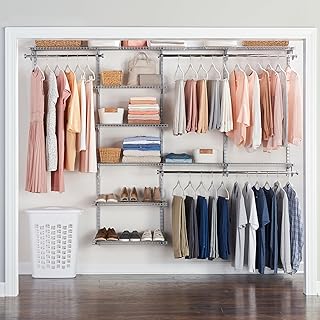
Rubbermaid Configurations Deluxe Custom Closet Kit 4-8 Ft.
A dependable everyday pick — Rubbermaid Configurations Deluxe Custom Closet Kit 4-8 Ft. Adjustable pulls in 81 ratings at 4.5 stars. Not flashy, just solid.
4. Maximize Vertical Space with Stackable Drop-Front Containers

The gap between the top wire shelf and the ceiling is usually about two feet of completely wasted real estate. Stacking standard boxes up there means you have to unstack everything just to reach the bottom box. I solved this by switching entirely to drop-front containers for my out-of-season shoes and bulky winter accessories. I use the Container Store Large Drop-Front Shoe Boxes, which cost $11.99 each and measure 11-1/4 by 14-1/4 by 7 inches high. I stack them four high against the back wall of my top shelf. The clear plastic door opens from the front with a satisfying magnetic click. You can pull a pair of boots out of the bottom box without moving the three boxes sitting on top of it. The rigid plastic frame supports the weight perfectly. One negative note: the clear plastic doors attract dust quickly due to static electricity. I have to wipe them down with a microfiber cloth every month to keep them looking clean. But the convenience of accessing seasonal gear without a step stool and a balancing act makes the dusting routine worth it.
5. Double Your Hanging Space with Tension Rods

Builder-grade closets usually feature a single wire shelf with a hanging rod attached underneath, placed about 65 inches off the floor. This height accommodates long dresses, but it wastes massive amounts of space if you primarily hang shorter items like blouses, blazers, or skirts. I added a Whitmor Double Closet Rod, which costs $16.88 at Walmart. It hangs directly from your existing wire rod and provides a second hanging bar about 30 inches below the first one. The height and width are fully adjustable. I set mine to 30 inches wide, creating a dedicated lower section for my folded trousers. The metal hooks that hang from the top rod can sometimes slide horizontally if you push your clothes too hard. I fixed this by wrapping a small piece of black electrical tape around the top rod right next to the hooks. The rubbery texture of the tape acts as a stopper, keeping the entire lower assembly perfectly in place. This simple addition doubled the usable hanging capacity on the right side of my closet without requiring any drills or hardware.
6. Incorporate Hanging Cubbies for Lightweight Soft Items

When you run out of flat wire shelving, you can create more shelves by utilizing the vertical hanging space. Hanging cubbies are highly effective, provided you understand their structural limits. I use the Threshold 6-Shelf Hanging Organizer, which costs $15.00 at Target. It measures 12 by 12 by 48 inches and attaches to the closet rod with a thick velcro strap. I use this specifically for lightweight items like cotton t-shirts, leggings, and silk scarves. You must avoid the common mistake of overloading these fabric cubbies. I once filled a similar organizer with six pairs of heavy denim jeans. Within a week, the cardboard inserts bowed permanently, and the velcro strap began tearing at the seams. Fabric organizers simply lack the structural integrity for heavy textiles. Keep the weight under ten pounds total. The textured canvas material is surprisingly durable against the metal hangers scraping past it daily, and it provides a soft surface that won’t snag delicate knits the way exposed wire ends occasionally do. You might also like: 15 Creative Home Organizing Ideas You Haven’t Thought Of

Yociyoga 4-Tier Stackable Closet Organizers and Storage
Honestly, Yociyoga 4-Tier Stackable Closet Organizers and Storage Basket surprised me — sturdier than it looks in the photos, and over 418 buyers gave it 4.5 stars.
7. Add Pull-Out Mesh Drawers to Existing Racks

Sometimes you need actual drawers for small undergarments, but you don’t want to buy a heavy wooden dresser. Integrating pull-out mesh drawers directly into your shelving system offers a contained look while maintaining airflow. I use the Elfa Classic Mesh Drawers, which run about $21.99 each at the Container Store. They require the Elfa suspension frames to operate, but the entire system integrates beautifully under standard wire setups. The tight steel mesh prevents tiny items like socks and jewelry from falling through, which is the main failure point of standard wire baskets. I tried a cheap, generic metal drawer system from a discount store first. The metal-on-metal scraping sound it made every time I opened it was awful, and the tracks jammed constantly. The Elfa system glides smoothly on nylon rollers. The 17-inch depth fits perfectly flush with standard deep closet returns. I keep my workout gear in these drawers. The breathable mesh ensures that gym clothes don’t get that stale, trapped-air smell that often happens in sealed wooden dresser drawers.
8. Create a Faux Solid Wood Look with Foam Core

If you hate the aesthetic of wire shelves but rent your home or lack the budget for a custom wood installation, you can build a highly convincing faux solid shelf. You need rigid foam core boards, which cost $1.25 for a 20-by-30-inch sheet at Dollar Tree, and a roll of decorative contact paper. I used the Duck Brand Easy Liner in a wood-grain pattern, which costs $6.48 at Walmart. I measured my shelf depth, cut the foam core to size using a sharp X-Acto knife, and wrapped the board tightly in the wood-grain vinyl. You just lay the wrapped board directly on top of the wire grate. It instantly creates a smooth, solid surface that looks like custom shelving from eye level. I did this for my front hall closet last spring. The only drawback is the mess during the creation process. Cutting foam core on the living room floor leaves tiny white static-charged foam beads everywhere. You’ll be vacuuming them up for days. But the finished product easily supports lightweight display items, hats, and decorative boxes without the visual clutter of metal gridlines. You might also like: 15 Kids Closet Organization Ideas That Actually Work
9. Avoid the Common Mistake of Overloading Shelves

Wire shelving has strict weight limits that most people completely ignore until a disaster happens. A standard, properly installed wire shelf can hold about 60 to 80 pounds per linear foot. However, that assumes the installer actually hit the wall studs. I once stacked three heavy plastic bins full of winter coats and bulk household supplies on a single top shelf. At 2:00 AM, the drywall anchors ripped out of the wall, bringing the entire shelf, the brackets, and chunks of plaster crashing down. If you plan to store heavy items, you must reinforce the track system. I replaced my ruined setup with Rubbermaid FastTrack hardware, which costs $14.99 for the heavy-duty uprights at Home Depot. I bought an inexpensive stud finder and ensured every single vertical track was screwed directly into structural wood, not just drywall. Now, when I bring home massive 30-roll packs of toilet paper and heavy jugs of laundry detergent from Costco, I place them on the reinforced bottom shelves. Always distribute heavy weight evenly, and never trust a plastic drywall anchor to hold your winter wardrobe.

AWTATOS Cube Storage Organizer Storage 12 Cube Bookshelf
A dependable everyday pick — AWTATOS Cube Storage Organizer Storage 12 Cube Bookshelf DIY Plastic C pulls in 28 ratings at 4.5 stars. Not flashy, just solid.
10. Measure Accurately Before Buying Any Bins

Purchasing organization products without a tape measure is a guaranteed way to waste money. Studies indicate that 40% of users don’t spend enough time measuring, resulting in bins that either waste space or hang precariously off the edge. Standard residential wire shelves are typically either 12 inches or 16 inches deep. I keep a Stanley 25-Foot PowerLock Tape Measure, which costs $11.97 at Home Depot, in my kitchen drawer specifically for this. Two years ago, I bought six beautiful woven baskets that were 14 inches deep for a 12-inch shelf. They hung off the front edge by two inches. Every time I closed the closet door, the interior door handle smashed into the baskets, eventually warping the wire shelf brackets from the repeated impact. You must measure the depth of the shelf, the height clearance to the next shelf, and the width between the vertical support brackets. The support brackets often eat up an inch of usable space. Write these three numbers down on your phone before you walk into a store. It prevents the frustration of returning a cart full of slightly oversized plastic bins. You might also like: 15 Home Office Organization Ideas for Every Budget
11. Group Like Items and Label Everything Clearly

A beautifully arranged shelf falls apart in three days if you don’t assign strict categories to your bins. The core principle of professional organization is keeping “like with like.” I keep all my travel toiletries in one bin, all my hair tools in another, and all my winter gloves in a third. To enforce this system, I use a Brother P-Touch PT-M95 Label Maker, which costs $19.99 at Target. Typing out the satisfying little plastic tape labels ensures that my family actually puts things back where they belong. The adhesive on these labels sticks perfectly to smooth acrylic or plastic bins. However, the labels will peel off textured fabric or woven hyacinth baskets within a week. If you use textured bins, you need to buy metal bin clip labels that slide over the edge of the basket. I label the front lip of the actual wire shelf for items that don’t sit in bins, like my stack of bath towels. When the shelf is clearly marked “Guest Towels,” it stops me from absentmindedly tossing a random sweatshirt into that empty space.
12. Prioritize Adjustable Tracks for Wire Shelf Closet Organization

If you’re installing a new system or upgrading a failing one, never buy fixed-bracket wire shelves. Over 60% of consumers prefer adjustable designs because storage needs constantly change. I use the ClosetMaid ShelfTrack system. The 84-inch standard vertical tracks cost $18.98 each at Home Depot. The vertical metal tracks screw into the wall, and the horizontal wire shelves sit on brackets that snap into slots every inch along the track. This adjustability is crucial for effective wire shelf closet organization. Last winter, I bought a pair of stiff leather riding boots that were 18 inches tall. With a fixed shelf, I would’ve been forced to lay them flat, taking up a massive amount of horizontal space. Because I had the ShelfTrack system, I simply popped the shelf bracket out with a rubber mallet, moved it up three slots, and snapped it back in. The entire adjustment took four minutes, and the boots fit perfectly upright. Your closet should adapt to your clothes, not the other way around.

5 Tier Closet Hanging Organizer
5 Tier Closet Hanging Organizer punches above its price — 13 buyers rated it 4.5 stars. I would buy it again.
13. Utilize Divided Turntables for Small Accessories

Deep wire shelves are terrible for storing small, individual bottles. If you put your daily moisturizer at the back of a 16-inch deep shelf, you will inevitably knock over five other bottles trying to reach it. I fixed this by adding an OXO Good Grips 11-Inch Turntable, which costs $17.99 at Target. It has a non-slip base and a smooth steel ball-bearing track that spins silently. I use this turntable on my middle shelf to hold my daily vitamins, essential oils, and the organic skincare products I pick up at Sprouts. The turntable keeps every single bottle at the front of the shelf with a simple spin. The OXO version has a small outer lip that prevents bottles from flying off when you spin it too fast. I tried a cheaper, flat turntable once, and a glass bottle of expensive face serum slid right off the edge and shattered on the floor. The raised lip is a non-negotiable feature. Turntables also work brilliantly in the corners of L-shaped wire closet layouts, turning an awkward dead zone into highly accessible storage.
14. Strategic Placement: Zone Your Closet Vertically

Organizing a closet isn’t just about buying bins; it’s about strategic placement based on your daily physical movements. I implement a strict vertical zoning strategy. Items I use every single day sit exactly at eye level. Items I use weekly sit one shelf down. Heavy, bulky items stay on the floor or the lowest shelf, and seasonal items go to the very top. I use a Sterilite 66 Quart Latching Box, which costs $11.48 at Walmart, to store the massive bulk packages of paper towels I buy at Kroger. I keep this large bin on the absolute bottom rack. Lifting a 30-pound box over your head to a top shelf is dangerous and physically exhausting. Conversely, keeping your daily work shoes on the floor means you have to bend over awkwardly every morning. I moved my daily sneakers to a waist-high wire shelf near the door. Zoning your closet this way reduces the physical friction of getting dressed. You shouldn’t have to stretch, bend, or move three different objects just to grab a clean t-shirt on a Tuesday morning.
15. Rotate Seasonal Clothing and Declutter Bi-Annually

Your wire shelves will always feel overcrowded if you’re staring at heavy wool coats in July. You must rotate your wardrobe seasonally to maintain an organized system. I use Spacesaver Premium Vacuum Storage Bags, which cost $24.99 for a six-pack on Amazon, to compress my bulky winter sweaters and down jackets. You load the clothes, zip the seal, and use your standard household vacuum hose to suck the air out. A pile of sweaters that used to take up two feet of vertical shelf space shrinks down to a dense, two-inch brick. I store these vacuum-sealed bags in the drop-front boxes on my highest shelf. During this bi-annual rotation, I aggressively declutter. Following Marie Kondo’s practical advice, I pull out anything that doesn’t fit, requires repairs I won’t actually do, or feels uncomfortable. I keep a large paper grocery bag from Whole Foods on the floor of my closet specifically for donations. When the bag fills up, I put it in the trunk of my car. Regular decluttering ensures your organization system only manages clothes you actually wear.

Ulif E1 Heavy Duty Closet Garment Rack
Honestly, Ulif E1 Heavy Duty Closet Garment Rack surprised me — sturdier than it looks in the photos, and over 14 buyers gave it 4.5 stars.
16. Clip S-Hooks on the Front Lip for Quick Storage

The front lip of a standard wire shelf is usually just a rounded piece of metal, but it can double as a hanging rack for awkward accessories. I bought a 10-pack of ProSource Heavy Duty S-Hooks, measuring 3.5 inches long, for $6.99 on Amazon. The top curve of the ‘S’ hooks securely over the front wire of the shelf, while the bottom curve provides a perfect hanging spot for belts, baseball caps, and small crossbody purses. I space five of these hooks along the edge of my lowest shelf to hold my leather belts by their buckles. Before I did this, my belts lived in a tangled knot inside a drawer. The metal-on-metal design means the hooks can slide horizontally if you bump them, making a loud clinking sound. I solved this by dabbing a tiny dot of hot glue on the wire shelf right next to the hook to lock it in place. It’s a cheap, immediate way to utilize the negative space hanging directly below the shelf lip.
Fixing a frustrating closet doesn’t require a contractor or a massive budget. By adding solid liners, measuring your bins accurately, and utilizing tension rods and dividers, you can force basic metal racks to function beautifully. I highly recommend starting with the Gorilla Grip shelf liners and the mDesign dividers. Those two simple additions solve 80% of the falling and sagging issues immediately. Trust me on this. If you found these practical tips helpful, save this article or pin it to your home organization board for your next weekend project.
Frequently Asked Questions
How do I stop items from falling through wire closet shelves?
The most effective method is installing rigid, translucent shelf liners. Products like Gorilla Grip or EasyLiner create a solid, flat surface that prevents small items from slipping through the gaps while still allowing overhead light to filter down.
How much weight can a standard wire closet shelf hold?
A properly installed wire shelf can typically support 60 to 80 pounds per linear foot. However, this requires the vertical support tracks or brackets to be anchored directly into wooden wall studs, not just drywall.
What is the best way to keep folded clothes neat on wire shelves?
Use clip-on metal shelf dividers. These dividers slide directly over the standard wire rungs and create firm vertical boundaries, preventing stacks of slippery fabrics or heavy jeans from leaning and toppling over.
Can I add drawers to existing wire shelf closet organization systems?
Yes, you can integrate pull-out mesh drawers into many existing setups. Brands like Elfa offer suspension frames and smooth-gliding mesh drawers that fit securely under standard wire shelving, providing contained storage for small items like socks.
