
What’s Inside
- Apply These Office Closet Organization Ideas by Decluttering First
- Maximize Vertical Space with Adjustable Systems
- Prioritize Closed Storage for Visual Calm
- Categorize Small Items in Clear Acrylic
- Optimize Drawer Interiors with Dividers and Liners
- Conquer Cable Clutter and Build a Charging Station
- Utilize the Back of the Closet Door
- Implement a Streamlined Paper Management System
- Embrace Sustainable Office Closet Organization Ideas
- Invest in Adequate Internal Lighting
- Create a “Reset-Ready” Maintenance Routine
- Leave “Breathing Room” in Your Storage
- Color-Code for Visual Harmony and Easy Retrieval
Last October, I opened my workspace storage to find a 2019 tax document, and a heavy metal stapler fell off the top shelf directly onto my foot. That massive purple bruise was the push I needed to start researching office closet organization that actually works. I’m not naturally tidy. I tried stuffing everything into cheap plastic bins for months before figuring it out. The truth is, fixing an office closet requires specific systems and precise measurements, not just pretty baskets. If you’re tired of digging through chaotic piles while a client waits on hold, you need a methodical approach. Here are the exact products, dimensions, and routines I used to rebuild my space.
1. Apply These Office Closet Organization Ideas by Decluttering First

Start with the KonMari method, but keep it strictly to office supplies. Gather every single pen, notebook, and charger from around your house. I found highlighters in my kitchen junk drawer, printer paper in the living room console, and binder clips in my nightstand. Put it all in one massive pile on the floor. Pros suggest discarding anything not used in the last six months to a year. I threw away three dried-out purple glue sticks and a stack of faded receipts from Whole Foods that I couldn’t even read anymore. A common mistake is organizing clutter. You don’t need a special bin for cables that belong to a 2014 digital camera. I use 13-gallon Hefty strong trash bags (usually $11.49 at Target) because the generic ones rip when you fill them with heavy paper catalogs. Sort everything into keep, recycle, and trash. It’s tedious. Your back will ache. But skipping this means you’re just paying for expensive containers to house garbage. Once you have your curated pile of actual necessities, you can start measuring your closet dimensions accurately.
2. Maximize Vertical Space with Adjustable Systems

Standard builder-grade closets usually have one flimsy wire shelf. That’s useless for heavy office supplies. You need to use the full height of your closet by installing adjustable shelving. I installed the IKEA KALLAX 16-cubby shelf unit ($139.99). It measures exactly 57 7/8 by 57 7/8 inches, which perfectly fit the width of my standard reach-in closet. The particleboard is heavy, and assembling it solo took me two sweaty hours, but the structural integrity is excellent. Trust me. If you have a larger budget, the Elfa system from The Container Store offers customizable tracks that mount directly to the wall. I tried a cheaper wire shelving unit from Walmart first, but the thin metal bent under the weight of my copy paper boxes within a week. Adjustable shelves let you create 12-inch gaps for standard 3-ring binders and 6-inch gaps for flat paper trays. Don’t leave massive 24-inch gaps between shelves. That just invites you to stack things perilously high until they topple over. Keep heavy items like your laser printer or bulk reams of paper at waist height to avoid straining your shoulders.
3. Prioritize Closed Storage for Visual Calm

Open shelving looks great on social media, but in a working office, it creates visual noise. You see every mismatched spine, every torn paperclip box, and every tangled cord. A major focus for modern design is storage that hides clutter to create a calm, focused environment. I rely on opaque bins. I bought six of the Brightroom Y-Weave plastic storage bins from Target ($8.00 each, the 11-inch medium size). The matte white finish hides the chaos inside completely. I use one entirely for my bulk office snacks. I buy the massive 4-pound bags of trail mix from Costco, and dumping them into a closed bin means I’m not staring at crinkly plastic packaging all day. I also use the IKEA BRIMNES cabinet with solid doors for my lower storage. It conceals my ugly, bulky laminator and the three different tape dispensers I own. When you open the closet doors, your eyes should rest on solid blocks of neutral color, not a chaotic mosaic of office supplies. If you use clear bins for everything, your space will still look messy no matter how neatly you stack things.
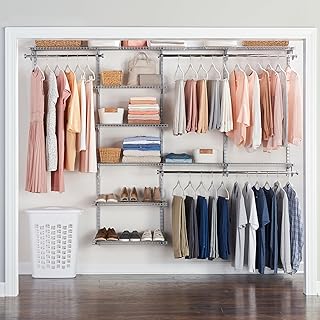
Rubbermaid Configurations Deluxe Custom Closet Kit 4-8 Ft.
Rubbermaid Configurations Deluxe Custom Closet Kit 4-8 Ft. Adjustable punches above its price — 81 buyers rated it 4.5 stars. I would buy it again.
4. Categorize Small Items in Clear Acrylic

“Keep like items together” is a fundamental rule that works when executed correctly. I used to toss pens, paper clips, and sticky notes into one large drawer. It took me five minutes of digging to find a single working black pen. Now, I use small, clear acrylic containers to group items. The Container Store sells a Linus shallow drawer organizer measuring 3 by 9 by 2 inches for $6.99. The 2-inch depth is key. If you buy deep 5-inch bins for small items, you end up digging again. I have one bin strictly for black gel pens, one for binder clips, and one for those little neon page flags. I tried using cheap cardboard jewelry boxes for this initially, but they warped and collected dust within a month. The hard acrylic wipes clean with a damp cloth. I also learned to separate my personal items from work items. I keep a small stash of emergency snacks—specifically the dark chocolate peanut butter cups from Trader Joe’s—in a separate opaque 4-inch square bin on the top shelf. Grouping items by exact category means my brain doesn’t have to work hard to find a paperclip when I’m on a stressful client call.
5. Optimize Drawer Interiors with Dividers and Liners

Putting things in a drawer without internal organization is a guaranteed way to create a junk drawer. Every time you pull the drawer open, the momentum sends everything sliding to the back. I fix this with two specific products. First, I line the bottom of every drawer with the IKEA PASSARP drawer mat ($7.99 for a roll). It’s a thick, gray polyester felt that grips the bottom of the drawer. I cut it to size (usually 18 by 24 inches) using heavy-duty fabric scissors. It stops the plastic bins from sliding and deadens the rattling sound when you open the drawer. Second, I use spring-loaded bamboo drawer dividers. I bought a 4-pack of the SPACEAID bamboo dividers on Amazon for $19.99. They expand from 17 to 22 inches. I place them vertically to create long channels for metal rulers, scissors, and legal pads. I initially tried those cheap plastic honeycomb dividers, but they snapped when I tried to force a heavy stapler into one of the slots. The solid bamboo creates rigid, permanent zones. You’re much more likely to put a ruler back in its designated 3-inch slot than to toss it into a cavernous, empty drawer. You might also like: 20 Stunning Tool Storage Organizing Ideas for a Fresh New Look
6. Conquer Cable Clutter and Build a Charging Station

Cable organization is usually the biggest headache in a home office. I used to have a giant knotted ball of white and black cords sitting on a shelf. Now, I use Velcro One-Wrap Cable Ties. A 30-foot roll costs about $14.49 on Amazon. I cut 4-inch strips, wrap them around individual cords, and secure them. They don’t leave sticky residue like electrical tape, and you don’t have to cut them off like zip ties. For smaller, less frequently used cables (like the micro-USB for my old Kindle), I store them in a clear plastic bead box from Michaels ($9.99). It has 16 tiny latching compartments. I use a Brother P-Touch label maker to tag every single cord because I won’t remember what a random black wire belongs to six months from now. I also integrated a dedicated charging station on the middle shelf. I bought a Satechi 5-Port USB charging dock ($59.99). It sits inside a shallow wooden tray, keeping my iPad, phone, and wireless mouse powered up. The cords are neatly bundled with the Velcro ties, and the power strip is mounted to the wall behind the shelf using heavy-duty 3M Command strips. You might also like: 13 Home Bakery Organization for Every Budget
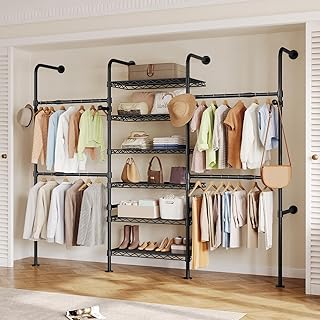
Closet Organizers and Storage
Closet Organizers and Storage has been one of the most consistently praised picks in this category. 39 reviewers averaged 4.5/5.
7. Utilize the Back of the Closet Door

The back of the closet door is wasted real estate in most homes. I installed the IKEA SKÅDIS pegboard system directly onto my hollow-core closet door. The pegboard itself is $22.99 for the 30 by 22-inch size. The crucial part is getting the right attachments. I bought a two-pack of the SKÅDIS hooks for $3.00 to hang my large fabric scissors and a roll of heavy packing tape. I also added three of the white metal cups ($3.00 each) to hold dry-erase markers and sharpies. Be careful with weight limits on hollow doors. I tried hanging a heavy metal file organizer on the door using standard screws, and it ripped right out of the thin wood, leaving jagged holes. Learned that the hard way. Use proper hollow-door anchors (the toggle bolt kind) if you’re mounting anything heavy. Now, the items I reach for multiple times a day—tape, scissors, markers—are accessible without even stepping into the closet. It frees up shelf space for bulkier items and keeps sharp tools safely out of reach if you have a toddler wandering into your office. You might also like: 16 Phone Organization Home Screen Worth Trying
8. Implement a Streamlined Paper Management System

Even if you scan most things, physical documents still pile up. I used to shove mail, invoices, and contracts into a canvas tote bag I got from Sprouts. It was a disaster. I missed a vehicle registration deadline because the notice was buried under grocery receipts. I fixed this by standardizing my physical filing. I bought a box of 100 Smead manila interior file folders ($12.50) and a set of Pendaflex hanging folders in forest green ($14.99 for 25). Do not buy the assorted color packs. A rainbow filing cabinet looks chaotic. Stick to one color for the hanging files and one color for the interior folders. I use a simple desktop multi-section inbox from Target ($15.00, metal mesh) on the primary shelf. It has three horizontal slots labeled “Action,” “File,” and “Waiting.” Mail goes into “Action.” Once paid, it moves to “File.” Every Friday afternoon, I take the “File” stack and put it into the green hanging folders. Broad categories work best: “Taxes 2024,” “Medical,” “House.” If you make the categories too specific, you’ll spend ten minutes trying to decide where one piece of paper belongs.
9. Embrace Sustainable Office Closet Organization Ideas

I’m slowly transitioning away from cheap, brittle plastics that crack after a year of use. Eco-conscious organization focuses on durable, sustainable materials. I started buying organizers made from bamboo and cork. I purchased the Ecoist cork desk organizer tray ($24.00). It measures 12 by 8 inches. The cork material is naturally grippy, so my ceramic coffee mug and metal pens don’t slide around or clank when I set them down. It feels much softer and warmer than hard plastic. You can also upcycle household items effectively if you do it right. I took three empty cereal boxes, cut them at a diagonal angle, and wrapped them in a thick, textured linen contact paper ($9.99 a roll on Amazon). They look exactly like high-end magazine files from a boutique, but they cost me almost nothing. I use them to hold my spiral notebooks and trade magazines. I also repurposed a sturdy cardboard box from a Kroger grocery delivery, wrapped it in the same linen paper, and use it to store my extra printer ink cartridges. It keeps the space looking cohesive without generating more plastic waste.

Yociyoga 4-Tier Stackable Closet Organizers and Storage
A dependable everyday pick — Yociyoga 4-Tier Stackable Closet Organizers and Storage Basket pulls in 427 ratings at 4.5 stars. Not flashy, just solid.
10. Invest in Adequate Internal Lighting

Most office closets have zero internal lighting. You’re relying on the ambient light from the room, which means the top shelf and the bottom corners are pitch black. I spent months using my iPhone flashlight to find extra staples. I finally bought a 3-pack of STAR-SPANGLED Motion Sensor Lights on Amazon for $29.99. They are 7.5 inches long and stick to the ceiling or under shelves with magnetic adhesive strips. They run on four AAA batteries each. The motion sensor is highly responsive. The second I open the closet door, the shelves are flooded with 6000K cool white LED light. I can actually read the small print on the side of a toner cartridge without squinting. The downside is that you have to change the batteries every three months if you open the closet frequently. I buy the massive 48-pack of Kirkland batteries from Costco to keep up with it. Proper lighting completely changes how you interact with the space. It feels like a functional extension of your office rather than a dark cave where you hide your junk.
11. Create a “Reset-Ready” Maintenance Routine

The best organizational system will fail if you don’t maintain it. I learned this the hard way. I spent a whole weekend organizing my closet, and three weeks later, it was a mess again because I was too lazy to put things back in their exact spots during a busy workday. Now, I use a “stash spot.” I placed a medium-sized wire basket ($12.99 from Target) on the most accessible shelf. When I’m rushing between Zoom calls and don’t have time to properly file a document or put away a hole punch, I toss it in the wire basket. It contains the temporary mess to one 10-by-10 inch square. Then, I have a strict 10-minute reset routine every Friday at 4:30 PM. I take everything out of the wire basket and put it in its actual home. I wipe down the shelves, empty the small trash can, and check my pen supply. This prevents the slow creep of clutter. If you don’t designate a specific temporary drop zone, your entire desk and closet floor will become the drop zone.
12. Leave “Breathing Room” in Your Storage

A massive mistake I used to make was filling every single bin and shelf to 100 percent capacity. If a bin holds exactly twenty markers, and you buy a new pack of five, you suddenly have nowhere to put them. Pros advise leaving about 20 percent of your storage space empty. This is called breathing room. I leave a 4-inch gap at the end of every row of books or binders. I leave one entire acrylic drawer completely empty. When I inevitably buy a new set of highlighters or receive a bulky client manual, I have immediate space for it without having to reorganize the entire closet. For hanging items, like my photography backdrops, I leave at least a 1/4 inch gap between the hangers. When things are packed too tightly, pulling one item out drags three other things with it. I once pulled a binder from an overstuffed shelf, and it pulled a glass paperweight down with it, which shattered on the hardwood floor. Give your supplies physical space to slide in and out easily.

SNSLXH 5 Pack Stackable Closet Storage Basket
A dependable everyday pick — SNSLXH 5 Pack Stackable Closet Storage Basket pulls in 4 ratings at 4.5 stars. Not flashy, just solid.
13. Color-Code for Visual Harmony and Easy Retrieval

If your closet looks chaotic, it’s likely because you have too many competing colors and textures. I focus on repetition and limit my closet to exactly three finishes: matte white, natural bamboo, and clear acrylic. I threw away my neon green plastic bins and my red wire mesh trays. By sticking to a strict color palette, the closet instantly looks custom and high-end. I extend this to color-coding my active projects. I use colored dot stickers ($4.99 for a roll of 1000) on the spines of my binders. Blue dots are for financial documents, yellow dots are for marketing materials, and red dots are for urgent client files. This makes retrieval fast. I don’t have to read the labels; my brain just looks for the blue dot. I buy my plain white binders in bulk from Walmart ($14.88 for a 4-pack of 1.5-inch binders) because they create a uniform look on the shelf. The visual harmony reduces eye strain and mental fatigue. When you open the closet, it should feel like a relief, not another stressful visual puzzle.
Organizing your office closet isn’t about buying the most expensive containers; it’s about creating logical, measured systems that match how you actually work. I highly recommend starting with the KALLAX shelving unit and building your bins around those exact dimensions. Pin this guide so you have the measurements handy the next time you’re standing in the storage aisle trying to guess if a bin will fit.
Frequently Asked Questions
What is the best way to organize an office closet?
Start by completely emptying the space and discarding unused items. Install adjustable shelving to maximize vertical space, use opaque bins to hide visual clutter, and group small items in clear acrylic drawer dividers for easy retrieval.
How do you hide messy cords in an office closet?
Use Velcro cable ties to bundle long cords tightly, and store smaller, unused cables in clear, labeled bead boxes. For active devices, set up a dedicated charging station inside a wooden tray to conceal the power strip.
Should I use clear or opaque bins for office organization?
Use opaque bins for large, visually messy items like bulk snacks, extra tape, or mixed cables to create visual calm. Reserve clear acrylic bins strictly for small, frequently used items like pens and paperclips.
How do I maintain my organized office closet?
Designate a single wire basket as a temporary drop zone for items when you are in a rush. Schedule a strict 10-minute weekly routine to empty this basket and return everything to its designated home.
