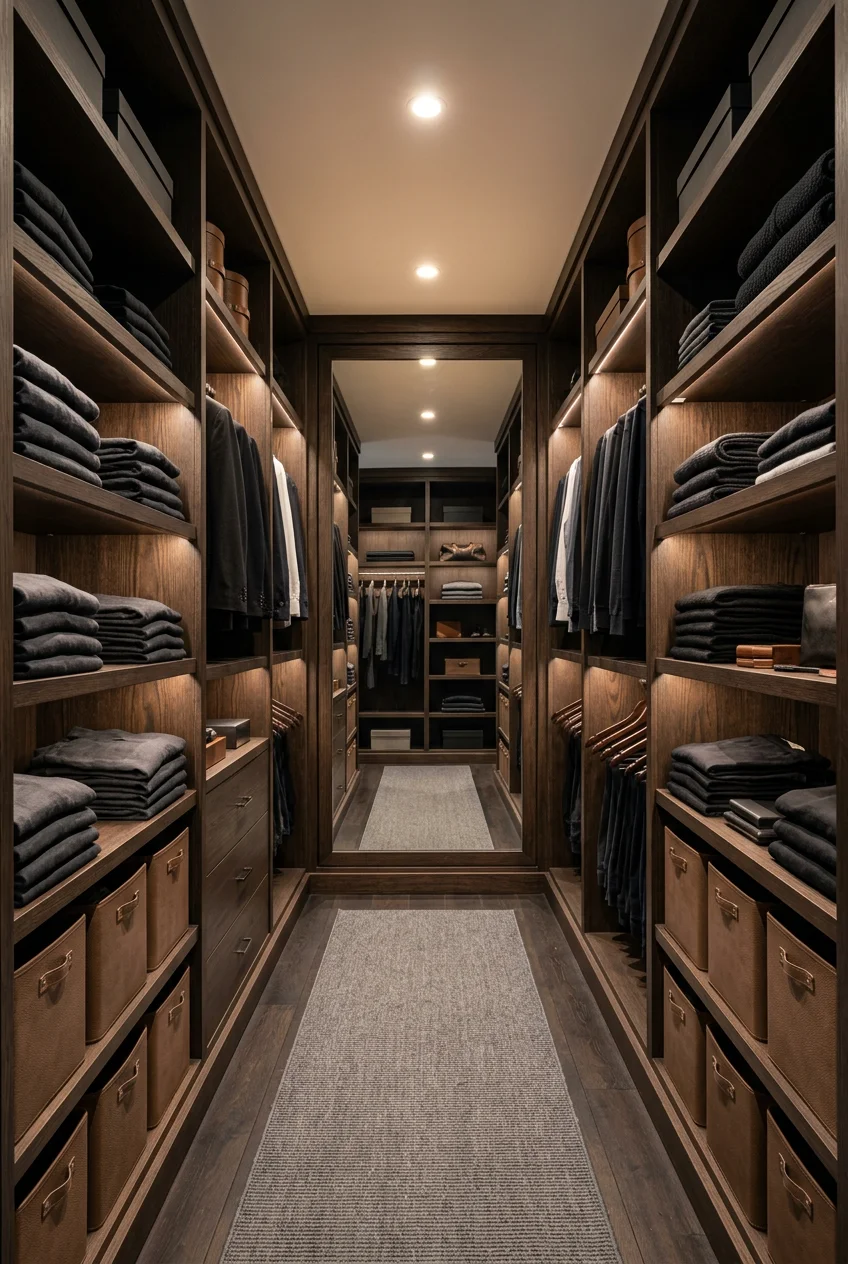
What’s Inside
- Master the Annual Purge with the Turned Hanger Trick
- Invest in Uniform, Quality Hangers for Space and Garment Care
- Maximize Vertical Space with Double Hanging Rods
- Categorize and Color-Code for Quick Outfit Selection
- Utilize Drawer Dividers for Small Items
- Integrate Dedicated Accessory Storage
- Opt for Angled Shoe Shelves for Visibility and Accessibility
- Incorporate a Built-in or Hidden Hamper
- Essential Mens Closet Organization for Formalwear
- Embrace Modular Closet Systems for Flexibility
- Implement Smart Lighting Solutions
- Create a Scoring Method for Decluttering Tough Decisions
- Organize by Hobby or Activity for Specialized Gear
- Utilize Open Shelving for Everyday Essentials
- Maintain a One In, One Out Rule
Last Tuesday, I opened my husband’s wardrobe and a mountain of wrinkled golf polos literally avalanched onto my feet. It smelled faintly of old cedar and desperation. If you’re struggling with mens closet organization, trust me on this, I’ve been in the exact same messy trenches. Getting mens closet organization right isn’t about perfectly folded underwear. It’s about building a system that actually survives Monday mornings when you’re rushing to find a clean shirt. I tried fixing his space for months before figuring it out. I bought the wrong bins. I folded things he just threw around anyway. It was a disaster. Let’s fix yours the right way.
1. Master the Annual Purge with the Turned Hanger Trick

I’m starting with a rule that completely changed how I handle closet clutter. Professional organizers like Barbara Reich swear by this, and it actually works. You need to commit to an annual wardrobe purge using the turned hanger trick. Here is how you do it. Turn every single hanger in your closet the opposite direction. After you wear an item and wash it, put it back with the hanger facing the correct way. After six to twelve months, any hanger still facing backward holds an unworn item.
Last January, I forced my husband to do this. The sound of plastic hangers clacking backward was deafening. Six months later, half his hangers were still backward. It was a harsh reality check. The most common mistake people make is holding onto clothes they haven’t worn in years, leading to an overstuffed, unmanageable space. You can’t organize clutter. If you need cheap hangers to start this experiment, grab a pack of Target Brightroom standard plastic hangers for $3.00 (an 18-pack). Once you see those backward hangers collecting dust, you won’t hesitate to bag those shirts up in reusable Trader Joe’s totes and donate them immediately.
2. Invest in Uniform, Quality Hangers for Space and Garment Care

I can’t stress this enough. You need to replace those flimsy wire hangers from the dry cleaner. They leave weird, nipple-like bumps on the shoulders of heavy wool sweaters and ruin the fabric over time. I kept using mismatched plastic and wire hangers for years, and it made the closet look like a chaotic thrift store rack. You’re going to want slimline velvet or sturdy wooden hangers.
Slim velvet hangers maximize space and prevent garments from slipping off into a heap on the floor. I highly recommend The Container Store Black Non-Slip Velvet Hangers. They cost $16.99 for a 40-pack and they grip fabric tightly. For heavier items like suits and winter jackets, you need wood. Men’s clothing often requires heavier hangers due to the sheer volume of material and broader shoulders. I buy the solid wood hangers from Costco. You get a 20-pack for $24.99. The smooth, polished wood feels heavy and expensive, and it keeps suit shoulders perfectly shaped. Mixing different hanger types is a huge mistake. Uniform hangers create a visually calm, organized line that instantly makes the space look custom-built.
3. Maximize Vertical Space with Double Hanging Rods

Most standard closets come with one single rod positioned right in the middle. It’s a massive waste of space. You need to install double hanging rods to effectively double your hanging capacity for shirts, jackets, and folded pants. I installed one of these myself last summer. The metallic scrape of the drill against the aluminum rod was annoying, but the result was incredible.
Ensure your top rod is positioned high enough to allow at least 42 inches of clearance for longer items like suits and dress shirts on the lower rod. Monika Kerstens, a design consultant at California Closet Company, emphasizes separating work and casual clothes into distinct sections using these double rods. If you don’t want to drill into your walls, you can buy an expanding add-on rod. The ClosetMaid Adjustable Double Hang Closet Rod costs exactly $17.98 at Walmart. It hooks directly onto your existing rod and hangs down, instantly giving you a second tier. I’ve noticed this is a massive trend for 2026 closet remodels. Don’t leave dead air floating below your short button-down shirts.
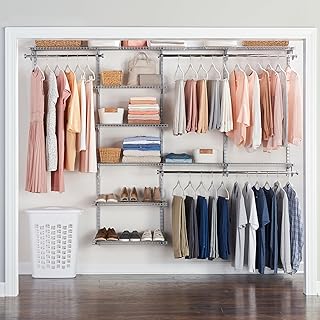
Rubbermaid Configurations Deluxe Custom Closet Kit 4-8 Ft.
If you want something that just works, Rubbermaid Configurations Deluxe Custom Closet Kit 4-8 Ft. Adjustable is a safe bet (81 reviews, 4.5 stars).
4. Categorize and Color-Code for Quick Outfit Selection

Organizing your clothes by category and color isn’t just for retail stores. It’s a practical way to save time. Organize your clothes first by category (dress shirts, casual shirts, pants, suits). Then, organize by color within each category, moving from lightest to darkest. Erin Hogue from The Container Store recommends this visual organization method, and I completely agree.
I used to just shove clothes wherever they fit. Finding a specific navy blue polo in a sea of black t-shirts took ten minutes of digging. Now, walking into a color-coded closet feels incredibly calming. The visual gradient from crisp white to deep charcoal grey is satisfying to look at. A common mistake is mixing clothes haphazardly. It makes finding items impossible and leads to daily frustration. To keep these sections distinct, use closet rod dividers. The Target Brightroom Closet Rod Dividers cost $5.00 for a pack of five. You can label them with a permanent marker. It’s a tiny investment that prevents your casual flannels from bleeding into your formal dress shirts.
5. Utilize Drawer Dividers for Small Items

Let’s talk about the sock drawer. Opening a drawer and seeing a rat king of black dress socks mixed with white gym socks is stressful. It usually smells faintly of old fabric softener and stale cotton. You need to implement expandable drawer dividers or small containers within your drawers for socks, underwear, ties, and pocket squares. You might also like: 20 Beautiful Aesthetic Home Makeover You Can Try Today
I tried just folding things neatly without dividers, but after three days, the drawer always reverted to a messy soup of fabric. You’re going to want clear acrylic drawer organizers. The Container Store Expandable Acrylic Drawer Dividers cost $19.99 for a set of two. They snap into place with a satisfying click and hold firm. Use them to keep subcategories separate. Keep your thin, ribbed dress socks completely away from your thick athletic socks. Pull-out drawers with these exact dividers are a huge trend for cutting clutter. When everything has a rigid boundary, you can’t just toss things in randomly. It forces you to maintain the system you’ve built. You might also like: 15 Clever Kitchen Small Space Ideas That Changed Everything
6. Integrate Dedicated Accessory Storage

Belts and ties need their own dedicated home. I learned this the hard way after stepping on a heavy metal belt buckle in bare feet at six in the morning. It hurt terribly. You’re going to use specific organizers for belts, ties, and watches. Don’t just roll them up and stuff them in a random shoe box. You might also like: 15 Clever DIY Easy Home Decor to Inspire Your Next Project
Consider a door-mounted or wall-mounted accessory rack. The InterDesign Classico Tie and Belt Rack costs $24.99 on Amazon and helps leather belts keep their shape without cracking. If you want a more integrated, high-end look, a John Louis Home Sliding Belt & Tie Rack starts around $32.50. You can mount it directly to your wooden closet system, and it slides out smoothly on metal tracks, offering 7 to 10 arms for storage. For watches and cufflinks, velvet-lined drawer inserts are incredible. The soft, plush texture of the velvet protects glass watch faces from scratching. I’ve found that when accessories have a specific, visible display spot, you’re much more likely to actually wear them instead of defaulting to the same brown belt every day.

5 Tier Closet Hanging Organizer
If you want something that just works, 5 Tier Closet Hanging Organizer is a safe bet (13 reviews, 4.5 stars).
7. Opt for Angled Shoe Shelves for Visibility and Accessibility

Instead of flat shelves, store your shoes on slightly angled shelves. This makes them look like they’re on a premium display in a high-end boutique. It allows for quick visual scanning and easy access. This is especially important for larger men’s shoe sizes (like size 13 or 16), which often hang awkwardly off the edge of standard 12-inch flat shelves.
I used to just line shoes up on the floor. I’d constantly find scuff marks on the leather from them being kicked around. Smelling stale leather from a pile of crushed dress shoes is not pleasant. Angled shelving changes everything. For less frequently worn pairs or expensive sneakers, use drop-front shoe boxes on your higher shelves. The Container Store Large Drop-Front Shoe Boxes cost $69.99 for a case of six. The clear acrylic lets you see exactly what’s inside, and the magnetic front door clicks shut securely, keeping dust out. Boutique-style shoe walls with graduated, angled shelving are a massive trend right now because they focus entirely on visibility and protection.
8. Incorporate a Built-in or Hidden Hamper

To prevent the dreaded pile of dirty clothes on the floor (or the classic clothes chair), you must integrate a multi-slot hamper directly into your closet design. If the hamper isn’t physically inside the closet where you undress, you won’t use it. I spent years picking up dirty socks off the bedroom floor before I finally moved the hamper into the closet space.
You need a three-slot laundry sorter to separate lights, darks, and dry cleaning immediately. This streamlines your entire laundry routine. The Wayfair Basics 3-Bag Laundry Sorter costs $49.99. It features thick canvas bags that lift out easily. The canvas has a rough, durable texture that holds up to heavy jeans and damp gym towels. A major mistake is using a single-bin hamper. When you use a single bin, you have to dump all the dirty clothes out on the floor on laundry day to sort them, which just creates another mess. Sort as you drop. It’s a tiny habit change that keeps the closet floor completely clear.
9. Essential Mens Closet Organization for Formalwear

You need to dedicate a specific hanging section strictly for suits, blazers, and expensive dress shirts. These items need enough space to breathe. If you cram wool suits together tightly, the natural fibers compress, and you’ll end up with permanent, sharp wrinkles that are a nightmare to steam out. Ensure you have adequate hanging space with at least 42 inches of vertical clearance.
I once found a tiny moth hole in my husband’s $400 wool suit because we stored it in a damp, cramped corner. It was a frustrating waste of money. For high-end fabrics, you need proper care. Buy real cedar wood to repel pests naturally. I buy the Household Essentials Cedar Blocks from Sprouts. A 24-pack costs $9.99. The faint, woodsy smell of natural cedar is incredibly refreshing compared to chemical mothballs. Place these blocks on the shelves directly above your suits. For seasonal formalwear, use breathable cotton garment bags. Avoid cheap plastic dry-cleaning bags at all costs. Plastic traps moisture and causes yellowing over time. Let your good clothes breathe.

Ulif E10 Clothes Rack(With Stretchable Hanger
If you want something that just works, Ulif E10 Clothes Rack(With Stretchable Hanger Rod)Freestanding Clothin is a safe bet (951 reviews, 4.5 stars).
10. Embrace Modular Closet Systems for Flexibility

For ultimate adaptability, you should invest in a modular closet system. Systems like Elfa Décor from The Container Store or Rubbermaid Configurations allow you to reconfigure shelves, rods, and accessories as your wardrobe needs change. This adaptability is a key trend for 2026.
I once built a fixed wooden shelf in a closet and immediately regretted it when winter coats didn’t fit underneath. Ripping out glued wood is a nightmare. Modular systems use metal tracks that let you snap shelves up or down in one-inch increments. If you buy taller boots or longer coats next season, you just move the shelf. The Gymax Custom Closet Organizer Kit costs around $199.99 at Walmart and is fully adjustable for closets three to six feet wide. The Rubbermaid Configurations kit costs $135.99 at Target. They feel incredibly sturdy once anchored to the wall studs. You’re never locked into a single layout. When your wardrobe evolves, your closet structure can easily evolve right along with it.
11. Implement Smart Lighting Solutions

You can’t organize what you can’t see. Most closets have a single, dim bulb on the ceiling that casts harsh shadows. You need to upgrade your closet lighting with motion-sensor LED strip lights along the shelves and hanging rods. This enhances visibility and adds a modern, polished look that makes getting dressed feel like a luxury experience.
I remember trying to tell a navy blue suit jacket from a black one in the dark. I walked out into the sunlight and realized I looked ridiculous. Good lighting fixes this instantly. Homeowners are completely expecting LED accents and motion-activated lighting in modern spaces. I bought the GE Motion-Activated LED Light Strips at Target for $24.99. They run on batteries, so you don’t need an electrician. You just peel off the sticky backing and press them under the shelves. The bright, cool-white light clicks on automatically the second you open the door. It completely eliminates dark corners where clutter tends to hide.
12. Create a Scoring Method for Decluttering Tough Decisions

When you’re decluttering, it’s easy to get stuck on items you’re unsure about. You need a scoring method. Assign points from one to ten based on fit, style, comfort, versatility, how often you wear it, and how you feel in it. Items with low scores can be confidently removed. This logically overcomes emotional attachments or those annoying just-in-case dilemmas.
I used this method to force my husband to throw out an old college t-shirt. It felt like rough tissue paper, had holes in the armpits, and smelled faintly of old basement, but it held memories. I made him score it. Fit? Two. Style? One. Comfort? Four. It failed the test miserably. I grabbed a pack of Post-it Notes for $3.99 at Kroger and we labeled three piles on the bed: Keep (Score 8-10), Maybe (Score 5-7), and Donate (Score 1-4). Putting a hard number on a piece of clothing removes the guilt of letting it go. If it’s not at least an eight, it doesn’t deserve real estate in your closet.

AWTATOS Cube Storage Organizer Storage 12 Cube Bookshelf
If you want something that just works, AWTATOS Cube Storage Organizer Storage 12 Cube Bookshelf DIY Plastic C is a safe bet (28 reviews, 4.5 stars).
13. Organize by Hobby or Activity for Specialized Gear

If you play golf, go to the gym, or collect specific sports team jerseys, you need to dedicate a specific section of your closet or a specific drawer just for that gear. This prevents mixing sweaty, specialized fabrics with your everyday work clothes and allows for quick retrieval when you’re rushing to an activity.
I used to find damp, stretchy gym shirts mixed in with clean cotton button-downs. It was gross. The textures don’t mix, and the smells certainly don’t mix. Now, all athletic wear lives in its own designated zone. For out-of-season gear, like heavy ski pants or thick hunting socks, use plastic storage bins on the highest shelves. The STERILITE 66 Qt Clear Plastic Storage Box costs $9.98 at Walmart. The plastic is thick, and the lid snaps shut tightly to keep dust out. Keeping your hobby gear quarantined means you won’t accidentally grab a moisture-wicking golf polo when you’re trying to pack for a formal business dinner.
14. Utilize Open Shelving for Everyday Essentials

You need to incorporate open shelving within your closet for frequently used everyday carry items. Things like cologne bottles, leather wallets, watches, and gym bags need a designated landing zone. This keeps your essentials within easy reach and maintains a neat appearance, preventing them from cluttering up your bedroom dresser or kitchen counter.
I once knocked over a bottle of expensive cologne that was balancing precariously on a crowded wire shelf. It shattered, and the overpowering scent of sandalwood lingered in the house for three weeks. It was a very expensive mistake. Now, we use a flat, solid wooden shelf dedicated entirely to these items. I placed an Acrylic Display Tray (which I grabbed for $15.99 at Target) right in the center. The smooth acrylic catches any minor spills and perfectly corrals loose change, collar stays, and keys. When you empty your pockets at the end of the day, having a specific, flat tray waiting for you prevents that random scattering of pocket junk.
15. Maintain a One In, One Out Rule

To prevent future clutter from ruining all the hard work you’ve just done, you have to adopt a strict one in, one out policy. Every time you purchase a new clothing item, commit to removing an existing item from your closet. This ensures your wardrobe remains highly curated and prevents overstuffing.
I used to be terrible at this. I’d buy groceries at Whole Foods and somehow sneak a new clearance jacket or sweater into the house, cramming it into a closet that was already bursting. The friction of pulling a shirt out of a tightly packed row is incredibly frustrating. If you buy a new Goodfellow & Co Men’s T-Shirt for $9.00 at Target, an old, faded t-shirt has to go into the donation bin immediately. No exceptions. This rule forces you to evaluate whether a new purchase is actually better than what you already own. It completely stops the slow, creeping accumulation of clothes that ruins most organizational systems.
I’m so glad you’re taking the time to fix your space. Implementing these tips takes a weekend, but the daily peace of mind is worth every second of effort. You won’t regret tossing those wire hangers. If you found this helpful, I’d love it if you pinned this article to your home organization boards so you can reference these exact product prices and measurements later!

Ulif E1 Heavy Duty Closet Garment Rack
Ulif E1 Heavy Duty Closet Garment Rack has been one of the most consistently praised picks in this category. 14 reviewers averaged 4.5/5.
Frequently Asked Questions
What is the best way to organize a men’s closet?
The best approach is using double hanging rods to maximize vertical space, upgrading to uniform wooden or velvet hangers, and color-coding clothes by category. Utilizing drawer dividers for small items like socks and ties is also crucial.
How much vertical space is needed for hanging men’s suits?
You need at least 42 inches of vertical clearance for men’s suits, blazers, and long dress shirts. This prevents the fabric from bunching up on the floor or shelf below, which causes permanent wrinkles.
How do I declutter my closet effectively?
Try the turned hanger trick. Turn all hangers backward, and after you wear and wash an item, hang it facing forward. After six months, donate anything still facing backward. You can also use a 1-10 scoring system for tough decisions.
What kind of hangers are best for men’s clothing?
Solid wooden hangers are best for heavy suits and winter coats because they support broad shoulders. For standard shirts and pants, slimline velvet hangers are ideal because they maximize space and prevent clothes from slipping.
