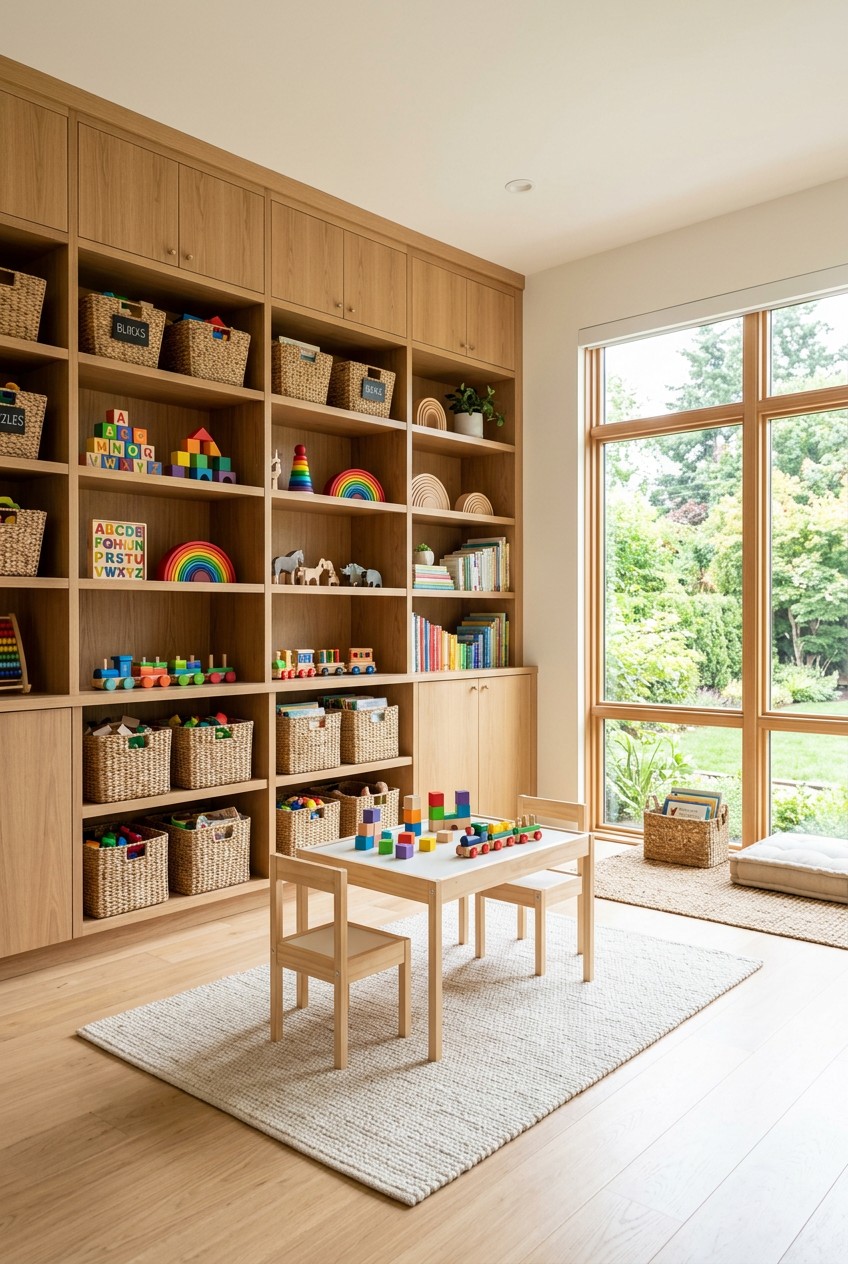
What’s Inside
- Embrace the IKEA TROFAST System for Modular Versatility
- Implement a Montessori-Inspired Toy Rotation
- Prioritize Clear, Stackable Bins for Visibility
- Maximize Vertical Space with Wall-Mounted Solutions
- Designate Activity Zones within the Playroom
- Use Fabric Bins and Baskets for Soft Items
- Involve Children in the Organization Process
- Label Everything with Pictures for Young Children
- Repurpose Old Crates for Unique, Sustainable Storage
- Utilize Under-Bed Storage for Less-Used Toys
- Avoid the “Black Hole” Toy Box Mistake
- Store Board Games in Zippered Pouches
- Employ a “One In, One Out” Policy
- Use Stuffed Animal Hammocks for Vertical Plushie Storage
Last Tuesday at 2 AM, I stepped directly onto the jagged plastic wing of a rogue Batman action figure in the dark. I dropped my water glass on the carpet, cursed silently, and realized my toy room storage system was a complete disaster. It’s a humbling experience to get defeated by a six-inch superhero while you’re just trying to walk to the kitchen. I’d spent hundreds of dollars on cute wicker baskets that just became dumping grounds for mismatched LEGOs, sticky pieces of playdough, and broken crayons. The smell of old juice boxes lingering at the bottom of a toy chest was enough to make me snap. After that midnight incident, I spent three weeks testing every organizing method I could find. I’m sharing the exact strategies that actually worked for my chaotic household. You don’t need a massive custom closet or an unlimited budget to fix this. I’ve wasted money on the wrong bins so you don’t have to. Here are fourteen highly specific, budget-friendly ways to reclaim your floor space and your sanity.
1. Embrace the IKEA TROFAST System for Modular Versatility

I’ve tried a lot of expensive shelving units, but the IKEA TROFAST system is the only one that survives my kids. I bought the light white stained pine frames last month for $59.99 each. The beauty is in the plastic bins. You slide them right into the grooved tracks on the wood. I use the shallow bins (measuring exactly 16 1/2″ x 11 3/4″ x 3 7/8″) for Hot Wheels and the deeper 9-inch bins for bulky wooden blocks. They cost between $4.00 and $8.00 a piece. A typical setup runs about $110.99 total. Honestly, I resisted buying this for a year because everyone on the internet has it. That was a stupid mistake. It’s popular because it works.
My kids can pull a bin completely out, drag it across the rug, and slide it back in. I actually caught my son sorting his blue LEGOs into a small white bin yesterday. I almost cried. Don’t buy the cheap knockoffs at Walmart. I tried a cheaper version and the flimsy plastic tracks snapped within a week, sending a cascade of marbles crashing onto the hardwood floor. Stick to the actual IKEA brand. It’s sturdy enough to handle a toddler sitting on it, and the smooth wood finish wipes clean easily when they inevitably draw on it with markers. It’s the ultimate foundation for toy room storage.
2. Implement a Montessori-Inspired Toy Rotation

I used to leave every single toy out on display. My living room looked like a preschool exploded. My kids wouldn’t play with anything for more than two minutes. They’d just dump a bucket, stare at it, and move on. Then I learned about toy rotation. You take eighty percent of the toys and hide them. Seriously. I pack them into 18-gallon Sterilite opaque totes (they cost $9.98 at Walmart) and shove them in the guest room closet. I only leave out 8 to 12 toys at a time. Every three weeks, I swap them out.
The first time I did this, my daughter thought she got brand new toys. She played independently with a chunky wooden puzzle for forty-five minutes. It’s wild how visual overstimulation kills their attention span. You don’t need a huge house to do this. Just use opaque bins so they can’t see the hidden stash. I once made the mistake of using clear bins for the rotation stash in the basement. My kids found them, recognized the bright plastic colors through the sides, and dragged everything back upstairs. Keep the out-of-rotation stuff completely hidden in dark gray or solid white plastic. Your daily cleanup will take five minutes instead of an hour.
3. Prioritize Clear, Stackable Bins for Visibility

Kids play with what they see. I learned this the hard way after buying expensive, opaque linen boxes from Target. They looked gorgeous on the shelf. But my kids just dumped every single box onto the floor to find one specific dinosaur. It was infuriating to clean up piles of dumped toys every afternoon. Now, I strictly use clear plastic containers for small items. I’m obsessed with the Translucent SmartStore Totes from The Container Store. They range from $7.99 for the tiny 1-quart ones to $25.99 for the massive sizes. The latches clip down tightly so if a bin drops, you aren’t picking up 400 tiny beads from the carpet. Trust me on this.
I use the medium $12.99 size specifically for Magna-Tiles. Because they’re completely clear, my kids can just point to what they want. You can stack them four high without the plastic buckling. I also keep a few small clear bins in the kitchen. When I’m cooking dinner, I toss a bin of crayons on the counter. I actually buy my clear bins right after I grab groceries at Whole Foods since the stores are right next to each other in my town. Skip the cloudy or frosted plastic bins. You want crystal clear visibility so your kids never have to guess what’s inside.

Ukeetap Multi-Purpose Pull-Out Storage Organizers
Honestly, Ukeetap Multi-Purpose Pull-Out Storage Organizers surprised me — sturdier than it looks in the photos, and over 52 buyers gave it 4.5 stars.
4. Maximize Vertical Space with Wall-Mounted Solutions

Floor space is precious. If you’re tripping over dress-up clothes and jump ropes, you need to use your walls. I built a massive wall-mounted pegboard system last fall. It cost me exactly $34.50 in supplies from Home Depot. I bought a 4-foot by 8-foot white pegboard panel and cut it down. You mount it with some basic 1×2 inch furring strips so there’s a gap behind it for the hooks. I bought a 50-piece metal hook set on Amazon for $14.99. We hang everything on it. Princess dresses, tiny wire baskets of markers, scissors, and little buckets of stickers. It gets the annoying, oddly shaped stuff off the floor.
I did mess this up at first. I didn’t anchor the furring strips into the wall studs. My son pulled on a heavy velvet superhero cape and ripped a chunk of drywall out. The sound of tearing drywall is horrifying. Always use heavy-duty drywall anchors or find the studs. It’s an afternoon project that completely clears your floor. I even hung a little metal basket just for those tiny plastic food pieces from their play kitchen. It looks like a miniature retail store display, and the kids love picking things off the hooks.
5. Designate Activity Zones within the Playroom

A playroom shouldn’t just be one giant dumping ground. You need specific zones. I divide our space into a reading nook, an arts and crafts station, and a messy building zone. I use low bookcases to create physical barriers between these areas. The Crate & Barrel Rue Wood Cube Bookcases are my absolute favorite for this. They come in different sizes, but I use the 3-cube version ($199.00) as a divider for the reading corner. It’s exactly 15.5 inches deep. It’s low enough that I can see over it, but it creates a cozy little boundary for the kids. You might also like: 20 Lovely DIY Home Makeover That Make a Real Difference
I put a fluffy $40 shag rug from Target in the reading zone to make it visually distinct. The building zone gets a flat, low-pile rug so tall LEGO towers don’t tip over. When kids know exactly where an activity happens, cleanup is much faster. They know the crayons don’t cross the invisible line into the block area. It took a few weeks of constantly reminding them, but now it’s automatic. Don’t push all your furniture against the walls. Use a low, heavy shelf to cut the room in half. It instantly makes a large room feel purposefully designed. You might also like: 20 Beautiful Aesthetic Home Makeover You Can Try Today
6. Use Fabric Bins and Baskets for Soft Items

Plastic bins are great for hard toys, but they look terrible holding stuffed animals. For soft items, you need fabric bins or thick woven rope baskets. They add soft texture to the room and hide the awkward, lumpy shapes of plushies. I buy the Pillowfort Kids’ Large Woven Toys Storage Baskets from Target. They usually cost around $25.00 to $35.00 depending on the size. I have a massive 18-inch cream-colored one sitting next to the couch. It holds about fifteen stuffed dogs and a bunch of fleece blankets. You might also like: 15 Clever Kitchen Small Space Ideas That Changed Everything
You can squish these soft baskets into tight corners, and they don’t scratch the baseboards when the kids drag them across the room. I’ve tried cheap wire baskets for stuffed animals before. That was a total disaster. The cheap metal wire bent, and the stuffed animals looked like they were trapped in a tiny jail. Stick to thick cotton rope or sturdy felt. Just be careful with lighter colors. I bought a pure white rope basket and someone spilled a $3.49 bottle of Kroger apple juice on it. The sticky brown stain never came out. Go for charcoal gray or navy blue to hide the inevitable dirt.
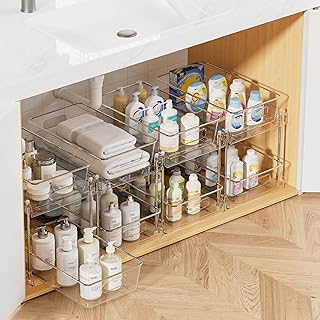
Vtopmart 4 Pack Bathroom Organizer
Vtopmart 4 Pack Bathroom Organizer has been one of the most consistently praised picks in this category. 64 reviewers averaged 4.5/5.
7. Involve Children in the Organization Process

Here’s a hard truth. If you organize the playroom while your kids are sleeping, they will destroy it by 9 AM the next morning. I used to stay up until midnight color-coding blocks and arranging books by height. The next day, my kids couldn’t find anything and just dumped every bin to look for a toy car. You have to involve them in the process. Last month, I sat on the floor with my four-year-old and a huge pile of toy cars. I held up a blue bin and a red bin. I asked him, “Should the big trucks go in the blue box or the red box?” He chose red.
Because he made the decision, he actually puts them back in the red box. It gives them a sense of ownership over their space. Yes, it takes three times as long to organize when they help. Yes, they will get distracted and start playing with the toys you’re trying to sort. But it’s worth it. I bribe mine with a handful of Trader Joe’s organic fruit snacks ($3.99 a box) to keep them focused on the task. Don’t dictate the system to them. Let them choose where the dinosaur figures live. If it makes sense to their little brains, they’re much more likely to maintain it.
8. Label Everything with Pictures for Young Children

Text labels are entirely useless for a three-year-old. I spent hours printing beautiful, minimalist black text labels on my expensive label maker. My kids completely ignored them because they can’t read. You have to use picture labels if you want them to clean up independently. I bought a pack of 50 clear plastic label sleeves on Amazon for $12.99. I just print out a color photo of a LEGO brick, a Barbie, or a wooden train, and slide it into the sleeve. Then I tape it to the front of the bin with heavy-duty clear packing tape.
For board games, I literally take sharp scissors and cut the logo right off the cardboard box. I tape that exact cardboard square onto the storage pouch. It’s so simple. My youngest can look at the shelf, see the picture of the green dinosaur, and know exactly where his T-Rex belongs. It completely eliminates the “Mom, where does this go?” whining that happens every night at 7 PM. If you don’t have a color printer, just draw a crude picture with a black Sharpie on a piece of masking tape. It doesn’t have to be pretty or Pinterest-perfect. It just has to be highly visual.
9. Repurpose Old Crates for Unique, Sustainable Storage

I love the look of natural wood, but custom shelving is wildly expensive. Instead, I repurpose old wooden apple crates. You can usually find these at craft stores or vintage flea markets for about $15.00 each. I bought six of them at a local antique fair last summer. I spent an hour sanding down the rough edges with 120-grit sandpaper so nobody gets a painful splinter. Then, I stacked them horizontally and vertically to create a custom, rustic shelving unit. I secured them together with 2-inch wood screws.
It cost me less than $100.00 total. They are perfect for displaying oversized picture books and chunky wooden toys that don’t fit in standard plastic bins. The deep wood tones make the playroom look less like a sterile plastic factory and more like an actual cozy room in my house. Just make sure you anchor the top crate to the wall. I skipped this step initially. My heavy orange cat jumped on top of the crates, and the whole stack wobbled terrifyingly. Always anchor your furniture, even if it’s just a few crates. It’s a cheap, sustainable way to add character to the space while gaining valuable shelf room.

OKZEST Utility Slim Storage Cart
A dependable everyday pick — OKZEST Utility Slim Storage Cart pulls in 17 ratings at 4.5 stars. Not flashy, just solid.
10. Utilize Under-Bed Storage for Less-Used Toys

If you don’t have a spare closet for your toy rotation stash, look under the beds. The space under a standard twin bed is a massive storage opportunity that most people completely waste. I use flat, long storage bins that slide right under the bed frame. I bought a 3-pack of gray fabric under-bed bins with clear zippered lids on Amazon for $17.99. They measure exactly 14.9 inches long by 9.8 inches wide by 9.8 inches high. They are perfect for storing out-of-season clothes or the bulky toys we are currently hiding.
The clear plastic lid is crucial because I can slide it out halfway and see exactly what’s inside without unzipping it. I keep all the messy, noisy electronic toys under my bed where the kids can’t reach them. I used to just shove loose toys under the bed without bins. They got covered in an incredibly gross layer of gray dust and dog hair. It took me an hour to clean a sticky plastic piano with wet wipes. Use bins with tight zippers or latching lids. It keeps the dust out and makes it so much easier to pull the whole collection out when it’s time to rotate.
11. Avoid the “Black Hole” Toy Box Mistake

I strongly hate traditional wooden toy boxes. When I had my first baby, my mother-in-law gifted us a beautiful, heavy oak toy chest. It looked stunning in the nursery. It was also the worst storage solution I’ve ever used. Large, deep toy boxes are just black holes. Kids toss everything in there without thinking. The heavy wooden blocks crush the delicate cardboard books at the bottom. Small pieces filter down to the very bottom corners where they are lost forever.
To find one specific toy, my son would have to dig through two feet of junk, usually tossing items over his shoulder onto the carpet. We finally got rid of it. I replaced it with a series of smaller, categorized 11-inch fabric cube bins from Target. They cost $10.00 each. Now, the cars are in one bin, the blocks are in another. Nothing gets crushed. If you have a giant toy box, stop using it for toys immediately. Use it to store extra winter blankets or bulky pillows at the foot of your bed. Do not let it eat your kids’ toys. It creates more mess than it solves.
12. Store Board Games in Zippered Pouches

This is my absolute favorite trick for toy room storage. Board game boxes are a massive scam. They are eighty percent empty air, and the cardboard corners always rip after three uses. We had a stack of fifteen games that took up an entire shelving unit. Half the boxes were crushed because my kids stepped on them. Last January, I threw all the boxes in the recycling bin. I bought a 14-pack of heavy-duty mesh zippered pouches on Amazon for $15.99. They are 13.5 by 9.5 inches, basically the size of a standard piece of printer paper.
I dumped the Monopoly board, the cards, the tiny silver pieces, and the paper instructions into one pouch. I cut the Monopoly logo off the original box and taped it to the front. I did this for every single game. Those fifteen massive boxes now fit into one single woven basket. It freed up an unbelievable amount of shelf space. I even took a pouch of Connect 4 to a restaurant last week. We just tossed it in my canvas tote bag. Seriously, throw away your bulky board game boxes today. You won’t regret it.

Sevenblue 3 Pack Under Sink Organizers
If you want something that just works, Sevenblue 3 Pack Under Sink Organizers is a safe bet (39 reviews, 4.5 stars).
13. Employ a “One In, One Out” Policy

You can’t out-organize too much stuff. If you keep buying toys, no amount of clever bins will save your sanity. We strictly enforce a “one in, one out” rule in my house. If my kids get a new toy for their birthday, they have to pick an old toy to donate. It sounds harsh, but it’s incredibly effective. We keep a medium-sized cardboard box in the garage. When it gets full, we drive it over to the local donation center. It teaches them that they can’t just hoard plastic junk forever.
Last Christmas, my daughter got a massive $45.00 Barbie Dream Camper from Walmart. Before she could open the plastic packaging, we sat down and picked out three old, broken dolls to throw away and one wooden puzzle to donate. She didn’t even cry. She was so excited about the camper that she happily handed over the puzzle. If you don’t do this, your house will slowly fill up until you’re drowning in plastic clutter. I grab extra cardboard boxes when I buy bulk paper towels from Costco. Keep one handy in the garage so you can toss things in the moment you realize they aren’t playing with them anymore.
14. Use Stuffed Animal Hammocks for Vertical Plushie Storage

Stuffed animals multiply when you aren’t looking. I swear we started with three teddy bears, and now we have a massive zoo. When the woven baskets overflow, you need to use the upper corners of your room. I bought the Lilly’s Love Stuffed Animal Hammock Storage 2-Pack for $14.95. It’s a stretchy white mesh triangle that you anchor into the corner of the wall. I hung ours about five feet off the ground. You just toss the plushies up there. It holds an absurd amount of weight.
I currently have about twenty-five colorful Squishmallows shoved into one hammock. It keeps them completely off the floor but still visible. It also creates a really cute, colorful display in the corner of the room. I did hang it too low the first time. My toddler grabbed a dangling monkey leg and pulled the entire hammock out of the drywall. Learn from my mistake. Hang it high enough that they can’t grab the bottom, and use heavy-duty screw anchors. It’s the absolute cheapest way to reclaim your floor space from a mountain of soft toys. Plus, the mesh material doesn’t collect dust like a solid shelf would.
That’s it. Fixing your toy room storage isn’t about buying a perfectly matching, thousand-dollar custom closet system. It’s about realistic, durable solutions like clear plastic bins, mesh pouches, and heavy-duty IKEA shelves. Start small. Pick one corner of the room this weekend, grab some trash bags for broken toys, and start sorting. I promise you’ll feel a massive weight lift off your shoulders once you can walk across the carpet without stepping on a toy car. If these tips helped you, please pin this article to your favorite home organization board so you can find it later when you’re ready to tackle the next messy room!
Frequently Asked Questions
How do I organize a toy room on a budget?
Repurpose cardboard boxes, use cheap zippered pouches for board games, and buy clear bins from discount stores. You don’t need expensive custom closets to create a functional system.
What is the best way to store small toy pieces?
Store tiny pieces like LEGOs or beads in clear, stackable plastic bins with tight latching lids. This prevents spills and lets kids see exactly what’s inside without dumping the container.
How often should I rotate toys?
I recommend rotating a batch of 8 to 12 toys every two to four weeks. Keep the out-of-rotation toys completely hidden in opaque bins in a closet or under a bed.
How can I hide toy room clutter in a living room?
Use attractive woven rope baskets or fabric bins that match your living room decor. You can also use low bookcases with opaque fabric cubes to conceal brightly colored plastic toys.
