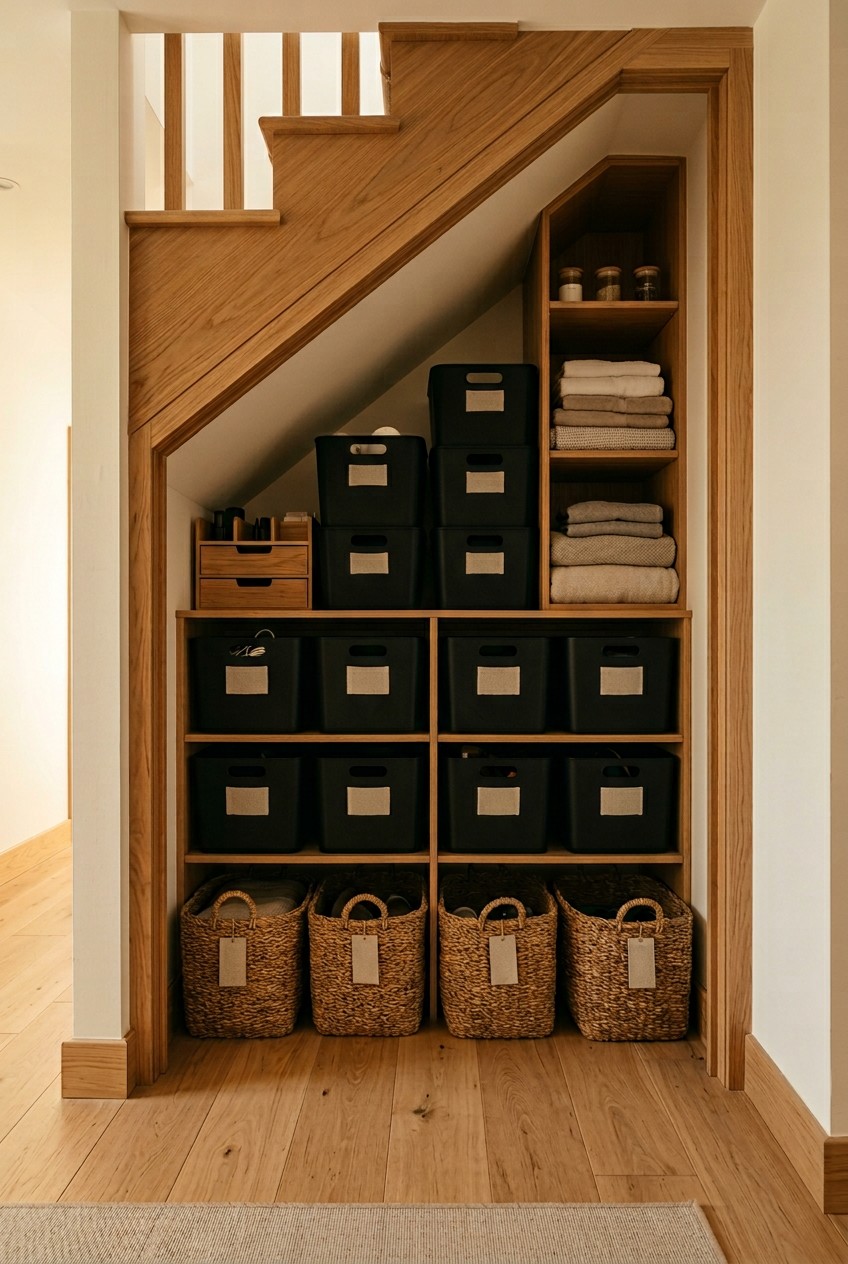
What’s Inside
- Empty It Out Before You Buy Anything
- Invest in Bespoke Pull-Out Systems for Under Stairs Closet Organization
- Use Modular Systems for Flexibility
- Install Motion-Sensor LED Lighting
- Maximize Vertical Space with Wall-Mounted Solutions
- Create a Dedicated Mudroom Zone
- Design a Functional Pantry or Dry Bar
- Incorporate Hidden Storage with Concealed Doors
- Utilize Door-Back Storage for Under Stairs Closet Organization
- Create a Cozy Reading Nook or Mini Library
- Implement Smart Storage for Specific Bulky Items
- Address Humidity with a Mini Dehumidifier
- Upgrade with Fluted Glass for a Modern Aesthetic
- Build a Dedicated Pet Supply Headquarters
I’m still nursing a bruised left toe from last Tuesday. I opened the tiny, awkward door in my hallway to grab a broom, and a rogue 32 oz bottle of Mrs. Meyer’s Lemon Verbena cleaner plummeted off a wobbly wire shelf directly onto my bare foot. That sharp, stinging pain was my wake-up call. My under-stairs closet was a hazard. I’d just shoved things in there for three years, hoping the door would stay shut. It smelled like stale dust and old sneakers, and the floor was a graveyard of reusable grocery bags. I knew I had to fix it. Let’s talk about how to make this space work. Organizing that sloped area can unlock massive storage potential if you stop treating it like a dumping ground. I’ve spent the last few weeks testing layouts, measuring weird angles, and finding the exact products that fit. Here are my best strategies for taking back that square footage. Trust me on this.
1. Empty It Out Before You Buy Anything

I can’t stress this enough. Prioritize decluttering first. The first time I tried fixing my under-stair space, I drove straight to Target. I dropped $145.89 on a matching set of 12 Brightroom woven baskets ($12.00 each) without measuring a single angle. I got home, and exactly zero of them fit under the sloped ceiling. A total waste of time. I had to lug them back to the store in the pouring rain. Before buying anything, empty the space completely. Pull every single item out. Categorize everything and be ruthless. Get rid of anything that doesn’t belong or isn’t used. As expert organizer Shifrah Combiths advises, clear the space entirely. This prevents organizing clutter and ensures you only store what’s needed. I found four dried-out bottles of Gorilla Glue, a broken Swiffer handle, and a single roller skate. Throw that junk away. Once it’s empty, wipe down the walls with a damp microfiber cloth and vacuum the corners. You need a blank slate. Only then can you see the angles and measure the depth accurately. It’s tedious work. Your living room will look like a disaster zone for a few hours. But it’s the only way to get a functional result. Don’t skip this, or you’ll just end up with prettier clutter shoved into the same dark corners.
2. Invest in Bespoke Pull-Out Systems for Under Stairs Closet Organization

If you’re tired of crawling on your knees to reach the back, you need to embrace bespoke pull-out systems. Fixed shelves in a deep, angled space are a nightmare. Things just get shoved to the back and die there. Last month, I helped a client in a historic home fix her hallway storage. Her space was 48 inches deep. We couldn’t reach anything past the first 12 inches without a flashlight and a prayer. Instead of fixed shelves, invest in custom pull-out drawers. These can be designed to fit the exact angles of your space. This maximizes every inch and stops items from getting lost. For instance, IVYO Carpentry in the UK offers custom-made drawers starting from £1150 to £3200, depending on needs. Yes, that’s a steep price tag. But it’s worth it if you own your home. If you’re in the US, local cabinet makers can build similar heavy-duty sliders for around $1,500. You just pull the handle, and the entire 48-inch deep shelf rolls out into the hallway. This ensures full view and easy access. No more using a flashlight to find paper towels. You can clearly see every item. It makes a massive difference in daily frustration. Skip the cheap plastic drawer towers. They won’t hold the weight of heavy cleaning supplies and will just snap.
3. Use Modular Systems for Flexibility

Sloped ceilings are the enemy of standard shelving. You can’t just shove a rectangular bookcase in there. You need flexibility. Utilize modular systems. Brands like Elfa and IKEA offer options that adapt to awkward shapes. I personally swear by the Elfa system from The Container Store. Their epoxy-bonded steel components are durable. They’re infinitely adjustable, allowing you to move shelves or add rods as needs change. I bought a basic Elfa starter kit for $149.99 and customized it with three 16-inch deep wire shelves. IKEA’s PLATSA system is also designed for creating wardrobe walls or cabinets under stairs with various possibilities. The frames come in different heights, so you can step them down to match the angle of your stairs perfectly. The ClosetMaid SuiteSymphony system (around $160 at Home Depot) also offers a modular design that provides a custom-closet look on a budget. The beauty of modular pieces is that if you realize a shelf is two inches too high for your vacuum, you just unclip it and move it. You aren’t stuck with a permanent mistake. I tried building my own wooden shelves once. I miscalculated the height of my Bissell CrossWave by a single inch. I had to rip the whole shelf out, patch the drywall, and start over. Save yourself the headache and go modular from the start.

AMKUFO 6 Pack-Closet-Organizers-and-Storage
Honestly, AMKUFO 6 Pack-Closet-Organizers-and-Storage surprised me — sturdier than it looks in the photos, and over 52 buyers gave it 4.5 stars.
4. Install Motion-Sensor LED Lighting

Under-stairs closets are notoriously dark. They smell weird, and you can’t see anything past the first row. I used to keep a cheap plastic flashlight on the top shelf just to find my winter boots. It was ridiculous. You need smart lighting. Install motion-sensor LED lights to illuminate the space automatically when the door opens. Products like the HIBOITEC Motion Sensor Closet Light (around $10 to $20 on Amazon) or Tailcas Under Cabinet Kitchen Lights (a 3-pack is around $20 to $30) are lifesavers. They’re rechargeable, wireless, and easy to install. They provide 350lm to 6000K illumination, which is bright enough to read tiny labels. You just stick the magnetic strip to the ceiling or under a shelf, and the light snaps right onto it. When the battery dies after a few weeks, you pull it off and plug it into a USB charger. Integrated lighting is a key trend for 2026. It enhances usability and adds a luxurious feel to a dingy space. I stuck three of the Tailcas lights along the sloped ceiling. Now, the second I open the door, the whole space lights up like a showroom. I can actually read the labels on my cleaning supplies. Skip the hardwired lighting unless you’re doing a full renovation. These rechargeable strips are cheap, bright, and take five minutes to stick to the wall. You might also like: 20 Creative DIY Garage Organization Ideas That Changed Everything
5. Maximize Vertical Space with Wall-Mounted Solutions

The floor is probably covered in junk right now. Mine was a graveyard of reusable grocery bags, rogue tennis balls, and a broken mop. Don’t just use the floor. Use the walls to maximize vertical space. Install wall-mounted shelving, pegboards, or slatwall systems. The Gladiator GearWall panels are excellent for this. A two-pack of 4-foot panels costs about $54.99 at Lowe’s. They’re compatible with various heavy-duty hooks and baskets. This allows you to hang mops, brooms, vacuums, and even a clothes drying rack directly on the wall. This is crucial for awkward sloped ceilings where traditional shelves won’t fit. Consider mounting GearWall panels on at least two walls to maximize hanging space. I screwed a panel directly into the studs on the tallest wall of my closet. I bought the Gladiator deep hook ($11.98) specifically to hold my heavy Shark vacuum cleaner off the floor. Getting things off the floor is the biggest secret to making a small space feel larger. When you can see the baseboards, the closet instantly looks cleaner. Plus, you won’t trip over a Swiffer WetJet every time you try to grab a lightbulb. Just make sure you use a stud finder. Drywall anchors won’t hold the weight of heavy cleaning tools. I learned that the hard way when a loaded hook ripped a baseball-sized chunk of drywall out of my wall last summer. You might also like: 20 Cozy Aesthetic Organizing Ideas to Inspire Your Next Project
6. Create a Dedicated Mudroom Zone

If your closet is near your front door, you have a massive opportunity. Transform it into a mini mudroom. Most people just throw their coats on the banister or leave shoes in a messy pile. It looks terrible and creates stress. Instead, install coat hooks at varying heights. Place them at 40 inches for children and 65 inches for adults. This ensures everyone can reach their own gear. Below the coats, add shoe cubbies and bins for bags or umbrellas. If you have the depth, add a small 36-inch wide bench with storage underneath. To keep the shoe cubbies from turning into a dirt pit, I use IKEA’s SKOSTALL shoe organizer. It costs around £3 (or $3.99 in the US). You can use them in cubbies for individual shoe storage. They stack one shoe on top of the other, cutting the footprint in half. I bought ten of them last month at the IKEA in Burbank. They fixed my family’s shoe mountain. We used to spend ten minutes every morning hunting for matching sneakers while the kids yelled that they were going to miss the bus. Now, every pair has a specific spot. Just remember to add a small 2×3 foot washable rug inside to catch the mud and water dripping off winter boots. You might also like: 20 Stunning Tool Storage Organizing Ideas for a Fresh New Look
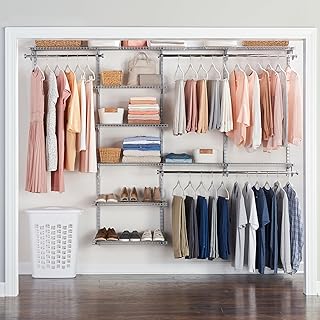
Rubbermaid Configurations Deluxe Custom Closet Kit 4-8 Ft.
If you want something that just works, Rubbermaid Configurations Deluxe Custom Closet Kit 4-8 Ft. Adjustable is a safe bet (81 reviews, 4.5 stars).
7. Design a Functional Pantry or Dry Bar

Sometimes the stairs are right next to the kitchen. If that’s your layout, turn the space into a pantry with narrow shelves for canned goods and dry ingredients. Or, make it a dry bar. A dry bar doesn’t require plumbing, making it a cost-effective upgrade. For a pantry, use clear acrylic bins and can holders. I get mine from The Container Store or Target. Target’s Brightroom multipurpose bins are around $5 to $20 depending on the size. I use the 10×10 inch clear bins ($12.00) to hold bags of rice, pasta, and snacks. Keeping items visible is mandatory in a deep space. If you use opaque bins, you’ll forget what’s inside and buy duplicates. I once found three unopened jars of marinara sauce hiding behind a solid white plastic bin. I had bought them at Whole Foods just weeks apart because I couldn’t see my inventory. It was a waste of $24. If you go the dry bar route, consider adding a 12-bottle wooden wine rack for a sophisticated touch. You can fit a small mini-fridge (around 17 inches wide) on the floor for sparkling water and mixers. It frees up space in your main kitchen cabinets. Just measure the depth carefully before buying a fridge. You need at least two inches of clearance in the back for the plug and proper ventilation, or the motor will burn out.
8. Incorporate Hidden Storage with Concealed Doors

We need to talk about the exterior. The standard hollow-core builder-grade door with a brass knob is boring and often ugly. For a sleek, minimalist look, especially trending in 2026, opt for concealed door panels. These are designed to blend with the surrounding architecture. Think of wood paneling that runs down the hallway and hides the closet door entirely. You push on a specific panel, and it pops open using hidden magnetic latches. This creates a clean appearance and hides clutter. It aligns perfectly with the design trend of seamless integration rather than visible storage. I saw this done beautifully at a client’s modern farmhouse in Austin. They used vertical shiplap down the entire staircase wall. The closet door was cut directly from the shiplap, with no visible hinges or doorknobs. It cost them about $850 in carpentry work, but the visual impact was stunning. It makes the hallway look much larger because your eye isn’t stopping at a cheap white door frame. If you can’t afford custom carpentry, you can achieve a similar vibe by painting the closet door and the trim the exact same color as your hallway walls. I did this in my own home using Sherwin Williams Alabaster (around $35 for a quart). It instantly camouflaged the awkward little door and made the hallway feel cohesive.
9. Utilize Door-Back Storage for Under Stairs Closet Organization

The back of the closet door is the most wasted real estate in your entire house. Don’t forget the inside of the closet door. Install an over-the-door organizer or mesh baskets for smaller items. This is the perfect spot for things like cleaning supplies, pet leashes, or a small watering can. Elfa offers incredible mesh baskets that can be hung on a residential door track. The Elfa Utility Door and Wall Rack system costs about $130 at The Container Store. It comes with a central spine and various sized baskets. Professional organizer Siân Pelleschi emphasizes making sure storage is easy to access and easy to put back. If you have to dig through a bin on a low shelf to find the glass cleaner, you won’t put it away. I have an Elfa rack on my closet door right now. The top basket holds my microfiber cloths. The middle holds three 16 oz spray bottles of Method all-purpose cleaner ($3.99 each at Target). The bottom holds rolls of dog waste bags. It keeps all those tiny, annoying items off the main shelves. One serious warning though: make sure you measure the clearance between the closed door and the first shelf inside. I installed a deep basket once, and the door wouldn’t shut. I had to unscrew the whole track and move it.

VIPEK V5 Heavy Duty Clothes Rack
If you want something that just works, VIPEK V5 Heavy Duty Clothes Rack is a safe bet (56 reviews, 4.5 stars).
10. Create a Cozy Reading Nook or Mini Library

If your space allows, and you don’t desperately need the storage for mops and vacuums, get creative. Build in a small bench with cushions and floating shelves for books. This transforms an awkward, dusty space into a charming, functional area. I helped a friend do this last year. We ripped off the closet door entirely and finished the drywall inside. We installed modular shelving units to hold her massive paperback collection. We found a great wooden bookcase storage unit with 9 boxes on Etsy for around $234.55. It was customized to fit the sloped ceiling perfectly. We added a custom 3-inch thick foam cushion covered in dark green velvet ($85 from a local upholstery shop). We also wired a small brass reading sconce into the wall. It became her six-year-old daughter’s favorite place in the house. It’s like a secret hideout. If you do this, make sure the space is properly ventilated. Closets get stuffy quickly. We installed a small louvered vent near the floor to keep the air circulating. Also, paint the inside a light, warm color. Dark paint in a tiny, enclosed nook feels like a cave. We used Benjamin Moore’s Swiss Coffee, and it made the tiny 15-square-foot footprint feel surprisingly airy and inviting. It’s a great weekend project if you have some basic DIY skills and a free Saturday.
11. Implement Smart Storage for Specific Bulky Items

You can’t just throw random things on shelves and hope for the best. You need to dedicate specific zones for bulky items like gift wrapping supplies, pet food, or luggage. Luggage is a huge pain point for most of my clients. People usually stand suitcases upright, which wastes vertical space and makes them prone to tipping over. For luggage, ensure your bottom shelves are deep enough. You need 20 to 24 inches of depth to store standard carry-on suitcases horizontally. This keeps them dust-free and easily accessible. You just slide them out like a drawer. For wrapping paper, use a tall plastic bag holder screwed to the wall to keep the 30-inch rolls from falling over. Use large 27-gallon plastic bins (like the yellow-lidded ones from Costco, around $11.99 each) for gift bags and tissue paper. I keep one massive Costco bin at the very back of my closet under the lowest part of the stairs. It holds all my Christmas wrapping supplies. I only need it once a year, so it doesn’t matter that it’s in the hardest-to-reach spot. Keep your daily-use items at waist height near the door. Put the bulky, seasonal stuff in the back. It sounds obvious, but you’d be surprised how many people put their daily vacuum cleaner in the deepest corner and then wonder why they hate vacuuming.
12. Address Humidity with a Mini Dehumidifier

This is a crucial step that almost everyone ignores until it’s too late. Under-stairs closets, especially in older homes or basements, can be extremely prone to dampness. There’s usually no HVAC vent in there, so the air just sits and gets stale. I ruined a $300 leather jacket a few years ago because I stored it in a damp hallway closet. It grew a layer of green fuzzy mold on the sleeves. I was furious at myself. You have to address the moisture. Place a small, electric dehumidifier inside the closet. You can buy a mini-dehumidifier rated for spaces up to 200 sq ft on Amazon. They typically cost between $40 and $80. I use the Pro Breeze Electric Mini Dehumidifier ($39.99). It sits quietly on the floor and pulls moisture out of the air to prevent mold, mildew, and damage. You do have to remember to empty the water tank every few weeks. I usually dump about 16 oz of water down the sink every month. If you don’t have an electrical outlet inside, use hanging moisture absorber bags. The DampRid hanging bags (around $12.48 for a 3-pack at Walmart) work incredibly well. Just hang one from a hook and replace it when the bottom fills with water. Don’t let your expensive coats or paper goods get ruined by hidden humidity.

5 Tier Closet Hanging Organizer
5 Tier Closet Hanging Organizer has been one of the most consistently praised picks in this category. 1 reviewers averaged 4.5/5.
13. Upgrade with Fluted Glass for a Modern Aesthetic

If you want to keep the door but hate the heavy, solid look, consider swapping the door panel for fluted glass. This is a massive design trend right now. Fluted glass has vertical grooves that distort the view behind it. It allows light to pass through while obscuring the actual items inside. You get the airy feel of a glass door without putting your messy vacuum cleaner on full display. I installed a custom fluted glass door on a client’s pantry under her stairs last spring. The door cost about $450 from a local glass and door supplier. We painted the wooden frame a stark matte black. It completely changed the hallway. It looked like a high-end European boutique. The glass adds incredible visual texture. It’s especially effective if you installed those motion-sensor LED lights we talked about earlier. When the light pops on inside, the fluted glass glows beautifully. If a custom door is out of your budget, you can fake the look. Buy a cheap French door with clear glass panes from Home Depot (around $150). Then, apply a fluted glass window film (like the Rabbitgoo brand on Amazon for $15.99). I tried this film on my bathroom window. You literally just spray the glass with a little soapy water and stick the film on. It takes ten minutes and looks shockingly realistic. No exaggeration.
14. Build a Dedicated Pet Supply Headquarters

If you have dogs or cats, you know how much space their stuff takes up. Half-empty bags of kibble, dusty treats, and tangled leashes usually end up dumped in a corner. The space under the stairs is the perfect spot to build a dedicated pet supply headquarters. I used to keep my dog’s 30-pound bag of Purina Pro Plan just sitting on the floor. It looked messy, and honestly, it attracted ants last summer. I had to throw away $65 worth of dog food. Never again. Now, I use large, clear acrylic bins with airtight seals for bulk pet food. I bought a 40-quart Iris airtight storage container on wheels for $26.99 at Target. It rolls right under the lowest shelf. I use smaller OXO Good Grips POP containers (around $16.99 each) for treats and dental chews. When I do my weekly grocery runs at Sprouts or Kroger, I immediately decant the treats into the clear bins and throw the ugly packaging away. I also installed three small matte black hooks ($4.98 each from Lowe’s) on the sidewall specifically for harnesses and leashes. Keep a small basket on the shelf for dog wipes and grooming brushes. Consolidating all the pet gear into one specific zone stops it from bleeding into your kitchen cabinets or mudroom. It makes feeding time so much faster and cleaner.
Organizing the awkward space under your stairs takes a little bit of sweat and some careful measuring. But I promise you, reclaiming that square footage is entirely worth it. Stop letting that deep, dark corner be a graveyard for things you don’t want to deal with. Empty it out, grab some modular shelving, and install a decent light. You’ll be shocked at how much you can fit in there. If you found these tips helpful, be sure to pin this article for later when you’re ready to tackle your own closet!
Frequently Asked Questions
How do you organize a deep under stairs closet?
The best way to organize a deep under stairs closet is by installing bespoke pull-out drawers or heavy-duty sliders. This allows you to pull the entire shelf out into the hallway, giving you full visibility and access to items stored in the very back.
What is the best shelving for sloped ceilings?
Modular shelving systems like Elfa or IKEA PLATSA are ideal for sloped ceilings. They allow you to adjust shelf heights and step down the frames to perfectly match the awkward angles of your under stairs closet organization.
How can I light a dark closet without hardwiring?
Use rechargeable motion-sensor LED lights. Products like the HIBOITEC or Tailcas magnetic light strips can be easily stuck to the ceiling or under shelves. They automatically turn on when the door opens and can be recharged via USB.
How do you keep an under stairs closet from smelling musty?
Under stairs closets lack ventilation and are prone to dampness. Place a small electric mini-dehumidifier inside to pull moisture from the air. If you lack an outlet, use hanging moisture absorber bags like DampRid to prevent mold and musty odors.
