
What’s Inside
- Implement a Strict Seasonal Rotation Schedule
- Maximize Vertical Space with Adjustable Modular Systems
- Invest in Slim, Dedicated Shoe Storage
- Designate Homes for Small Items with Labeled Bins
- Upgrade to Matching, Sturdy Hangers
- Install Hooks at Multiple Heights for Accessibility
- Maximize Overlooked Space with Door Organizers
- Integrate Smart, Motion-Sensor Lighting
- Relocate the Command Center to a Less Visible Area
- Prioritize Functionality Over Pure Aesthetics in Entrance Closet Organization
- Avoid the Common Mistake of Overstuffing
- Explore Hidden Storage for a Streamlined Look
- Invest in Multi-Functional Entryway Furniture
- Contain Wet Weather Gear with Drip Trays
- Create a Dedicated Return Station
Last November, I stood in my hallway with a dripping umbrella as three coats, a leash, and a rogue boot avalanched out of my closet onto my toes. The smell of damp wool and wet dog hit me all at once. That failure finally forced me to rethink my entrance organization. My old system—a sagging wire shelf and a pile of shoes—failed the second the temperature dropped below fifty. I spent six months testing bins, racks, and hooks. Most of them bent, broke, or looked like cheap plastic junk. I finally found a system that handles wet boots, heavy coats, and random mail without looking like a disaster zone. Here’s how I fixed it.
1. Implement a Strict Seasonal Rotation Schedule

You can’t fit four seasons of gear into one thirty-six-inch closet. I tried for months. I shoved heavy parkas next to denim jackets, and the friction made it impossible to grab anything without dragging three other hangers down. The fix? A strict seasonal rotation. Once the weather hits sixty degrees, the heavy winter gear goes.
Last April, I bought a pack of vacuum bags at Costco thinking they’d solve my storage problems. I packed five wool coats, shoved them under my bed, and six months later, the plastic had split and the coats smelled like stale dust. Learned that the hard way. Now I use rigid plastic bins. I use the Sterilite 66 Quart Clear Latching Storage Boxes. They cost $17.99 at Target. They measure 23.6 inches long, which fits perfectly under a bed frame. I fold the coats, pack them with a few cedar blocks, and latch the lids. It keeps only current items in the prime space by the door and cuts down on visual clutter.
2. Maximize Vertical Space with Adjustable Modular Systems

Most builder-grade closets have one shelf sixty-six inches up, leaving tons of wasted space. You need to use every inch with an adjustable system. I installed the Container Store Elfa system last Tuesday. The basic four-foot setup costs about $215. The white metal tracks feel cold, but they hold 75 pounds per shelf without bowing.
Here’s a massive mistake I made: I used the cheap plastic drywall anchors that came in the box. I loaded the top shelf, and at two in the morning, the entire track ripped out of the wall. The sound was deafening. Skip the included hardware. Go to Home Depot and buy 75-pound rated toggle bolts for $4.98. You drill a half-inch hole, slide the metal toggle through, and tighten it down. The tracks won’t budge. By adding three adjustable shelves above the rod, you create zones for off-season items, hats, and bags. The flexibility lets you shift shelves in one-inch increments.
3. Invest in Slim, Dedicated Shoe Storage

Shoes on the floor create a tripping hazard and ruin your footwear. You need narrow, vertical cabinets. I initially bought a fourteen-inch deep fabric organizer from Walmart for $25. Within three weeks, the fabric sagged under my hiking boots and the bottom cubbies collected dried mud I couldn’t wipe clean.
I switched to the IKEA BISSA shoe cabinet. A three-compartment unit costs $99. It’s 11 inches deep, perfect for the narrow wall inside my door. The compartments tilt out, holding up to twelve pairs. If you have taller boots, you can remove the middle divider in the bottom compartment for sixteen inches of clearance. For my nicer sneakers, I use drop-front clear plastic boxes from The Container Store. They cost $11.99 each. The clear acrylic lets you see what’s inside, and the drop-front means you don’t have to unstack the boxes. It keeps the dirt off your clean floors.
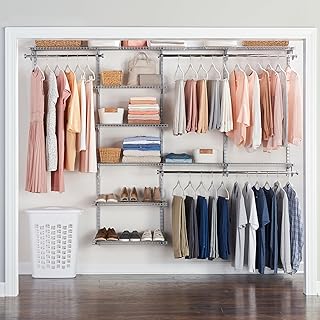
Rubbermaid Configurations Deluxe Custom Closet Kit 4-8 Ft.
Honestly, Rubbermaid Configurations Deluxe Custom Closet Kit 4-8 Ft. Adjustable surprised me — sturdier than it looks in the photos, and over 81 buyers gave it 4.5 stars.
4. Designate Homes for Small Items with Labeled Bins

Small items like dog bags, keys, and chapstick will scatter if you don’t contain them. Assign specific, labeled bins. Woven baskets look nice in photos, but they’re terrible for small items. I bought three hyacinth baskets from Whole Foods for $24.99 each. They shed sharp fibers every time I pulled them off the shelf, leaving dust all over my paint.
I replaced them with clear acrylic bins. The Brightroom 11-inch clear bins from Target cost $12.00 each. The smooth plastic wipes clean with a damp towel. Clear containers are practical because they keep everything visible, stopping you from digging blindly while rushing out the door. I use a Brother P-touch label maker, which costs $34.99, to print bold black text on white tape. One bin gets dog gear, another holds sunscreen. Giving every object a boundary prevents the closet from reverting to a dumping ground.
5. Upgrade to Matching, Sturdy Hangers

Replacing a chaotic collection of mismatched hangers is the fastest way to make a closet look organized. I used to have a mix of thin wire and neon plastic ones. The visual noise was overwhelming. Worse, the wire hangers bent under my four-pound pea coat, leaving permanent puckers in the shoulders.
I threw them out and bought uniform wooden hangers. I use the IKEA BUMERANG solid wood hangers. They cost $6.99 for an eight-pack. The clear lacquer prevents splinters. The wood clacks together with a solid sound when you push coats apart. The curved shoulder profile supports heavy gear without stretching the fabric. If your closet is tiny, you might need slim chrome hangers, but avoid the velvet-coated ones. The velvet grips fabric too tightly, making it annoying to grab a jacket on your way out. Smooth wood lets a heavy coat slide off with one hand.
6. Install Hooks at Multiple Heights for Accessibility

Hangers are great for coats, but terrible for grab-and-go items like canvas bags, wet umbrellas, or hoodies. You need hooks at multiple heights. I used to keep my gym bag on the floor, where I tripped over it daily. Now, I use the side walls. You might also like: 20 Charming Aesthetic Closet Organization Ideas You Need to See
Don’t bother with cheap suction hooks. I stuck one to the back of the door, and it held for four hours before dropping my coat into a pile of shoes. I strictly use Command Large Utility Hooks now. A two-pack costs $8.48. I place two hooks at adult height, roughly sixty inches up, for heavy purses. I place three hooks at forty inches for smaller items and kids’ backpacks. The heavy plastic hooks handle up to five pounds each. The staggered heights prevent bags from tangling. It also forces you to use the blank wall space between the door frame and the rod. You might also like: 20 Inspiring Organizing Storage Home Hacks Ideas for Any Style

Ulif E10 Clothes Rack(With Stretchable Hanger
If you want something that just works, Ulif E10 Clothes Rack(With Stretchable Hanger Rod)Freestanding Clothin is a safe bet (951 reviews, 4.5 stars).
7. Maximize Overlooked Space with Door Organizers

The inside of your door represents fifteen square feet of storage. You need to use it. I bought an over-the-door organizer on a whim last year. The metal brackets were too thick. When I tried to close the closet, the metal gouged a deep scratch into my door frame because the clearance was less than 1/8 inch. I had to sand and repaint the frame. You might also like: 15 Utility Closet Organization Ideas Worth Trying
Always measure the gap before buying an organizer. You need at least a quarter-inch. I eventually bought the 24-Pocket Over The Door Shoe Organizer from The Container Store for $39.99. I don’t use it for shoes. The clear vinyl pockets are perfect for storing umbrellas, grocery bags, hand sanitizer, and a first-aid kit. The pockets keep everything separated and visible. It frees up an entire shelf. The heavy canvas backing prevents the organizer from banging against the door.
8. Integrate Smart, Motion-Sensor Lighting

Most entryway closets are dark boxes. Relying on the hallway light casts a shadow right where you’re trying to find a glove. Hardwiring a light fixture costs over $300. You don’t need to do that.
I installed the IKEA ÖVERSIDAN LED light strip. The eighteen-inch version costs $19.99. It runs on a rechargeable battery, so there are no cords. The motion sensor detects movement the second you open the door, flooding the shelves with a soft, 2700K warm glow. It shuts off after thirty seconds. The battery needs recharging every two months, taking about two hours via USB-C. The magnetic mounting strip lets you pull the light bar down easily. Seeing the color of your coats in the back corner completely changes how the space feels.
9. Relocate the Command Center to a Less Visible Area

If your entryway is small, don’t store mail or bills in the front closet. I tried keeping a tray on a shelf. Within a week, it overflowed with junk mail and receipts. The visual clutter made the entire closet look messy, even when the coats were hung perfectly.
I moved my command center to a pantry closet near the kitchen. I bought a twelve-by-twelve inch cork board from Kroger for $9.99 and mounted it at eye level. I attached a small metal basket for keys and sunglasses. This keeps the daily paper mess out of the entrance. When you walk in, the closet should only deal with items you need to transition from outside to inside. By removing the administrative clutter, you gain back shelf space for hats and gloves. It also forces you to process mail where you actually sit down to handle bills.

AWTATOS Cube Storage Organizer Storage 12 Cube Bookshelf
If you want something that just works, AWTATOS Cube Storage Organizer Storage 12 Cube Bookshelf DIY Plastic C is a safe bet (28 reviews, 4.5 stars).
10. Prioritize Functionality Over Pure Aesthetics in Entrance Closet Organization

It’s easy to buy matching bins because they look beautiful on social media. I’ve fallen for this trap. Before buying anything, use a tape measure and inventory what you own. I bought stunning rigid canvas boxes that were fourteen inches deep. When I got home, I realized my shelves were only twelve inches deep. The boxes hung over the edge and prevented the door from latching.
Design around your actual routines. If you wear wet snow boots daily, a delicate wooden shoe rack will rot within a month. You need heavy-duty rubber. If you own bulky parkas, measure the shoulder width. A standard heavy coat needs sixteen inches of depth to hang without brushing the back wall. Don’t buy a product because it looks minimal. Buy it because the dimensions match your shelf and the material can handle the moisture of daily use.
11. Avoid the Common Mistake of Overstuffing

The single biggest error is cramming too many items into the space. I used to keep twelve jackets in my small closet. The hangers were packed so tightly I couldn’t slide them apart. Pulling one out meant yanking it, which tore buttons or knocked other coats down. The friction ruins clothes and causes daily frustration.
You need a strict limit. I enforce a two-inch gap rule. There must be enough room on the rod to slide a hanger two inches without resistance. For my household, this means a maximum of three jackets per person: one heavy coat, one light jacket, and one raincoat. Everything else goes to the bedroom closets. If the rod feels tight, something has to leave. Being ruthless about volume is the only way to maintain the system long-term. Less stuff means less to manage.
12. Explore Hidden Storage for a Streamlined Look

If your closet lacks doors, or if you removed them because they jammed, the mess is always on display. I had louvered bi-fold doors that pinched my fingers and popped off the track. I ripped them out last summer.
To hide the hanging coats, I installed a heavy-duty tension rod. I bought a black metal one on Amazon for $19.98. It holds twenty-two pounds. I hung an eighty-four-inch linen curtain on metal rings. The sound of the rings sliding is smooth. The heavy fabric adds soft texture while concealing the utilitarian storage. When guests come over, I just pull the curtain, and the hallway looks clean. If you have the budget, mirrored sliding doors are another great option. They hide the storage while reflecting light, making a cramped hallway feel larger.

Yociyoga 4-Tier Stackable Closet Organizers and Storage
Honestly, Yociyoga 4-Tier Stackable Closet Organizers and Storage Basket surprised me — sturdier than it looks in the photos, and over 418 buyers gave it 4.5 stars.
13. Invest in Multi-Functional Entryway Furniture

If you have three feet of wall space outside the closet, you need a piece of furniture to relieve the pressure. Putting on boots while hopping on one foot is annoying and usually ends with someone leaning against the freshly painted wall with dirty hands.
I bought the Vasagle industrial storage bench for $65.99. It measures 17.7 inches high, the ergonomic sweet spot for tying laces. The frame is heavy steel, so it doesn’t wobble, unlike the particleboard bench I tried previously that snapped under my husband’s weight. The bench has two metal mesh shelves. I use these for wet boots I don’t want inside the closet. By moving heavy footwear outside, I freed up the bottom of the closet for a recycling bin and extra tote bags. The bench anchors the space and defines where shoes belong.
14. Contain Wet Weather Gear with Drip Trays

You can’t put muddy boots directly onto a wooden closet floor. The moisture will warp the wood, rot the baseboards, and leave a mildew smell. I ruined a section of baseboard because I let umbrellas drip onto the floor for an entire spring.
You need a drip tray. I use a heavy-duty rubber boot tray from Target that costs $14.99. It measures thirty by fifteen inches and features a raised two-inch lip. The rubber has a strong smell, so leave it outside for two days before using it. The lip contains melting snow and mud perfectly. Once a week, I take the tray outside and hose it off. I also keep a small plastic bucket next to the tray for wet umbrellas. Isolating the moisture prevents it from soaking into your shoe boxes or damaging the closet floor.
15. Create a Dedicated Return Station

The front closet is the last thing you see before leaving. It’s the perfect place to manage items that need to leave your house. I used to leave Amazon return boxes on my kitchen counter. I’d walk past them on my way to the car, forgetting them until the return window closed and I lost thirty dollars. It took years to figure out that simple trick.
I fixed this by creating a return station inside the closet. I bought a thirteen-gallon canvas tote bag for $18.50. I hung it on a Command Hook at eye level. Anything that needs to leave the house goes in this bag. Whether it’s a sweater that didn’t fit, borrowed Tupperware, or library books, it goes in the tote. When I grab my keys, the bag is right in my face, making it impossible to ignore. It eliminated the mental weight of remembering scattered returns and keeps cardboard off my kitchen counters.
Organizing this space takes a weekend of measuring and a few trips to the hardware store, but the daily friction it removes is worth the effort. I won’t ever go back to the single wire shelf. If you tackle even three of these tips, your mornings will feel less chaotic. Pin this article so you have the measurements and product prices handy when you’re standing in the storage aisle.

5 Tier Closet Hanging Organizer
If you want something that just works, 5 Tier Closet Hanging Organizer is a safe bet (13 reviews, 4.5 stars).
Frequently Asked Questions
How do you maximize space in a small entrance closet?
Install an adjustable modular shelving system like Elfa to utilize the full vertical height. Add over-the-door organizers with clear pockets for small items, and use slim, 11-inch deep shoe cabinets to keep footwear off the floor without blocking the door.
What is the best way to store wet boots in a closet?
Never place wet boots directly on the floor. Use a heavy-duty rubber boot tray with a raised two-inch lip to contain melting snow and mud. This protects your baseboards from water damage and can be easily hosed off outside.
How many coats should I keep in my entryway closet?
Keep a maximum of three jackets per person in the front closet: one heavy winter coat, one light jacket, and one raincoat. Ensure there is a two-inch gap between hangers so you can easily pull items out without friction.
How can I organize small items without making the closet look cluttered?
Use clear acrylic bins rather than woven baskets for small items like dog leashes and sunglasses. Label each bin clearly. This keeps items contained, prevents dust accumulation, and allows you to see the contents immediately without rummaging.
