What’s Inside
- Hide the Chaos in Multi-Functional Storage Ottomans
- Build a Modular Cube Living Room Toy Storage System
- Swap Plastic Bins for Woven Seagrass Baskets
- Start a Bi-Weekly Toy Rotation System
- Use Wall-Mounted Floating Shelves for Display
- Invest in a Coffee Table with Deep Storage Drawers
- Label Everything with Picture and Text Tags
- Repurpose a Dining Buffet or Console Cabinet
- Stop Over-Stuffing Your Living Room Toy Storage Bins
- Micro-Sort with Small Dividers Inside Big Chests
- Slide Low-Profile Rolling Bins Under the Sofa
- Add a Heavy-Duty Storage Bench to a Window Nook
- Color-Coordinate Your Baskets to the Couch
- Try the Desperate “Car Trunk Rotation” Trick
Last Tuesday night, I was walking barefoot across my dark house, holding a lukewarm mug of chamomile tea. My heel came down hard on a stray, sharp plastic PAW Patrol Marshall figure. I spilled tea down my shirt, yelled loud enough to wake the dog, and sat on the floor in sticky frustration. That was my absolute rock bottom with living room toy storage. I’m telling you, the plastic clutter creeps up on you when you aren’t paying attention. One minute you’re bringing home a cute, aesthetic wooden block set from Sprouts, and the next, your floor looks like a primary-colored explosion of noisy gadgets.
I’ve spent the last three years figuring out how to hide this chaos. I tried the giant, bottomless toy box method for months before figuring it out. It’s a disaster. You can’t just shove things in a corner and pray your house looks like an adult lives there. Kids dump the whole box out just to find one tiny blue car at the bottom, and you’re left cleaning it up again. Let’s fix this mess together. I’m sharing the exact bins, shelves, and sneaky tricks I use to keep my sanity intact.
1. Hide the Chaos in Multi-Functional Storage Ottomans

I’m totally obsessed with hiding things in plain sight. If you’re tired of staring at plastic towers, you need to invest in multi-functional storage ottomans. I’m not talking about those tiny, flimsy cubes that collapse when you sit on them. I tried a cheap cardboard-lined one last year. I sat on it to tie my boots and went straight through the lid, bruising my thigh. It’s safe to say I won’t do that again. Instead, look at the Pottery Barn Kids Universal Storage Ottomans. They run about $249, which isn’t cheap, but they’re built like actual furniture. They measure exactly 26 inches wide by 20 inches deep and 19 inches high. The interior gives you a massive 22 by 16.25 by 12 inches of usable space. I’ve stuffed an entire 100-piece wooden train set in there.
If that’s out of the budget, Target has some fantastic folding storage ottomans in their Threshold line for around $45 to $70. I grabbed two of the faux leather ones last month. They smell a little bit like chemicals and plastic off-gassing for the first two days, so leave them on the porch to air out. Once they’re inside, they’re perfect. You can prop your feet up on the soft, padded top with a cup of coffee, and nobody knows you’re resting your heels directly above fifty loose Hot Wheels cars. It’s the ultimate quick-stash solution when your mother-in-law texts that she’s dropping by in ten minutes. Just scoop the mess, drop it in, and shut the heavy lid.
2. Build a Modular Cube Living Room Toy Storage System

You can’t talk about organization without mentioning the classic cube shelf. The IKEA KALLAX shelving unit is a massive trend right now, and for good reason. I’ve got a four-by-two white KALLAX unit tipped horizontally behind my sofa. When you combine it with the IKEA DRÖNA insert boxes, which are usually around $5.99 each, you get a clean, customized look. These systems allow you to categorize everything without making your space look like a messy daycare center.
I’d highly recommend buying the fabric boxes instead of the hard plastic ones. The DRÖNA boxes have a soft, almost velvety texture that looks high-end from a distance. However, I’ll admit a frustrating negative: they attract dog hair like a magnet. I’m constantly running a sticky lint roller over the black fabric boxes to get the golden retriever hair off them. It’s annoying, but it’s worth it for the visual calm. Each cube is exactly 13 by 13 inches, which is surprisingly deep. You can fit about 20 standard-sized picture books or a mountain of stuffed animals in a single cube. Pro tip: always anchor these shelves to the wall. I didn’t anchor my first one, and my toddler tried to climb it to reach a toy on top. The whole thing wobbled, and my heart stopped. Buy a $4 anti-tip kit from Home Depot and use a stud finder. It takes ten minutes and you won’t regret the peace of mind.
3. Swap Plastic Bins for Woven Seagrass Baskets
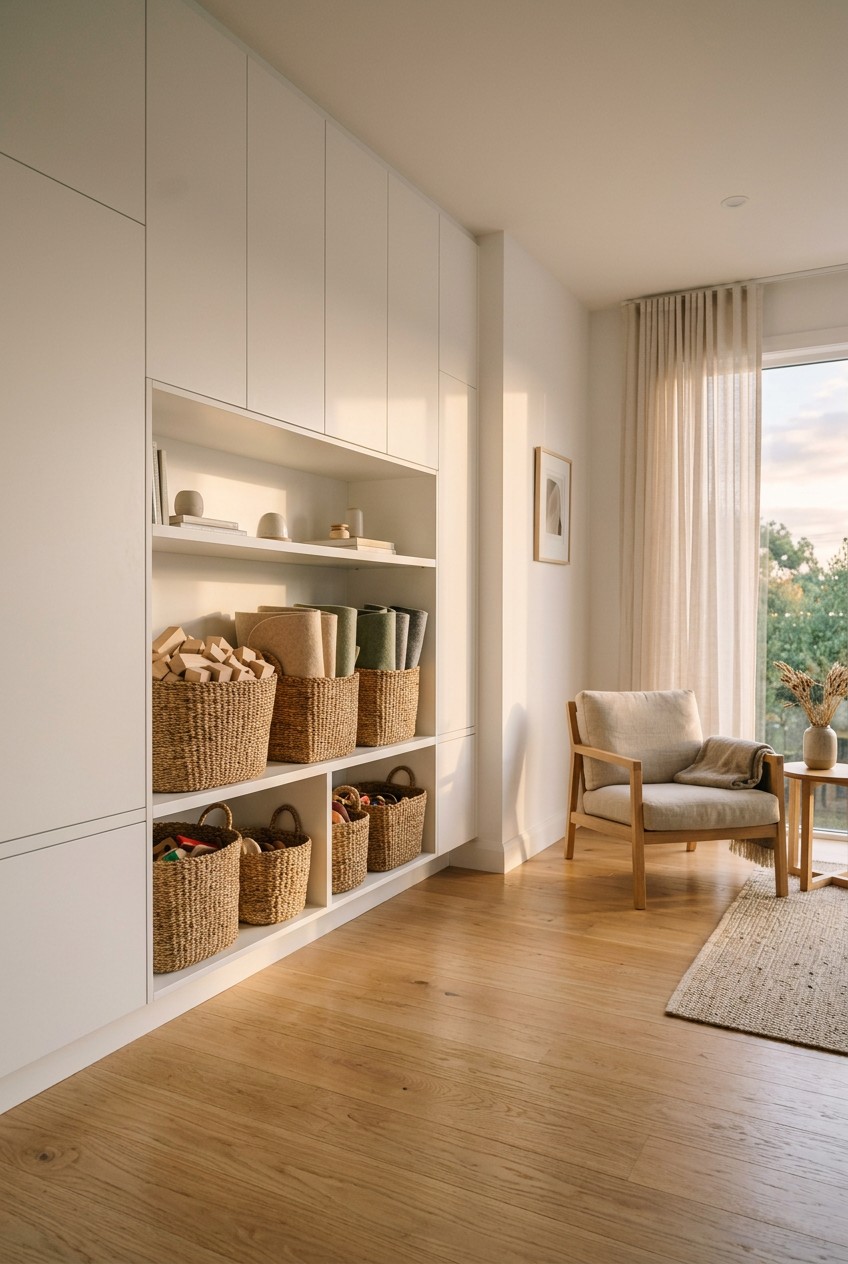
Skip the neon plastic bins. They look awful and they scream “kid zone” the second you walk through the front door. I’m a huge advocate for replacing ugly plastic with aesthetically pleasing baskets made from natural fibers. Materials like seagrass, rattan, or water hyacinth add a gorgeous, earthy texture to your decor. Brands like Natural Artisan Home and Kouboo offer incredible, sturdy options ranging from $45 to $110. I found a massive, thick-weaved water hyacinth basket at Whole Foods of all places, right near the floral section for $39.99, and it’s been my favorite purchase this year.
These natural baskets smell faintly like dried hay, which I actually love. They’re perfect for storing soft items like stuffed animals, fleece blankets, or plush toys. But let’s be honest about a major mistake I made: don’t put heavy, sharp toys in woven baskets. I filled a beautiful $60 rattan basket to the brim with heavy wooden blocks. When I tried to drag it across the rug by the handles, the bottom completely tore out. The sharp corners of the blocks snapped the dried fibers, and I ruined the basket instantly. Keep the heavy stuff in solid wood or thick plastic containers. Reserve the scratchy, textured woven baskets for the soft, lightweight items that won’t puncture the sides. They look beautiful sitting next to a fireplace or tucked under a side table.

Kmiectse Clear Storage Bins with Lids
Honestly, Kmiectse Clear Storage Bins with Lids – 4 Tier Plastic Bins with Wheel surprised me — sturdier than it looks in the photos, and over 19 buyers gave it 4.5 stars.
4. Start a Bi-Weekly Toy Rotation System

This is an expert-backed approach that is trending huge for 2026, and it genuinely saved my sanity. A toy rotation system involves keeping only a limited selection of toys accessible at any given time and storing the rest completely out of sight. When kids have too many options, they get overwhelmed and end up just dumping everything on the floor without actually playing. I’m ruthless about this now. I keep exactly ten toys out in the main living space. The rest go into heavy-duty 18-gallon Sterilite plastic tote bins that cost about $9.98 at Walmart.
I haul those big grey bins out to the garage and stack them on metal shelves. Yes, the garage smells a bit musty, and you have to wipe dust off the lids before bringing them back inside, but it works. Every two weeks, usually on a Sunday night after the kids are asleep, I swap the toys. When they wake up on Monday morning, it’s like Christmas. The “old” toys feel brand new again. I’ll admit, the first time I did this, it backfired. I packed away a noisy, flashing VTech piano that my youngest loved. She cried for two days straight pointing at the empty shelf. I caved and brought it back inside. The lesson? Don’t hide their absolute favorite comfort items. Rotate the secondary toys, the puzzles, and the building sets that they haven’t touched in a few days.
5. Use Wall-Mounted Floating Shelves for Display

If you’re out of floor space, you have to look up. Maximizing vertical space is the easiest way to make a cramped room feel larger. I’m a big fan of installing floating shelves at varying heights to display a few cherished, beautiful toys. The IKEA LACK shelves are the undisputed champions here. They start at around $19.99 for the 43-inch version, and they have hidden brackets so they look incredibly sleek against the drywall. I mounted three of them staggered on the wall behind my reading chair. You might also like: 20 Inspiring Garage Organization Ideas That Are Totally Worth It
I use these shelves specifically for the toys that are actually nice to look at. Think wooden vintage cars, beautifully illustrated hardcover books, or a classic wooden abacus. You don’t want to put a bright plastic slime-making kit on a display shelf. The installation can be a massive headache if you aren’t prepared. The first time I tried to hang a LACK shelf, I didn’t use drywall anchors. I just screwed it straight into the drywall. Three days later, it ripped a massive chunk of plaster out of the wall and crashed onto the floor, taking a heavy wooden dollhouse with it. I spent a whole weekend patching and painting the wall. You can’t skip the heavy-duty toggle bolts. Once they’re installed correctly, they hold up to 20 pounds. Just remember to dust them every week, because flat white shelves show grey dust and pet dander almost immediately. You might also like: 20 Gorgeous DIY Waste Materials Home Decor Ideas for Any Style
6. Invest in a Coffee Table with Deep Storage Drawers

Your coffee table is taking up a massive footprint in the center of your room. If it doesn’t have storage, you’re wasting valuable real estate. Many modern coffee tables now come with built-in drawers, lift-tops, or lower shelves designed specifically for hiding clutter. I finally ditched my minimalist glass table and bought a Mission Coffee Table with Woven Baskets from Target for exactly $225. It has two deep, sliding drawers on metal glides and an open bottom shelf. You might also like: 15 Creative Dollar Tree Hacks Organizing Ideas for a Fresh New Look
The heavy wood finish hides fingerprints, and the drawers are an absolute lifesaver. I use the left drawer exclusively for art supplies: 24-packs of Crayola crayons, coloring books, and washable markers. I use the right drawer for Magna-Tiles. There’s a downside you need to watch out for, though. The drawer tracks get dirty incredibly fast. Last month, my kids were eating Trader Joe’s peanut butter pretzels over the open drawer. The salt and pretzel crumbs fell directly into the metal sliding tracks. The next time I tried to close the drawer, it jammed, made a horrible grinding metal sound, and got stuck halfway open. I had to use a vacuum with a crevice tool and a damp Q-tip to clean the tracks out. It’s a small hassle, but having a totally clear coffee table surface when guests arrive is worth the occasional maintenance. Just enforce a strict “no snacks over the open drawers” rule.

Sterilite 4 Pack Ultra Latching Box, Storage Bins with Lids
Sterilite 4 Pack Ultra Latching Box has been one of the most consistently praised picks in this category. 126 reviewers averaged 4.5/5.
7. Label Everything with Picture and Text Tags

If you want your kids to actually clean up their own messes, you can’t just expect them to know where things go. Professional organizers swear by this, and I do too. You must use clear labels on all your storage bins. For younger children who can’t read yet, picture labels are non-negotiable. For older children, you should combine a picture with bold text to support early literacy. I use a Brother P-Touch label maker I bought at Staples for $34.99. The satisfying whirring sound it makes when it prints a fresh label is addictive.
I print the text on the label maker, and then I print small clipart images of the toys from my computer. I laminate them together using self-adhesive laminating sheets. To attach them to fabric bins, I bought a pack of clear plastic bin clips for $12.99 on Amazon. They slide right over the edge of the basket. Don’t make the mistake of using standard sticker labels directly on fabric or woven baskets. I tried that for months. The stickers peel off at the corners, collect dust on the sticky backing, and eventually fall off and get stuck to the bottom of your socks. When I tried to peel a stubborn sticker off a plastic bin, it left a horrible sticky residue that I had to scrub off with strong, orange-scented Goo Gone. Stick to the removable plastic bin clips. They’re a lifesaver when you rotate toys and need to swap the labels quickly.
8. Repurpose a Dining Buffet or Console Cabinet

Sometimes you just need to close a heavy door on the mess and walk away. That’s why repurposing existing furniture like dining buffets, media stands, or console cabinets is brilliant. You don’t have to buy furniture specifically labeled “toy storage.” I bought a gorgeous, heavy wood dining credenza from Costco for $499. It was supposed to hold fine china and wine glasses. Instead, I put it right against the long wall in my living room, and it holds every single noisy, brightly colored plastic toy my kids own.
The beauty of a cabinet with solid doors is that it completely conceals the clutter. You don’t have to worry about color-coordinating the bins inside or making it look neat. You just stack the puzzles, toss the action figures in a heap, and shut the heavy wooden doors. The magnetic catch clicks shut with a satisfying thud, and the room instantly looks like an adult sanctuary again. The only negative I’ve found is that the shelves inside are usually fixed in place. I couldn’t fit a tall Barbie dreamhouse inside because the middle shelf wouldn’t budge. I had to get my husband to use a jigsaw to cut a section of the shelf out just to make it fit. Measure your bulkiest toys before you commit to a piece of furniture with fixed shelves. Otherwise, it’s the perfect way to maintain a sophisticated aesthetic while hiding a mountain of plastic junk.
9. Stop Over-Stuffing Your Living Room Toy Storage Bins

This is the most common mistake I see when I help friends organize their homes. People buy a great set of bins, and then they cram way too many toys into a single container. If a lidded bin won’t close, or if the sides of a fabric basket are bulging outward, it’s a giant red flag. You’re over-stuffing. I used to do this with the Target Y-Weave plastic bins. They cost about $8.00 each, and they’re great, but they aren’t indestructible. I jammed about forty hard plastic dinosaur figures into one bin and forced the lid down.
Three days later, I heard a loud cracking sound from the corner of the room. The pressure had literally snapped the plastic side of the bin, leaving a sharp, jagged edge that I ended up scratching my hand on. You have to follow the 80% rule. Never fill a bin more than 80% full. You need that extra 20% of space so kids can easily dig their hands in to find what they want without dumping the entire contents onto the rug. If you can’t fit a category of toys into a bin while keeping it under 80% full, you don’t need a bigger bin. You need to declutter. Take a hard look at the collection and donate the toys they haven’t touched in a month. It’s hard to let go, but the visual relief of a properly filled, easily closable bin is incredible.
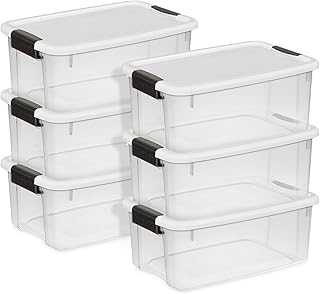
Sterilite 6-Pack Ultra Latching Box, Storage Bins with Lids
A dependable everyday pick — Sterilite 6-Pack Ultra Latching Box pulls in 126 ratings at 4.5 stars. Not flashy, just solid.
10. Micro-Sort with Small Dividers Inside Big Chests

If you have a large, deep toy chest, you’re probably dealing with the “black hole” effect. Kids just throw everything in there, and the small pieces filter down to the bottom. Instead of treating a large chest as a single dumping ground, you need to micro-sort. I use small dividers and open bins inside my larger storage units to categorize items. I bought a set of OXO Good Grips adjustable drawer bins for $14.99 and placed them directly inside my large wooden toy box.
Before I did this, my son would dump out 500 loose Legos onto the hardwood floor just to find one tiny, specific rubber tire. The deafening, cascading crash of hundreds of hard plastic bricks hitting the wood floor at 6:00 AM used to make my blood boil. Now, I keep the tires in a small 4-ounce OXO bin, the clear windshield pieces in another, and the minifigures in a third. The larger bricks stay loose in the main compartment. It prevents the dreaded full-dump. I won’t lie, it takes discipline to maintain. You have to sit there with them and enforce putting the tiny pieces back in the right little dividers. Sometimes I find a rogue Lego tire in the couch cushions, but overall, cleanup is significantly faster and way less noisy. You can’t skip the micro-sorting if you have kids who love building sets or tiny craft supplies.
11. Slide Low-Profile Rolling Bins Under the Sofa

Under-couch storage is highly underrated. If your sofa has at least six inches of clearance underneath, you’re sitting on a goldmine of hidden storage space. I use slim, rolling storage containers that fit neatly under the couch for puzzles, board games, and large coloring pads. I bought two long under-bed rolling boxes from The Container Store for $29.99 each. They measure exactly 36 inches long, 18 inches wide, and 6 inches high. They’re completely invisible until you reach down and pull them out.
They keep flat items perfectly organized and out of sight. However, there’s a frustrating learning curve with rolling bins. The tiny plastic wheels are notorious for getting caught on area rugs. My living room has a thick, high-pile Moroccan rug. The first time I tried to yank the bin out from under the couch, the wheels dug into the rug fibers, the lid popped off, and fifty puzzle pieces scattered under the sofa. I had to get down on my stomach with a flashlight to fish them all out. I also learned that the wheels collect dust bunnies and stray dog hairs like crazy. You have to flip the bins over once a month and pull the tangled hair out of the wheel axles, or they stop rolling completely. Despite the maintenance, it’s a brilliant way to utilize dead space for flat, awkward items that won’t fit in standard square baskets.
12. Add a Heavy-Duty Storage Bench to a Window Nook

A storage bench is the ultimate double-duty piece of furniture. It offers extra seating for guests and a massive amount of hidden storage underneath. I placed a beautiful upholstered storage bench right under the large front window in my living room. I found it on Wayfair for $185. It has a soft, beige velvet texture that feels amazing to sit on when I’m lacing up my sneakers in the morning. Inside, it holds all the bulky dress-up clothes, superhero capes, and oversized foam swords that refuse to fit nicely in normal bins.
When you’re shopping for a storage bench for kids, safety hinges are absolutely non-negotiable. I can’t stress this enough. I bought a cheap, used wooden bench at a garage sale a few years ago. It just had standard door hinges. My daughter lifted the heavy wooden lid, reached in for a toy, and the lid slammed down squarely on her fingers. The screaming was awful, and we spent two hours icing her bruised knuckles. I threw that bench in the dumpster the next day. The Wayfair bench I have now has pneumatic safety hinges. When you let go of the lid, it stays open on its own, and when you push it down, it closes in slow motion. It’s totally safe for little hands, and the velvet fabric adds a cozy, warm texture to the room’s decor.

Sterilite 4-Pack Ultra Latching Box, Storage Bins with Lids
Honestly, Sterilite 4-Pack Ultra Latching Box surprised me — sturdier than it looks in the photos, and over 126 buyers gave it 4.5 stars.
13. Color-Coordinate Your Baskets to the Couch

Visual clutter is just as stressful as physical clutter. Even if all the toys are perfectly put away in bins, if those bins are bright neon green, hot pink, and royal blue, your living room is still going to feel chaotic. I swear by color-coordinating your storage to blend in with your existing decor. I have a large, oatmeal-colored sectional sofa. I went to Walmart and bought six Mainstays fabric bins in a matching beige color for $4.88 each.
I placed these bins on the lower shelves of my end tables and TV stand. Because the bins match the couch and the rug, they practically disappear into the background. The eye just glides right past them. It creates a massive sense of visual calm. I used to use clear plastic bins because I thought it would be easier for the kids to see what was inside. That was a huge mistake. Clear bins just put the messy, jumbled colors of the toys on permanent display. It looked like a thrift store shelf. Opaque, color-coordinated bins are the way to go. Yes, you have to rely on the labels (like I mentioned in tip 7) to know what’s inside, but the trade-off for a peaceful, adult-looking living room is completely worth it. Stick to neutrals like cream, grey, woven tan, or whatever matches your largest piece of furniture.
14. Try the Desperate “Car Trunk Rotation” Trick

I’m saving the most surprising tip for last. If you live in a small apartment or a house with zero closet space, you might run out of indoor storage completely. When that happened to me, I started using the “Car Trunk Rotation” trick. I bought a heavy-duty black plastic milk crate from Home Depot for $11.99. I loaded it up with a batch of toys, carried it out to the driveway, and shoved it into the deep trunk of my Honda CR-V.
It sounds crazy, but your car is essentially a mobile, climate-controlled (mostly) storage unit. Every three weeks, when I’m bringing groceries inside from Kroger in my reusable bags, I grab a few toys from the trunk crate and swap them with toys from the living room. It keeps the indoor clutter down and the toys fresh. You do have to be careful about what you store in the car, though. I made the mistake of leaving a box of Crayola crayons in the trunk crate during a hot July week. The car interior got up to 120 degrees, and the crayons melted into a solid, waxy, rainbow puddle at the bottom of the crate. It ruined a stuffed animal that was sitting next to it. Only put hard plastic toys, wooden blocks, or books in the car trunk rotation. Keep anything that can melt or warp safely inside the house.
I’m so glad I finally cracked the code on keeping the plastic explosion under control. It takes a little bit of upfront effort and a few trips to Target or IKEA, but reclaiming your living room is the best feeling in the world. You don’t have to live in a house that looks like a preschool exploded. Try setting up just one or two of these systems this weekend, maybe start with the multi-functional ottoman or the under-couch bins. If you found these tips helpful, make sure you pin this article to your favorite home organization board on Pinterest so you can find it later when you’re ready to tackle the playroom!
Frequently Asked Questions
How do I hide toys in my living room?
Use multi-functional furniture like storage ottomans or coffee tables with deep drawers. Swapping clear plastic bins for opaque, color-coordinated woven baskets also helps conceal bright plastic clutter seamlessly into your decor.
What is the best living room toy storage for small spaces?
Maximize vertical space with floating shelves for display, and utilize the dead space under your sofa with low-profile rolling bins. A storage bench near a window also provides hidden space without expanding the footprint.
How often should I rotate toys?
A bi-weekly or monthly rotation schedule is ideal. Keep about ten toys accessible in the living room and store the rest out of sight in garage bins or even your car trunk to keep kids engaged.
How can I organize small toy pieces?
Avoid the ‘black hole’ toy chest by micro-sorting. Use small adjustable drawer dividers or multi-bin organizers inside larger chests to separate tiny items like Legos, preventing kids from dumping everything on the floor.
