What’s Inside
- Embrace Stuffable Bean Bag Chairs for Dual Functionality
- Implement a Toy Rotation System for Engagement
- Utilize Vertical Space with Stuffed Animal Hammocks
- Invest in Modular Systems like IKEA TROFAST
- Avoid Plastic Bags and Vacuum Seals for Long-Term
- Opt for Clear, Breathable Bins for Visibility
- Display with Storytelling Through Aesthetics
- Repurpose Furniture for Hidden Storage Solutions
- Consider Vertical Toy Zoos for Large Collections
- Label Bins with Pictures for Young Children
- Clean Soft Toys Before Storing Long-Term
- Utilize Wall-Mounted Solutions for Smaller Spaces
- Create Multi-Functional Play Zones with Storage
- Use Cube Organizers with Fabric Bins
Last Tuesday at 2 AM, I stepped on a musical plush dog in the dark and almost broke my toe on a doorframe. The dog started singing a nursery rhyme in a creepy, low-battery voice while I clutched my foot in agony. That was the moment I realized my soft toy storage was a total disaster. If you’re drowning in plushies, I feel your pain. Finding practical storage isn’t just about making a room look nice. It’s about saving your sanity and keeping your floors clear of furry trip hazards. I’ve spent three years testing every bin, basket, and hammock on the market. Some were brilliant. Others were complete garbage that ripped within a week. I’m going to walk you through exactly what works, what doesn’t, and how much you should actually spend. Grab a coffee. Let’s fix this plushie explosion.
1. Embrace Stuffable Bean Bag Chairs for Dual Functionality

I’m a massive fan of making things do double duty. Instead of traditional plastic bins that sit there taking up floor space, I highly recommend a stuffable bean bag chair. This is basically a giant, empty fabric shell that you fill with plushies. I bought the Posh Stuffable Storage Bean Bag on Amazon for $39.99. I got the extra-large 48-inch sphere in a grey chevron pattern. You just unzip it and shove the plushies inside. It holds a mountain of toys. We fit over sixty medium-sized bears and bunnies in there. The fabric is a thick, durable canvas that feels like a heavy-duty backpack. One quick tip: only put soft things inside. I tried tossing in a few hard plastic dolls once. My daughter sat on it and immediately complained about a hard lump poking her back. It was a total fail. I learned that the hard way. Now, we strictly use it for plushies. If you want something smaller, the Smart Wallaby Child’s Pouf is fantastic. It costs about $34.99 and measures 31 inches in diameter, but it expands up to 23 inches high when fully stuffed. It’s made of a softer, velvet-like material. I dragged my bean bag into the living room last week. We were having a movie night. I’d just gotten back from a chaotic grocery run at Kroger, hauling six heavy bags inside. Having a giant, comfy bean bag that also hid fifty stuffed animals was a lifesaver. It keeps the visual clutter to zero. Plus, kids love lounging on their own toy mountain.
2. Implement a Toy Rotation System for Engagement

Most people get this wrong. You don’t need to display every single toy your kid owns at the same time. Professional organizers suggest keeping only a third to a half of a child’s toys accessible. For soft toys, keeping 8 to 12 in rotation is the sweet spot. I started doing this last year and it changed how my kids play. When a kid has fifty plushies staring at them, they get overwhelmed and end up playing with none of them. They just dump them on the floor. I bought a pack of those massive, 27-gallon black plastic storage bins with the yellow lids from Costco. They cost about $11.99 each. I use these strictly for the out-of-rotation toys. You must use opaque bins for this. If your kids can see the toys through clear plastic, they will beg for them. I hide these heavy-duty bins in the top of the guest room closet. Every three weeks, I swap the toys out. It feels like Christmas morning for them. They rediscover a stuffed dinosaur they haven’t seen in a month and treat it like a brand new toy. It boosts their focus and keeps the bedroom floor manageable. I used to feel guilty packing away their toys. I thought I was depriving them. But honestly, this rotation system minimizes clutter and makes playtime more intentional. Skip the guilt. Grab some solid-colored bins. Your vacuum cleaner will thank you.
3. Utilize Vertical Space with Stuffed Animal Hammocks

If you’ve got empty corners, you’re wasting prime real estate. Hanging a stuffed animal hammock is a classic trick, but you have to buy the right one. Don’t buy the cheap, flimsy mesh ones from the dollar store. They sag, they rip, and they look like fishing nets that washed up on a beach. I personally swear by the Lilly’s Love Stuffed Animal Hammock. It costs $21.99 on Amazon. It’s made from durable, thick netting that feels like heavy-duty macrame cord. The large version measures 41.5 by 41.5 by 55 inches. It holds up to 25 pounds of plushies. That’s a lot of weight for a fabric net. I learned a hard lesson with this one, though. Don’t use the cheap plastic drywall anchors that come in the box. I tried that in my son’s room. Three days later, the entire hammock ripped out of the wall, leaving three jagged holes in the drywall and dumping a mountain of stuffed dogs onto his bed at midnight. It was a disaster. Go to a hardware store and buy heavy-duty toggle bolts for $4.99. Once it’s anchored properly, it’s brilliant. It keeps the toys off the floor. I love how it adds a cozy, decorative touch to the room. It creates a colorful canopy of toys in a dead corner. Just make sure you hang it low enough that you don’t need a step stool to toss the toys back in.

8 Pack Extra Large Heavy Duty Moving Bags
Honestly, 8 Pack Extra Large Heavy Duty Moving Bags surprised me — sturdier than it looks in the photos, and over 17 buyers gave it 4.5 stars.
4. Invest in Modular Systems like IKEA TROFAST

If you want a system that grows with your kids, the IKEA TROFAST storage combination is unbeatable. Professional organizers obsess over this system for a reason. It’s adaptable and child-friendly. A standard white wooden TROFAST frame costs about $99. Then you buy the lightweight plastic pull-out bins separately. The large bins cost around $6, and the smaller ones are $4. You slide them into the grooves on the frame like drawers. I love the texture of the wooden frame mixed with the smooth plastic bins. It looks clean and modern. The best part is that kids can easily pull an entire bin out, carry it to the rug, dump out their soft toys, and shove them all back in when they’re done. I bought our TROFAST unit on a rainy Tuesday. I spent three hours navigating the IKEA maze, then stopped at Whole Foods on the way home to grab a $7.99 slice of berry chantilly cake just to recover from the assembly process. Building it took about forty-five minutes. It was worth every second. One mistake to avoid here is buying all shallow bins. Plush toys are bulky. You need the deep, 14-inch bins for stuffed animals. The shallow ones aren’t good for anything bigger than Legos or markers. The deep bins easily hold a dozen medium-sized plushies. Because the bins slide out entirely, you don’t have to dig blindly to find that one specific stuffed rabbit your kid is crying for at bedtime. You might also like: 20 Beautiful Aesthetic Home Makeover You Can Try Today
5. Avoid Plastic Bags and Vacuum Seals for Long-Term

I’ve got a massive warning for you. If you’re packing away soft toys for long-term storage, don’t put them in sealed plastic garbage bags. Don’t use those plastic vacuum-seal space bags either. I know it’s tempting to suck all the air out of a giant teddy bear so it shrinks to the size of a pancake. I tried this wrong for months before figuring it out. I packed away twenty of my daughter’s childhood plushies in a vacuum-seal bag and shoved them under a bed. A year later, I opened the bag. The smell was horrific. It smelled like a damp, musty basement mixed with wet dog. Because plastic traps moisture, any tiny bit of humidity inside that bag breeds mold and mildew. The fabric on three of the bears was ruined with black spots. I had to throw them away. I was heartbroken. Soft toys need to breathe. Instead of plastic, you must use breathable fabric storage bags or ventilated containers. I now use heavy-duty cotton canvas laundry bags. A pack of two extra-large heavy-duty cotton bags costs about $18.99 on Amazon. They keep the dust off but allow air to circulate through the woven fibers. If you live in a humid climate, throw a $2.99 silica gel packet into the canvas bag just to be safe. Trust me on this. Don’t suffocate your plushies in plastic. It’s a surefire way to ruin them forever. You might also like: 20 Inspiring Organizing Storage Home Hacks Ideas for Any Style
6. Opt for Clear, Breathable Bins for Visibility

For soft toys that you aren’t displaying but still want to access easily, clear storage bins are the way to go. You want to protect them from dust, but you also need to see what’s inside without opening every single box. I’m obsessed with The Container Store’s Clear Sweater Boxes. They cost exactly $12.99 each. They measure 15.6 inches long by 13.1 inches wide by 6.8 inches tall. They stack beautifully on closet shelves. The plastic is thick and crystal clear, not that cloudy, cheap plastic that cracks if you look at it wrong. They fit about 90 percent of standard-sized plush toys. I also use a neat trick for the tiny, palm-sized plushies. You know, those little fast-food meal toys or tiny keychain plushies that always get lost at the bottom of a big bin. I group them together using purifyou Premium Reusable Produce Bags. A set of nine costs about $15.30. They’re made from a breathable, fine mesh fabric. I stuff all the tiny toys into a mesh bag, pull the drawstring tight, and toss that into the clear Sweater Box. It keeps categories separate and prevents the little toys from getting squished under the heavier ones. Plus, the mesh allows for airflow. This setup gives you total visibility. You can stand in front of your closet and instantly spot the exact green dinosaur your kid is demanding. You might also like: 15 Cozy DIY Closet Organization Ideas for Any Style

Cisily Sponge Holder for Kitchen Sink
If you want something that just works, Cisily Sponge Holder for Kitchen Sink is a safe bet (123 reviews, 4.5 stars).
7. Display with Storytelling Through Aesthetics

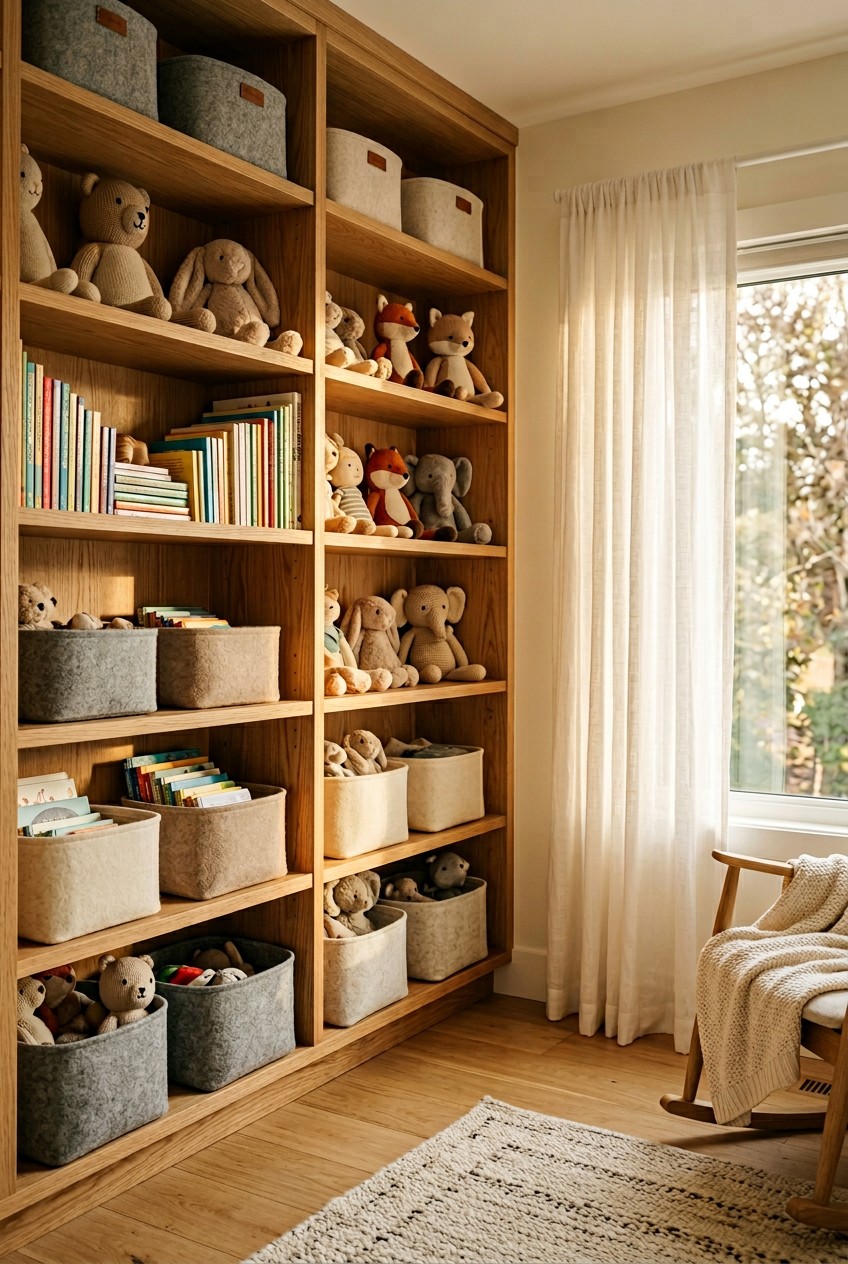
There is a massive trend happening right now in the organizing world. Moving beyond simple plastic bins, the current trend is all about styling and aesthetics. Instead of hiding everything, you create curated little vignettes on shelves. It turns soft toy storage into actual room decor. I started doing this after a playdate last month. I’d just grabbed some $3.49 peanut butter pretzels from Trader Joe’s, and the kids were playing in the bedroom. I noticed they naturally grouped their toys into little scenes. I decided to make it permanent. I bought three IKEA LACK floating shelves. They cost $14.99 each and measure 43.25 inches long. They have sleek, hidden mounting hardware so they’re floating on the wall. I installed them staggered on a blank wall. Then, instead of just lining the plushies up like soldiers, we created themes. One shelf is a Plushie Vacation corner. We set up three stuffed bears sitting on a tiny $5 wooden beach chair we found at a craft store, complete with a tiny paper umbrella. Another shelf is a Woodland Forest with stuffed foxes and owls peeking out from behind a fake trailing ivy plant. This method is brilliant because it limits the number of toys on display to only the absolute favorites. It forces you to declutter the rest. Plus, it looks incredibly charming and intentional, rather than messy.
8. Repurpose Furniture for Hidden Storage Solutions

If you live in a smaller house or an apartment, you can’t afford to have dedicated toy bins taking up your living room floor. You have to maximize your space by using furniture with built-in, hidden storage. I’m fiercely protective of my living room aesthetic. I refuse to let it look like a daycare center. My secret weapon is a storage ottoman. I bought the Threshold Tufted Storage Ottoman from Target for $80. It’s a gorgeous charcoal grey fabric with a tufted top. It measures 38 inches long by 18 inches deep. It looks like a high-end piece of adult furniture. It sits right in front of our sofa. But when you lift the heavy, padded lid, it’s entirely hollow inside. That is where I stash all the soft toys that inevitably migrate downstairs. We can fit about twenty plushies in there. When guests come over, I just grab the toys off the rug, chuck them into the ottoman, and slam the lid shut. Bam. The living room is spotless in ten seconds. You can also use entry benches with hidden baskets or TV stands with solid cabinet doors. The trick is to avoid glass doors. You want opaque barriers so the bright, chaotic colors of the toys don’t clash with your living room decor. Repurposed furniture is the ultimate stealth storage.
9. Consider Vertical Toy Zoos for Large Collections

If your kid has a massive collection of stuffed animals and refuses to part with a single one, you need a vertical stuffed animal zoo. This is a tall, cage-like structure made of wood and elastic cords. I highly recommend the Mloong Stuffed Animal Storage zoo. It costs $45.99 on Amazon. The genius of this product is its tiny footprint. It only takes up 14 by 14 inches of floor space, but it stands about 5 feet tall. You just stretch the flexible elastic bungee cords and shove the plushies inside. The toys are trapped in the zoo, but kids can easily reach through the stretchy cords to pull out whatever they want. It transforms a chaotic pile of clutter into a colorful, towering display. The wood on the Mloong model is sanded smooth, so there are no splinters, and it’s painted a crisp white. I’ll admit, assembling this thing was a bit annoying. Threading the elastic cords through the little holes took me about thirty minutes and my fingers were sore afterward. But once it’s built, it’s incredibly sturdy. It holds an absurd amount of toys. We fit over fifty plushies in ours. It utilizes vertical space perfectly. Just make sure you put the heaviest, most dense plushies at the bottom to give the tower a solid center of gravity so it won’t tip over on thick carpet.

WYT Clear Storage Latch Bins
If you want something that just works, WYT Clear Storage Latch Bins is a safe bet (25 reviews, 4.5 stars).
10. Label Bins with Pictures for Young Children

Professional organizer Katy Winter suggests a brilliant tactic for getting toddlers to actually clean up their own messes. You have to involve kids as young as two in the cleanup process by giving them highly specific tasks. But here is the problem. Two-year-olds can’t read. If you label a bin with a fancy text label maker, it means absolutely nothing to them. You have to use picture labels. I started doing this and it blew my mind how well it worked. I bought a roll of chalkboard tape on Amazon for $6.99. It’s exactly what it sounds like. A sticker roll with a blackboard texture. I cut a 3-inch square, stuck it to the front of a plastic bin, and used a $3.50 fine-tip white chalk marker to draw a simple picture of a teddy bear. For the Lego bin, I drew a little brick. For the car bin, a little car. It’s an inexpensive, removable, and cute labeling option. When it’s time to clean up, I don’t say to clean the room. That’s too overwhelming. I hand my toddler a plush dog and ask him to put it in the bin with the teddy bear picture. He waddles over and drops it in. It turns cleanup into a matching game. If you change what’s in the bin later, you just wipe the chalkboard tape with a damp paper towel and draw a new picture.
11. Clean Soft Toys Before Storing Long-Term

This is a massive, costly mistake that almost everyone makes. Never, ever pack away plush toys for long-term storage without cleaning them first. If a toy has been sitting on a bed or dragged across a floor, it’s covered in dust mites, dead skin cells, natural skin oils, and microscopic food crumbs. If you lock that dirt into a storage bin for a year, the fabric will deteriorate, and the oils will turn rancid and attract pests. I learned this the hard way. I stored a $35 Jellycat bunny without washing it. When I took it out a year later, the white fur had permanent yellow grease stains around the ears from my son’s hands. It was completely ruined. Now, I follow a strict cleaning protocol. First, I take a standard $4.99 Scotch-Brite lint roller and aggressively roll the entire toy to pick up loose dust and pet hair. You’d be disgusted by how much comes off. Next, I spot-clean any visible stains with a damp microfiber cloth and a tiny drop of Dawn dish soap. For most sturdy plush toys, I hand wash them in the sink with a capful of Woolite Delicates detergent, which costs about $9.99 for a bottle. Squeeze the water out gently. Never wring them, or you’ll ruin the stuffing. Let them air-dry completely on a drying rack in the sun for at least 48 hours to prevent internal mold.
12. Utilize Wall-Mounted Solutions for Smaller Spaces

When you’ve got zero floor space left, you have to look up. Wall-mounted storage is a lifesaver in tiny bedrooms. Hanging buckets or fabric bags on heavy-duty hooks works great, but my absolute favorite trick is repurposing wooden crates. I use the IKEA KNAGGLIG pine crates. They cost exactly $14.99 for the large 18-by-12-inch size. They come as raw, untreated pine wood. I spent a Saturday afternoon painting three of them a vibrant teal blue. Then, I mounted them directly to the wall sideways, so the bottom of the crate sits flat against the drywall and the open top faces out into the room. It creates a deep, rustic, box-like wall shelf. I screwed them straight into the wall studs using 2-inch wood screws. They’re rock solid. We use these crate shelves specifically to hold the bulkiest, most awkwardly shaped soft toys that don’t fit in normal bins. I was actually inspired to do this after a trip to Sprouts. I saw how they displayed their fresh produce in tilted wooden crates and thought I could do that with plushies. It frees up so much precious floor space. Plus, it keeps the toys highly visible and accessible. The kids can just reach up and grab what they want. It adds a really cool, textured, 3D element to a boring bedroom wall.

Sakugi Storage Shelves – 5 Tier Shelf Organizer
A dependable everyday pick — Sakugi Storage Shelves – 5 Tier Shelf Organizer pulls in 31 ratings at 4.5 stars. Not flashy, just solid.
13. Create Multi-Functional Play Zones with Storage

Multi-functional furniture is huge. You want pieces that blend playful design with practical, hardcore organization. I recently discovered the Playkitchen Toy Organizer Rack with Built-In Seat. It retails for about $119.99 on Amazon. It’s a brilliant piece of engineering. It features three tiers of tilted plastic storage bins on the left side, and a sturdy wooden bench seat with a padded cushion on the right side. Underneath the bench seat, there is a hidden pull-out drawer. It creates a complete little reading and play zone in one compact unit. My kids love sitting on the padded bench with a book, surrounded by their toys. It encourages independent play because everything is right at their level. When playtime is over, cleanup is effortless because the tilted bins are wide open and easy to toss things into. We use the hidden drawer under the seat specifically for soft toys, while the plastic bins hold heavier items like wooden blocks. The whole unit measures 44 inches wide, so it fits nicely under a standard window. The wood is a smooth, light birch color that doesn’t look cheap or tacky. It feels like a premium piece of preschool furniture. If you want to encourage your kids to actually stay in their room and play quietly, creating a dedicated, comfortable zone like this is the secret.
14. Use Cube Organizers with Fabric Bins

We can’t talk about soft toy storage without mentioning the absolute holy grail of home organization: the cube organizer. Specifically, the IKEA KALLAX shelving unit. An 8-cubby unit costs about $89.99. It’s heavy, thick, and practically indestructible. I pair it with the IKEA DRÖNA fabric boxes, which cost $5.99 each. These boxes are exactly 13 by 15 by 13 inches. They slide into the KALLAX cubbies with satisfying, millimeter-perfect precision. I made a huge mistake once. I tried to save a few bucks by buying generic fabric bins during a late-night Walmart run. They were $4 each. I brought them home and they were a half-inch too small. They looked sloppy, leaving a weird gap at the top, and the cardboard sides buckled within a week. Skip the cheap knockoffs. Buy the DRÖNA boxes. They have rigid, sturdy inserts that hold their square shape even when stuffed to the brim with heavy plushies. This system is incredibly versatile. You can dedicate one fabric bin to teddy bears, one to squishmallows, and one to action figures. Because the bins are completely opaque, the room instantly looks immaculate the second you slide the box back onto the shelf. The system easily adapts as your child’s toy collection evolves over the years. It’s the most reliable, aesthetically pleasing storage solution I’ve ever used.
Honestly, getting your soft toy storage under control is going to relieve so much daily stress. You won’t be tripping over stuffed dogs in the dark anymore. If I had to pick just one absolute favorite method from this list, I’d go with the stuffable bean bag chair. It’s just too practical, affordable, and comfortable to pass up. But whether you choose the sleek IKEA TROFAST system, a hanging hammock, or a towering plushie zoo, the key is to pick a system that fits your specific space and stick with it. Don’t let the plushies take over your house. Take your space back. I’d love to hear which of these ideas you’re going to try first. If you found these tips helpful, please pin this article to your home organization boards on Pinterest so you can find it later when you’re ready to tackle that mountain of toys. You’ve got this!
Frequently Asked Questions
What is the best way to store a large amount of soft toys?
The best method for massive collections is a stuffable bean bag chair. You can fit over fifty plushies inside a 48-inch bean bag, turning a chaotic pile of clutter into a functional, comfortable seat for your kids.
Can I store soft toys in plastic vacuum bags?
No, you shouldn’t use plastic vacuum bags for long-term soft toy storage. Plastic traps moisture, which easily leads to mold, mildew, and permanent fabric damage. Always use breathable cotton or canvas bags instead.
How do you organize soft toys so kids can actually reach them?
Using modular systems like the IKEA TROFAST or KALLAX with pull-out bins keeps toys at a child’s height. Labeling these bins with simple picture stickers helps toddlers know exactly where to find and put away their toys.
Should I wash plush toys before putting them in storage?
Yes. Always clean soft toys before storing them long-term. Use a lint roller for dust, spot clean stains with dish soap, and hand wash with mild detergent. Unwashed toys harbor oils and skin cells that attract pests and cause yellowing.
